• Log In
  • Log In
Slate (skeleton-v3 PHP 8 prototype)
Slate (skeleton-v3 PHP 8 prototype) Learn · Create · Lead
  • Students
    • Mission and Vision
  • Parents
  • Community
    • Mission and Vision
  • Calendar

Gender Studies - Menasion - d1 Public Feed

Create a Post

Feminist Movie Review

Posted by Nyla Moore in Gender Studies - Menasion - d1 on Thursday, January 14, 2016 at 12:34 pm

  1. The movie I watched was Love and Basketball. It’s a love story about a girl named Monica and a guy named Quincy who are trying to follow their dreams of playing pro basketball while also trying to keep their relationship together. When I tested the movie with the Bechdel test, it passed. The main character, Monica talked with her basketball rival and later friend, Syd. Both women had many conversations that did not include any mention of a man. Next, I tested the movie with the Mako Mori test and it passed. The main character, Monica, has her own story that runs throughout the whole movie with the other main character, Quincy. Both Monica and Quincy realize that they want to be with each other at the end of the movie, but her story is kind of independent and doesn’t always have him in it.

  2. For my anti-gender biased review, I would require it to

  • have at least have 2 women and men in it

  • the women should have a job

  • if possible, be a woman who isn’t white

  • the woman and man should be somewhat independent
Be the first to comment.

Film Review

Posted by Crystal Taylor in Gender Studies - Menasion - d1 on Thursday, January 14, 2016 at 12:23 pm

1) A movie that meets the Bechdel test is Mean Girls. Mean Girls is about a teenager known as Cady Heron. Cady was raised in Africa and was home-schooled, and once she finally moved to the suburbs her parents made the decision to let her go to public school for the first time. Cady experiences many different things which she never thought could happen. She soon becomes apart of the popular clique in her school known as the Mean Girls. The Mean Girls are the people that everyone hates, but wants to be their friends at the same time. In the movie, there was a scene where Cady and the other three girls in the group were in the ring leader's, Regina George, house. They were staring in the mirror and talking to one another about different things they want to change and improve about themselves. Cady wasn't accustomed to beating herself up and not being happy with her looks, so when they looked at her to say something she says "I have really bad breath in the morning." It was a really funny scene, but shows that females can still have conversations, regardless if it's positive or negative, about things other then men. 

2) My own anti-gender bias film test would be called the CP Test. The four questions would be...

a) Is there at least one named male and female character?

b) Is the male aiming to do something that doesn't benefit him getting "the girl"?

c) Is the female aiming to do something that doesn't benefit her getting "the guy"?

A movie that I am going to review to see if it fits my film test is Revenge of the Bridesmaids. In this film, there are a group of bridesmaids known as Abigail, Parker and Rachel who are trying to ruin a brides wedding simply because of the simple fact she was only marrying for money. On top of that, the bride, Caitlyn, stole her "best friend's" and one of the bridesmaids, Rachel, boyfriend. So, Rachel was a bridesmaid to her best friend who stole her boyfriend and is only marrying him for his money. I do not think this fits my film test because although there is a male character not doing anything to "get the girl", the whole movie was based around getting justice for the male AND getting Rachel her guy back. This goes to show that there aren't many movies in which guys/girls aren't aiming to just get "the guy" or "the girl". 

Be the first to comment.

Birdemic: Shock and Terror

Posted by Harrison Freed in Gender Studies - Menasion - d1 on Thursday, January 14, 2016 at 9:06 am

James Nguyen’s breakout exercise in cinematic failure, Birdemic, was a success on all fronts. Its unique blend of Hitchcockian terror and Al Gore-ian philosophy is unprecedented and remains unsurpassed. It unfortunately fails the Mako Mori test as there are no female characters that have independent character arcs, but, there are no character arcs in the movie at all, so it’s at least equal in this regard. Surprisingly, though, it passes the Bechdel Test; two named women talk to each other about something other than a man: going pee. Don’t let this fool you, though. The main male character works as a high-profile salesman whereas the main female character works as a model. The women are much more likely to be nude at any given time than the men are. So, to ensure equality in sexuality, I have developed a new test that is specifically designed for such topics.


THE BIRDEMIC TEST:

For every sexually posed female, there must be at least one equally sexually posed male. For as long as the female is in underwear or is nude, the male must be equally in underwear or nude.


Birdemic, naturally, does not pass this test. It wouldn’t necessarily be better or worse if it passed the test, because it exists in such a state of perfection that no minor overhaul could change it. It does make me think that other, more judge-able movies should be held to such a standard.


Anyway, I highly recommend this movie.
shutterstock_107685965-615px
Be the first to comment.

Feminist Film Review

Posted by Arianna Haven in Gender Studies - Menasion - d1 on Thursday, January 14, 2016 at 8:45 am

cher-clueless-33982214-1280-720

The Movie I Watched: Clueless


The Bechdel Test: In order to pass the Bechdel Test, the movie needs to 1) have two female characters, that 2) talk to each other, 3) about things other than men. In Clueless, there were many female characters. Specifically, there were three main female characters: Cher, Dionne, and Tai. They all interacted many times. While some of their conversations were about boys, there were also many conversations that were not. Some of the other topics included school, working out, and make-overs.


The Ari Test: The movie does technically pass the Bechdel Test, but I do not think that shows women in a very intelligent light. Most of the character’s conversations were about make-up, boys, shopping, or clothes. In my opinion, the movie played into a lot of stereotypes about girls. If I made a feminist test for a movie it would make sure that there had to be a woman in an intelligent role. Here are the rules for my test:

  • Has at least two women in leading roles

  • Has a woman in an “intelligent” role

  • The women cannot depend on men for everything.


Based on this test, Clueless would not pass because all of the female characters aren’t very smart. Even the female teacher is kind of oblivious.


Be the first to comment.

Beats Of The Southern Wild

Posted by Teylor Ellerbe in Gender Studies - Menasion - d1 on Wednesday, January 13, 2016 at 8:23 pm

tumblr_m3f1ggM79f1ro73ufo1_500

“Hushpuppy, an intrepid six-year-old girl, lives with her father, Wink, in the Bathtub, a southern Delta community at the edge of the world. Wink's tough love prepares her for the unraveling of the universe; for a time when he's no longer there to protect her. When Wink contracts a mysterious illness, nature flies out of whack, temperatures rise, and the ice caps melt, unleashing an army of prehistoric creatures called aurochs. With the waters rising, the aurochs coming, and Wink's health fading, Hushpuppy goes in search of her lost mother.” -- Written by Sundance Film Festival


The Mako Mori test:


a) At least one female character

Hushpuppy


I’m-the-man
I’m-the-man

b) Who gets her own narrative arc

She is the main character and the movie is about her.

c) That is not about supporting a man's story.

Her father more so supports her story arc and all the people around support her story arc as well being as though she is the main chacher.


My Film test review


My film test review will be called … It will have more than one person of color, that has their own plot line and is not looked at as the token black friend or token ethnic friend. They are not to be overly loud and deemed angry at the world. I want them to be curious about the world and live in a loving community. They will not act as the stereotypes that are placed on them by the world.
Be the first to comment.

Film Reviews

Posted by Haisha Hahsy in Gender Studies - Menasion - d1 on Wednesday, January 13, 2016 at 4:20 pm

jp
jp
​A movie that passed the the Bechdel and/or Mako Mori tests, is Jurassic Park yet the 2 women do not even have a conversation. Yes it passes but nothing real, like real communication is not made. I give this movie a 3.5 for there is 2 women, when they talk with 2 lines each fully to each other that is good enough. I mean in this movie there was plenty of chances for more women actress and more convo between them. There is plenty of space for improvement. 
ll
ll

If I were to make my own rules I would make a total of 4. First it would be a 25% of the actors would be women. For if there were 2 women but 100 men that is not fair. The second rule would be that you have to look at movie situation because if there are 2 women that are in the a old timed movie zone when communication is hard, and when the communication is not made between the 2 women that is not always the movies fault. The third part is that at least one women/girl has clothes that does not show-off anything. The fourth rule would be that there has to a good communication that is not about men/boys but about something smart like work and/or education. 

The movie that I reviewed is the The Lord Of Rings Trilogy there are 3 very important and strong, forceful women. They all were respectful clothing and even though they do not talk to each other for the huge distance gaps between them it is understandable. All of there conversation are well also for they do not exactly talk about men but about the war. Overall I give this movie a 4.5 they lost the .5 for they still could have found a way to at least find a way of communication between at least 2 or the women. 

Be the first to comment.

Heathers, Put to the Test

Posted by Jade Schweitzer in Gender Studies - Menasion - d1 on Tuesday, January 12, 2016 at 11:00 pm

 The film I’m choosing to review for this assignment, is Daniel Water’s 1988 movie, Heathers. 

This movie actually, throughout different scenes in the movie passes both tests, the different Heathers talk to each other about many things, most of which are admittedly vapid, but are not about boys. In the movie there are three girls named Heather, who are secondary characters, and the fourth member of their high school clique is the main character, Veronica. Who as the main focus of the movie passed the Mako Mori test. She has her own narrative, backstory, and complete perspective throughout the movie, that at points involves a man, but does not revolve around him, and in the end she leads to his demise. 

Thinking on the parameters of these different tests to asses how biased/gender based movies are, I noticed that a lot of these tests have rules that revolve around the female members of the cast, or lack there of. And if I were to make my own test I would do so a little differently. 

1: Is there an equal presence of male/female characters?

2: Do the character’s relationships hinge on romance/sex between the sexes?

3: Are there characters throughout the movie that are purely to further the theme of sexualization and not relevant in any other capacity? 

ie-Don Jon, the numerous woman in the start of the film, that you see have sex with the male character, then have nothing else to do with the movie, having no actual weight to the story. 

Looking at the test I’ve come up with, I could probably add more if I thought about it long enough, and in all honesty, I’ll probably never be happy with it, and I’m not sure if all movies will eventually pass any test like this, but it is interesting to see the portrayal of different people based off of such trivial details, like gender in the media. 

Screen Shot 2016-01-19 at 9.16.56 AM
Be the first to comment.

Bechdel/Jung-Allen Test

Posted by Otter Jung-Allen in Gender Studies - Menasion - d1 on Tuesday, January 12, 2016 at 9:20 pm

ferris_buellers_day_off

Ferris Bueller’s Day Off passes the Bechdel Test, but just barely. The movie revolves around a high school senior named Ferris Bueller and his circle of friends. The plot shows us that Bueller has perfected the faked sick day, and the movie begins by him fooling his parents into letting him stay home. As soon as his mother and father leave for work, he goes on a series of wild adventures throughout the city with his girlfriend Sloane and best friend Cameron. The Bechdel Test is utilized in one of the final scenes, when he is racing home to beat his parents and sister (Jeanie) there. Jeanie was given a ticket for speeding while out searching for Ferris, and she is driving back from the police station with their mother in the passenger seat. The car ride consists of their mother nagging and lecturing Jeanie for her behavior, and the scene is interspliced with Ferris and his father travelling back home as well. Technically, this scene would qualify as a pass for the Bechdel Test because there are two women who have a conversation about something other than a man. But this interaction is extremely short, is not an isolated scene, and the dialogue is ultimately unimportant to the plot. Furthermore, many renditions of the Bechdel Test require both women to have names, while in Ferris Bueller’s Day Off, Ferris’ mother does not have a specified name. The Jung-Allen Test requires the following things: two named women, at least one of color, that have an interaction about something other than a man for a full, uninterrupted thirty seconds. This would mean that Ferris Bueller would definitely lose this test. It is not as low a bar as the actual Bechdel Test, but it is still a relatively low bar that I can only think of one movie of the top of my head that would pass this test (The Help). As a reminder, both the Bechdel and Jung-Allen Test do not measure anything about the movie except for its amount of representation. It does not measure whether the movie is feminist or not, and does not grade its actual quality. But the Jung-Allen Test will do a better job of performing the aforementioned tasks. The racial component encourages racial representation (however low), and the uninterrupted thirty second rules encourages the idea that the conversation will have actual relevance to the plot.


Be the first to comment.

"Sisters"

Posted by Ella Petersen in Gender Studies - Menasion - d1 on Tuesday, January 12, 2016 at 3:42 pm

‘Sisters’ Movie Review Using the Bechdel Test

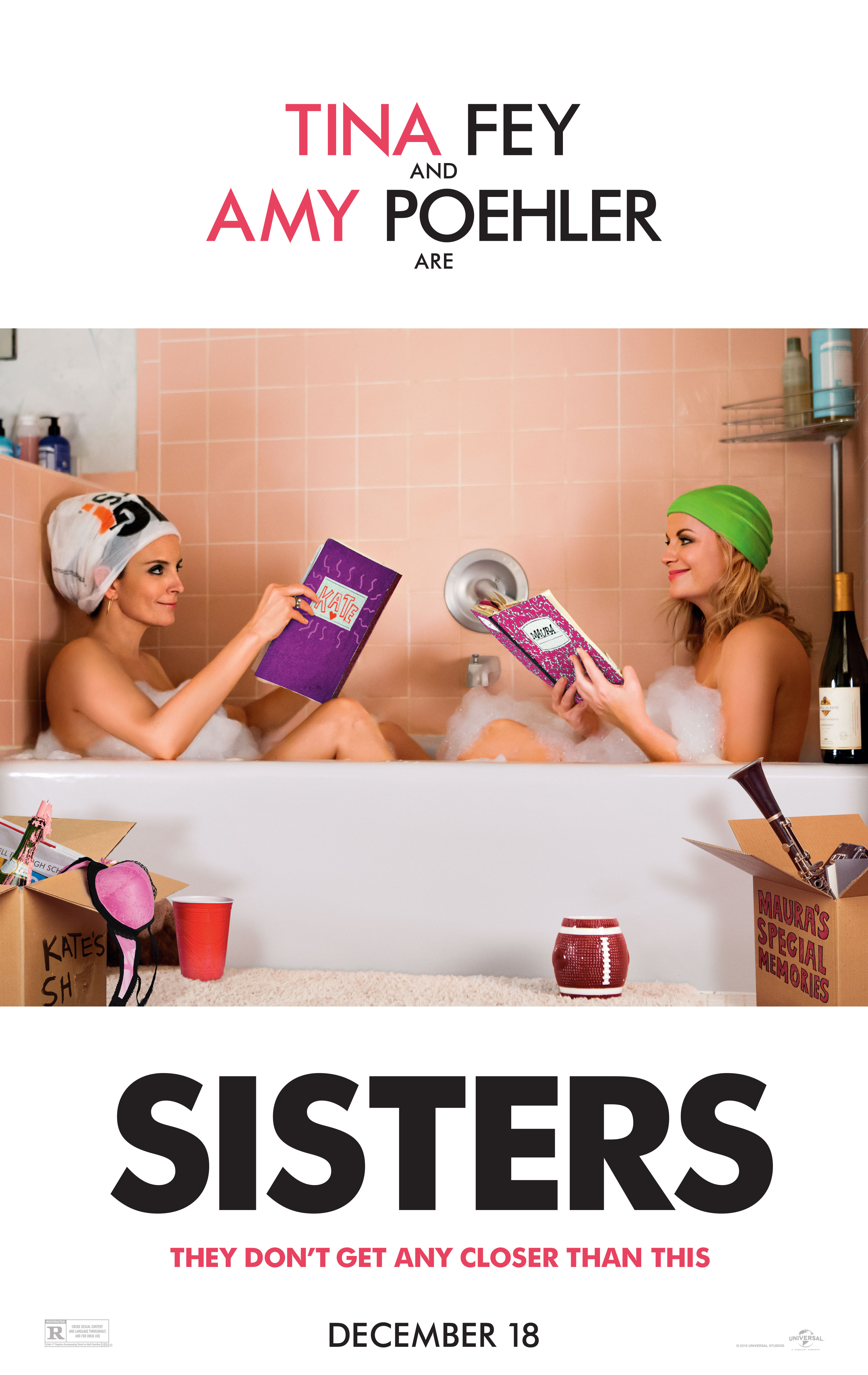
The movie Sisters is about two sisters whose parents are trying to sell their childhood home. They come home to pack up their stuff and they decide to throw one last party in the house for old times’ sake.

This movie definitely passes the Bechdel test. The first piece of criteria in the Bechdel test is that there are at least two named women. The movie’s two main characters are women: Maura and Kate Ellis. Kate’s daughter, Haley is also named many times. Another is Brinda, a woman who the sisters hate from their childhood who ends up trying to get into their party.

The second piece of criteria in the Bechdel test is that women must talk to each other in the movie. The main characters, Maura and Kate, talk to each other about many things, most of which is about their childhood home being sold and party planning for their party. They also do some talking to Kate’s daughter, who is going through a hard time because Kate is not being as responsible as her daughter would like for her to be.

The second piece of criteria for the test is that they speak to each other about things other than a man. There are times in the film where Maura and Kate talk to each other about men but it is not an overwhelming amount. They each have a crush at the party they throw but only Maura really falls in love with the man she likes and that is not until the end. They talk about the home, their parents, the party, and Kate’s daughter a lot more than they mention men.


If I were to make up my own test the criteria would be:


-At least 2 women are named in the film.

-They do not abide by strict gender roles.

-They are at least somewhat developed characters in the film.

‘Sisters’ Movie Review Using My Test


The first piece of my test says that at least two women are named in the film, like the Bechdel Test. I found this to be an extremely important for a film to be woman-friendly, so I kept it in my test. As I said before, Kate and Maura Ellis are the two main characters as well as Kate’s daughter, Haley.

My second piece of criteria for my test says that the women in the movie do not abide by strict gender roles. I found that “Sisters” also passes this part of my test. Maura and Kate are not overweight, but they are an average weight and they are proud of it. There is a scene in the movie where they stick out their stomachs and laugh about it, which I found pretty funny. They are not ashamed of their normal weight and they are not trying to obtain the skinny woman image that so often appears in the media. There is also a scene where they are picking out provocative dresses for their party. They are not doing this to attract men, they are doing it for themselves and they are laughing about it because the dresses are tailored more for younger girls. I thought that was pretty cool because they were just being themselves and showing as much as skin as they would like-just like a guy can. They also swear and drink which goes against the “polite, happy, and pure” stereotype that girls are held to.

My last piece of criteria says that the women in the movie are at least somewhat developed characters. “Sisters” of course passes this one with flying color as the two main characters are women.

Conclusion


Overall, I thought that “Sisters” was a funny and interesting movie that portrayed women in a realistic way. I enjoyed the simplicity of the movie and the way I could just get lost in it and not have to analyze too much while watching it. Although I do love movies that make me think, this one was good for an easy yet fun watch while also being feminist friendly.
Be the first to comment.

Juno - Feminist Film Review

Posted by Michaela Prell in Gender Studies - Menasion - d1 on Tuesday, January 12, 2016 at 10:29 am


Bechdel Test:

  1. At least two women in it

  2. Who talk to each other

  3. About something besides a man

Mako Mori Test:

  1. At least one female character

  2. Who gets her own narrative arc

  3. That is not about supporting a man’s story

My Test:

  1. At least one non-white woman

  2. Who talks to another woman

  3. About something other than a man


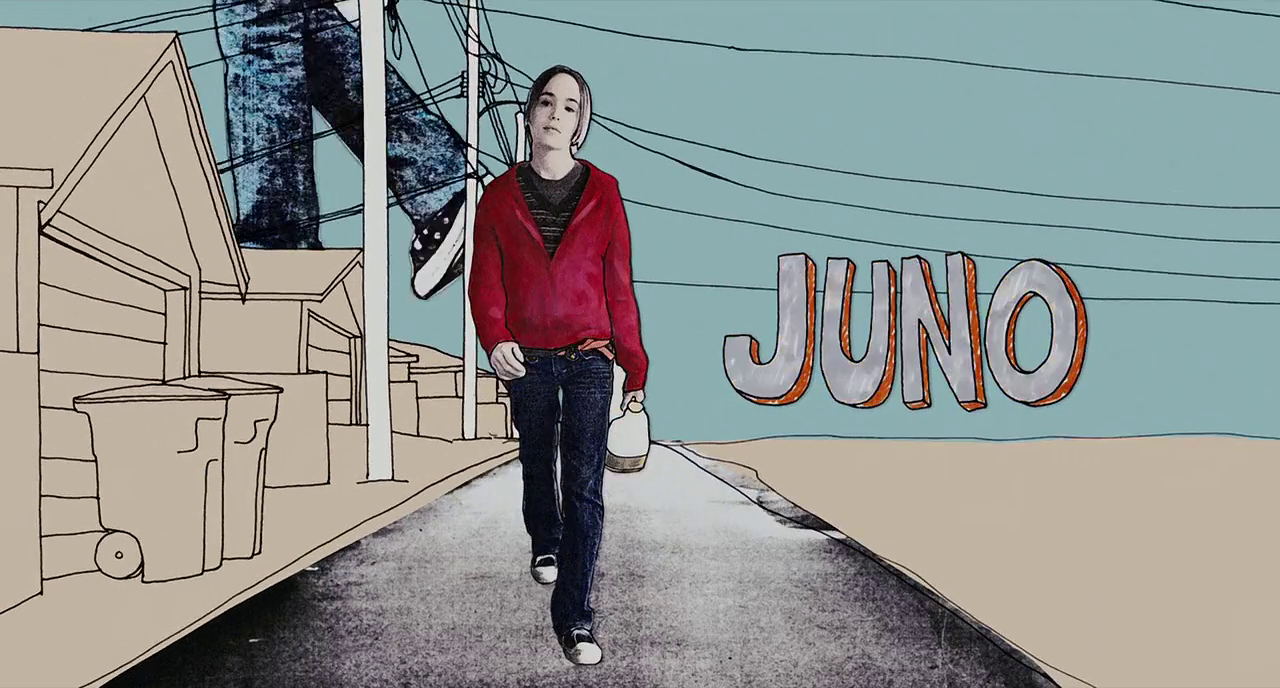
Juno is an independent movie from 2007 starring Ellen Page. At the age of 16 she became pregnant after having sex with her best friend. She decides to give the child up for adoption. But this movie is about more than that. It is about the hardships of being seen as an outsider, the pain of loving someone who does not loves you back, and so much more that we all fell as people passing through this world. This movie has witty dialog, strong characters, and insightful commentary.  But how does this movie, which is written by a woman, Diablo Cody, represent women?

This movie is named after the lead character for a reason. At it’s core the move is about no one other than Juno. This movie easily passes the Bechdel test. It has multiple female characters; the main character Juno, her friend, mother, and the woman who is adopting the baby. These are the most important, but there are a few more. There are multiple situations in which the women talk to one another. There are a good amount of conversations between female characters, and even though lots of them are about male characters, enough of them are about other things that Juno passes the Bechdel test much better than plenty of other moves.

The Mako Mori Test is no match for Juno this movie never has a scene without the lead female. The narrative arc is only really about her, how she changes, what she experiences, and the good and bad decisions she makes. Even though this movie is in a lot of ways a romance too, Juno in no way depends on a man, and the parts of the story that do not include male characters are just as strong as any others. Juno’s story arc does not support a man at all, if anything the male christers are there to support her story arc.

When It came to making my own test, I wanted to focus on gender and race. I created a test that was heavily based off of the Bechdel test, but focused on the race of the female characters. Juno just barely passed this test. There is only one female character that is not white, in fact she is the only character in the whole movie who is not white. Su-Chin is an asian classmate of Juno’s who she sees outside of an abortion clinic. In this conversation Su-Chin tries to convince Juno not to abort her unborn child. This short, but important scene gives the movie a passing grade on my test, but by a slim margin.

The fact that a movie passes even one of those tests, is rare compared to most movies. The fact that it was written by a woman is probably linked to that, but it is also rare in Hollywood. This is is both a good and bad fact. It is good that Juno passes these tests and supports women in Hollywood. But us also just barely passed the last test, think of how many movies don’t do that, probably the vast majority. Juno, aside from being a beautiful, compelling, and entertaining movie, it brakes a lot of boundaries in the movie industry. More importantly, it shows how much more work Hollywood must take on in order to make the industry truly equal and fully diverse.

Be the first to comment.
76 posts:
← Prev
  1. 1
  2. 2
  3. 3
  4. 4
  5. 5
  6. 6
  7. 7
  8. 8
Next →
RSS

GSTUDIES-1

Term
2015-16

Other Websites

Launch Canvas

Blog Tags

  • Senior Art 1

Teacher

  • Elizabeth Menasion
Slate (skeleton-v3 PHP 8 prototype) · Location: 1482 Green St · Shipping: 550 N. Broad St Suite 202 · Philadelphia, PA 19130 · (215) 400-7830 (phone)
×

Log In