• Log In
  • Log In
Slate (skeleton-v3 PHP 8 prototype)
Slate (skeleton-v3 PHP 8 prototype) Learn · Create · Lead
  • Students
    • Mission and Vision
  • Parents
  • Community
    • Mission and Vision
  • Calendar

Globalization - Laufenberg Public Feed

Create a Post

  4th Quarter Benchmark Description

Posted by Diana Laufenberg in Globalization - Laufenberg on Wednesday, May 11, 2011 at 12:04 pm

Globalization 4th Quarter Benchmark

Big Idea: Evidence of globalization is everywhere in our day-to-day activities.  All around us, the influences of global factors drive decisions, impressions and understanding.  In order to internalize this influence and impact, we look to our familiar surroundings for images that represent the different topics and themes we study in Globalization.


Basics:

  • Take 10 original photos that represent a different aspect of the globalization curriculum – reference the course outline for a list of the themes and concepts
  • For each of the images, write at least two paragraphs that explain the connections between the image and the globalization theme.  These paragraphs need to draw clear connections between the theme, Philadelphia and reputable resources.
  • A 10 source bibliography (not annotated) MLA format
  • Choose a presentation tool that best represents your ideas (this are just a few ideas, there are many, many more)
    • o    http://www.techsmith.com/camtasia.asp?gclid=COevzt3KrqECFQmU7QodCVMOAQ
      o    Keynote has some great templates for creating an essay with audio and text
      o    http://www.joggle.com/  
        •    with this tool you can just record your analysis if you like, pretty easy to use.
      o    http://photopeach.com/
      o    Google Presentation
      o    Here http://inmotion.magnumphotos.com/
        •    great site that has some of the best photo essays I have ever seen. Also we can use Imovie to make slide shows as well if people don't want to learn a new program.

  • Post a link to your work on sla.org


Suggested Use of Time in Class:


Week One:  Brainstorm a list of images/scenes that you would like to capture and tie each of those to a theme from the Globalization course outline.


Week Two: Research each of the themes, looking for a reputable source to support the ideas you would like to represent in each of the different images and corresponding paragraphs.  When you write your paragraphs, you should specifically cite these sources in the paragraphs.


Week Three: Write your paragraphs and complete your bibliography, pull together the images, paragraphs and bibliography into a published format.


Outside of class homework: Collect images and finalize any requirements not finished in class.


Example:


image


The demographic shift within Alma Center, WI is best exemplified by these side by side signs.  Over the past 20 years, the number of Spanish speaking immigrants has grown dramatically in this small, rural farming town.  Interestingly the long settled families of this area match many of the cultural and societal norms of the new immigrants settling in the area with a focus on religion and families.  Prior to the recent migration of Latino immigrants, the predominant cultural backgrounds were from Northern Europe.


Immigrant migration into small farming communities was best explained in this article by …. (you get the picture)


Be the first to comment.

A Day In The Life.. Bolivia

Posted by Jennifer Albright in Globalization - Laufenberg on Saturday, April 30, 2011 at 6:48 pm


​Sources:
Link
Link
Link
Link
Link

Images:
Image 1
Image 2
Image 3
Image 4
Image 5

Reflection:
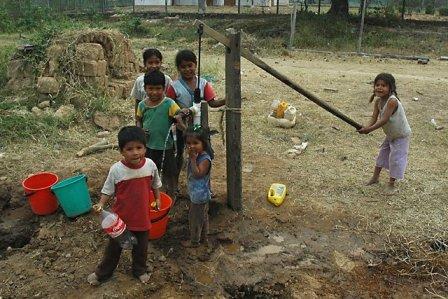
When i was 12, I went to school and then I went to my babysitter's house and did homework and went out and later on I would fight with my mom and go to sleep. I never had to work or do anything, everything I ever needed was handed to me even if everyone else had to work really hard for it. Plus, there are labor laws and in the city it's a little difficult to have your own garden, though my neighbors form Albania tried. I don't know what I really expected from Bolivia, but I don't think that this was it. I even anticipated having to chip in to help the family out, but a child that goes right home to work when they have homework and have to study, that was something I didn't expect. How do you even do well in school when you have so much to do? And there are really, really high drop out rates which isn't good for anyone. And in 40 years they'll probably still be where they were when they were 12, only they won't be going to school and they'll be supporting they're families.
Bolivia
Be the first to comment.

Assignments for 4.26.2011

Posted by Diana Laufenberg in Globalization - Laufenberg on Monday, April 25, 2011 at 10:48 pm

​JQ: How safe is safe enough? - POST ALL WORK ON MOODLE
Do you feel as though the United States has done enough to secure its citizenry after 9.11? Defend your answer with actual examples, please.

Gitmo
- POST ALL WORK ON MOODLE
1. Read this NYTimes Article and analyze this graphic
2. Represent the main ideas of the article in a paragraph.
3. Choose a side... Should Guantanamo be left opened or closed? Did it serve a valuable security purpose or was it a waste of tax payer money?
4. Does your region have any citizens being detained in Guantanamo... if yes, who?
Be the first to comment.

A day in the life; Cuba

Posted by Harrison Talese-Rhodes in Globalization - Laufenberg on Monday, April 25, 2011 at 2:37 pm

​The average 12 year old in Cuba probably begins his day waking up in a house full of relatives. Cuban homes are commonly made up of persons from multiple generations in one family. Many extended family members may live together in a home meant for just one small group. He will put on his school uniform whose color is decided by grade level.

After waking and eating what would probably be a government breakfast made up of eggs and maybe cheese, bread, and fruit (if you're rich) the kid would probably walk to school. The chances are very low that they would drive-- cars are notoriously scarce in Cuba due to the embargo enacted by the United States against the country 50-some years ago. Even if there was a car, it would be a very old model.

Once he arrives to school, and he probably will arrive to school, because most Cuban citizens are given at least an elementary education, he will learn subjects crafted around the idea of country, hard work, and knowledge deemed valuable. He will have to recite the Cuban pledge of allegiance.

After all this, depending on the social standing of his family, the kid will either work or play. If he needs to get groceries, he will do so from a government establishment, and will probably only be able to take home certain goods.

"Unicef - Cuba - Statistics." UNICEF. N.p., 02 March 2010. Web. 25 Apr 2011. <http://www.unicef.org/infobycountry/cuba_statistics.html>.

Merz, Chelsea. "Harvard Public Health Review." Harvard University Summer, 2002: n. pag. Web. 5 Apr 2011. <http://www.hsph.harvard.edu/review/review_summer_02/txt677cuba.html>.

"Life In Cuba." Essortment.com - Your Source for Knowledge. Essorment, 2010. Web. 25 Apr 2011. <http://www.essortment.com/life-cuba-19872.html>.

A. Chandler, Kenneth. "Brutally honest assessment of current life in Cuba." Havana Journal. New York Post, 2010. Web. 25 Apr 2011. <http://havanajournal.com/politics/entry/brutally-honest-assement-of-current-life-in-cuba/>.

"Photo Gallery: Life in Castro's Cuba." Natoinal Geographic. Web. 25 Apr 2011. <http://news.nationalgeographic.com/news/2006/08/060804-cuba.html>.

Be the first to comment.

A Day in the Life: Tanzania

Posted by Taylor Valentine in Globalization - Laufenberg on Monday, April 18, 2011 at 9:49 pm

​Day in the life timeline

In Tanzania and all of sub-Saharan Africa, a child's life is much harder than it is in the U.S. While public education exists, it lacks a decent student to teacher ratio and basic supplies. Schools are often long distances from children's homes, and traveling can be dangerous. Finally, malnutrition makes learning very difficult. Children are also at risk for other deadly diseases and infections including HIV/AIDS and malaria. 

Life is just as difficult for adults in Tanzania.  In fact, many are less educated than their children, since primary school has only recently become required. Most work long hours in the fields and receive little to support their families. It is very difficult to break this poverty cycle in Tanzania. 

Because I visited Malawi last year, most of the information was expected.  One fact that was surprising was the high enrollment rates that the country boasted. I hadn't expected that 97% of children would be enrolled in primary school.  However, it is important to keep in mind that enrollment is not attendance. 

Sources: 
Cameron, Lizzie. "Tanzanian Family Life." CNN. CNN, 14 Nov 2007. Web. 18 Apr 2011.

Hagen, Nadia. "Photo exhibition: Rural life in Tanzania." Crossroads Magazine. Crossroads, 24 Dec 2010. Web. 18 Apr 2011.

"Tanzania." The World Factbook. Central Intelligence Agency, Apr 2011. Web. 18 Apr 2011.

"School Kids and Street Food."
 Food and Agriculture Organization of the United Nations. UN, Feb 2007. Web. 18 Apr 2011.

Shepard, Jessica. "Don't Look Back." Guardian.co.uk. The Guardian, 10 Mar 2009. Web. 18 Apr 2011.

Photos:

http://www.flickr.com/photos/millenniumpromise/4838096549/

http://www.travelpod.com/photos/2/Tanzania/All%20over.html

Be the first to comment.

5 Photo Story- Oceania

Posted by Alexis Ukaha in Globalization - Laufenberg on Saturday, April 16, 2011 at 11:48 am

This is my 5 photo story from the region of Oceania about the great barrier reef.


Screen shot 2011-04-16 at 11.46.49 AM
Be the first to comment.

A day in the life..

Posted by James Smith in Globalization - Laufenberg on Friday, April 15, 2011 at 9:10 am

Here you go.
Be the first to comment.

A day in the life of a child in North Korea.

Posted by Caroline Abdulbaki in Globalization - Laufenberg on Wednesday, April 13, 2011 at 7:04 pm

Here is a link to my slideshow summarizing the daily life of a chid in North Korea. 
Be the first to comment.

5 Photo Story

Posted by Darnell Sample in Globalization - Laufenberg on Wednesday, April 13, 2011 at 12:35 pm

This is my 5 photo story of a 12 year old child in Japan. It describes how they just go to school, clean the school, go home, practice their religion then back to school the next day.
Screen shot 2011-04-13 at 12.31.26 PM
Be the first to comment.

5 photo story.

Posted by Christopher Cassise in Globalization - Laufenberg on Wednesday, April 13, 2011 at 12:28 pm

​Check it out!
Be the first to comment.

Chilean Minor Daily Life

Posted by Bria Wimberly in Globalization - Laufenberg on Wednesday, April 13, 2011 at 11:32 am

My Picture, Bibliography, and Description

How does this life compare that of yours when you were 12?
In Chile, children have more responsibilities. Most families in Chile are poor so both the mom and dad have to work. The children are left with balancing their education with work in farms, in the house, or taking care of younger siblings.
What was most surprising about your findings?
Something surprising I found is how fond Chile is to their education. Every kid goes to school up to 12th grade, and afterwards most go to universities. They make sure children are prepared for work in the future.
What parts were expected?
Since most families are poor, the children have to work. It's hard for kids to work multiple hours and focus on their homework.
What do you think that 12yo's life will be like when they are 40?
Kids of higher class will have better jobs because they focus more on education than working to help the family. Lower class usually work in agriculture or low paying jobs.
Be the first to comment.
130 posts:
← Prev
  1. 1
  2. 2
  3. 3
  4. 4
  5. 5
  6. 6
  7. 7
  8. 8
  9. 9
  10. 10
  11. 11
  12. 12
  13. 13
Next →
RSS

GLOBAL-001

Term
2010-11.S1

Teacher

  • Diana Laufenberg
Slate (skeleton-v3 PHP 8 prototype) · Location: 1482 Green St · Shipping: 550 N. Broad St Suite 202 · Philadelphia, PA 19130 · (215) 400-7830 (phone)
×

Log In