• Log In
  • Log In
Slate (skeleton-v3 PHP 8 prototype)
Slate (skeleton-v3 PHP 8 prototype) Learn · Create · Lead
  • Students
    • Mission and Vision
  • Parents
  • Community
    • Mission and Vision
  • Calendar

English 3 - Pahomov - D Public Feed

Create a Post

  Myi Harte: Untitled

Posted by Larissa Pahomov in English 3 - Pahomov - D on Monday, January 11, 2016 at 1:02 pm

There are days that I feel that I’m not really here. Like I'm looking through a still pond out the eyes of someone else. Or I feel that i'm just not brave enough to deal with my own problems, so I lock my emotion away, that way it hurts less when things happen. I put my headphones in and just focus on the words, trying to play over my thoughts and problems like they aren’t there. "I will not be forgotten.This is my time to shine. I've got the scars to prove it. Only the strong survive. I'm not afraid of dying. Everyone has their time. Life never favored weakness. Welcome to the pride". “Yeah, why you believing the propaganda?

Why everybody sound like they wanna be from Atlanta? Are you the voice or the echo? Are you the nail or the hammer? I be talking while chewing my beats, I don't mind my manners. Choruses that fit the opera, that's why I need phantoms. I got my doubt at gunpoint, that's why I need ransoms. I find it much easier to zone out then to have to be there, to say it in other words just a machine that has a job to do and it gets it done.

There are time that I try to fix my mind on one thing saying that this is way I don’t need to show or have my emotions get in the way of my work. Sometimes it’s get to hard to be in that zone and I just feel like I just there for no reason only for the one that I put in my head, join the army have no fear and no emotion just get the job done and don't asks too many question and I'll be good.

At times that is the only thing that goes through my head day after day or something more on the line of I'm an athlete so I can keep on working and working and I'll be fine. I work hard I’ll be placed at the top so I don’t care about the pain or what I have to give up. I just did to remember don't give up on. Even if I pass my goal I still give it my all.

every day I go to the gym or find a way to get my body ready to join the army one of the things on my mind that’s a target. So when I walk up it’s early I get out of bed that a deep breather and get right into the work, Max lunges, squats, calf raise, push-ups,crunches, burpees, mountain climbers, flutter kick, cherry pickers, and others that I want to do that day, Times I want to make up a challenge for myself so I do, so like the “1000”, You start with “500” the day before you pick 5 workouts you want to do and do a 100 for all five. Then the next day you pick 10 and do a 100 of each. while doing a workout I can really say that I'm pushing myself to get something done. Also when I work out it get me to think about the physical pain not mental, so when I get tired it’s easy to forget about it.

Other times in my life I have days where I just don't like being in one place and need to be on the move so I spend time just walking around the city or biking. I do it just to clear my mind if I feel like i've lost my way and need to try to get that light that I held back in my life. When I walk by windows I look at myself but it doesn't feel like I'm looking back at me or it’s not really me on the other side. Most times that I look at my reflection I see something that would only make sense in my dreams. Something that I would see myself doing but on a whole different level, something way passed what I can do so I act like it need had and keep moving on thinking that I don't need my emotion they only get in my way and slow me down.

there’s just days that I can go to school and ya have a good time with people around me but at the end of the day it’s just me in my head and a lot of emptiness. so I just deal with it, true that my family tells me they got my back so I plan it off and put on a smile because it’s the only thing that gets people to stop and just shut up but at the end of the day when I set in my room aint no one there but my other half. I has me feeling that it’s the person I want to be but can never get close enough so I just give up because it;s really the only thing in life I’m good at.

Times I write down what I need to remember a feel just so I can remember the plan the loss or the sadness that I felt. Times I write not just the bad but the good, just in my book that I tell many not to look at or we just done, I don't speak to them I block them from everything I don't care even if they step right in front of me they get run down and when they say something or other say something about it I just say I don't care.

(The book Yellow birds"His life had been entirely contingent, like a body in orbit, only seen on account of the way it wobbles around its star.It says that his life was something that he didn't really have control of he just was there unable to do what he wanted to do. so when he looked inside of himself he saw nothing but a single light.  so there was something that he cared for that held he in place in his own place, and sometimes he would lose sight of it or start to let it go that's way it says on the account of the way it wobbles around. As he tried to make something or try to change his ways that was like a wobble in his life

"They carried the sky. The whole atmosphere, they carried it, the humidity, the monsoons, the stink of fungus and decay, all of it, they carried gravity.” this quote makes it sound like the soldier had not just the weight of their equipment but the weight of everyone that they had ever meet and more. looking inside theyself that might have come to the same thing and that was there drive even as they saw one another death. To hold the sky it to be the ones that protect it and the people under it. they had to stand up against the heat. have to fight something from the ground was like they trying to fight the demon inside of them but they knew they had to do it. the water that they had to cross over. so the demon in they might have had they think about running away but they had nowhere to run but in to a battle that they were submerged in. they had to go through death and the smell of their falling friends and brother and the bodies of their enemy’s. then the last part they carried gravity itself to me that’s like helping other move on and get through anything that was to hard for them himself to go through and that take and sound mind and body to get that job done.This is what people in the army have to go through every day think about not only him/herself and what they themselves are going through but have to put that to the side to get the job done to keep their friends and family safe from whatever it is. Also that it’s not easy to look at what's under a human, somewhere deep down there is a demon inside and to fight it.

I just feel that once my body fails me and I can move forwards then it’s over for me that’s why I put so much in to my sports and workouts. I’ll still keep working on getting to a higher rep that’s why I don't have a set number to get to I go till I can’t them move on to the next  workout.


https://www.wevideo.com/hub/#media/ci/559514289
6 Comments

Battle Tactics In The War For Love: DECEPTION

Posted by Jesse Stevens in English 3 - Pahomov - D on Wednesday, April 27, 2016 at 8:02 am

The play “Taming of the shrew” contains multiple methods of courtship, but the one that seems most prevalent is the art of deception. In the play, the character of Lucentio chose the road of deception instead of honesty to try and get his woman. The 2012 movie “Think Like A Man”,  one of the main characters Dominic sets out to do the same to get the girl of his dreams, even if he doesn’t match her standards.


Dominic shares many qualities  with Lucentio  They both fell in love at first sight and both pretended to be something they weren’t in order to get closer to the girl. The only difference between the two was their  status. Lucentio was already in a position of power, and so was the woman he was after. In contrast, Dominic was considered a dreamer and didn’t really have any money to his name, but he pursued a successful business woman that made six figures.

Both of these situation lead to hilarious moments and show the audience the blur between the honesty and deception as both men attempt to woo their women. Even in modern times, it is  actually encouraged when attempting to start a relationship with someone to be evasive and cunning so you can get exactly what you want. Both of these formats suggest that in order to be with that special someone, one must use deception to get closer to the one that they love. Honesty is not enough because that alone may not get a person to the place they want to be at to make a lasting impression.


[ACT 1. SC 1., Lines: 196-198]

TRANIO "You will be schoolmaster And undertake the teaching of the maid: That's your device"

Lucentio and tranio begun to hatch their plan to dress lucentio as a schoolmaster while tranio impersonates lucentio so that the real lucentio could get closer to bianca and make her fall in love with him without her father or the other suitors knowing.  Notice the underhandedness of this move just so Lucentio could get closer to bianca. He went as far as to disguised himself as another just for the chance to be alone with bianca. Granted there weren’t many options in lucentio’s case as he had to compete with the other suitors. He even got his friend involved with the lie by having tranio dress up as him so no one would know that the real Lucentio was missing. In this case Dominic from “Think Like A Man” wasn’t far off from what Lucentio did in “Shrew”.Screenshot 2016-04-17 at 11.36.58 PM.png


illusion Dom.png

Dom’s manager told him to work valet and get this rich man’s car for him. Long story short he came back with the car and lauren was outside getting in her car, when she saw him she thought that the car was his. Dom took advantage of this and stayed in the other man’s car and drove off to follow lauren to ask her on a date. The defining moment was when Dominic decided to stay in the car. He knew that it wasn’t his car but lauren didn’t and he used that to his advantage. Since he went along with what she believed to become so rich man that he was not he actually got closer to lauren. In both situations Dom and Lucentio felt as though being deceitful and putting up facades were the quickest ways to get closer to a woman. Also take into account that the two happening hundreds of years apart which leaves one to infer that men having been using this tactic for years. This also means that deep down people actually believe that it’s socially acceptable to lie in this sort of capacity.

[ACT 3. SC.1, Lines: 33-39]

Lucentio “HIc ibat, as I told you before, Simois, I am Lucentio, hic est, son unto Vincentio of Pisa. [Sigeia] tellus, disgusted thus to get your love, Hic steterat, and that “lucentio” that comes a-wooing…”

This takes place some time after Tranio became lucentio and lucentio took the role as cambio, Bianca’s latin teacher. He takes this time to try and get closer to bianca by telling her that he is really lucentio and that he loves her and did this to be with. Previously stated both Lucentio and Dom had succeeded through deception to get closer to their love. Lucentio felt as though he was close enough to reveal his true identity and even if she doesn’t reciprocate the feeling immediately he got what he wanted and that was to be closer.  Dominic however chose to stay masked by the illusion he created to get what he wanted.

Screenshot 2016-04-17 at 11.45.48 PM.png

Dominic and Lauren are on their first date and Lauren asks Dom what he does for a living. Domini lies and states that he is a high class chef in between jobs. This made Lauren pry even further until Dominic began to talk about his dream to have his own restaurant. Dom then apologized because they agreed to stop talking about work but Lauren interrupts him and states that what he said was not work but a dream and she liked to talk about dream. After this exchange you could see that they had become closer. Even if the facade that he put about being a high grade chef was false the dream he shared was true. See the his lie was needed to get close enough to the one he love just so he could show her the real him at that point leaving it up to her whether or not she loved him back, much like lucentio.

If Naysayers stopped to think about it, they would realize that being deceitful and deceptive are all apart of falling in love . Yes it’s dishonest and one shouldn’t lie but it can also means that that person cares enough to try and get closer. It’s just doing so in a bad way. The main goal is to get closer to the one you love and be deceitful is fair game besides it’s been done before for a long time now.


4 Comments

Be Kind, or Be Cruel

Posted by Vaughn Matthews in English 3 - Pahomov - D on Wednesday, April 27, 2016 at 7:53 am


Be Kind, or Be Cruel

Comparing “Taming of the Shrew” to “Silver Linings Playbook”


“The Taming of the Shrew” tells a story of romance between an unusual man name Petruchio and an ill-mannered woman named Katherine. Petruchio uses Katherine as a part of his plan, to marry and receive riches. In “SIlver Linings Playbook”, Bradley Cooper plays Pat, a former teacher who moves back in with his parents after  astint in a mental instituion.. Jennifer Lawrence plays Tiffany, a girl who just lost her husband. She’s also friends with Nikki, Pat’s wife. Pat uses Tiffany as a part of his plan to get back with his wife Nikki.


As I read “Taming of the Shrew” and watched “Silver Linings Playbook”, I noticed that both Petruchio and Pat used the same tactic to manipulate women, to only receive what they wanted. In the relationships, both males only wish to benefit themselves, and not the female. The males have different reasons and they have different ways of getting to their goal. Petruchio use the tactic of being mean, and Pat uses the tactice of being kind. These texts both show that real love doesn’t exist, and that no matter the time period men only use love as a way to get what they want.


Quote #1


"Petruchio: Good Lord, how bright and godly shines the moon!

Katherine: The moon? The sun! It is moonlight now.

Petruchio: I say it is the moon that shines so bright.

Katherine: I know it is the sun that shines so bright

Hortensio: Say as he says, or we shall never go

Katherine: Forward, I pray, since we have come so far,"

Act 4, Scene 5, Lines 3- 7, 14-15 (Pages 185 & 186)


In this part of the play,  Petruchio and Katherine plan on going to see her father. In these lines, Petruchio and Katherine argue about what time of the day it is. Because Katherine is so mean, Petruchio gives her a taste of her own medicine, in a way to tame her. He does this manipulate her into liking him, in a way of love. Once he could do that, he could marry her, and get her riches.


Image #1

download.jpg

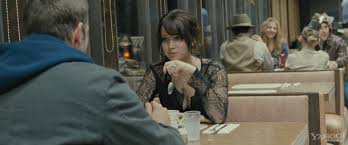
In this scene from “Silver Linings Playbook”, Pat and Tiffany go out to eat dinner. Tiffany sees this as a sign of love. Pat uses the dinner date as a way to get close to Tiffany, so he can get close to Nikki.


Unlike Petruchio, Pat is nice to Tiffany, so she can like him. Once Pat gets her to like him. He can get close to Nikki, because like said before, Tiffany is good friends with Nikki.


Quote #2

"Thus have I begun my reign,

And ‘tis my hope to end successfully.

My falcon is now sharp and passing empty,

And till she stoop, she must not be full-gorged

For then she never looks upon her lure.

Another way I have to man my haggard,

To make her come and know her keeper’s call."

Act 4, Scene 1, Lines 188- 194 (Page 151)


In this part of the play, Petruchio speaks of how he’s going to starve Katherine. In thes elines he explains why he’s going to do this. In line 190 he says “My falcon now is sharp and passing empty”. When he says falcon, he’s talking about Katherine, calling Katherine his falcon. When he says “sharp and passing empty”, he’s saying that she’s very hungry. When he says “And till she stoop”, stoop means fly directly to the keeper or to the prey, saying that Katherine will fly to him. When he says “For then she never looks upon her lure”, lure means the bait held by the keeper, Petruchio being the keeper. Petruchio is going to make sure she doesn’t know what they have isn’t real. When he says “Another way I have to man my haggard, man my haggard means to train a falcon, like said before, Petruchio is calling Katherine his falcon. In the last line when he says “To make her come and know her keeper’s call” he means Katherine come back to him when he wants. Petruchio does this cruel act so he can have control over Katherine. If he has control over Katherine, she won’t act so ill-mannered, and he can marry her. Once he marries her, he can get her riches, what he really wanted.


Iamge #2

Screenshot 2016-04-24 at 5.42.13 PM.png

Screenshot 2016-04-24 at 5.42.17 PM.png

Screenshot 2016-04-24 at 5.42.50 PM.png

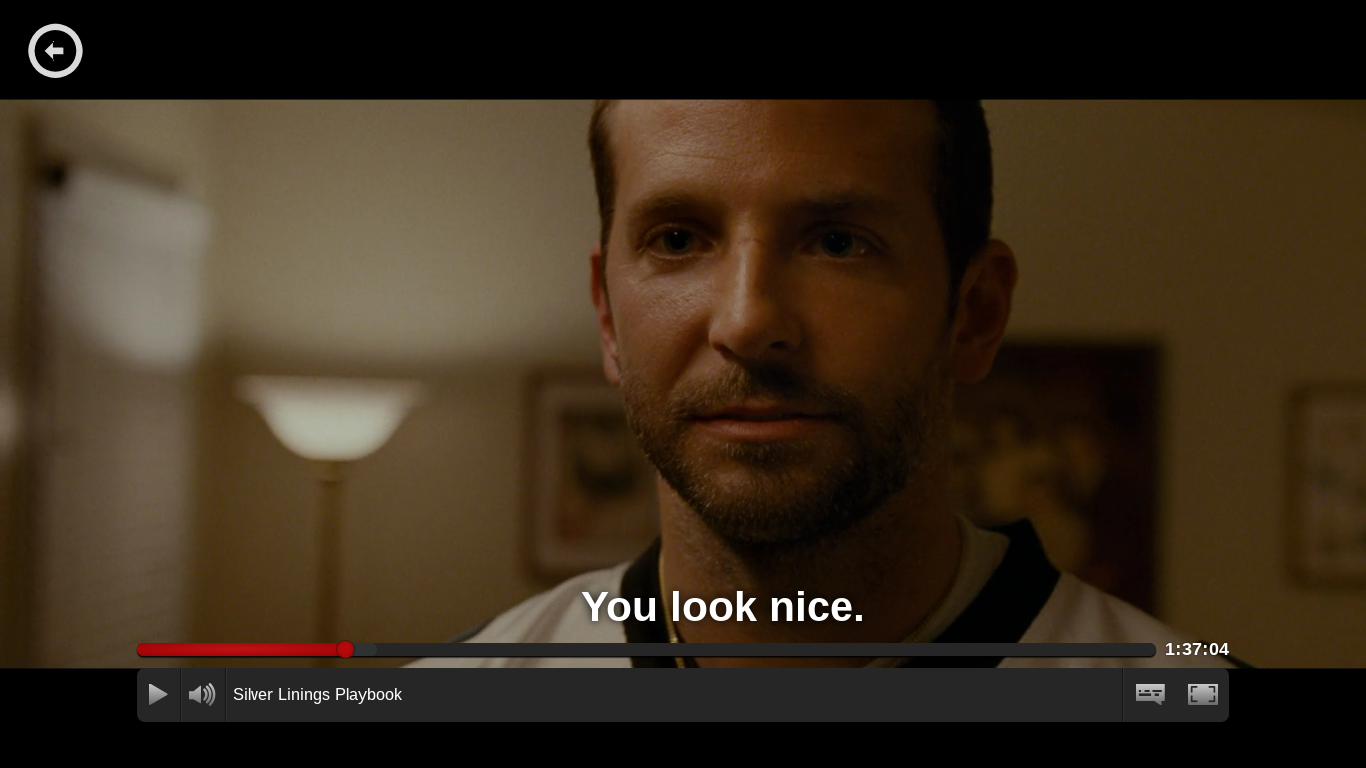
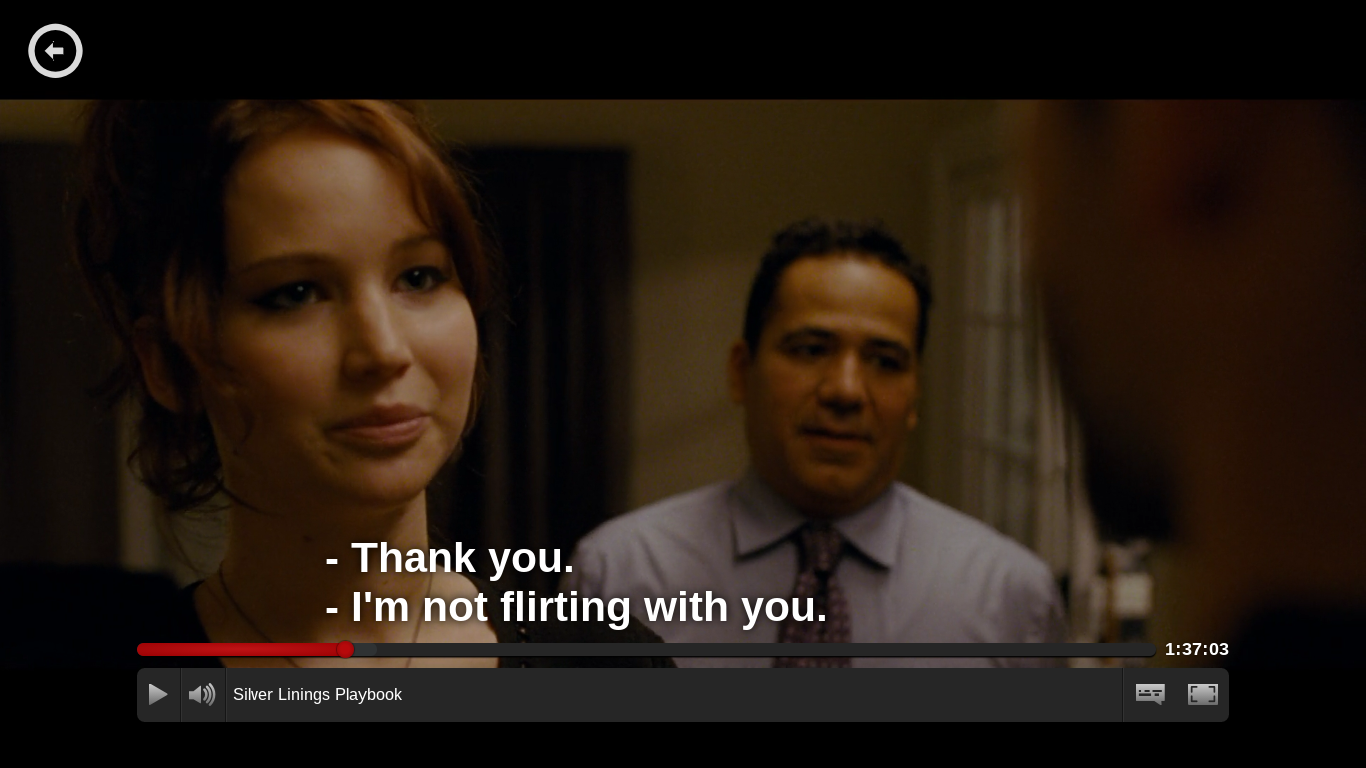
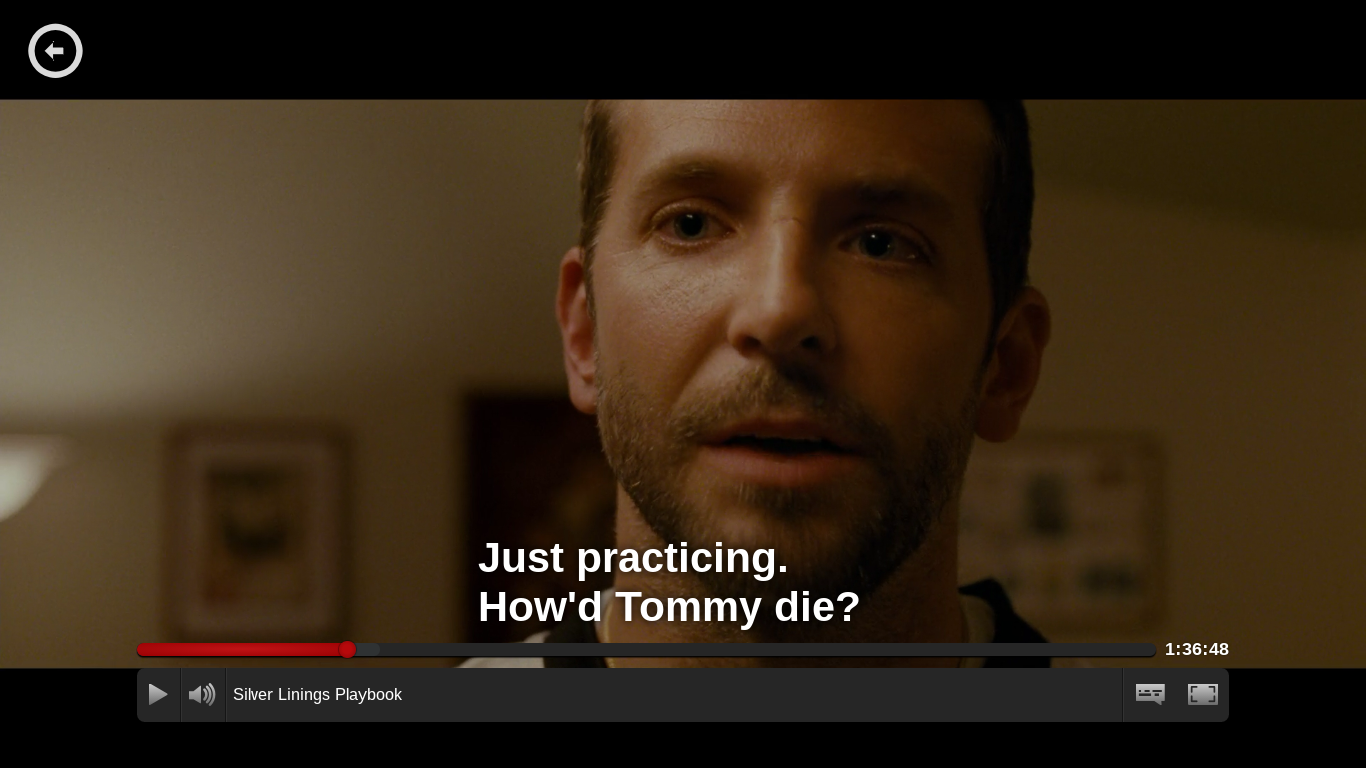
This scene is from the beginning of the movie, when Pat and Tiffany first meet. Pat gives Tiffany a compliment on how she looks nice. After she replied saying “Thank you”, he said he wasn’t flirting with her. Pat said he was saying she looked nice as “practice”. This “practice”  was for him to better hisself so he could get back to his wife. This was when Pat realized he could use Tiffany to his advantage.


Again, Pat uses the tactic of being nice, unlike Petruchio. Right here, this is the beginning of how


“Taming of the Shrew” and “Silver Linings Playbook” are prime examples of how men use love on females to get what they want. They show that it may seem real, but it isn’t true love. Being that they were from two different time periods, that shows that things still haven’t changed about men using love on women to benefit themselves.

4 Comments

“I’m not a smart man, but I don’t know what romance is”

Posted by Brandon Jones in English 3 - Pahomov - D on Wednesday, April 27, 2016 at 1:52 am


Forrest Gump is a romantic-comedy-drama film created in 1994. The story follows the life Forrest Gump (Tom Hanks), who is a dim-witted, but kind-hearted and athletic man from Alabama. Between the time of his birth in 1944 and 1982, Forrest witnesses and in some instances, influences key defining points in the latter half of the 20th century. It would be remissive however to not acknowledge the importance of Jenny Curran (Robin Wright). Jenny Curran is Forrest Gump’s childhood friend and love interest, though her role transcends these titles. Throughout the whole movie Jenny always turns to Forrest in her time of need. This is crucial because in spite of all of her failed relationships she always turned to Forrest for solace and comfort. Even though this movie is a “romantic-comedy” it is centered around an atypical romance. Similar to this, the shakespearean play, “The Taming of the Shrew” offers a plethora of atypical romances. One particular atypical romance is between the two characters Katherine and Petruchio. The reason for this relationship being atypical is that neither Katherine and Petruchio particularly care for eachother. As displayed in both The Taming of the Shrew and Forrest Gump, these unusual relationships reflect that nobody has a set definition of love or romance.


QUOTE #1


“I will be master of what is mine own.

She is my goods, my chattels; she is my house,

My household stuff, my field, my barn,

My horse, my ox, my ass, my anything.

And here she stands, touch her whoever dare.”- Petruchio (3.2.235-239)


In this scene, Petruchio’s words about Katherine exemplifies his true feelings. Petruchio sees Katherine as nothing more than property. This can be supported by the words “She is my goods.” He is comparing Katherine to a material possession and neglecting the fact that she is a human being.


IMAGE #1


Screenshot 2016-04-26 at 9.29.34 PM.png


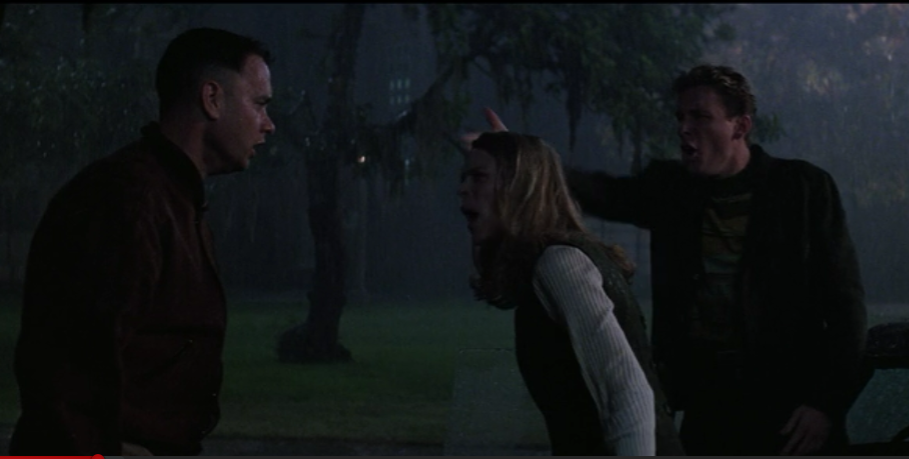
Jenny goes from being angry at Forrest for killing the mood with her momentary lover, to talking to Forrest about her hopes and dreams. While she is doing this she is undressing in front of him. Jenny then goes on to ask him if he “had ever been with a girl” and guides his hand to feel her naked breast. This symbolizes that Jenny views Forrest as a “second option” or a “back up plan”


Comparison:


These two scenes are similar because because both Forrest and Katherine are used to suit the needs of both Petruchio and Jenny. However the difference between the two scenes is that Jenny uses Forrest as something to fall back on when any relationship she has fails, in order to ease the pain of her loneliness and Petruchio objectifies Katherine not for emotional purposes, but for the pursuit of domination and power.


QUOTE #2


“Be patient, gentlemen. I choose her for myself.

If she and I be pleased, what's that to you?

'Tis bargained 'twixt us twain, being alone,

That she shall still be curst in company.

I tell you, 'tis incredible to believe

How much she loves me. O, the kindest Kate!”- Petruchio (2.1.321-326)


In this scene, Petruchio is lying about both Katherine’s love towards him and Kate agreeing to marry him. The fact that Petruchio says “Tis bargained ‘twixt us twain, being alone,” shows two things. The word “bargained” shows that Petruchio treats this “marriage” as a deal, rather than a mutual love. Another thing that can be seen is that Petruchio’s lie shows that he doesn’t value Katherine’s opinion or her love. He doesn’t even value her hand in marriage, but rather the title that comes with it.


IMAGE #2


Screenshot 2016-04-26 at 11.17.31 PM.png


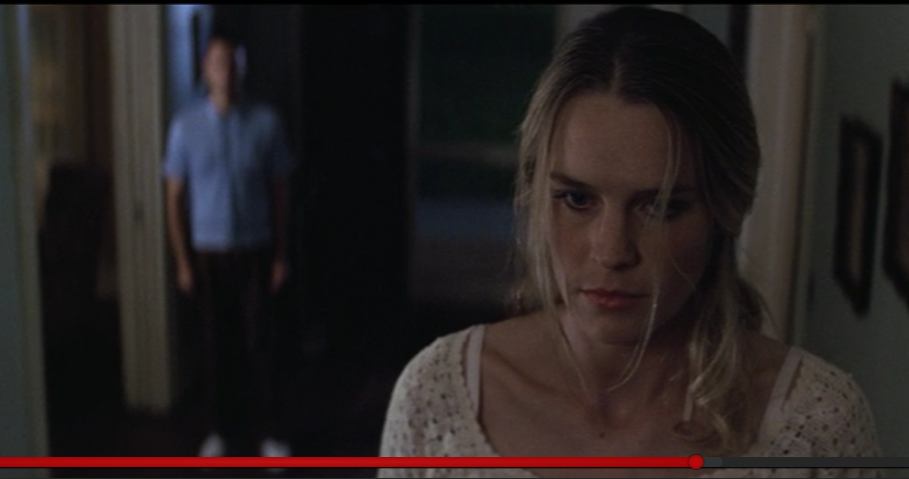
In this scene, Forrest says to Jenny, “Will you marry me?...I’d make a good husband Jenny.” Jenny then responds with “You would Forrest….You don’t want to marry me.” This prompts Forrest to ask “Why don’t you love me Jenny?” Even though Jenny later tells Forrest that she does love him, this doesn’t dismiss the fact that Forrest feels unloved. Even though Forrest gives 100% into his pursuit of Jenny, he feels as though he is not getting what he truly seeks, and that is Jenny’s love. Jenny realizes this as well, as shown in her statement “you don’t want to marry me.” Jenny feels as though Forrest doesn’t know what he would be getting into if they were to get married and the statement “you don’t want to marry me” serves as a warning to Forrest. However, this should not be taken as Jenny not being interested in marrying Forrest, but rather her wanting what is best for him.


Comparison:


These two scenes show that Katherine doesn’t want to marry Petruchio for the fact that he doesn’t value her as a person or what’s best for her. Jenny on the other hand, doesn’t want Forrest to marry her for the fact that she thinks Forrest deserves better. Both the film and the book show that traditional means of romance don’t necessarily need to be involved in these relationships in order for them to work.


Conclusion:


As shown in both The Taming of the Shrew and Forrest Gump, no one has a set definition of romance. Through both of the atypical relationships between Forrest and Jenny and Katherine and Petruchio, it is shown that for some reason these relationships work out in the end, where both Forrest and Jenny and Katherine and Petruchio end up getting married (respectively in the the book and movie). Despite what society believes as an ideal romance or relationship, there aren’t any. Just as people are unique and different, so are romances and relationships.


5 Comments

Behind every love is a lie

Posted by Joel Johnson in English 3 - Pahomov - D on Wednesday, April 27, 2016 at 1:49 am

“The Taming of the Shrew” & “The Silver Linings Playbook”


Deception & honesty are  recurring events in “The Taming of the Shrew”, between the characters. The same thing goes for the 2012 movie “ Silver Linings Playbook,”.


Pat Solatano, Jr. is a bipolar man, who has just been released from prison after he beat up his wife’s secret lover.  His later love, Tiffany Maxwell is a recovering sex addict. Her husband, Tommy Maxwell recently died. Pat & Tiffany could be compared to Petruchio and Katherine’s relationship but in reversed. Petruchio uses devious tactics to get with Katherine’s. In “Silver Linings Playbook,” Tiffany uses similar tactics on Pat. She made him think that her goal something else but in reality, it was something completely different. In dissimilarity, Pat isn’t knowledgeable of Tiffany’s goals until the end of the film. Katherine although, most likely knew Petruchio’s plans already. These stories shows that,while deception and dishonesty aren't moral, they can benefit you a lot depending on the way you use them.


"Petruchio: Come, come, you wasp, i’faith you are too angry.

Katherine: If I be waspish, best beware my sting.

Petruchio: My remedy is then to pluck it out.

Katherine: Ay, if the fool could find where it lies.

Petruchio: Who knows not where a wasp does wear his sting?  In his tail.

Katherine: In his tongue.

Petruchio: Whose tongue?

Katherine: Yours, if you talk of tales, and so farewell.

Petruchio: What, with my tongue in your tail?"


(Act II, Scene I, 207-214)


In this scene, Petruchio and Katherine are first meeting.  While on the surface they are insulting and testing each other mentally, they are also making hints at the sexual attraction between the both of them. This represents deception, because they are hiding true meaning behind their words.


Pat & Tiffany’s Interaction


Screenshot 2016-04-27 at 1.47.53 AM

 Pat and Tiffany meet for the first time at Pat’s friend Ronnie’s house. Pat first says that Tiffany looks nice, and soon after asks about her dead husband. Which then turns into awkward and sub- hostile conversation between both of them.  However, during the conversation, they are both giving each other attracted stares all in front of Ronnie. When Tiffany leaves him and Ronnie, she gives Pat a sensual look, implying her intentions, just like Katherine and Petruchio. This is a perfect example of each other. Their relationship starts off little hostile but then grows into something more special.


"Signor Hortensio, ‘twixt such friends as we

Few words suffice; and therefore, if thou know

One rich enough to be Petruchio’s wife—

As wealth is burden of my wooing dance—

Be she as foul as was Florentius’ love,

As old as Sibyl, and as curst and shrewd

As Socrates’ Xanthippe or a worse,

She moves me not—or not removes at least

Affection’s edge in me, were she as rough

As are the swelling Adriatic seas.

I come to wive it wealthily in Padua;

If wealthily, then happily in Padua."


(Act I, Scene ii, 62–73)


Petruchio explains to Hortensio about his intention of finding a bride in Padua. He states that his main goal is to marry for money. Petruchio says that he does not care about anything else. He says that the woman may be as “foul as was Florentius’ love”, “old as Sibyl” or “unpleasant as Socrates’ Xanthippe”. Petruchio does not care as long as she is rich. This show’s his feelings towards her at first are blatant about his materialism and selfishness. Later on in the book he falls in love little by little.


Screenshot 2016-04-27 at 1.49.17 AM

In this scene Pat is walking Tiffany home. They start to talk about what just happened and then Tiffany offers the option of sex. He rejects and she walks away. This shows her first attempts and stating her objection of the relationship but Pat is slowly falling in love and doesn’t see her intentions. She originally only wants sex and tells him that but from the beginning Pat fell in love with her slowly.


Both of these prove dishonesty and deception can affect future situations.  Petruchio’s manipulation and deceit at first only brought a difficult relationship and a forced marriage. But, in the end Katherine ended up to be happy. In Silver Linings Playbook, Tiffany does something wrong, very manipulative and dishonest. Throughout the dishonesty that is part of her friendship with Pat, comes an honest


1 Comment

Ideas About Love Transcend Time

Posted by Tianna McNair in English 3 - Pahomov - D on Wednesday, April 27, 2016 at 1:27 am


Ideas About Love Transcend Time

By Tianna McNair


“Taming of the Shrew” and “Brown Sugar”

“The Taming of the Shrew”,written by Shakespeare, is about a bunch of suitors, dressed in disguise, trying to compete for a young girl's hand in marriage. Her father, the king, would not allow her to be married off until her older sister Katherine was married first. The majority of the play centers around the a man named Petruchio and how he managed to turn a feisty women into a dainty lady. This fifthteenth century play addresses ideas about love and expectation that are present  in the 2002 film, Brown Sugar. Taye Diggs and Sanaa Lathan both star in Brown Sugar, which is about two childhood friends that reconnect. Sidney, played by Sanaa Lathan, feels a way when she finds out the Dre suddenly gets engaged. One thing that is pretty consistent throughout the movie is the idea that women seek mainly to please the man because it is expected of them. Marriage is not really about love but more so about control and based off of expectations set by gender roles for men and women.


To help better explain, look at  Act iii of Taming of the Shrew.  Petruchio and Katherine get married and arrive at Petruchio's house. Here Petruchio decides to "tame" Katherine by depriving her of many things.


"But for my bonny Kate, she must with me. Nay, look not big, nor stamp, nor stare, nor fret; I will be master of what is mine own. She is my goods, my chattels; she is my house, My household stuff, my field, my barn, My horse, my ox, my ass. my anything, And here she stands, touch her whoever dare”


In this scene, Petruchio makes it very clear that he is the one in control of the relationship. He controls when she eats or sleeps,and even what she wears. He then goes on to compare Katherine to a bunch of different objects. This directly shows that she is a possession to him.

Over the past 423 years, there has not been many changes to the way that men and women perceive love, relationships, and marriage. Men still think that women are there for their pleasure and in ways still object them. Petruchio, from Taming of the Shrew, says that Katherine has to be delicate and submissive while Dre, from Brown Sugar, says that his wife needs to be sexually submissive which is another way of objectifying her.

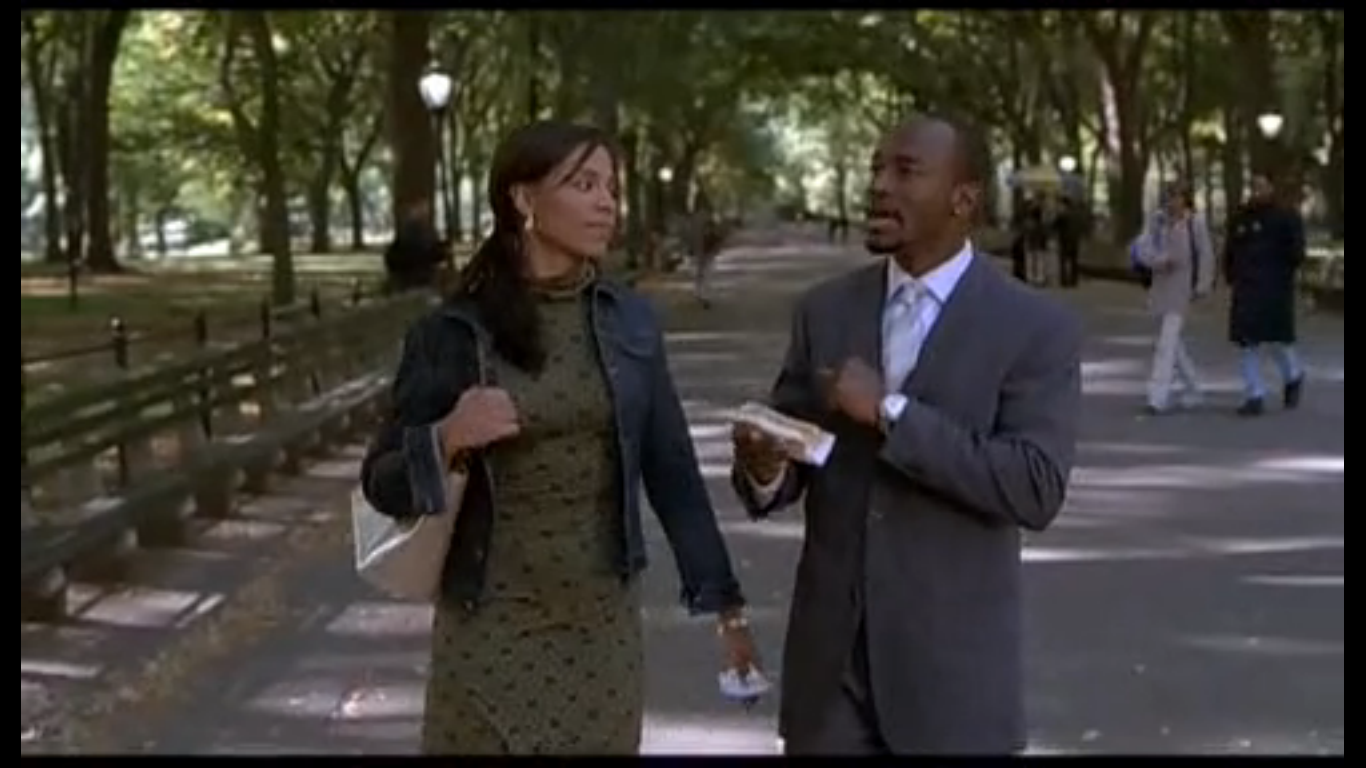
In this upcoming scene, Sidney and Dre are hanging out and Sidney asks Dre how did he know that his fiance is “the one”. He goes on to explain to her his reasoning.

“You know, we all looking for wifey material. A woman that's fine, smart, classy, but not a snob. You know, hella... hella sexy, but not a ho. That's brown sugar. That's my Reesey. I mean, don't get confused by her business suit. She is a freak in the bedroom…”

Screenshot (14).png

Dre describes what he seems to think that all men look for in a woman. He is saying he scored because he found a woman like that. In both the play and the movie, the male lead seem to use the male expectation of their time to objectify the women in their lives. In present day men are encouraged to be hypersexualized, Dre demonstrates that activity when talking about Reese because he never mentioned a thing about her personality or even loving her. In the play Petruchio objectifies Katherine but takes a different approach in doing so. He speaks of Katherine in a very possessive way. He talks about how she is like the things he owns which shows that she is less than a human, an object, because there is no positive connotation associated with a person claiming to own another person.


Petruchio was very set on trying to get Katherine to agree with marrying him. On page 95 he went on a small rant.


"Marry, so mean, sweet Katherine, in thy bed. And therefore, setting all this chat aside, Thus in plain terms: your father hath consented That you shall be my wife, your dowry ‘greed on, And, will you, nill you, I will marry you. Now, Kate, I am a household for turn, For by this light, whereby I see thy beauty, Thy beauty that doth make me like thee well, Thou must be married to no man but me. For I am he am born to tame you, Kate, And bring you from a wild Kate to a Kate Conformable as other household Kates.”


In this piece of dialogue, Petrucio blantly says that he wants to marry Katherine and spends his time thinking of a way to make Katherine submissive. In many movies today and even in real life people will be attracted to someone but try to tweak their personality to make it more appealing to them instead of finding someone who they were ok with from the beginning. Another way that this scene from the play seems to be showing that marriage is not about love because Katherine and Petruchio are pretty much very similar as far as their wild, violent, and straightforward behavior. This makes it hard to understand why he would want so badly to change would her when it would seem more fitting for him to be in love with the idea of having a woman who is just like him.


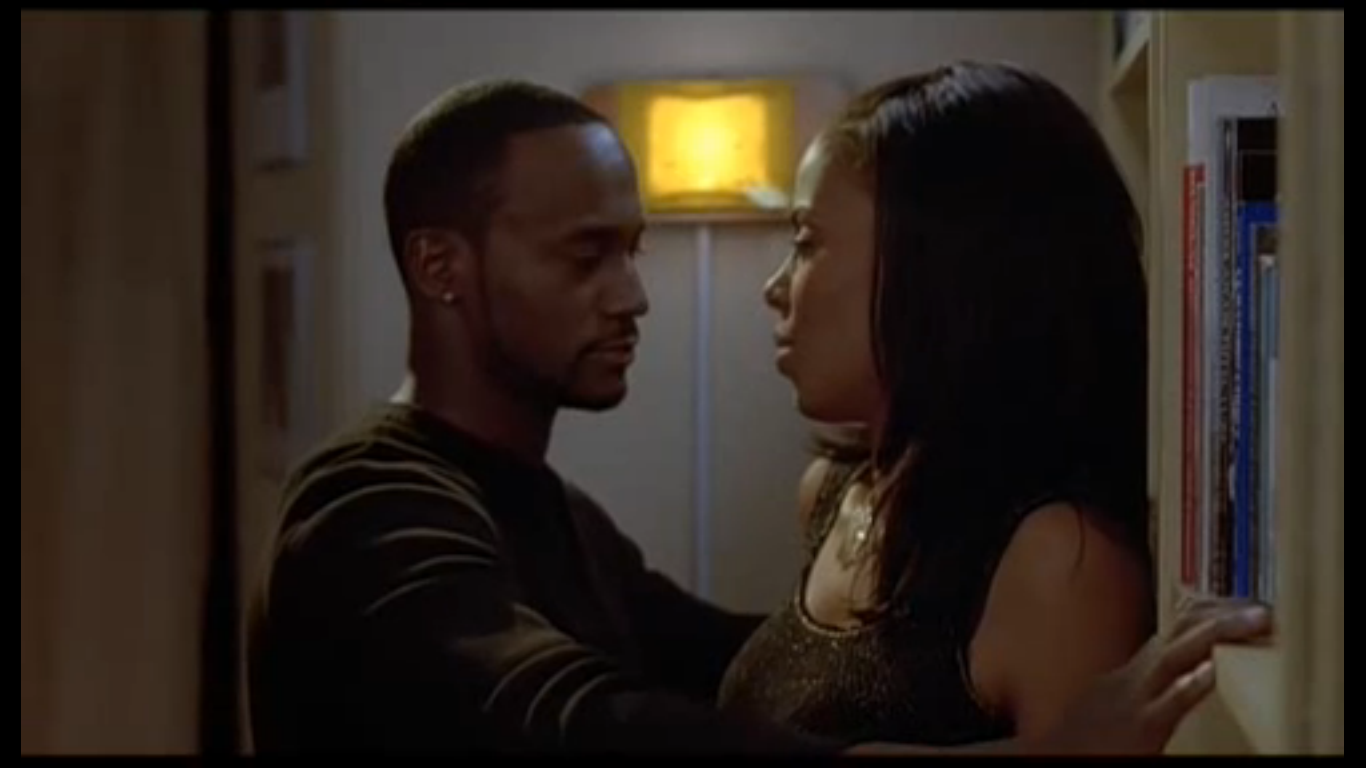
In this next scene Dre and Sidney are talking and bonding after they find  out that Reese has been cheating on him.


“Something happened between me leaving the house… and, uh… getting to the wedding. But, you know, I shook it off, 'cause, damn, I had a beautiful woman that loved me to death. So, you know, I took all those feelings and... locked them away, 'cause not everybody can marry their one true love. It was a pretty difficult situation.”


Screenshot (18).png


When Dre says that not everybody can marry their one and true love then it automatically goes to show that marriage is not about love. Perhaps he married her because she is successful or maybe even because of her looks but either way love was not in it. There is also the possibility that her married her simply because it is expected for a man of his age to do so. The theme of marrying because you have to not because you want to is present in The Taming of the Shrew. Katherine did not want to get married but she had to because of her father and the societal norms of that time.


In man ways people today are different from the people of the past. But male and female expectations in relationships transcends time. Although “Brown Sugar” and “The Taming of the Shrew” are two completely different stories in two completely different time periods the dynamics of the relationships in both stories are similar. They both prove that society on a large scale affects the way that people approach different things, in this case relationships. So something as timeless as the male’s role when dating or marrying a woman makes it so a man from the fiffthteenth centry and a man from present share the similar ideas about love.

2 Comments

Tying the Not(ting Hill)

Posted by Isabella D'Angelo in English 3 - Pahomov - D on Wednesday, April 27, 2016 at 1:22 am


Tying the Not(ting Hill)

Comparing “Notting Hill” to “The Taming of the Shrew”


The popularity of romantic comedies throughout time comes from the hope they offer women that love will find them and bring them the ultimate fulfillment in life - marriage, transforming them from angry, bitter “shrews” into fairytale, picture-perfect wives who live happily ever after with their handsome “prince.”


Girl meets boy. Girl behaves badly. Boy forgives her, woos her with kindness and acceptance. Romance blossoms. Sun sets on the beaming couple at their wedding.


In Shakespeare's romantic comedy, “The Taming of the Shrew,”a wealthy merchant in Padua named Baptista completely controls the fate of his two daughters. He has declared that the younger, gentle, and innocent Bianca, cannot marry before her older sister, Katherine, whose stubborn spirit and “foul temper” have given her the reputation of being a “shrew.” As many suitors as Bianca has, Katherine has none until the arrival of Petruchio, who considers himself “up to the challenge” of “taming the shrew” and turning her hostility around with a plan to “kill a wife with kindness.” In the end, despite the fact that he has deprived her of sleep and starved her to get his way, Katherine surrenders publicly and becomes the docile wife she is expected to be, giving up her own sense of independence and free will for the love of a man and a “happy” marriage.


Similarly, Anna Scott in the movie, “Notting Hill”, is a famous but hot-headed  Hollywood actress who seemingly has everything- wealth, fans, and fame. She lives a luxurious, jet-setting life of privilege that she has created for herself, by herself. Enter a chance encounter with the floppy haired, shy, and clumsy William Thacker, a mild-mannered travel bookshop owner, down on his luck romantically and financially. First she kisses him then pushes him away, not once, but twice. But in the end, love conquers both her spirit and her heart and finds them happily married and expecting a child.


But, what if it’s all a lie?


What if, underneath the light-hearted, theatrical vision of love, lays a darker, shocking subliminal message - love is not real! Romance does not exist! Both were created by society as propaganda to ensure the submission and sublimation of women to men. As women gained more and more independence and self-reliance, they could no longer be forced into marriage, the one role that society historically has wanted (and needed) them to have. A woman’s place was behind and beside a man, at a man’s will and under his rule. Societal standards deemed women as nothing more than property to be controlled and used to provide heirs and alliances for their fathers and husbands. But once women wised up to the idea that they didn’t have to let men make decisions about their lives and their futures, what could society do to bring them back to their obedient obligations?  And so the concepts of love and romance were developed theatrically as a form of propaganda to help entice women subconsciously back, seemingly of their own accord, to fulfilling their society duty of becoming wives and mothers.   


Petruchio: Come, come, you wasp, i’faith you are too angry.

Katherine: If I be waspish, best beware my sting.

Petruchio: My remedy is then to pluck it out.

Katherine: Ay, if the fool could find where it lies.

Petruchio: Who knows not where a wasp does wear his sting? In his tail.

Katherine: In his tongue.

Petruchio: Whose tongue?

Katherine: Yours, if you talk of tales, and so farewell.

Petruchio: What, with my tongue in your tail?

(Act 2, Scene 1, 207–214)


When Katherine and Petruchio first meet, this conversation between them should have been a showcase for Katherine’s intelligence because it’s clear that she could not only respond to Petruchio’s taunts, but equally match him with her quick and “sharp” wit. But in order to promote the propaganda of a woman’s need to be subservient, audiences of the time instead were given a comparison of Katherine to a nasty wasp, because a woman, after all, was nothing but an animal that had to be yoked. Even Petruchio was used to turn their clever back-and-forth banter into something sexual, undermining and bringing down an intelligent woman by turning her into a sexual creature who needed him.


Anna Scott, fresh off of a successful publicity tour for her last blockbuster hit and in London working on her next film project (a Henry James novel adaptation because William Thacker had mentioned it earlier), having “behaved badly” and pushed him away months before, now comes back to tell him that all of her fame, all of her achievements, which she’s done on her own, mean nothing without him. She stands in front of him begging for his love, not as a woman of independence and means, but as a “girl” who just wants him to love her, who needs his love if she is ever going to be happy.  Romantic love at its propaganda best - a self-sufficient, successful woman who has everything and should feel complete, willing to give it all up for a man, because without a man’s love, she is incomplete.


“Thy husband is thy lord, thy life, thy keeper,

Thy head, thy sovereign, one that cares for thee,

And for thy maintence commits his body

To painful labor both by sea and land,

To watch the night in storms, the day in cold,

Whilst though liest warm at home, secure and safe,

And craves no other tribute at thy hands

But love, fair looks, and true obedience-

Too little payment for so great a debt.”

(Act 5, Scene 2, 162-180)


In this last scene in the play, Katherine has been “tamed” in a very public display to ensure that not only the people of Padua, but the audience sees her revert into an obedient and compliant wife with no further need for a spirited, independent streak because she now understands that her husband is there to rule and she is there to obey. Society’s propaganda used this play as an opportunity to show love from a woman isn't even sufficient “payment” for all that man does for her, making sure that everyone understands that a woman would never be able to survive and succeed on her own.


Similarly, in “Notting Hill”’s closing scene, the famous Anna Scott is seen gentling cradling her pregnant belly while blissfully laying her head on her husband's lap, utterly content away from the cameras and fans, no longer needing success or fame to define her because she is now married and in love.


In both the play and the movie, instead of characterizing a woman of independent thought and deed as someone to be admired and respected for their self-confident intelligence, society’s propaganda vilifies them as “foul-tempered shrews” who would only find happiness once they had found a man to love and marry them. With women who did not need a man in their life, there had to be a way for society to get them to want a man in their life. If force was not an option in a society that had no intention of letting women rise beyond their subservient station, then an alternative had to be found. Romantic love was created for independent-thinking women to subconsciously “force” them to believe that their lives would never be complete, no matter how independent they were, without a husband (and the subsequent happily-ever-after).


3 Comments

Love Blinds All

Posted by Vilma Martinez in English 3 - Pahomov - D on Wednesday, April 27, 2016 at 12:47 am


    "Taming of the Shrew", a movie about love that has been around for a long time. "How to Lose a Guy In 10 Days", a recent movie about breaking up with a guy in a limited time. Both of these pieces have their characters go through trial and error when it comes to love and show us different yet similar sides of love.

    In both "Taming of The Shrew" and "How to Lose a Guy In 10 Days", deception is key point for the relationships of main characters. In "The Shrew", Lucentio, a guy who has fallen in love with a girl named Bianca, who dresses up as an education instructor in order to gain her love. While a man named Petruchio, who is trying to gain Katherine’s love breaks a promise he made to her father of having Katherine fall in love before having her marry him.

    In "10 Days", Andie, a woman currently working for a magazine was given a task that needed to be completed in 10 days, which was to lose a guy that has grown attached to her. She chose Benjamin as the guy she would "lose". These two texts are different because in “The Shrew” , Petruchio’s trying to gain Katherine’s in order to gain the riches he will, but in “10 days” the main character is trying to drive a guy away in a limited amount of time. However, they are more similar than different because by the end of both these pieces someone eventually falls in love because love eventually blooms, even through the deception, because in the end they have truth to make up for it.


“Lucentio: I told you before… I am Lucentio… son unto Vincentio of Pisa, and that “Lucentio” comes a-wooing… is my man Tranio… bearing my port… that we might beguile the old pantaloon.

Bianca: I know you not… I trust you not… take heed he hear us not… presume not… despair not”

(Act 3, Scene 1, Lines 33-47, Lucentio and Bianca’s Dialogue)


In “The Shrew” a lot of deception occurs and in this scene, Lucentio reveals who he actually is. Bianca is not fond of the idea that he did hide who he was, but was willing to let him know that he still had a chance to be with her. Unlike Bianca, both Andie and Benjamin were not fond of deceiving one another. It is clear in this scene that Bianca is ok with the way Lucentio and the others deceived her. She was willing to give him a chance because she was in such a rush to fall in love and get married.


Compared to Bianca and Lucentio, Andie and Ben are not in a place where they want to fall in love, but due to a bet and an article, they eventually do causing a huge break down in their relationship.


    At this point if “10 days”, Andie finds out about the bet Benjamin made and Benjamin finds out about the article that Andie was going to write. Both parties get angry at one another for the setup, but walk away with raw emotions. Compared to “The Shrew”, Andie walked away during this fight, unlike Katherine who

sticks by Petruchio’s side even though he always treated her like trash. Katherine stuck around even though she was given a chance to run away. Andie on the other hand did not accept being toyed around the way she was, but neither did Benjamin.


“Thy husband is thy lord, thy life, thy keeper,

Thy head, thy sovereign, one that cares for thee,

And for thy maintenance; commits his body

To painful labor, both by sea and land”

(Act 5, Scene 2, Lines 17-20 Katherine’s Dialogue)


    When the final scene in the book came around, Katherine was the first wife to follow her husband’s orders and come to him first while dragging the other wives with her. She then goes into a speech on how a woman should treat her husband and how those women who refused to go to their husbands should be ashamed of themselves. In “The Shrew” Katherine confessed her “love” to Petruchio, but he did not do the same. The reason for that is that he does not love her because all he wanted in the first place was the land and money he would get by marrying her. The difference in these two scenes is that in “10 days” both Benjamin and Andie love each other, but difference in “The Shrew” Katherine only “loves” Petruchio and he does not “love” her back.


Unlike in “The Shrew”, in “10 days” both of the main characters show a strong love for one another by the end of the movie.


By the end of the movie, Andie has published her article on “How To Lose A Guy In 10 Days”.  When a friend of Benjamin’s reads the article, he hands it to Ben to read. As he scans the article he sees that Andie talks about being in love with Ben and he decides to go after her. They soon confront each other about their love and get together.  Even through what they have done to one another, they looked back on what had happened within the 10 days they had been together, making them forget about the bad and embrace their love. Although in both pieces, the characters confess their love, the one person who did not do so was Petruchio, he was the only one who had yet to say I love you in some sort of way to Katherine and mean it.


    In the end, these two movies have managed to show love blossoming through the worst of situations. Even through the rough times a person can still find the emotions to appreciate another and accept the love they have truly fought to find. Both “Taming of The Shrew” and “How to Lose a Guy in 10 Days” have shown two stories unfold in crazy ways. The base of the relationships might not have been stable, but the result was a good by the the end because it was love that made them forget all about those bad things and only focus on their love.


4 Comments

Breaking Hearts or Breaking Stomachs

Posted by Niah Lombo in English 3 - Pahomov - D on Tuesday, April 26, 2016 at 11:30 pm

Both John Tucker must Die and The taming of the shrew show the same theme of dominance and control is the main key to a relationship. Petruchio uses his dominance and his male status to control kate and tame her. While Kate uses her sexilyness and confidence to play John. Both Petruchio and Kate have one common goal, to “tame” their spouse into what they want.

The movie is different from the play in one big way: The idea of taming. In the taming of the shrew Petruchio is looking for rich wife, when he meets Kate he realizes he has to do some work on her. After settling the deal with her father, he decides to tame her by tactics such as starving her, ignoring her, looking down on her, and by doing so he is changing her way of thinking and making her truly believe that a wife’s job is to serve the man.. In John Tucker must die Kate is the new girl at school and she notices that three girls are being played by the same man, John Tucker. The girls decides to get even with John by taming kate to be the perfect woman to make him fall in love. She uses tactics such as joining cheerleading, joining clubs, and a whole new wardrobe. In the end she tames him to be the perfect man. This difference shows that attitudes about “taming” someone have changed--today their our laws that prevent abusing people, so Kate uses her sexyness. But in Shakespeare's time, abuse was very common.

The taming of the shrew is a story about “true” love. Through the play it expressive the idea that love has to be perfect. The perfect women, the perfect house, the perfect wealth, and the perfect “shrew”. Petruchio express what he wants in marriage, wealth. He doesn’t care who he marries as long as they are rich.

“I come to wive wealthily in Padua; if wealthily then happily in Padua.”
Act 1, Scene 2, Lines 76-77.

Kate matches Petruchio perfect woman, why she is the daughter of a wealthy man who owns a ton of land. Petruchio follows the rule that is set in place, that true love is perfect. So he persuses the rich man's daughter but realizes that in order for it to be a perfect marriage, he has to tame her.


“After my death, the one half of my lands, And, in possession, twenty thousand crowns.”

Act 2, Scene 2, Lines 115

After learning how rich Kate is and will be when her father dies, he becomes very determined to win her.


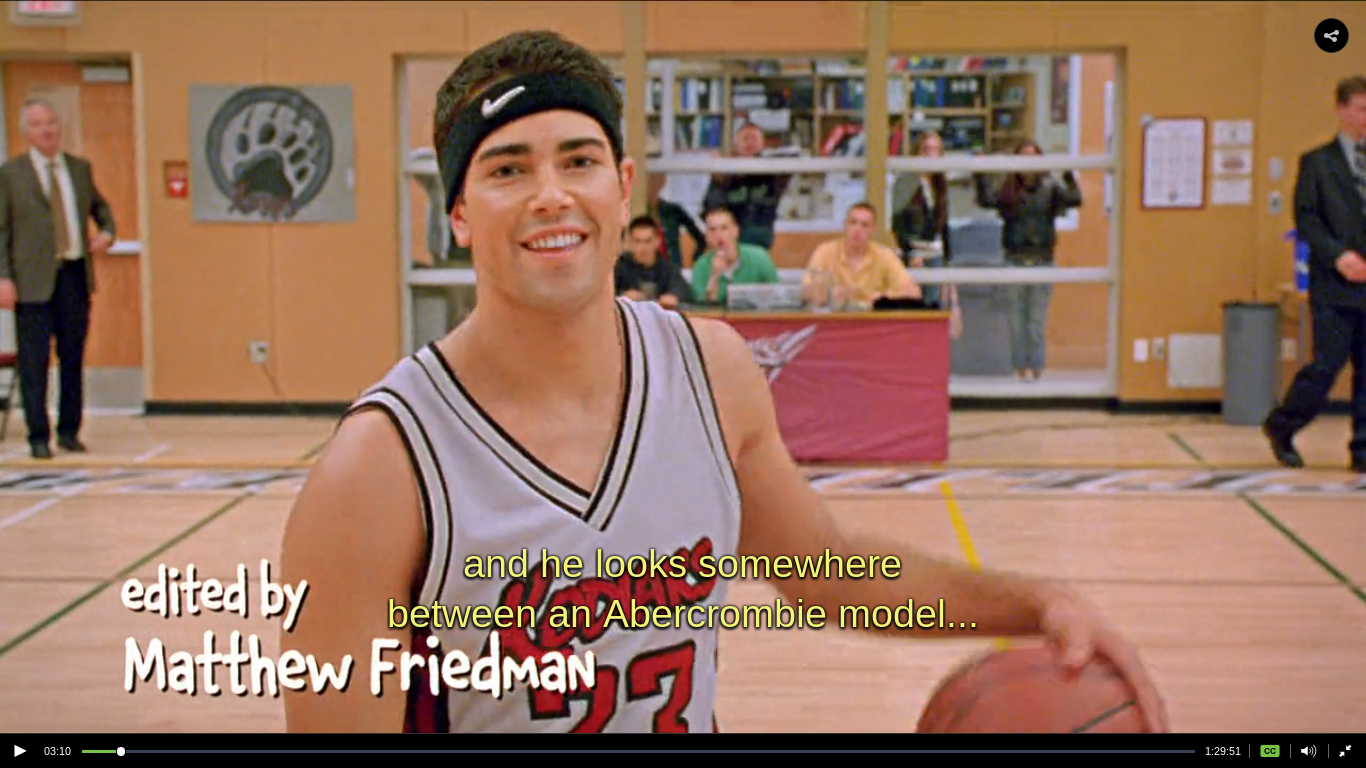
In the movie, John Tucker is the typical high school jock, he has all the ladies, the looks, and the clothing. All the girls want him and all the guys want to be him. John has 3 girlfriends, one is an over achiever, one is a cheerleader, and eco friendly person. One thing they all have in common is that they are known in the school, Unlike Kate.

“John Tucker, Let's face it, He is the man,
Captain of the basketball team, his family's loaded...
and he looks somewhere between an Abercrombie model...
and a Greek god,- Kate”

Screenshot 2016-04-26 at 10.09.33 PM.png

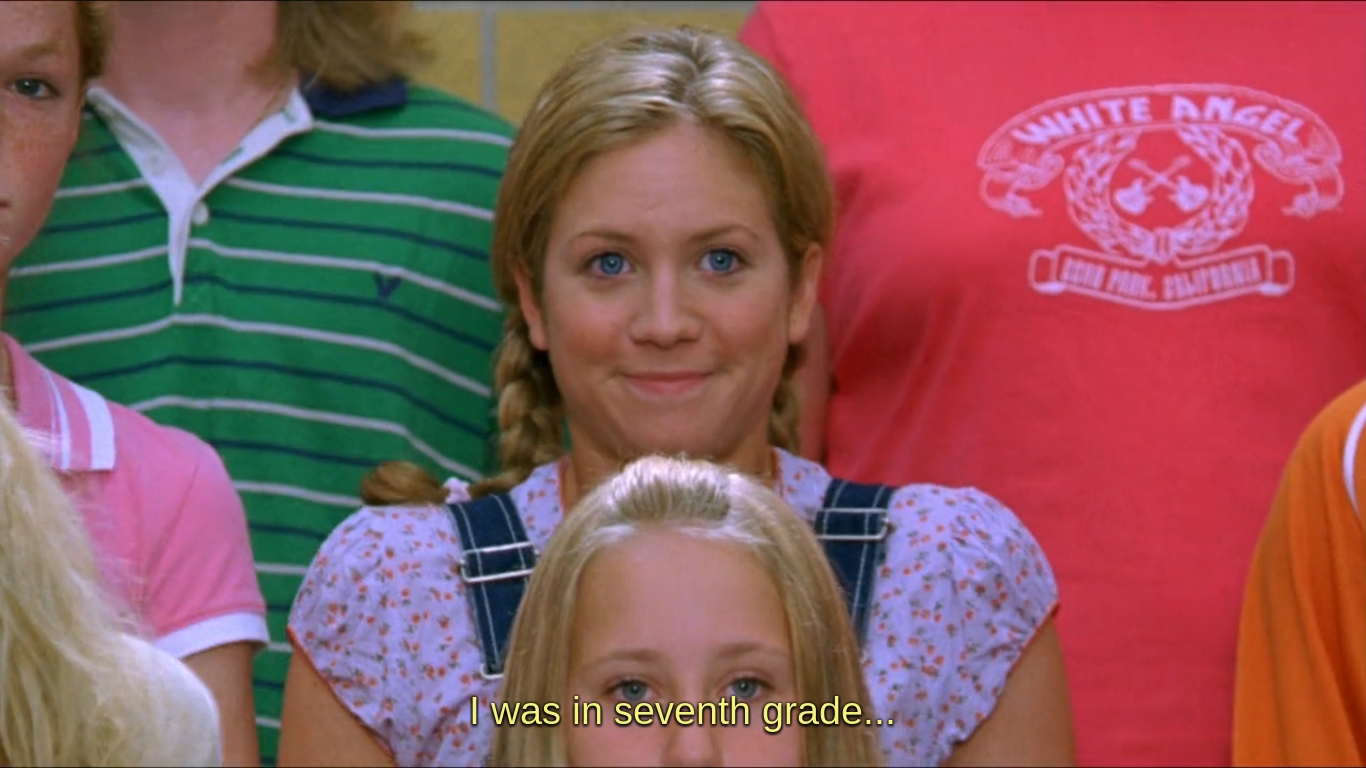
Kate was more of a shy and quiet girl. She moves around a lot because her mother goes from relationship to relationship. So Kate never really was able to make friends. Kate considered herself to be invisible, no one ever noticed her. It’s safe to say that Kate and John are the total opposite from each other unlike Petruchio and Kate (TTOTS).

Screenshot 2016-04-26 at 9.52.17 PM.png

Screenshot 2016-04-26 at 9.07.21 PM.png


“I was in seventh grade...  
when I realized
I was invisible- Kate”


Petruchio main goal to have in a woman is wealth, but he wants more. He decided to tame the loud and confident kate with tactics such as starving her, leaving her, and embarrassing her. He wants the perfect woman so bad that he changes her so she can fit his ideal woman instead of accepting her for how she is.

“Women are made to bear, and so are you.”

Act 2, Scene 1, Lines 1048

After a while Kate accepts Petruchio and changes herself. The play presents the idea of everything being perfect in order to have the perfect marriage. At the end of Kate’s little sister's wedding, their husbands check to see who’s wife will listen to them. Kate’s sister didn’t answer to her husband and kate called her out on it.

“Fie, fie, unknit that threat'ning unkind brow
And dart not scornful glances from those eyes
To wound thy lord, thy king, thy governor.
It blots thy beauty as frosts do bite the meads,
Confounds thy fame as whirlwinds shake fair buds,
And in no sense is meet or amiable.
A woman moved is like a fountain troubled,
Muddy, ill-seeming, thick, bereft of beauty,
And while it is so, none so dry or thirsty
Will deign to sip or touch one drop of it.
Thy husband is thy lord, thy life, thy keeper,
Thy head, thy sovereign; one that cares for thee
And for thy maintenance; commits his body
To painful labor both by sea and land,
To watch the night in storms, the day in cold,
Whilst thou li'st warm at home, secure and safe;
And craves no other tribute at thy hands
But love, fair looks, and true obedience--
Too little payment for so great a debt.
Such duty as the subject owes the prince,
Even such a woman oweth to her husband;
And when she is froward, peevish, sullen, sour,
And not obedient to his honest will,
What is she but a foul contending rebel
And graceless traitor to her loving lord?
I am ashamed that women are so simple
To offer war where they should kneel for peace,
Or seek for rule, supremacy, and sway,
Whey they are bound to serve, love, and obey.
Why are our bodies soft and weak and smooth,
Unapt to toil and trouble in the world,
But that our soft conditions and our hearts
Should well agree with our external parts?
Come, come, you froward and unable worms,
My mind hath been as big as one of yours,
My heart as great, my reason haply more,
To bandy word for word and frown for frown.
But now I see our lances are but straws,
Our strength as weak, our weakness past compare,
That seeming to be most which we indeed least are.
Then vail your stomachs, for it is no boot,
And place your hands below your husband's foot,
In token of which duty, if he please,
My hand is ready, may it do him ease.”

Act V, Scene 2, Lines 2644


Kate is trying to get back at John for treating women like crap, but maybe it’s a little more than that. Kate is making a statement to all men, especially the ones that play her mother. Never treat a women wrong, or she will come a get you. With the help of her new friends, she becomes the perfect women that John looks for in a woman. She goes from being an outcast to one of the most popular girl in school.


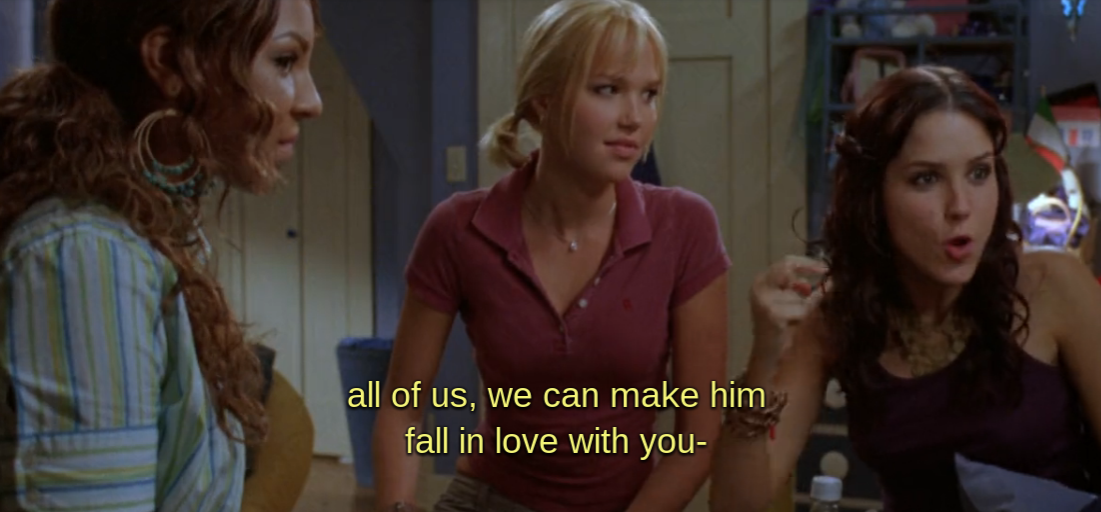
“And we can make you into anything, If we combine...
all of us, we can make him fall in love with you-.

I mean really fall in love- and then we'll...
yank it all out from under him,”


Screenshot 2016-04-26 at 10.36.11 PM - Edited.png

After coming to the realization that they can just break his heart, the three friends (AKA John’s ex girlfriend) and combine themselves into her. Making her the “perfect” woman for John to fall in love with.


Screenshot 2016-04-26 at 10.55.13 PM - Edited.png

“Who’s the new cheerleader? She’s hot”- John


Kate went along with the plan. She will be the perfect woman for John Tucker. When he falls in love with her, she will break his heart like he did to the other girls. Some of the tactics used to make her “perfect” was trying out for cheerleading. What is more perfect than the caption of the basketball team dating the cheerleader.


Kate proved her love to Petruchio when she listened to his command and gave a speech on how women are made to please and served their husband. Petruchio uses abuse to tame kate into his perfect woman.

“Why, there's a wench! Come on, and kiss me, Kate.”

Act V, Scene 2, Line 2688


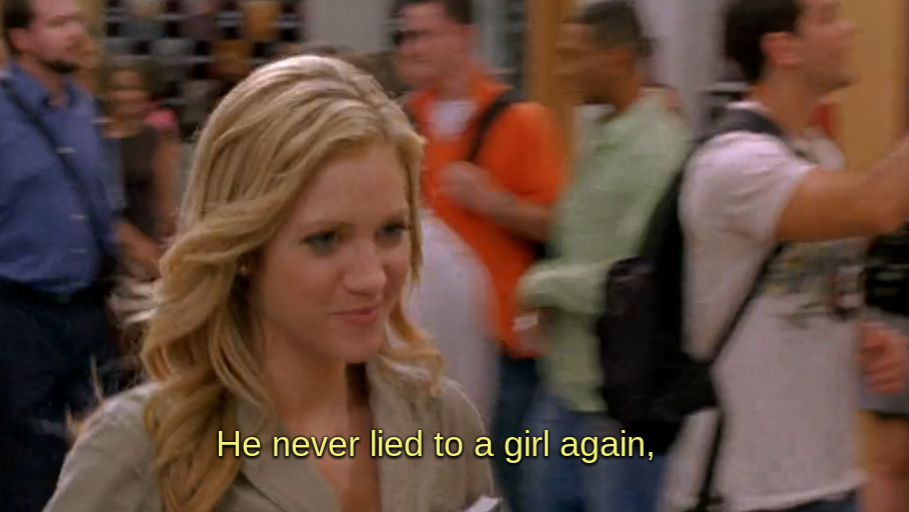
John being the typical high school jock, fell for the new kate. But the plan started not to work when kate blurred the lines between acting in love and being in love. In a nutshell, John found out about Kate's plans and broke up with her. Kate then apologized and John became the perfect man. He was not cheating anymore, lying anymore, and being disrespectful.


Screenshot 2016-04-26 at 11.14.49 PM - Edited.png

“And John Tucker?
We definitely got to him,  
He never lied to a girl again,

“-Kate


What is “real love”? Is it chanling everyone to be the perfect match or accepting their flaws? One thing to consider is the time period of both the movie and play. Love evolved over the years from being the perfect match to beating the odds. The taming of the shrew uses the idea of the perfect match with Petruchio and Kate by pairing the two crazy couples together. While John Tucker must die beats the standards that Shakespeare put by making the basketball player fall in love with the social outcast. So should “taming” be apart of the definition of “love”? Well one thing for sure is that it is a common theme through love stories.


2 Comments

​ Who’s in it for the love?

Posted by Luke Risher in English 3 - Pahomov - D on Tuesday, April 26, 2016 at 11:28 pm


Who’s in it for the love?

A look at how romantic comedies portray people close to the partners judging the relationship


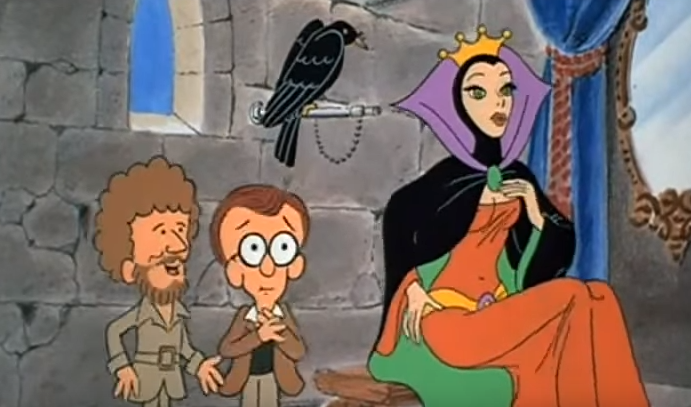
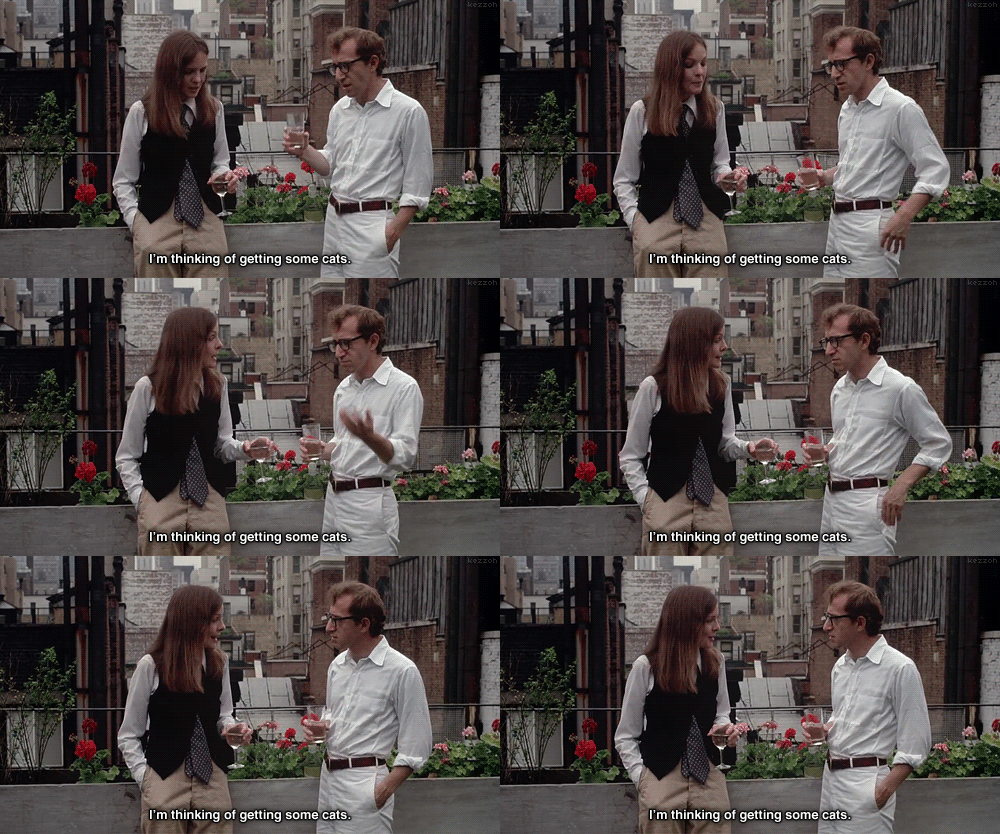
Woody Allen's modern romantic comedy "Annie Hall" (1977) seems completely disconnected from the 16th century play "The Taming Of The Shrew". While the circumstances are wildly different, viewers can see how romantic relationships can be based on love for the participants, but looked at in different light by people close to those actually in the relationship. In "Annie Hall" The main character, Alvy, is in a relationship with Annie which is based on love and romantic attraction. The movie is based around their relationship and how it works and doesn’t. They both receive advice about what to do in the relationship and judgement on whether or not the relationship is right for them. In the "Taming Of The Shrew" Baptista, father of Katherine and Bianca, must judge the relationships that his daughters are about to start and what value they hold. Katherine is the older daughter and must get married first before Bianca who is more attractive to suitors, but finally Katherine gets married and Bianca becomes available for marriage. In both the play and the movie there is analysis from outside characters on the main relationship.

Viewers can see that the loved ones of the individuals in the relationship, judge the relationship itself. This is to be expected if they want the best for the person they are close, but in both pieces of media, we see that more often the values are based things other than the person's romantic love. There are many elements that outsiders may want to see in the relationship such as money, short term pleasure, and future along with others. While audiences like to think that people analyze relationships based on love, in these romantic comedies, outsiders are judging the relationship on aspects other than the "love" of the person.


“Content you Gentlemen. I will compound this strife. ‘Tis deeds must win the prize, and he of both that can assure my daughter greatest dower shall have my Bianca’s love.” (Act- 2, Scene - 1, page- 101)


In the show the character Bianca has many suitors because of her beauty. In this scene the father of Bianca (a young woman who is available for marriage to either of these men) is negotiating who will marry his daughter. One man is older, while one is younger and both are seeking Bianca’s hand in marriage. Based on the times the father must marry off the daughter. In this scene and quote, the father is asking about one thing: money. The fundamental value underlying the father's question is how many material possessions will Bianca have when she is married. This is what drives his decision making. The father's main focus is not the romantic love, but the physical wealth of his daughter in her relationship.


This scene is mirrored by Alvy’s character meeting Annie’s family. The viewer can see that the family approves (excluding the anti semitic grandmother for ethnic based reasons, this grandmother character is used as a comical character) of Alvy based on the general lack of confrontation and tension. This is shown through their manners and actions. One example of this is Annie’s brother trusting Alvy enough to tell him deep thoughts in the next scene. Also based on the family’s positive reactions, the viewer can tell that the family approves of the relationship. The paradox is that at dinner Alvy is not an attractive person so there is not necessarily a reason for them to like him based on character traits. The context shows that the family is basing their judgement on other things. The viewers can infer that the family knows about Alvy’s stable economic and social position because of previous conversations. Alvy’s character is well off in life and this may be the primary reason that the parents and other family members approve of the relationship.    

This Annie Hall scene goes even farther. In the later part of the scene we meet Alvy’s family. Before the scene is flashed up Alvy makes the statement that “the two (families) are like oil and water” but we can still see the values are similar. His family's immediate discussion is based on a relationship between two unnamed characters and their marriage. The comments are on the economic stability of the husband. They state he doesn’t have a good jobs and he’s too old to not have a career. This again is judging the basis of the relationship off the economics and not the love.

While the scenes and motives are similar between these two pieces there are many differences. For example in “Shrew” the negotiation and money settlements are very direct and outlined clearly. In Annie Hall the money is more on the outside of the conversation and hinted at, which is normal in the American culture. The context is assumed in Annie Hall and direct in “The Taming Of A Shrew.”


“Master, you looked so longly on the maid, Perhaps you marked not what’s the pith of all.” (Act 1, Scene 1, page 41)


In this scene in the show Lucentio's friend is trying to tell Lucentio not to engage in this relationship. Lucentio is the main suitor of Bianca who fell in love at first sight. Tranio is his friend and servant. Lucentio has fallen in love with Bianca at first sight and he intends to marry her already, but Tranio says this line. This statement is judging Lucentio engaging in that relationship not based on feelings of love, but instead what Lucentio's future would look like. Lucentio was supposed to be focused on his education and Tranio’s statement is saying he should not engage because he would become sidetracked with the relationship. This line shows how Tranio mostly focuses on a judgement of the relationship not based on the love in the relationship.

In this scene the cinematographers use cartoon to tell the story which is why it look different. In this part of the movie Alvy’s friend Rob is trying to be convinced by Alvy that he should leave his relationship based on love to pursue other relationship with different focuses such as sexual pleasure. In this scene Alvy is talking to the wicked witch of the Snow White story who is symbolic of a relationship. During their conversation, Rob comes in to try to convince him that a relationship that is based on love is not what is right for him. We can see that the witch is sexulized in this scene as Rob is convincing him that he should stop looking for love and focus more on short term pleasure. Rob leads Alvy into a date with a separate women and they hook up before Alvy realizes that sort of relationship is not what he wants, he would like a relationship based on love and not short term or sexual pleasure.

Obviously these scenes are different because these friends are looking at separate things. While Tranio is looking at Lucentio’s future, Rob is looking at Alvy’s immediate pleasure. The nature of the judgement is different because Rob is actively setting Alvy up. The differences are clear, but the link between these two scenes is how close friends give advice and make judgements on the relationship based on things other than romantic love. These show future goals and short term pleasure to be things that friends look for in relationships as higher priorities.

tumblr_neueeeaJrL1tbko3do1_500.gif

In both of these stories viewers can see how the people close to the partners analyze and judge the relationship and the values it has for the person they’re close to. Different people look at different aspects of the relationship to judge it. In both the play “The Taming Of The Shrew” and the movie “Annie Hall” different characters judge the relationship based on many things including money, social class, pleasure, and future opportunity. While these come in various forms and from different perspectives, their underlying reason is never love. They rarely judge the relationship based on romantic love of the partners.


4 Comments

Dirty Dancing with the Shrew

Posted by Cacy Thomas in English 3 - Pahomov - D on Tuesday, April 26, 2016 at 11:17 pm

​

Dirty Dancing with the Shrew

Dirty Dancing in Relation to The Taming of the Shrew


In the play “The Taming of the Shrew” Baptista, the father of two unwed daughters Bianca and Katherine, has to decide who his children will marry. Similar to the 1987 movie “Dirty Dancing,” Dr. Jake Houseman, the father of the main character Baby and her sister Lisa, places his input on who he thinks are right for his daughters to date. However in “Shrew” Baptista has the final say on the spouses of his daughters while in “Dirty Dancing” Dr. Houseman does not. What causes the difference between these two stories is the time period. When “Shrew” was written in 1593, it was traditional for parents to have a very heavy influence, if not total control on who their children would marry. But times had changed when “Dirty Dancing” was introduced in 1987, as people had more freedom to marry who they loved rather than who their parents approved of.


Despite this change in a new era of romance, both men went through similar situations. They each thought they knew who was best for their daughters, but in the end were fooled by false outer appearances and personalities. This revealed that the men they thought were best, were actually conniving, indifferent, and uncaring for the love of their daughters.


"Content you, gentlemen. I will compound this strife.

‘Tis deeds must win the prize, and he of both

That can assure my daughter greatest dower

Shall have my Bianca's love. "


Act 2, Scene 1, Lines 361-365


This line of the play is spoken by Baptista, father of Katherine and Bianca. In this scene he is addressing Bianca’s potential suitors and saying that whoever can offer the greatest dowry, will be chosen to marry Bianca. Of course, he is doing this in good faith thinking that whoever has the most material possessions will be able to provide what is best for his daughter. What he was not thinking of was who would be able to provide for the emotional well-being of Bianca. He saw the wealthy men and did not put a second thought into how they would treat Bianca as a person. It is interesting to look back and see what parents valued in the spouses of their children compared to today, and notice it is not as different as one would think.


Continuing this thought, Baptista’s thought process is very similar to the mindset of Dr. Houseman in Dirty Dancing. While staying at a resort during the summer, he sets his daughter Baby up on a date with a wealthy young man. This is to keep her away from a lower class dancer named Johnny Castle, who he thinks is rebellious and a bad influence. He only sees Johnny’s rugged, “bad boy” exterior, and not how he acts around Baby.


In the first screenshot, Dr. Houseman is telling Johnny to stay away from Baby. At this point in the movie he is aware that they have been spending time together and definitely does not approve of it. In order to keep the two apart he sets Baby up with a wealthy young man named Neil Kellerman. In the second screenshot, Neil and Baby are on a date and Neil is talking about his accomplishments. As shown, he considers himself “the catch of the county,” and continuously tries to woo baby with his wealth, education, and social status; she is never impressed. She would much rather be with someone who connects with her on an emotional level and values her goals in life than someone who can offer her material possessions. It is sad but true that her father can see that as he persists in keeping Baby away from Johnny. He is blinded by Johnny’s inability to climb the social ladder and cannot see the support he gives Baby in every aspect of life.


"Thus in plain terms: your father hath consented

That you shall be my wife, your dowry ‘greed on,

And will you, nill you, I will marry you"


Act 2, Scene 1, Line 261-272


In this scene, Petruchio, Katherine’s only suitor, has tricked Baptista into approving of him and letting him marry Katherine for love. He is telling Katherine that no matter how she feels or what she does they will be married against her will. This is a direct example of how Baptista’s judgement of Petruchio was wrong and skewed. He thought that Petruchio was best fit for Katherine but in reality Baptista set his daughter up with a misogynistic, demanding, and overall awful person. Petruchio portrayed his relationship with Katherine as one of love even though she openly rejected him multiple times. He was able to influence the mindset of her friends and family into thinking that even though she hated Petruchio publicly, when they were in private she practically worshipped him. It is later shown after they are married the physical and emotional abuse Petruchio forces upon Katherine.  If Baptista knew about the maltreatment of Katherine, he would have never let Petruchio marry his daughter. But because of Petruchio’s charm and false pretenses, Baptista was tricked into thinking he was the perfect fit for Katherine.


This type of relationship is comparable to that of Baby’s sister Lisa. Dr. Houseman approved of the boy he set her up with named Robbie Gould, as he came from a wealthy family and had a promising future ahead of him. However, Dr. Houseman did not see the abuse Robbie placed on Lisa behind the scenes of their relationship.


In this screenshot Robbie states, “Some people count, some people don’t.” This particular quote speaks volumes of his true character which he hid from Dr. Houseman. When talking with Dr. Houseman, Robbie appeared to be the paradigm of gentlemen, but this was a different story when Houseman was away. In this particular scene Robbie is addressing Baby while no one else is around and reveals his true motives to her. Much like Petruchio to Baptista, Robbie has no trouble manipulating Dr. Houseman to see him as an upstanding citizen, working during the Summer and going to medical school in the Fall. However in reality he had been sleeping around and exploiting women for his own pleasure. Dr. Houseman was never suspicious of his behavior until he accidentally revealed himself at the end of the movie. If it were not for this happening Dr. Houseman would in no way learned that Robbie was not what he claimed to be. After discovering this, he opens his heart and sees that the choices he made may not have been the best for Lisa and Baby, showing that he truly cares for his daughter and not just for material possessions.


Both fathers thought they did what was right for their daughters, but in the end were wrong in their assumptions. While the play and the movie tell the same tale of parental influence on relationships, Dr. Houseman was able to change his ways and recognize his mistakes. As Baptista went through the same experiences, he did not see that his influence was wrong for both of his daughters. This, in part, is caused by the time difference of both stories. Culturally, the idea of parents having a say on who their children will marry has been a staple in society, although it has become less authoritative over time.  As Baptista has complete dominance over his daughters’ marriages, Dr. Houseman can only give his input on who his daughters should go out with. This shows that the idea and seriousness of love is constantly changing with time, as well as how people interpret it. But it also shows that parents will always have some type of influence on their children's spouses.


3 Comments
73 posts:
← Prev
  1. 1
  2. 2
  3. 3
  4. 4
  5. 5
  6. 6
  7. 7
  8. 8
Next →
RSS

ENG3-4

Term
2015-16

Other Websites

Launch Canvas

Blog Tags

  • English 1
  • Story 1
  • NIAH LOMBO 1
  • 2015 1
  • Air 1
  • English 3 1
  • monster in law 1
  • Taming the Shrew 1

Teacher

  • Larissa Pahomov
Slate (skeleton-v3 PHP 8 prototype) · Location: 1482 Green St · Shipping: 550 N. Broad St Suite 202 · Philadelphia, PA 19130 · (215) 400-7830 (phone)
×

Log In