• Log In
  • Log In
Slate (skeleton-v3 PHP 8 prototype)
Slate (skeleton-v3 PHP 8 prototype) Learn · Create · Lead
  • Students
    • Mission and Vision
  • Parents
  • Community
    • Mission and Vision
  • Calendar

English 3 - Pahomov - C Public Feed

Create a Post

  Women End Up Wearing the Pants

Posted by Larissa Pahomov in English 3 - Pahomov - C on Thursday, April 28, 2016 at 8:24 am

Comparing The Taming of the Shrew” to “ The Back up Plan”

By Jamira Terrell

In “The Taming of the Shrew,” it is proven  that romantic love within relationships is mainly controlled by men and the desire to possess the other person.  In “Shrew,” Petruchio swears that he can have his way with Katherine no matter what she wants. In contrast, Zoe from “The Back-up Plan” takes on the “manly” role and becomes the possessive and dominant one within the relationship.

Zoe in the movie; reflects Petruchio from “Shrew” because she is the dominant character just like Petruchio in the play. They share some of the same key roles, emotions, tactics, and determination to gain what they want within their relationship. Throughout the movie, Zoe gains the support of her friends because they know how badly she wants to have a baby, likewise, Petruchio also gains the support of his friends. Also, the romantic relationships within “Shrew” and “The Back-Up Plan” were both forced. Zoe did not like Steve in the beginning of their relationship; instead,she wanted him for one reason to be able to have his baby. Although there are many similarities, Zoe, unlike Katherine, actually has feelings for Steve once she grows closer to him. Likewise, Petruchio was pursuing Katherine, whereas Zoe was pursuing Steve, until a change of events when Steve messes up and he ends up chasing after her. The differences allow for a peaked interest in both scenarios;Allowing the viewer to see that women have accessible power and control either equal or more than men these days. But at the end of the day, both parties in the situations must maintain the same love for each other in order for the relationship to be deemed a romance.

“I am ashamed that women are so simple to offer war where they should kneel for peace, or seek for rule, supremacy, and sway when they are bound to serve, love and obey.”

-Katherine, (Act 5, Scene 2, Line 177-180)

In this part of Katherine’s speech, given after a bet that was placed, she is explaining women’s loyalty to their men. The bet placed was to see who’s woman would come to them first when summoned. Being as though Katherine was not only the first, but only woman to come when called, Petruchio won the bet. Katherine was surprised at the fact the other women did not adhere to the needs of their partner. In her speech Katherine emphasizes the notion that women should surrender to their man and everything that they do should be in benefit of him; what he wants, he gets. In the time period of this play, it was imperative that women remain inferior and passive within relationships or else, the would not make good wives. From little, girls were raised knowing that they not only should get married, but were obligated to, and there would be no marriage without a form of loyalty.

Zoe finds herself in a similar situation as she tries to explain to Steve what her plan is for their future, but at the same time how she does not plan to fall in love with him but yet, they go their separate ways.
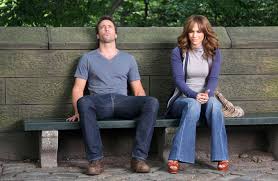
Image result for the backup plan movie

In this scene from "The Back-Up Plan," Zoe nervously explains to Steve that her future plans are to fall in love, get married, and have a baby, but not necessarily in that order. More like, have a baby, get married, and fall in love. Throughout the movie, Zoe is always anxious and nervous about every little thing she does. She is afraid, that something, or someone, may mess up her plan to have a baby, unlike Petruchio, who in the movie knows exactly how his plan is going to work and doesn’t fear that anything will mess that up for him.

"It's awful, awful, awful. Then a small moment happens, that's so magical. That makes it all worthwhile."- Steve

Steve tries to kindly get Zoe to understand that certain things in life can not be forced. It is all catalyzed by a small event. Knowing that Zoe is worried that, because she is getting older, she will no longer be able to carry a baby for much longer, he tries to console her by letting her know that things will happen at the least expected times. Although, Petruchio and Katherine seem to not agree. Given that Petruchio is forcing what he wants within a relationship, and Katherine has to abide; same way that Zoe is forcing what she wants and Steve has to abide.

“Thy husband is thy lord, thy life, thy keeper, thy head, thy sovereign, one that cares for thee, and for thy maintenance commits his body to painful labor both by sea and land…”

Katherine, (Act 5, Scene 2, Line 162-170)

Towards the end of the play, Katherine gives a speech devoting herself to Petruchio. She knows and accepts the fact the her husband, being a man that he his, has the right to control her and have complete dominance over her. This is an attribute that she becomes accustomed to, so much that she believes that her love and obedience to Petruchio is not even enough to thank him for the role he plays in her life; dominant and superior. She ends by saying “Too little payments for such a debt.”

In conclusion, both the movie and play prove that love and relationship are controlled by the desire to possess the other, but it does contrast the idea that dominance is not only a role that men play. In the end of the movie, Zoe ends up with twin babies, falling in love with a man that she never thought twice about, and having a grand wedding. Petruchio, at the end of the play, wins over Katherine and her loyalty to him. Both the movie and play end just the way the protagonists anticipated; with love, loyalty, and feeling of accomplishment.


1 Comment

Learning How to Grieve

Posted by Benjamin Simon in English 3 - Pahomov - C on Sunday, January 10, 2016 at 7:26 pm

Video: https://www.youtube.com/watch?v=0QxSb2k-6Qs&feature=youtu.be

Learning How to Grieve

I sat in the office of my grandmother’s house. Just seconds ago, I had been on the phone, but I now spun my chair around to survey all of the memorabilia that surrounded the room. A Mike Trout baseball poster hung against the closet door. A photo of the Atlantic City Surf, the city’s former independent baseball team, was pasted to the wall on the other side of the room. Miniature, plastic army men sat in the case parallel to me, defended by two single pieces of tape which held the door closed.

It brought a smile to my face. The first in a while. All of these goofy things belonged to my grandfather, who had died just a couple of hours ago.

***

I was walking down the street, back to my friend Jared’s house when I got the phone call. It wasn’t late, but it wasn’t early either. It was a dark night in mid October, 2014. The call was from my mom.

I assumed that it was a call to ask how I was doing. It was my first night I had ever spent at Jared’s house and she was probably worrying, so I answered. But instead of hearing my mom, I heard my dad. He was crying. As expected, I was shocked. I’d never heard or seen my father cry.

“Ben,” he said bluntly. “Grandpa died.”

The rest of that conversation and what happened directly after is a blur. I know I didn’t cry. Instead, I remember standing on some person’s lawn in Northeast Philly in the dark, completely shellshocked.

It turns out that my grandfather, grandmother, cousin, and uncle were headed to dinner around 7 or 8. They were going to celebrate my cousin Rebecca’s acceptance into medical school at Ventura’s Restaurant in Northfield, New Jersey, just four blocks away from my grandparent’s house.

When they entered the lobby of Ventura’s, my grandfather noticed he forgot something in the car. He told my grandmother that he was going to the car to get it. My grandmother asked to walk with him to the car, as it was across a busy street and my grandfather wasn’t the most steady walker. However, he insisted that my grandmother not come with him. He was fine going by himself.

But a couple minutes later a lady ran into the restaurant and nervously exclaimed that a man had just been hit outside. My grandmother knew right there that it was my grandfather who had been hit.

***

I arrived at my grandmother’s house that night after spending most of the hour ride to South Jersey listening to music, lost in J Cole’s words. Although I may have looked mad or sad, sitting silenced in the car, I was thinking.

We arrived at my grandmother’s house around 10 or 11. My uncle was there, as was my grandmother, and cousin. My family was smaller on my dad’s side. I had two cousins, and an uncle and an aunt, as opposed to almost 25 relatives on my mom’s side.

Walking into the house, there was obviously a certain sadness. On the other hand, there was also some awkwardness in the air. What were we supposed to do? There wasn’t really much to say, it was still so new and uncomfortable. I was just happy to be surrounded by my family and have the ability to help my grandmother.

It wasn’t much longer until my aunt came up to me.

“Hey Ben, could you do a favor for me?”

I nodded.

“You know how Max is in California? Well, I was hoping you could speak to him. You know hard it probably is on him to be thousands miles away with no one to really comfort him. Could you talk to him, just see how he’s feeling and stuff?”

Max was my other cousin and at the time he was in college in California. I didn’t really know what to say to my aunt because I wasn’t keen on the idea talking to Max. What would I say? I envisioned an incomplete conversation without much to say.

Yeah, I’m fine. How about you?…I know, it’s really sad what happened...I was at my friend’s house when I heard, how about you?...Yeah still feeling fine…Okay, see ya.

But I agreed and walked up the stairs to my grandfather's former office for privacy.

I tried to sound a little more cheerful than I was when I talked to Max. I didn’t want him to worry about me. I tried to keep a positive attitude, so I asked him how he was feeling and we talked about what happened to grandpa.

After we both said that we were doing fine, there wasn’t much else to say. Again, the awkwardness that I had experienced in the living room 20 minutes ago was happening over the phone. Grandpa had died. Yes it was sad, but it was still all so new. It hadn’t hit me yet and I didn't know what to ay about it.

“So, uh,” I said, looking for something to talk about, “who do you think is going to win the NBA championship?”

We continued with a couple more awkward exchanges about sports and ended the conversation.

I sat in the room a little bit longer, cherishing the peace. I rolled the chair around and surveyed all of the collectibles that my grandfather had. I smiled as I remembered his goofiness and his love for buying things for himself and friends. The room embraced all that my grandfather stood for as a person. His desk represented his love to work. His baseball cards floating around represented his love for baseball. His poster of the Atlantic City Surf, a small, independent, and struggled baseball team formerly from Atlantic City, showed his loyalty to the places, things, and people he loved, regardless of what others thought.

As I smiled, I even shed a tear. I rarely cried, but I noticed that this room was my grandfather. Looking back, this was probably where his death finally set into reality for me.

For the next few days I was surrounded by family and friends at all times. I never had the space to be upset because I was enclosed by people that were visibly sad. I didn’t want to show them that I was hurt. I didn’t want them to worry about me. Instead, I wanted to be there for them because I was confident I could figure it out myself.

After three days of missing school because of the funeral and mourning, I decided that it was time to go back to school and somewhat return back to life. My cousin, Rebecca, worked in the city, so she volunteered to drive me down to school from South Jersey, where I had stayed the last couple days. The feeling I experienced when returning back to my regular lifestyle was similar to Private Bartle’s in The Yellow Birds. When he comes back to Richmond, Virginia, he is oddly out of his comfort zone. After spending almost a year in Iraq, he felt that not a single person around him could understand what he went through in Richmond and it ate him alive.

Like Bartle, when I walked into school that morning, I suddenly felt alone. No longer did I have friends and family surrounding me. No longer were they there to comfort me and understood what I was going through. No longer were they there to distract me from my own sadness. I had to return back to regular life.

I walked into Mr. Todd’s class and people asked me where I was.

“Uh...Personal stuff,” I told them. It was around 8:05 and there was still about 10 minutes before class began.

I sat down in my seat and pulled out my computer. I felt out of place. I didn’t want to be here. I wanted to be with my family that knew what happened and could help me. Instead, I was sitting in school by myself. It wasn’t long before class began and Mr. Todd put on an educational movie. Great. Now, I was alone in the dark, only accompanied by a boring movie. 

Instead of being distracted, my thoughts kept returning to my grandfather. It was the first time since the funeral that I had visibly felt sad. At that moment, I could not control my emotions. As I sat there watching the movie, I honestly felt alone. No one could help me. It was one of the tougher classes I had ever sat through.

The rest of the day is still a blur to me. I vaguely remember taking a test the next period, but then I also remember working on a project. Everything about that day just clumps together in my mind.

However, I learned a lot from this experience. I learned that while your life may be in uprooted and disrupted, it still goes on around you. Most of the time, we want to conceal our feelings and hide them from others for many different reasons. Not that it’s a bad thing; it’s just people’s preference of how much information they want to tell others. You never know what one may be going through, so it’s always important to make sure you are putting your nicest persona forward. 

I also learned to understand that when you move out of your comfort zone after a traumatic experience, you just need to prepare yourself to be okay with being upset. Pain is inevitable when you lose someone you love. Is it bad? No. Is it good? Probably not. But it happens and the best you can do is prepare yourself for it.


https://www.youtube.com/watch?v=0QxSb2k-6Qs&feature=youtu.be
2 Comments

I Can't Do My Punnett Squares

Posted by Ella Petersen in English 3 - Pahomov - C on Sunday, January 10, 2016 at 6:20 pm

My family is proof that it takes a village to raise a child- and eventually three at that. For me, having two parents, two step parents, and one DNA giver is just as complicated as it sounds.

I can’t remember a time that I didn’t know I was conceived by a donor. My parents always made it a point to have my older sister and I know about it.

My mom would tell us: “Your father is your father just as much as I am your mother. You’re just not related to him in the same way you are to me.” Sadie and I would nod. We didn’t totally understand it, but we didn’t care too much for it anyways because we didn’t realize that it was different. At a young age it was easiest to assume everyone else was just like us.

Sadie and I were conceived by the sperm of the same male donor and my mother’s eggs, while my younger sister (who came further down the road) is the child of my mom and my step dad. From the information gathered from my parents (I’ve only seen the actual report a few times), the donor report must have read something like this:


Donor #1738

Physical Description:

Brown Hair

Green Eyes

Height:

6’1

Weight:

176 lbs.

Ancestry:

German/Scottish

History of Disease:

No Cancer in bloodline

No Sickle Cell in bloodline

No Cystic Fibrosis in bloodline

Blood Type:

O+

Occupation:

Computer Engineer

Interests/Hobbies:

Wrestling

Sports

Computers


“There was no donor available with red hair like mine, so we chose the closest thing to it. But he’s German like me, and he has my eye color too,” my father told Sadie and me.

In elementary school, still thinking everyone was made by a donor, I wrote a short story about my family. In the story, I mentioned that I was not biologically related to my dad, that I had an “imaginary dad” somewhere. During parent teacher conferences, my teacher brought it up to my parents.

“One more thing. In her short story about her family, she mentioned that she was not related to her father. You should probably clear that up with her.”

When my mom tells the story of this day, she says that she could tell my teacher was being obnoxiously nosy and only wanted to bring it up to get the inside scoop. My parents never considered the donor a private matter. My dad was still my dad just as much as he would have been if we were related, so it really didn’t matter. Though, my parents responded with a simple “okay” as to not give her what she was looking for.

I remember distinctly that doing punnett squares for my family bloodline in science class was confusing. How could I go home and collect data from each side of my parents’ family to figure out the likelihood of me having certain traits, when I only had a half of the data? I had no idea whether my sperm donor had attached ear lobes or a hitchhiker's thumb! I would make up the data for my dad’s side because it was hard for me to explain to my teachers and they probably would have made me do that anyways.

Once I realized that I was different, I started to feel extremely foreign to the idea of how I was brought to this Earth. As many times as my parents told me the story, I could never find the words to tell someone else about it. It felt unexplainable to myself, let alone to other people. I didn’t feel any sadness or anger about it, I just felt confused and abnormal. I felt weird knowing that my sister and I were alone with this “thing” that we couldn’t describe to people. It was crazy that something could be such a big part of who I was, but also so foreign to me at the same time, like Norman Bowker in The Things they Carried who couldn’t explain the bloodshed he witnessed and couldn’t relate to his hometown anymore- a thing thing that was such a big part of who he was.

In middle school, I started being completely open about it. I figured that having to explain it again and again would help me explain it to myself.

The reactions varied, but the most common (and my favorite one) is:

“Oh my god. You could totally have long lost brothers and sisters somewhere!”

And it’s true. I could have half siblings that I am not aware of. And that was so crazy to me. Who knows how many couples picked his sperm?

And that donor had a life! Maybe he had a wife and even had kids with her. Maybe he’s famous or maybe he has the world record for holding his breath for 20 minutes.

And as I thought about all of this, I realized that I didn’t even care about any of it because I had the best dad and most amazing family without even knowing the donor’s name. This flipped a switch in my head and it took away all the confusion that I was feeling. I thought, What difference do any of these possibilities make? I was not confused anymore because I was content. And I had always been content. I just needed to explore what the donor meant for me in order to come to this conclusion.

My mom recently came up with the clever nickname “Bob the donor” for my mystery DNA sharer. Whenever my sister and I have a trait that does not come from my mother’s bloodline, we blame it on him.

“Bob the donor must have some pretty curly hair because that does not come from my side,” my mother says.

I recently have had a growing interest in finding my half brothers and sisters. I contacted the sperm bank to find out that my sister and I have at least 3 half siblings! Only once, just the other day, did I try and enter my donor number into a database. I have my contact information for my donor sharers to find me as well. Nothing has come up yet, but I will not stop trying.

I wouldn’t have my family any other way. We are different, and that’s just one thing that I love about us. If it weren’t for the donor, I would not be here, and for that I am thankful that I share his genetic make-up. Figuring out what the donor meant to me was a long, but inevitable journey. I now know that it really means very little for the way I live my life. But, whenever someone says I look like my dad, I can’t help but laugh a little bit.

https://www.wevideo.com/hub#view/559031134


I Can't Do My Punnett Squares
4 Comments

My Path With Empty Hands

Posted by Ian Fay in English 3 - Pahomov - C on Sunday, January 10, 2016 at 5:59 pm

One day, over a decade ago now, I walked into a room bigger than my house’s first floor. An ocean of blue mats covering the floor, heavy bags standing taller than adults, and arsenals of bo staves and escrima sticks in the corners of the room. This was the training room of the martial arts school known as Martial Posture Studio. My friend Tadeusz (Tuh-day-oosh) and I were in our first martial arts class. His mother, Monica, had us try it out after his built up peer pressure possessed me to follow suit. There were two other students in the room who were much older and seemed to have been for a fairly long time because of the purple belts around their waist. After a few minutes, a man dressed in a black gi,  training pants, and a black belt tied around his waist. He rounded us up and proceeded give us our first class in Kenpo Karate (Translates to Law of The Fist, Empty Hand). The thought of learning the arts of war somersault around our minds like the ninjas we thought we were. We were enthralled and decided to continue to learn this discipline which spring-boarded my path of learning Kenpo Karate .

The first few years of my training have escaped my memory. However, my teacher Ish says that I, like many other children at that age who take up martial arts, was extremely unfocused. There were some moments that made him put his hand on his brow like a porch awning to his eyes and let out a forceful sigh. I obviously was not the best at first but, that is very much normal. Even as young as I was, I knew Kenpo Karate was not at all about win or loss. There is an importance on growth. It did not matter at all about how fast or how large it was. If there was some positive change on you not only as a fighter, but as a person then, Ish and the other instructors were satisfied.

I continued training at the school but, Tadeusz had lost interest not long after we had gotten our yellow belts. The long term goal of black belt came with a seemingly endless road to get there. The road can stand amongst people like a basilisk as the amount of progress you must make to achieve it. Ish says that at full concentration, focus, and dedication, it could take someone at least five years to achieve black belt but, for most, it could take a decade. However, there was always one proverb that kept bringing confidence back to life in me and my classmates. “Whether you say you can or cannot do it, either way you are right.” Ish would often say. It was this proverb`that kept me training. It kept me hardening my knuckles and shins into a tree’s solidity, kept me in stances that emulate cats and cranes, kept performing kadas that began as a dance only to transform into a lethal choreography, kept me on the path to becoming a black belt before a freshman.

Middle school came around which was a phase in my life that had a detrimental emotional impact in my life. My friends from elementary school had moved on to other schools in the city for their middle-school lives. I came into 5th grade alone with barely a friend with me. The people in my class were mostly people that would be considered in my mind as an asshole. They always ridiculed me for my gullibility, threw slurs at me like verbal bullets and their hateful aura drove me away like a gun ringing out. I had felt lonely for most of my time at school and around this same time, I began to appreciate Martial Posture Studio more than ever before. I had discovered some of the most therapeutic techniques courtesy of my martial arts instructors. This included things like punching a striking bag with all your passion as it get absorbed like a scream into a bedroom pillow, light contact sparring with glistening gloves and padded gear as bodies whipping around like dragons around a mountain peak, and laughing as the sweat drips down from our brows like raindrops granting new growth to trees. At times it felt like a second home. A place where I could spend time without any worries of anxiety and stress pouring into my mind. Where I had many more friends to laugh, frolic, sweat, and spar with. And for a very long time, that was the best thing ever for me.

I found myself at the top of my class in middle school. I was a blue belt on the cusp of becoming a green belt and was readying myself to move onto the next class. This would also be when my biggest hurdle would appear in the form of my classmate, David. I remembered his face vaguely from kindergarten and because of that we became very good friends in our class. He however, changed progressively as time went on. He showed one quality that I had grown to hate not just in him but, in general, arrogance. He would always boast every time he beat me in a sparring match, every in-house tournament win he would have over me, every step higher he was than me his voice spread out like peacock feathers as he yelled “Superior Blood!” It annoyed me to the point where we almost had a scuffle with each other. He almost made me want to quit martial arts.

I started contemplating quitting martial arts. The social toxicity I wished to escape was invading the one safe haven I had. And even though at the time I was a brown belt, I was still being told my skills were sub-par. However, that one proverb began ringing in my head like a song you have longed to hear play on a radio. “Whether you say you can or cannot do it, either way, you are right.” I said to myself. And so I stayed. I dug my toes into the mat with each stance, used my new found focus as a whetstone to sharpen my skills, and soon enough, I was ready for the black belt test.

It was the first day of high school. A long day marking the next stages of my life. The day I became a freshman at Science Leadership Academy and a black belt in Kenpo Karate. I finished school and immediately went to Martial Posture Studio afterwards. What followed was some of the most grueling hours of my life. three hours of reciting every kada I knew, doing reps of workouts and drills, and easily the worst part, sparring my teachers each for a two minute round.  My breath was heavy, my face was bruised, and my legs were weak to stand on. After I was carried of to the side and the ceremonial kicks to the Solar Plexus, I became a black belt.

I owe a lot to martial arts. Being that I’ve trained for more than two thirds of my life, it has shaped me into the person I have become today. This transformation is similar to the soldiers in Kevin Powers’ The Yellow Birds. Like me, they were influenced by their environment that only people with similar experiences can empathize with. Obviously the influences have had different effects but, nevertheless it is still there. Sometimes I often wonder what kind of person that I would have been had I not accepted Tadeusz’s request. How would I have handle the solitude I feel during middle school? How would I have  reacted to many of the students I was with that angered me? How would I be different? I often think about these questions a lot and I don’t really like the conclusions I come to. Because of this, I am very grateful of the life I have lived.


Personal story (1)
1 Comment

Life After Loss

Posted by Kara Heenan in English 3 - Pahomov - C on Sunday, January 10, 2016 at 5:49 pm

I heard my name twice in a voice I recognized. I sat in the passenger seat of the green Nissan Xterra. I looked over, there is my dad looking right at me, just how I remember him now, short blonde hair and light blue eyes. He had that concerned look on his face, the one I pictured whenever I thought of him. “I want you to get into a good high school,” he said, as we passed by Council Rock high school, where he went, “It doesn’t have to be down there.”

“Down there” as in Philly, where I lived, with my mom and sisters. A court ruled that my mom had custody of my sisters and I, which meant that I see my dad every other weekend. Obviously, he had always wanted us to live with him permanently, and this high school talk was one of his strategies.

“Yeah, maybe,” was all I really ever replied, being in the seventh grade and not so much caring about high school at the time. I always knew that moving to Bucks County and living with him and attending high school there was one of my options, but I always sort of knew I wasn’t going to go with that option.

Little did I know, that about 6 months later, I would no longer even have that option.

It was a Friday morning, I was getting ready for school, excited that this was the last day of the school week and that the weekend was approaching. I felt that way until my mom burst through the door sobbing like she had just heard the worst news she could ever hear, right after getting off the phone with my stepmom. “Your dad died last night,” was the only sentence she could get out.

It felt like the words pierced right through me one by one. I realized that it happened before she even finished the sentence, and it didn't take a while for me to realize, which was weird because it was extremely unexpected. I felt numb, my stomach in knots and my mind overflowing with thoughts, the craziest it had ever been and the worst I had ever felt.

I don’t remember much after that; I just remember crying, everyone in my house crying. The day itself taught me a lot about myself. Among my sisters, I was always known as the “rock” because I was the one that had it all together and was always weirdly emotionless, which isn’t even how I really am, just how I let myself be on the outside. I hold most of my emotions in.

The rest of that day was a long one. My mom, siblings, and I went over to my dad’s house, which then became known as my stepmom’s house. As soon as I walked in, the house had felt different. Or, the house didn’t feel different, I did.

After a long time of just talking and crying, I went up to the room I stayed in when I was there, just walking around it and examining things. My stepmom came in at one point.

“Sweet pea,” this was a nickname she gave me when I was really young. “You okay?”

“I’m doing okay,” I said in reply. “I think it’s Kelsey you should be worrying about, she’s been crying a lot.”

I regretted saying that immediately after. I always feel the need to make sure everyone is happy, I put myself last, and seeing my entire family in that state just added to the emotional wreckage I was already experiencing.

This caused my mind to race the entire day, focused on one question: what can I do to make everything better? But there was nothing I could do. An entire person, my dad, who we all loved was gone and there was nothing we could do.

“No, I’m worried about you.” She said, in a soft worried tone she never usually had.

I usually liked being alone with my emotions. I didn’t want to put my burdens on anyone. But when someone notices or show they care, I appreciate it. So her individual attention made me happy. After losing my dad, all the support I got from people made me realize that I can’t really face problems like these alone.

The adjustments I had to make was to live without my dad. Losing a person leaves a giant space in your life that is impossible to fill. There was no person or thing that could fill that space. You just have to get used to that space, accept the fact that it’s there and that there’s nothing you can do about it.

Being thirteen, and not having any experience with losing anyone that close to me, those adjustments were hard. It was hard not going up to his house every other weekend; not getting any calls of him yelling at me about not calling him; not hearing his voice, seeing him, or anything.

Eventually, I did get used to that lifestyle, but never fully. I still think of my dad every single day, usually when I see something that reminds me of him, like hearing a song that he used to play or just a random thought or memory relating to him that pops up in my head.

Sometimes my mom or one of my sisters would bring up something about him, and after he is mentioned, there is always a short silence. “He’s really gone?” is the question that always comes up in my head during that silence, and I assume it’s in their mind too. Then there’s that realization, that yes he is really gone, and we go on with what we were saying.

I don’t feel all that different from before that situation, but then again I feel like a completely different person. I know that now I’m much more appreciative of the people around me, and much more aware that they could go any second. I was always aware of death and that it happened, but it just never occurred to me that  it could also happen to me or to someone close to me. With that situation, it made me realize it could happen to anyone.

Reading “The Yellow Birds”, a book about a man named Bartle that goes to war, I felt like I connected with him emotionally in a way that I couldn’t if I had read that book before the situation. Bartle was best friends with a guy named Murph, and being in the war, he knew that at any time he could die or that Murph could die. Before I lost my dad, I wasn’t prepared for all of that. But now I’m aware that I could die or that anyone close to me could die at any moment.

There was good and bad that came out of this situation. Good and bad comes out of every situation. I learned many important lessons about death and also about life.  I would never say that I’m thankful that all of this happened, but I’m thankful for these lessons that came out of it.
4 Comments

"Speak Up!"

Posted by Rifah Islam in English 3 - Pahomov - C on Sunday, January 10, 2016 at 1:41 pm

More often than not, you keep silent because you’re afraid that the words you want to speak will not want to be heard. An unnatural silence, something that you had learned to master as the years had gone by. Thinking back, you know that not even half of the things you wanted to say have made its way through your lips. Teeth clenched, lips tight shut, gaze lowered, that is who you are. But who are you? Are you your everlasting silence or the words you never spoke? Growing up, you were always labeled the “shy” kid, who sits in the corner of the classroom and who silently gets her work done. The kind of kid you wouldn’t necessarily miss if they were absent, or really notice when they are sitting in the room. Raising your hand in class was a miracle, but only did so when you were absolutely sure you would be right. The euphoria that you’d feel after sharing your thoughts would be a highlight, something to cherish. You knew you wanted to do that more often, but your fear is bigger than your want, until one day...

“Class, it’s time to start thinking about a class president!” My fifth grade teacher Ms.Phillips asked, with her cheerful smile.

You clenched your hands tightly, just thinking about the position made you scared. You knew what class president really meant. It meant standing on the stage, in front of the entire grade and sharing your ideas of a better school with them. It meant communicating with different students, staff and parents in order to make your vision a reality. It meant getting over your shyness Rifah, you’re not ready for it. But your mind was already bustling with ideas. What if we could start a school recycling system? You had read that in a book somewhere and thought it could really help the entire school actively make a change. In what ways could we clean and beautify the school, to add more school spirit? How could we make our fifth grade graduation the most memorable moment of our lives?

“Remember, each fifth grade class elects two representatives from their class to run for the position. The person with the most votes out of all the class representatives becomes president and the person with the second most votes becomes vice president. The rest of the class representatives get put on the council and will be lots of help along the way. Anyone interested?”

You scanned the room and watched two or three brave kids raise their hand. Naturally, they were the “top kids”. No one called them that, but everyone knew it. They were the kids that actively participated, got good grades and had lots of friends as well. It was definitely going to be two of them, no doubt. Soon enough it was time to move on to math, english and then finally time to make your way back home. As you packed your belongings you couldn’t help but wish you raised your hand.

The next day before recess, your teacher stopped you at the door after the room had cleared, saying she had something to say. What could it be? Did you do something wrong recently? No, it couldn’t be that. She sat you down in a chair in front of her desk. “Rifah, have you thought about running for class president at all?” Ms.Phillips asked earnestly.

“I...I mean...I’m not too sure. I haven’t really thought about it.” You said, looking down at the ground. It was easier to lie when you didn’t look into her kind eyes.

“Well a couple students mentioned you’d be a great candidate. So if I were you, I’d think about it. You’d make a great one.”

“But I’m so quiet all the time. How can I be president?”

“Being class president is not just about making speeches and public speaking. It’s about identifying problems in our community, coming up with creative solutions and really connecting with your classmates. You possess qualities like intelligence and empathy that are needed in a leader. You may be on the shier side but that has never stopped you from helping a friend. Your classmates have recognized that and you should too. We can work on the speaking part together, no worries.”

You finally lifted your head from the ground and met her smile. Maybe you could actually do this. You went home that day and your parents were nothing but supportive of the idea. They helped you write your first speech, the one you’d be sharing with your class. This speech would be the deciding factor on which two students would be elected from your class. You wrote about a few promising ideas you had that would help make your school a better place like the recycling plan and a few beautification projects. You emphasized on the idea that this was not just about you, but the effort and dedication of the entire school community. You wanted to use your position to give classmates a voice in their education, to have their opinions and ideas heard. After practicing reading and rereading aloud with your parents, Ms.Phillips and even a few kind friends, the day finally came to present to the class. You were nervous as you stood at the front of twenty five other people. You shut your eyes for a second, thinking maybe you couldn’t do this. Maybe this was a bad idea Rifah. For you, this was as scary as Tim O'Brien in The Things They Carried going to Vietnam, out of his comfort zone and away from safety.  

“Come on Rifah, you can do this.” A classmate said, cheering you on. 

As you began to open your eyes, more and more people cheered you on, smiled and supported. You had never felt more safe to speak in your life. With a deep breath, you began the speech that won you one of the two nominations for class president. You were so happy that day and proud too. You did it. The girl that was afraid to raise her hand to ask to go to the bathroom just shared her ideas, dreams and aspirations with the entire class. But soon enough you were faced with a bigger feat, a speech in front of the whole grade, asking them for their vote for the position of the president. You were scared, but this time you knew you had the support of your classmates and teacher. You started your speech, nervous as usual. But as more people smiled, laughed at the new jokes you added and cheered when you said something they enjoyed, you gained your confidence. You didn’t end up becoming president or vice president, but being on the council was the best reward you could ever ask for. The role changed your life, honestly. It taught you it was okay to be shy but it is extremely important to speak up for yourself because your opinions are valid and important. Your ideas would change the entire game. You had that power. It took years to be confident in yourself and even today you aren’t fully, but you have grown to accept who you are and love that person. You have become more outgoing and talkative throughout the years.  It’s probably because you’ve been quiet for so long that sometimes you can't keep your mouth shut! Just like how O’Brien has come to terms with going to war and accepted that it had shaped him greatly as a person.


1 Comment

Reminiscing and Learning From the Past

Posted by Benjamin Fink in English 3 - Pahomov - C on Saturday, January 9, 2016 at 4:33 pm

​

Reminiscing and Learning from the Past


Although I may not always indicate it, I have been through many experiences of my life that didn’t exactly go as smoothly as I expected them to. I have desired for many days to flow smoothly with no major problems to talk about, but circumstances partially beyond my control would prompt me to get extremely nervous and paranoid. Even when the circumstances could be seen as not very anxiety-worthy by other people, my mind would be clouded by thoughts of how my parents would react when I told them about what happened. The first time I remember being nervous and paranoid in school was the second time that I got a C grade on an assignment that I completed. After both of my parents had harshly scolded me for keeping the secret of getting a D grade for the first time in my curricular history (they believed I hadn’t done my best and rushed without even trying), I was deathly afraid that history was going to repeat itself and I would be harshly scolded again. This would have once again emotionally scarred me and driven me to the verge of crying uncontrollably. I was so nervous that my stomach was aching for the rest of the day at school, as I could hardly wait for the chance to finally get the issue off my chest. The good news is that not only did neither this experience nor others like it elicit no actual anger or disappointment from my parents (although they did wish that I could have done a little better), but they also helped me to prepare for future experiences of similar natures. In a way, I suppose the mistakes I have made in the past could be considered blessings in disguise, as they have helped me to grow and learn as a person and taught me how to handle situations of similar natures in a more rational and responsible way.

The main protagonist of the novel The Yellow Birds is a young U.S. Army Soldier named Private John Bartle. He is 21 years old, emotionally reserved, and ultimately scared of what may come his way during the First Iraq War. As the story progresses, we witness him going through one traumatic experience after another, each one seeming to be even more heinous than the last. While Bartle is obviously horribly emotionally scarred, he somehow manages to maintain a stoic front, or at least an apathetic one. This repression of his emotions is what ultimately leads to him lying about his friend Daniel Murphy’s death, as well as his post-traumatic stress. The silver lining to the cloudiness of his experiences is that he eventually put the past behind him and settled his debts, albeit too late, as he had already been sent to jail for lying about Murphy’s status, having claimed that he was missing in action instead of killed in action.

Even when in jail, the past comes back to haunt him, more specifically in the form of Murphy’s mother Ladonna, to whom Bartle promised to take good care of her son before being shipped overseas. This visit from Ladonna forces Bartle to try and reconcile his past and learn from it, as he feels guilt not only for failing to protect Murphy, but for making an empty promise to Ladonna. In fact, before being shipped out, his squad leader, Sergeant Sterling, actually called him out on how stupid that promise was retrospectively. As he so-eloquently put it, “Promises? Really? You’re making f***ing promises now?” It is hinted but not explicitly written that Sterling’s argument against making promises of a similar nature to Bartle’s promise is that when you’re going to war, there is no guarantee that one specific man will come back alive. So it stands to reason that it would be foolish to guarantee a safe return when you cannot foresee the future, least of all make someone immune to death and destruction. Somehow, despite my lack of war experience, I seem to find myself to be relatable to Private Bartle, at least to a certain degree.

While I may not have been to war or suffered from PTSD, I have admittedly been through peculiar experiences that prompted me to get them off my chest and talk to someone about them. The most important distinction between my experiences and Bartle’s experiences (apart from their different natures) is that while Bartle had to bottle up his emotions until the end of the novel, I have been known to get my problems off my chest almost immediately when I get the chance. This is because I believe in a philosophy akin to “honesty is the best policy.” While I may sound naive and simple to some of the more cynical readers of this essay, I truly believe that if you are honest with someone about your actions when you make a mistake, not only will they still love you but they will also try to understand and help you to learn from them. Although, to be fair, my honesty policy is more applicable to minor mistakes such as getting a failing grade on an assignment than it is to problems as serious as murder and sadism. Besides, I am not exactly a fan of the concept of bottling up my emotions for so long that my sanity starts deteriorating and I slowly start to become stoic and depressed. But then again, who is, am I right? You see, I prefer to get my problems off my chest sooner so that I can feel as though the weight on my shoulders and the aching pain in my stomach caused by my anxiety have disappeared, or at least eased off on me.

One of the more serious mistakes I had made in my life was when I was in sixth grade and we were taking SATs. I had just gotten back a graded assignment from math class which, once again, had received a C. I wanted to talk to my math teacher about it, but my homeroom teacher said that I had to wait until the SAT work period had ended. Unfortunately, I was so nervous that I wouldn’t take no for an answer, so I asked my SAT supervisor the same question and he gave me the answer I wanted. Of course my homeroom teacher found out about my manipulation and I had something new on my plate to confess to my parents. When I confessed my mistake of manipulating teachers in order to get the answer I desired, they were disappointed in me. They weren’t exactly horrified that I got another mediocre grade, as they were used to me getting the occasional C or D, they were really upset that I acted selfishly and dishonestly manipulated the teachers for my own personal gain. In order to make up for my crime of manipulating the teachers, I had to type up and send emails to each one expressing my apologetic sentiments and promising them that I would never do such a thing again.

Luckily for me, my punishment was temporary, as it was merely a suspension of my electronics privileges for the weekend. I managed to pull through that punishment by finding other recreational activities such as reading and pacing, as well as accepting that my punishment was more akin to a learning experience than to an act of sadism. I could see that my parents weren’t punishing me because they wanted me to lose my mind from a shortage of video gaming, but rather wanted me to learn from this experience so that I would never manipulate people like that again. Strangely enough, I actually felt some sense of enjoyment being suspended from video games for the weekend, as I recognized my punishment as a learning experience to reflect on. Besides that, I was able to keep myself occupied with other recreational activities, such as reading, pacing, watching a movie that Dad playfully forced me to watch, and eventually going out to dinner with my family on Sunday Night.


Ben Fink's BM Video
2 Comments

Pretty Grief by Otter Jung-Allen

Posted by Otter Jung-Allen in English 3 - Pahomov - C on Friday, January 8, 2016 at 3:54 pm

I’ve never been good at being honest. My apologies are harsh, and my confessions are quick. Often, I smirk when I’m discussing something serious about myself, as if my memories are some sort of misunderstood inside joke. I’m stingy with the punchlines. I cut and choose the amount of myself I give away very carefully. I remember my pain purposefully and privately. And worst of all, I write about it.

When I was eleven, I began a planned endeavour into depression. I started self harming routinely. Originally, I wanted attention. Or maybe help I didn’t know I needed. Isolation was closer to me than I liked to pretend. Ideally, my friends would see that my unhappiness was enough of a project to pay attention to. So I rolled up sleeves for easier visibility. Hurt myself a room away from someone in the hopes they would walk in. None of them ever did. I wasn’t disappointed, because I didn’t really understand what I wanted to happen. Emotional reflection and analysis is not a privilege afforded to sixth graders.

One day in July, I stripped next to the pool and two of my friends caught sight of my wrists. They spent the next two hours in the water twisting, pulling, grabbing, and scratching at them, giggling like maniacs. It wasn’t the reaction I expected. Technically it was attention. And technically it scared the shit out of me. Things spiraled. Friends saw, friends laughed, and friends always, always left. I stopped being able to tell the difference between boredom and numbness. Emotions started to make me feel pathetic. My mother found out, and I hated myself for exhausting her. So I told myself I had attempted an experiment and had failed. That all this nighttime would end and I’d be happy in the morning. It didn’t work. I underestimated addiction and its ability to stalk. Depression was quiet and dogged and dark and at fifteen I started writing it down.

When I came to high school and discovered slam poetry, I got jealous. A beginning poet is the most natural form of envy. I went to slams and saw these beautiful, emotional people giving themselves to crowds who reached back and shouted, We hear you! We love you! Give us more! The act of being received like that is a lonely teenager’s dream. So in freshman year, poetry became my newest and most accessible way to self destruct. I followed suit with what I had seen, and glamorized my own mental illnesses. I wrote poems about hurting myself, about my mother, about my father, about being sad, about crying, about suicide, etc. The audience responded the way I had hoped. I got support. I got more hugs than I could count. But it made me feel absolutely nothing. There was no clarity. No emotion. No resurfacing. No therapy. It was recitation of trauma. And I couldn’t understand why it wasn’t working. I think now I do.

Poetry is often known as a way of emotional expression and translation. But to me, its actual purpose has always been clear: to make grief pretty. Writing dormant pain back into existence is praised. Digging into oneself is rewarded. A large audience has no agenda for the performer because they are anonymous. So applause is conducive to how easy the story is to respond to. Writing about myself is an act of separation. Heart from body. Mind from thought. Joy from smile. I objectify my experiences to the point where I’m convinced I didn’t have them. Once the experience does not sound like yours anymore, you are ready to begin.

This phenomenon is not isolated to poetry or depression. O’Brien mentions his experience with it in The Things They Carried. “The act of writing had led me through a swirl of memories that might otherwise have ended in paralysis or worse. By telling stories, you objectify your own experiences. You separate it from yourself. You pin down certain truths. You make up others. You start sometimes with an incident that truly happened...and you carry it forward by inventing incidents that did not in fact occur but that nonetheless help to clarify and explain.” (158) He believes that trying to explain the war encourages him to falsify memories for easier delivery.

The exact same thing happened to my poetry. I created new incidents. They may have never actually happened, but they assist in making the pain seem more attractive and sensical. Being understable convinces the listener that the poet understands themselves enough to recover alone. And if not alone, then the most they’ll need is a few hugs and I love you texts. Writing about pain can make the conviction that there is only pride in steady recovery. Often the self fakes their own growth through their writing to reassure themselves and those around them that they no longer need help. A slam poet shouts, Look at what I’ve been through! Don’t you all feel something for me? The easier the trauma is to receive, the more support is given. And the more the changing world seems to accept the self, no matter how false the presentation of the self is, the more the self feels validated and, to a sense, normal. It’s the most seemingly honest way to seek attention.

Then something happens when the poet is no longer shy of the spotlight. When tearing yourself open becomes a paid pastime and the only familiar way to garner support, the microphone becomes just another addiction. You become dependent on the attention you receive. Many assume that writing is catharsis, but regurgitating trauma always comes with the price of acid reflux. Of course, the act of sharing can shake memories out of us that may otherwise have rotted in paralysis or dysfunctionality. But really it just hurts. And making it into an artform just makes it a procedural hurt. Therefore, we become jealous that other poets might utilize the pain that we worked so hard to get our bodies used to feeling. Slam poetry teaches children to fingerpaint with our trauma and the unhappiness of a poet is our only antecedent of paint. We’re swollen with heartache. And the pen’s only purpose is to prick.

In the same vein, I still feel reluctant to use the word trauma to describe that which I write about, because it has become such a foreign concept to me. What is trauma? I hurt myself, sure, but how valuable is that? Ongoing self harm doesn’t have enough balance between relatability and good endings to be appealing. Scars are artistic. Fresh wounds are not. Therefore, writing about scars is easy. But writing about the act of creating them is impossible. Clarity doesn’t always come with hindsight. Even this essay feels like a pitiful and futile reach for empathy where there is none. I can write poem after poem about tears and sadness and whatever, and never came close to honesty. Which, honestly, is what I did. And I was fine with that. Lying to the audience. To myself. It was familiar to say everything and speak nothing.

But of course, this facade catches up. It may take hours. It may take years. But the process of rebirthing yourself as someone you are not is always inevitably undone. In a way, my personal undoing is an ongoing process. Part of it is writing with brutal honesty. To not apologize to myself for how I have written about myself in the past, but to continue without doing so. This essay is a prime example. I did not lie once in what you’ve just read. And I won’t again.

5 Comments

The Dentist

Posted by Guy Peart in English 3 - Pahomov - C on Friday, January 8, 2016 at 9:00 am

1/8/16
​ English 11
C Band

Fear is not something that can be postponed. It cannot be shaped, or fought. And the worst thing about it is that you’ll never see it coming -- at least I didn’t. Most people get nervous and uncertain about going to the doctor or the dentist because they are there to help you, seems logical right? When you’re five and your mother pulls you out of school on a Friday, you get hyped just like when you get a sleepy substitute teacher.

It was a warm and sunny Friday in August, you just had award winning school lunch and you’re called down to the office. You’re shocked to see mom there ready to, what it looks like, go home. She said, “Sweetie come one, we’re going to the dentist office.” Although I was let down, it didn’t bother me, I get a toothbrush and a toy from the top drawer when I’m usually done anyways. It was a win-win for me.

In the car, the windows were tinted and gave a strange effect on the sunlight passing through. Taking longer than expected I complained how hungry I was, but mom says I have to wait until the appointment is over to eat, I grew more stubborn. Now pulling on the road that the dentist is on, I know this because it has the alligator crossing sign twice on the same side, I unbuckle my seatbelt even though I know I’ll get warned to put it back on. We pull into the cement, rolling smooth like a comic who writes his own jokes. I feel the regular nervous symptoms, sweaty hands and forehead, trembling legs, and jumbling hands.

The office smells like breast milk, there are kids running around, babies screaming louder than jet engines, and mothers holding their phones with their shoulders. We go to sign in, mom tells me to find a seat, while my sweaty hands begin to work on a second coat. I found a corner seat with enough space for a family of four, we sat mostly undisturbed, while I fought the urge to play with the toys provided all over the floor. My mom pretends to read a magazine while I gaze around the room, trying to find something to distract me from getting even more nervous.

What seem like a millennium later I hear my name, the lady always pronounces my last name wrong, and my mother and I march with the lady through the hallway. Some rooms are open with dentists conversing, others are shut with loud machines. We take a right turn. There is a huge room with double doors. Next to the doors, to the left and right, are two glass windows so you can see what is going inside the room. There are a handful of dentists in there preparing equipment and all wearing particle masks. Right past that room was where I sat, while my mom checked in to another head desk, this wait was quite different than the entrance of the office. We were the only people back there, no screaming kids, it was quieter than a cemetery. I was extremely nervous, now growing fear. I heard my name being pronounced incorrectly again. I followed the man that had his mask down, my mother sat still and quietly while reading another magazine. Eager to walk pass that scary room, I ended up following the man into the room. Just like Lemon in The Things They Carried, at this point, I was terrified of what was about to happen and would freak out inside.

The room was illuminated with lights brighter than those on a UFO. The staff seemed to have doubled, while still trying to observe my surroundings, I was asked to climb up on the operating chair that was flattened to 180 degrees. While lying down, I could barely see anything except for the brightest lights ever and the dentists’ heads. They had me put a heavy vest on so I could take x-rays. I had to clench down on plastic pieces so the dentists could take and observe pictures of my teeth. After what seemed like a quick checkup, the group started to turn on different machines, I wasn’t sure if they had numbed my gums because I didn’t feel much throughout the procedure. The first thing that they did was put a pencil like machine in my mouth and it made the loudest noise imaginable. I can barely see or hear, and there is a group of people huddled around me, nightmare was the right word. Almost directly after the noise stopped, they removed the pencil thing from my mouth, then started to place what looked like sliced olives all over mouth. I grew curious to what the heck was this wrong with me, it felt like I was glued to the chair forever. I grew less nervous and more aggravated. I fear was a little bit different as if  I feared something else, but the fear still remained. Though I don’t remember them giving me anything to sleep or numb my mouth, I remember closing my eyes for a long time and opening them back up many times. Some of the times the dentists were not around me, other times they were positioned somewhere else like they were in a revolution around my head. After the olive things they placed in my mouth, I don’t remember them doing much afterwards, just maybe messing around with tools to move around whatever they were trying to move in mouth.

I often think of this experience to something like an alien abduction, where you’re in a bright room laying down. When you look up you only see shadows of figures staring at you, poking you. Most people that claim to have been abducted, and remember the experience ass terrifying and unique, as I do mine. After the operation, the dentist handed me a mirror, and I was shocked. I don’t remember if I liked them or hated them, But I now had two proud and energizing silver teeth. I ran out of the doors and showed my mom, I don’t remember if she laughed or frowned, but she gave me a handful of quarts to go to gamble on the gumball and cheap toy machines while she talked to the dentists to pay or discuss. I remember getting two of the sticky hand toys, one red and one green. The ones you could find at any grocery store and some restaurants. I fumbled with them for the rest of the visit.

My mom grabbed my hand and walked me out to the car, I was still waving the hand things around with one hand and rubbing my two dry, new teeth with the free hand. I couldn’t wait to show everyone at school the next day, or even see my dad’s reaction when I got home.

My dad came home, dirty and with the same Coke bottle that was glued to his hand everyday. When I showed him, I think he said that they were cool or something, and then directed his attention towards my mom and the fridge. Still squeaking my two teeth with my free hand, sometimes it would make a high pitched sound.

Kindergarten, I remember almost more of than a lot of the other grades. This was one of the happiest areas that I lived in, and the teacher was very committed to us, which I’ll forever cherish. The kids names have slipped my mind although. When I was walked to my classroom the following monday, everyone’s jaws dropped. They were all, without a doubt, shocked. I didn’t care if they liked them or not, I got all of the attention for quite some time and I was happy. I'm sure that made me a lot of friends as well. I remember sitting with older kids on the bus ride. The only one that didn’t pay much attention was my great kindergarten teacher.

This trip to the dentists changed my world and would, to this day, manipulates my feelings towards going to the dentists. Even though the procedure was scary and a huge transformation for me, I would forever be changed by it and grateful for the good and bad things it brought me. If asked to do this again, shockingly I’d say yes.


Be the first to comment.

Police discrimination

Posted by Leon Finney in English 3 - Pahomov - C on Monday, November 9, 2015 at 12:16 pm

​African Americans get harassed  and killed by white police and it is not by accident . USA today analysis of seven years of FBI data “ white officers kill black officers kill black “suspects”  twice a week a week in the United States on a average 96 times a year” which claims around a quarter of the 400 annual deaths reported to federal authorities by local police departments were white-on-black shootings. What's more, the analysis indicates that 18% of the black suspects were under the age of 21 when killed by the police, as opposed to just 8.7% of white suspects. These statistics are self explanatory black people have a way greater percentage of police.

The statistic on white-cop-on-black-suspect shootings is alarming in and of itself. Then the next question should be why are blacks bigger targets to police brutality than white people.   But while race plays a critical role, the number of white cops shooting black people is just part of a larger problem. Black people across the United States are more likely to face discrimination in the criminal justice system and be harassed, arrested and shot by police just because of the pigment of their skin or stereotypes, Black cops should police the black neighborhoods instead of the white police officers only because the black police officers would get more understanding of what would be happening in the neighborhood instead of just locking somebody up and or shooting on sight. vise verse with white people I know they would feel safer being around their people.”

On a hot summer afternoon in August 1998, 37-year-old U.S. Army Sergeant First Class Rossano V. Gerald and his young son Gregory drove across the Oklahoma border into a nightmare. A career soldier and a highly decorated veteran of Desert Storm and Operation United Shield in Somalia, SFC Gerald, a black man of Panamanian descent, found that he could not travel more than 30 minutes through the state without being stopped twice: first by the Roland City Police Department, and then by the Oklahoma Highway Patrol. This is just prime example of a African American man  being discriminated and harassed  against, its just in this case it  happened to be  a U.S Army sergeant A African American man serving our country the situation he was in i think would have made any body want to hate the cops his twelve year old son was in the car with him the police purposely traumatized this young man they locked him in the car with no air condition and was blowing hot air and threatened to sick the dog on him if he tried to escape just to make it clear they were out there for two and a half hours. the police officers knew they were in the wrong because they turned off the patrol evidence camera   . The sergeant said he just does not understand why we as a people can't move on as a people in this country move past racism and discrimination .

Its not by accident that African Americans get discriminated against, we are targeted were not blind to the fact that other races are also getting discriminated against but we are the “ prime suspects” we make it come to light in American with movements like Black Lives Matter and Hands up.  we try to let the world know what we're going  through in America that why I think that when someone says something about police brutality they think of black people in particular not white, or Hispanic.  


"Driving While Black." The Washington Monthly. N.p., n.d. Web. 09 Nov. 2015.

"Driving While Black: Racial Profiling On Our Nation's Highways." American Civil Liberties Union. N.p., n.d. Web. 09 Nov. 2015.

Be the first to comment.

The Bad side

Posted by Jaime Vaquero-Garcia in English 3 - Pahomov - C on Monday, November 9, 2015 at 11:56 am

American Football? Isn’t american football fun, thrilling, gets the heart pumped up? This is true for players of all ages Many sport leagues or in other words, adults sports, are a very big influence on teenagers. Before they can become professionals, though teens sports are how many league player are made, the passion of the sport. Most people believe that playing team teen sports are a good thing. They keep teens healthy and keeps them focused on a positive target or goal, however, there is a dangerous side to team sports.

American Football is known for having a lot of physical contact. Most of the time, this can lead to big injuries and causing teens to lose their good physical shape and also get a bad mindset. Having a bad mindset can make things more competitive, reasons cause in the game the football player are going to be more aggressive on the field. Having a mood like this, is changing the behavior of the player, which includes the mindset, and physical contact. According to the an article aboutHuman Kinetics published by (name website), it will describe the behavior not just in the field but outside of it. Some of the main common sense of American football player for teenagers is that they're so accustomed to using physical intimidation and violence, reasons of the sports which reverses the behavior when facing conflicts outside of the sport. For example, athletes that allow their emotions be guided by their sport are most likely to lose control if their manhood is being challenged is some way.

Football is a very strong game/sport. The training is strong because the teenager has to do a lot of upper body workouts, meaning deadlifts a lot of squats and also includes a lot of running which track is involve. After training hard and trying to improve the teenages skills, the game is very different. Training and the game are two different thing, the side effects of playing very rough can change the outcome of the health. According to an article published on Grantland.com, “if the sport of football ever dies it will die from outside in”.Although the years, several studies suggest that up to 15 percent of football players suffer a mild traumatic brain injury during the season. Including for teens the center of Disease Control and Prevention eliminates the nearly 2 million brain injured or suffered by teenage players every year In fact,  the probabilities of a team player getting a concussion while playing a high school football game is 3 times higher than the second most dangerous sport, which  is girls soccer games. Even though knowing that this is healthy sport and for the teenager, in the same way that it is also dangerous.

Now behavior is a very important thing in the sport. There are many reasons why behavior is an important thing. The very first reason why it's important it's because of sportsmanship and so that the team to look good in front of other people. Mean by other people is for example the coach, the school's  resume for college and other people that look for teenagers in high school to get a scholarship, mean, and so on and so fore. According to the article, LiveScience.com, “Besides the highly publicized stories, there are thousands more across the nation involving amateur athletes taking risks both on and off the field. From performance-enhancing supplements to referee/official abuse to fights, guns and recorded crimes, the image of sports as a positive influence on athletes may need a second look.” From within this quote, many people, meaning teens relate to their NFL players. Many people intend to change their behavior to follow the NFL players and be inspired by them and they do many things to look like them too. By using the data from National Longitudinal Study of Adolescent Health

More than 60,000 male students from across 120 schools were included within activities, risk behavior, and at home influence, which lead into most likely violence of field and specifically fighting.

In conclusion, every sport has their good side every sport is healthy every sport has a good benefit. The NFL can become one of the greatest and be a great influence for the next generation. The life of other teenagers depend on NFL, they are what makes teenagers who they are. Sometimes when the teenager receive their training and gain skills, sometimes the football player tend to push themselves harder and try to be more aggressive on winning because losing isn’t an option.

1 Comment
86 posts:
← Prev
  1. 1
  2. 2
  3. 3
  4. 4
  5. 5
  6. 6
  7. 7
  8. 8
  9. 9
Next →
RSS

ENG3-3

Term
2015-16

Other Websites

Launch Canvas

Blog Tags

  • Pahomov 1
  • English 3 1
  • Pah 1

Teacher

  • Larissa Pahomov
Slate (skeleton-v3 PHP 8 prototype) · Location: 1482 Green St · Shipping: 550 N. Broad St Suite 202 · Philadelphia, PA 19130 · (215) 400-7830 (phone)
×

Log In