• Log In
  • Log In
Slate (skeleton-v3 PHP 8 prototype)
Slate (skeleton-v3 PHP 8 prototype) Learn · Create · Lead
  • Students
    • Mission and Vision
  • Parents
  • Community
    • Mission and Vision
  • Calendar

English 3 - Pahomov - C Public Feed

Create a Post

  Women End Up Wearing the Pants

Posted by Larissa Pahomov in English 3 - Pahomov - C on Thursday, April 28, 2016 at 8:24 am

Comparing The Taming of the Shrew” to “ The Back up Plan”

By Jamira Terrell

In “The Taming of the Shrew,” it is proven  that romantic love within relationships is mainly controlled by men and the desire to possess the other person.  In “Shrew,” Petruchio swears that he can have his way with Katherine no matter what she wants. In contrast, Zoe from “The Back-up Plan” takes on the “manly” role and becomes the possessive and dominant one within the relationship.

Zoe in the movie; reflects Petruchio from “Shrew” because she is the dominant character just like Petruchio in the play. They share some of the same key roles, emotions, tactics, and determination to gain what they want within their relationship. Throughout the movie, Zoe gains the support of her friends because they know how badly she wants to have a baby, likewise, Petruchio also gains the support of his friends. Also, the romantic relationships within “Shrew” and “The Back-Up Plan” were both forced. Zoe did not like Steve in the beginning of their relationship; instead,she wanted him for one reason to be able to have his baby. Although there are many similarities, Zoe, unlike Katherine, actually has feelings for Steve once she grows closer to him. Likewise, Petruchio was pursuing Katherine, whereas Zoe was pursuing Steve, until a change of events when Steve messes up and he ends up chasing after her. The differences allow for a peaked interest in both scenarios;Allowing the viewer to see that women have accessible power and control either equal or more than men these days. But at the end of the day, both parties in the situations must maintain the same love for each other in order for the relationship to be deemed a romance.

“I am ashamed that women are so simple to offer war where they should kneel for peace, or seek for rule, supremacy, and sway when they are bound to serve, love and obey.”

-Katherine, (Act 5, Scene 2, Line 177-180)

In this part of Katherine’s speech, given after a bet that was placed, she is explaining women’s loyalty to their men. The bet placed was to see who’s woman would come to them first when summoned. Being as though Katherine was not only the first, but only woman to come when called, Petruchio won the bet. Katherine was surprised at the fact the other women did not adhere to the needs of their partner. In her speech Katherine emphasizes the notion that women should surrender to their man and everything that they do should be in benefit of him; what he wants, he gets. In the time period of this play, it was imperative that women remain inferior and passive within relationships or else, the would not make good wives. From little, girls were raised knowing that they not only should get married, but were obligated to, and there would be no marriage without a form of loyalty.

Zoe finds herself in a similar situation as she tries to explain to Steve what her plan is for their future, but at the same time how she does not plan to fall in love with him but yet, they go their separate ways.

Image result for the backup plan movie

In this scene from "The Back-Up Plan," Zoe nervously explains to Steve that her future plans are to fall in love, get married, and have a baby, but not necessarily in that order. More like, have a baby, get married, and fall in love. Throughout the movie, Zoe is always anxious and nervous about every little thing she does. She is afraid, that something, or someone, may mess up her plan to have a baby, unlike Petruchio, who in the movie knows exactly how his plan is going to work and doesn’t fear that anything will mess that up for him.

"It's awful, awful, awful. Then a small moment happens, that's so magical. That makes it all worthwhile."- Steve

Steve tries to kindly get Zoe to understand that certain things in life can not be forced. It is all catalyzed by a small event. Knowing that Zoe is worried that, because she is getting older, she will no longer be able to carry a baby for much longer, he tries to console her by letting her know that things will happen at the least expected times. Although, Petruchio and Katherine seem to not agree. Given that Petruchio is forcing what he wants within a relationship, and Katherine has to abide; same way that Zoe is forcing what she wants and Steve has to abide.

“Thy husband is thy lord, thy life, thy keeper, thy head, thy sovereign, one that cares for thee, and for thy maintenance commits his body to painful labor both by sea and land…”

Katherine, (Act 5, Scene 2, Line 162-170)

Towards the end of the play, Katherine gives a speech devoting herself to Petruchio. She knows and accepts the fact the her husband, being a man that he his, has the right to control her and have complete dominance over her. This is an attribute that she becomes accustomed to, so much that she believes that her love and obedience to Petruchio is not even enough to thank him for the role he plays in her life; dominant and superior. She ends by saying “Too little payments for such a debt.”

In conclusion, both the movie and play prove that love and relationship are controlled by the desire to possess the other, but it does contrast the idea that dominance is not only a role that men play. In the end of the movie, Zoe ends up with twin babies, falling in love with a man that she never thought twice about, and having a grand wedding. Petruchio, at the end of the play, wins over Katherine and her loyalty to him. Both the movie and play end just the way the protagonists anticipated; with love, loyalty, and feeling of accomplishment.


1 Comment

Giving their Sonny Side

Posted by Benjamin Simon in English 3 - Pahomov - C on Tuesday, April 26, 2016 at 12:46 pm


Giving their Sonny Side

Comparing The Taming of the Shrew and Big Daddy


In William Shakespeare’s The Taming of the Shrew, there are certain attributes that the men must enact to court the women. The book follows around two suitors, Lucentio and Petruchio, who witness, utilize, and understand the expectations by which the two are expected to have at the time as they chase after a father’s daughters. The same can be said about the 1999 movie Big Daddy, which follows Sonny, a young man (played by Adam Sandler) who illegally adopts a child as his own. Sonny also has to deal with the expectations women have for him as a man. Both the suitors and Sonny have to show that they must make the first move towards the woman and also demonstrate that they can take care of the woman. However, since it is a different time period, the importance of romance varies. While the suitors do not need to be romantic to the women in order to woo them, Sonny has to share romantic moments with Layla for her to fall in love with him. Therefore, men have always known that they have certain standards and expectations they have had to meet in order to court women. However, these aspects, including romance, have evolved over time.


“Sir, list to me: I am my father’s heir and only son. If I may have your daughter to my wife, I’ll leave her houses three or four as good, within rich Pisa walls, as any one old Signior Gremio has in Padua, besides two thousand ducats by the year of fruitful land, all which shall be her jointure.” -  Tranio as Lucentio.


Act 2, Scene 1, Lines 383-391.


In this scene, Tranio is disguised as Lucentio, acting as a potential suitor for a sweet, pretty young woman named Bianca while Lucentio pretends to be a school teacher. However, as shown in the quote before, he first has to prove his worth to her father and show that he can take care of Bianca. He makes the first move by coming to her house and showing interest in Bianca to Baptista, the father. In Big Daddy, Sonny also has to make the first move and prove that he can take care of Layla.

Screenshot 2016-04-19 at 2.45.13 PM.png

bigdaddy19B.jpg


While in The Taming of the Shrew, Tranio (disguised as Lucentio) makes the first move and shows his worth in one scene and quote, the same cannot be said for Sonny in Big Daddy. In the first screenshot provided, Sonny is making his first move to Layla in the park. He uses his illegally adopted child to help find a way to talk to Layla. It is obvious she is into him, but does not want to make a commitment. Over time, they begin to spend more time together, as shown in the second screenshot. During these special times, Sonny works to demonstrate that he is responsible by showing that he can take care of Layla.


While both the book and movie show two similar ideas about the expectations that men know they must follow in order to successfully court a women, they also differ. In order to show that he could take care of Bianca, Tranio (disguised as Lucentio) had to go through Baptista first. He also had to prove that he can take care of Bianca in the future by showing off his wealth, as demonstrated in the quote above. Sonny also had to make the first move, but went straight to the woman, which shows the change in romance. Today, women have more agency and speak for themselves, unlike in Shrew, where the suitors went the father first.


In addition, just like in The Taming of the Shrew, wealth plays a large role in Sonny’s effort to court Layla. When they first meet, he is working in a toll booth once a week. His lack of ability to maintain a well paying job is a main reason why his former girlfriend, Vanessa, leaves him at the beginning of the movie. It is also cause of concern for Layla and her family. When they have their first kiss, Layla’s sister witnesses it and scolds Layla saying, “He’s dirty and he’s poor.” At the end, Sonny becomes a lawyer and marries Layla. Just like in The Taming of the Shrew, Sonny’s ability to show that he can find a reliable source of income finds him a wife.  

“And therefore, if thou know one rich enough to be Petruchio’s wife (As wealth is burden of my wooing dance), be she as foul as was Florentius’ love, as old as Sibyl, and as curst and shrewd as Socrates’ Xanthippe, or a worse, she moves me not, or not removes at least affection’s edge in me, were she as rough as are the swelling Adriatic seas.” -Petruchio

Act 1, Scene 2, Lines 68-75

In Shrew, Petruchio is explaining to Hortensio, a friend, his ideas on courtship. At face value, the quote is showing how Petruchio views Katharine. He doesn’t care if she is nice or beautiful or if she is romantic-- all he cares about is money. However, this also shows the expectations that women have for men in Shrew does not include romance. Petruchio knows that he merely has to show an interest in Katharine and provide his wealth. Eventually, Petruchio goes on to court Katherine without showing much affection towards her. However, the opposite can be said about Sonny’s expectations as a man, seeking a wife.

Kiss.jpg

In this scene, Sonny is enjoying a romantic scene with Layla. After going out to a fancy restaurant, Sonny and Layla have their first kiss under the stars of New York City, when he drops her off at her apartment. He understands that in order for him to woo Layla, he has to be romantic. This kiss and other instances, like while they’re sitting on the couch listening to music, shows his effort at romance.


However, in Shrew, the romance is not a necessity. As shown through Petruchio’s explanation about what women mean to him, and the fact that he was still able to court Katherine, shows its lack of importance. This is the opposite of what Sonny thinks he needs to do in order to court Layla. Therefore, he tries to have moments like the first kiss to show his romantic outreach and love for Layla. As times have since changed, Petruchio doesn’t need to do this to woo Katherine.


The play and the movie both show the expectations that men know they must meet in order to court women. However, some aspects have developed over time which helps us understand society’s attitudes towards courtship. As women have gained more and more rights over themselves, their relationships, and the world around them, the expectations have changed with them. In The Taming of the Shrew, the men had to first prove themselves to their desired women’s fathers, while today, they have to prove themselves straight to the women. Ultimately, these aspects have impacted the standard that men know they have to utilize, although many of the ideas still hold the same basis.


Works Cited:

  • Shakespeare, William. The Taming of the Shrew. Ed. Barbara A. Mowat and Paul Werstine. New York: Folger Shakespeare Library, 1992. Print.
  • Big Daddy. Directed by Dennis Dugan. Performed by Adam Sandler and Joey Lauren Adams. New York City, 1999. Film.

1 Comment

Winning a Father's Blessing

Posted by Benjamin Fink in English 3 - Pahomov - C on Tuesday, April 26, 2016 at 10:02 am

WinningaFathersBlessing
Be the first to comment.

Eggs in One Basket

Posted by Quinn Grzywinski in English 3 - Pahomov - C on Monday, April 25, 2016 at 8:24 pm

Society’s perception of what love is and how it should relate to relationships has been skewed into the area of fantasy and wishful thinking for many centuries, and art has always sought to satirize and critique this. For instance, while they may have been both written over 300 years apart, the classic Shakespearian comedy “Taming of the Shrew” and the 1977 Woody Allen movie “Annie Hall”, both examine to some extent the expectations of relationships and how those expectations can either tear relationships apart or bond the couple in question tighter together. Through their combined commentary, “Shrew” and “Annie Hall”, both in their similar and different approaches to tackling the nebulous theme of love, create stunning and contemporary insights on the predetermined expectations of relationships, how society has taught us they should be, how they actually are, and what they mean for both of the people involved.


Expectation is a broad term, so before we begin to compare and contrast these two pieces of media, we need to solidify what both are trying to say about the subject of expectation. “Shrew” was written during a time where men were expected to hold control over a marriage while the woman wasn’t so much as a person as a medal. She was a way to either show off prideful arrogance or attain money and land. This is reflected in the play. The two sisters: Bianca and Kate, aren’t so much courted because of love as they were because of interior motives from the suitors. The reader doesn’t so much see Bianca is being courted by her three suitors Gremio, Hortensio and Lucentio pursue Bianca because they love her as much as her land-renowned beauty is something to be won. The pitifulness of this venture is reflected in the play’s own genre, the comedic nature of the play is a way to reflect just how silly the whole situation is: that Bianca’s suitors disguise themselves as other people to win her love, or rely on dirty tricks so they can be the one’s to inherit Bianca’s wealth and land. It makes it all the more ironic and satisfying when the one who Bianca marries at the end of the play is Lucentio, the one suitor who impersonates a man(the literature teacher Cambio) who does not have money or family renowned to offer in exchange to Bianca’s father Baptista for Bianca’s hand.

As for Kate, her objectification is a little more obvious. Her suitor Petruchio only seeks to woo her initially for the money from her father, who in turn is also actively using Kate as a literal roadblock in order to get her married, not allowing for the more desirable Bianca to be married until Kate is first engaged. It’s in this sexist expectation of the time period that the play finds its most potent point, however. This is where the critique of the expectation of love is found in “Shrew”. The last scene of the play is a narratively integral culmination of the satire that Shakespeare has been building up until that point, and while it is true that the finale of “Shrew” is extremely interpretive, for the purpose of this paper, we will interpret it as it relates to the theme.


“To offer war where they should kneel for peace;

Or seek for rule, supremacy, and sway,

When they are bound to serve, love, and obey.

Why are our bodies soft and weak and smooth,

Unapt to toil and trouble in the world,

But that our soft conditions and our hearts

Should well agree with our external parts?”

-Kate(Act V, Sc 2)


Kate’s passionate monologue at the end of the play is essentially complete contradiction of how she has acted throughout the entirety of “Shrew”. What she is saying here is contrary to her beliefs about the relationship dynamics between man and wife should work, and neither is she simply repeating hammered in ideals from her newlywed Petruchio. Petruchio after all, has been one of the less misogynist people we’ve met in the play, since he’s mostly just here for the money and doesn’t directly give Kate power over the marriage, but not exactly taking it away from her either. Rather, his aptitude to leave her to fend for herself during their honeymoon suggests that he completely understands Kate’s strength and will, but just needs to show her that such an attitude will only drive people away, so she best calm a bit. So, if not Petruchio to who Kate delivers this speech, then who? The answer, as well as who Shakespeare was mocking in “Shrew”,  is simply the audience, and by extension the reader. Though it could be read one way or another, “Shrew”could be regarded as a biting commentary on the unequal gender-dynamics of the time, playing up the stupidness of it for laughs, before ending it with a speech that can easily be seen as completely false given what the audience have seen throughout the play. And, just to spit in the face of those who may be taking the speech seriously, Shakespeare has given the most important, longest and most thematically significant speech, the last grand monologue before the curtain drops… to a woman. It’s a combination of thematic comedy and tonal identity, that shows just how much expectations towards marriage have changed during the centuries. It ends the play on a note saying that while society may still hold these sexist expectations, Kate and Petruchio know it not to be true, though that won’t stop them from holding a mutual understanding of how they’re being perceived by other, and exploiting that expectation to win the bet of the play’s last scene.

Annie Hall, on the other hand, takes on an expectation much more relevant to modern society and marriage as a whole, and the whole affair is decidedly much less upbeat than the comedic “Shrew”. Tackling the modern expectations of how relationships should be right now rather than the sexist ideals of Shakespeare’s time, Annie Hall questions whether happiness necessarily constitutes whether two people are in love. In the modern day world, happiness for both parties is in any expectation for marriage or relationship, but Annie Hall directly challenges this notion.


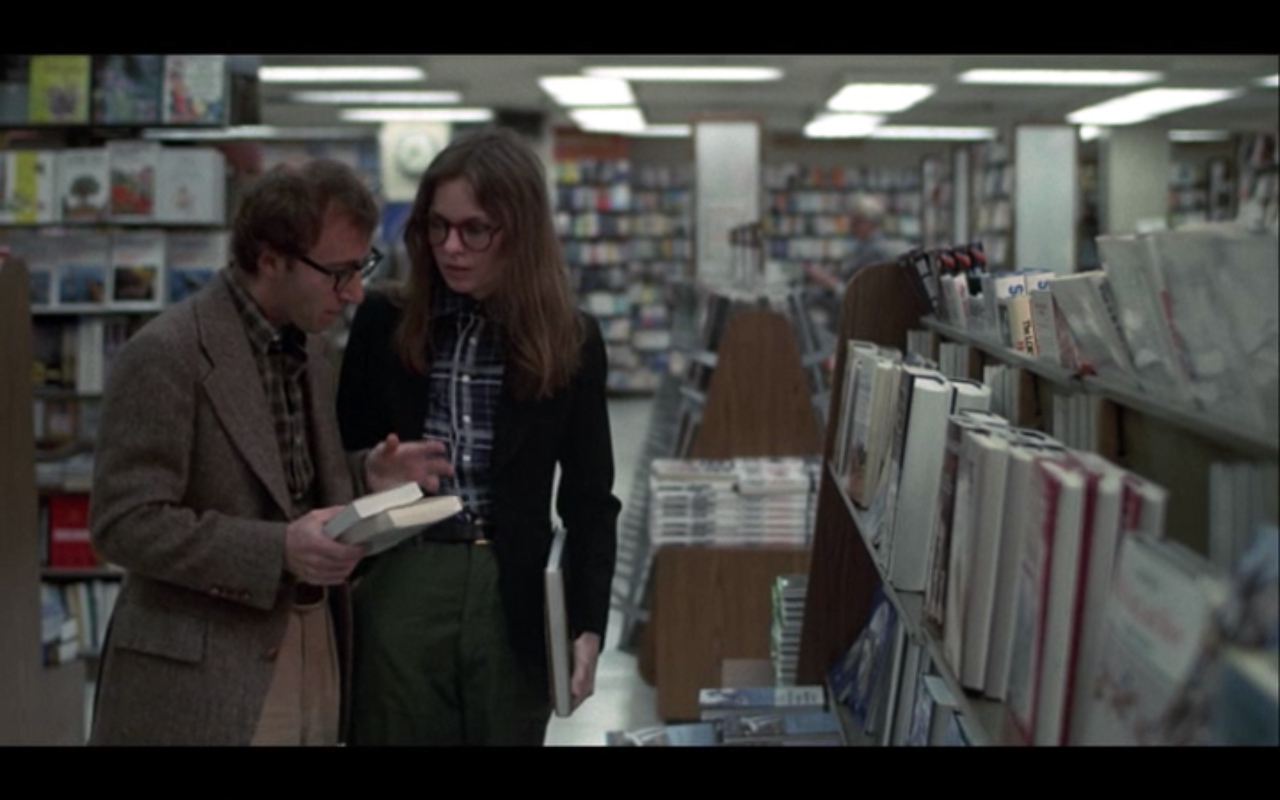
image

In this quiet scene in a bookstore, the protagonist of Annie Hall: Alvy, a neurotic comedian, explains his philosophy of life to the titular female lead. According to Alvy, in life, you’re either horrible or miserable. If you’re horrible you’re either terminally ill of psychically disabled, so if you’re neither of those things, you should be grateful to be miserable. It’s an extremely negative outlook on life as a whole, and while it’s one that only Alvy seems to hold in the movie, it’s an outlook that the movie seems to want to transfer to the audience. Life is a miserable experience, and so by extension, are relationships. But just because life and relationships are horrible, that doesn’t mean they still don’t hold some kind of value.


The conclusion of both media pieces ultimately hinges on whether the couples of “Shrew” and “Annie Hall” reject or deny the expectations about love and marriage that have till that point driven the narrative. In “Shrew”, both Petruchio and Kate have defied the sexist expectations of the time, and as a result, while they may not be in love with one another depending on how the dialogue is interpreted, they are certainly both are happy at the end of the play. They hold each-other in a certain amount of respect, and the reader can gather that their relationship, even if it was not romantic, still persevered long after the last scene.


“Come, Kate, we’ll go to bed.

We three are married, but you two are sped.

[To Lucentio] ‘Twas I won the wager, though you

hit the white,

And being a winner, God give you good night”

-Petruchio(Act V, Sc 2)


In this quote, Petruchio lays out why exactly he thinks he is the “winner” at the end of the play. Though Lucentio has won the jewel of the play: Bianca, the ultimate symbol of purity and “victory” throughout the plan, Petruchio knows that his relationship, built on a bedrock of mutual understanding rather than the sneaky underhand tactics that Lucentio stooped too, will ultimately prove more sustainable. This again, is shown by Shakespeare in the play. When the men make a bet to see which of their wives will come first when called, it is only Kate who comes to Petruchio, and not only that, but drags the non-obedient Bianca by the ear along with her. This could be seen as Kate being fully indoctrinated into the gender politics of the time, but more likely, it’s to show that the woman and men who built their marriages on the norm, and by extension, expectations of the time will not have a healthy, mutually respected relationship.


On the other half of the coin, Annie Hall shows how relationship dynamics falter when both sides of the relationships believe wholeheartedly in the romantic expectations of the time, which is in this case, that love equals happiness. Building up to the finale, Alvy and Annie have broken up and reconciled multiple times, but now that he’s about to lose Annie perhaps for good to a handsome music producer, Alvy flies to California to get her back. His attempt utterly fails, even an attempted marriage proposal, and he flies back to New York. The film closes on a slight fast-forward to chance meeting Alvy and Annie have back in New York, and it’s Alvy’s closing narration over this final scene that truly ties the thematic core of this piece together.


image

As the ending credits start to roll, Alvy describes an old joke he once heard. In the joke, the narrator tells a doctor that his brother believes that he is a chicken, and when the doctor asks the narrator why he doesn’t turn his brother in, the narrator says that he “needs the eggs”, which strikes a chord with Alvy about his experience with relationships. In Alvy’s opinion, while relationships may be chaotic and stupid and miserable, everyone still puts up with them because they “need the eggs”. This is a direct parallel to the film’s thematic message about happiness in relationships. While modern day expectations say that relationships should be happy, Annie Hall says that they are in reality, well… chaotic, stupid and miserable. But despite that, relationships still “give eggs”, that human connection that we call love, and the hurt is worth it. The ending of Annie Hall shows what happens when expectation about relationships get in the way of actual relationships, that that human connection crumbles.


Both “Shrew” and Annie Hall are critics of relationship expectations in terms of the time period they were both created. While they go about it different ways, both pieces of media agree that these expectations that society create around the concept of relationships destroy those same relationships. Proper relationships can only work if both parties look past the expectations created by society, and see their human connection for what they are eggs that worth harvesting despite the nasty stuff around them.


Be the first to comment.

I Am Loud, Teach Me Silence

Posted by Otter Jung-Allen in English 3 - Pahomov - C on Monday, April 25, 2016 at 2:24 pm

A Thematic Comparison of The Taming of the Shrew and Silver Linings Playbook

In The Taming of the Shrew, the plot revolves around Petruchio “taming” wild and angry Katharine to be a proper and decent wife as part of a challenge. Pat in Silver Linings Playbook does the same to Tiffany unintentionally by falling in love with her.


Though the methods that the two men use may seem different, the end result and the stereotypes the pieces carry out are very similar. Both men see possession over the women in their lives that they wish to date/marry, and both men end their journeys with a docile partner as a result of their actions, whether intentional or unintentional. The idea that women need to be fixed by a partner is perpetuated by both literature and media that portrays men as the changing force of a “troubled” woman’s life. He uses his tools of strength and affection to sedate her ways and convince her to act “normal”. Even though the movie has some more egalitarian themes because it is a more modern piece of work, both The Taming of the Shrew and Silver Linings Playbook show us that outspoken women are seen as something to be loved or taught how to be loved when they are incapable of doing so.


“I will be master of what is mine own./She is my goods, my chattels; she is my house,/My household stuff, my field, my barn,/My horse, my ox, my ass, my anything./And here she stands, touch her whoever dare.” Act 3, Scene 2 (235-239)


In Shrew, Petruchio is a suitor from another land who arrives to purposefully tame and marry infamously untameable and always single Katharine. In this particular scene, Petruchio is announcing to a crowd the power that he has over Katharine, the woman who, as made clear to us, does not wish to marry him. Petruchio acts as if he deserves to own Katharine as both his wife and property. He demeans her by comparing her to objects and animals. He implies how obedient and inanimate she can be under his care. Here, Katharine is shown as something to be taught how to love because she is so “wild” she was previously incapable of doing so. The idea that a loud or rude woman is presented as an inanimate thing waiting to be taught love is sexist by nature.


The man in this scene is named Pat, and the woman Tiffany. They both have ambiguous mental illnesses and violent mood swings, and because of this they do not get along at first. But after meeting through a mutual friend and then establishing a complicated friendship, they manage to find some common ground through their honesty. Pat was imprisoned because he beat up a man that he caught his wife with. In this particular scene, he has recently been released a few days before and is out on a job when he runs into Tiffany. Here, he is explaining to Tiffany why it will work out when he meets up with his past wife, Nikki, again.


“Okay, yeah, we wanna change each other, but that's normal, couples wanna do that. I want her to stop dressing like she dresses, I want her to stop acting so superior to me, okay? And she wanted me to lose weight and stop my mood swings, which both I've done. I mean, people fight. Couples fight. We would fight, we wouldn't talk for a couple weeks. That's normal. She always wanted the best for me … our love's gonna be f---ing amazing.”


Pat acts as if he deserves to win back Nikki and that she should accept his advances, even after their separation was because of an explosion caused by his possession over her body. He sees Nikki as something that he must teach how to love. He implies she was incapable of loving him before he “improved” himself and vice versa. Though this may seem like a more egalitarian way of considering love (both partners must improve for the other), Pat still presents it as if the only reason they will ever be happy together in the future is because they both changed they way they looked/acted.


“Katharine the curst,/A title for a maid of all titles the worst.”

Act 1, Scene 2 (130-131)


In this particular scene, Grumio is speaking to Hortensio about Katharine, and how mad and difficult she actually is to handle. The implication that Katharine already had this nickname assigned to her in the past, since mentioning it is a point of humor. Katharine is obviously seen as a woman who does not fit the societal standards of female obedience, and therefore is labelled as “curst” and “the worst”. But we are shown later in the play that Katharine has always continued to act this way because of the contrast between her and her docile sister, Bianca. She even criticizes her father for not favoring her and instead giving Bianca all of the affection and good marriages. Katharine is a real person acting on real emotions, not a madwoman like she is made out to be.


slp.jpg

In this scene, Tiffany has just finished opening up to Pat about her depressive sexual behavior after her husband died. Then, Pat is discussing the dinner they had with a mutual friend and whether his behavior there would impress Nikki if Nikki had been there. They are speaking about the opinion of the actual woman who held the dinner, Tiffany’s sister. Tiffany is telling Pat what her sister said about him.


“She said you were cool, but … you know.”

“No, I don’t know.”

“Sort of like, how you are … sort of like me.”

“Sort of like you? I hope to God she didn’t tell Nikki that.”

“Why?”

“Because it’s just not right. Lumping you and I together, I mean, it’s just wrong, and Nikki wouldn’t like that. Especially after all the sh-t you just told me.”

“You think I’m crazier than you.”

“Because … I mean, well, we’re different.”


Tiffany is shamed by Pat because Tiffany does not meet the societal standards for female sexual activity. Therefore, Pat treats her as if she is a mad person and unable to be seen as anything acceptable. This is especially true because the purpose of the conversation is for Pat to woo Nikki again, and he condemns Tiffany’s behavior as not something that would attract a partner. Again, we return to the standards set for single women who do not want to marry.

It is made clear that Tiffany is a real person acting on real emotions, not a madwoman like she is made out to be.


Pat is Petruchio and Tiffany is Katharine. Both Tiffany and Katharine are labelled as onry and untamed. Except in Playbook as opposed to Shrew, both Pat and Tiffany are tamed by each other instead of the man taming the woman on purpose. Pat makes that clear when he says, “The only way to beat my crazy was to do something even crazier. Thank you. I love you.” Still, there are underlying implications of Pat taming Tiffany by loving her, and by the end of both the movie and the book (Shrew), both women are passive. Both Tiffany and Katharine are shown as people who need to be loved, and then are taught how to love once it is obvious that they are “unable” to. These portrayals show us that society’s attitudes toward heteronormative courtship/dating are largely skewed. Women are not seen as equals in the relationship in relation to men. Instead, they are first seen as something to be edited in order to fit patriarchal expectations. The moment they express themselves, outspoken women are seen as something to be loved or taught how to be loved when they are incapable of doing so.


1 Comment

The Bride's Keeper

Posted by Rifah Islam in English 3 - Pahomov - C on Monday, April 25, 2016 at 2:00 pm

A Comparison of "The Taming of the Shrew" and "Humpty Sharma Ki Dulhunia"

The play “The Taming of the Shrew”, explores the complexities of love and how it can eventually turn into marriage based in the past. On the other hand, the hindi film Humpty Sharma Ki Dulhania (Humpty Sharma’s Bride) takes a look at love and marriage in the 21st century. In the play and the movie, the parents have a huge say in the marriage part of their children’s love story. The parents in both stories wish to see their daughters secure financially. While there are similarities between the concerns the parents have about their daughters, the way that their concerns evolve and they come to a compromise throughout the stories are different.

In the play, Baptista is only concerned about the money that the suitors can offer his daughter. This idea doesn’t budge or change at all throughout the play. In the end, he’s happy that both his daughters were able to get married to such rich men and doesn’t really ask for much else. In the movie, Kavya’s (Humpty’s lover) father is unaccepting of Humpty’s financial situation. However, after getting to know Humpty and who he is, he changed his mind. These stories reflect that while fathers can still be concerned about financial security in marriage for their daughters, today they are more flexible and willing to accept marriage from a suitor with a good heart and personality.

“Faith, gentlemen, now I play a merchant’s part;

And venture madly on a desperate mart.”

(Act II, Scene i, 345-346)

In the quote, Baptista is referring to himself as a merchant. It’s almost as if his daughter’s marriage means he’s selling her, like a merchant would sell his goods in a marketplace. By this point in “Taming of the Shrew”, Petruchio convinced Baptista that his daughter has agreed to marry him and that they will be married by Sunday. Baptista is very happy. What else could he ask for? Petruchio had everything he wants which consists of money, money and even more money. By playing merchant and essentially “selling” his daughter, Baptista can rest assured that there will be plenty of money involved in this marriage.

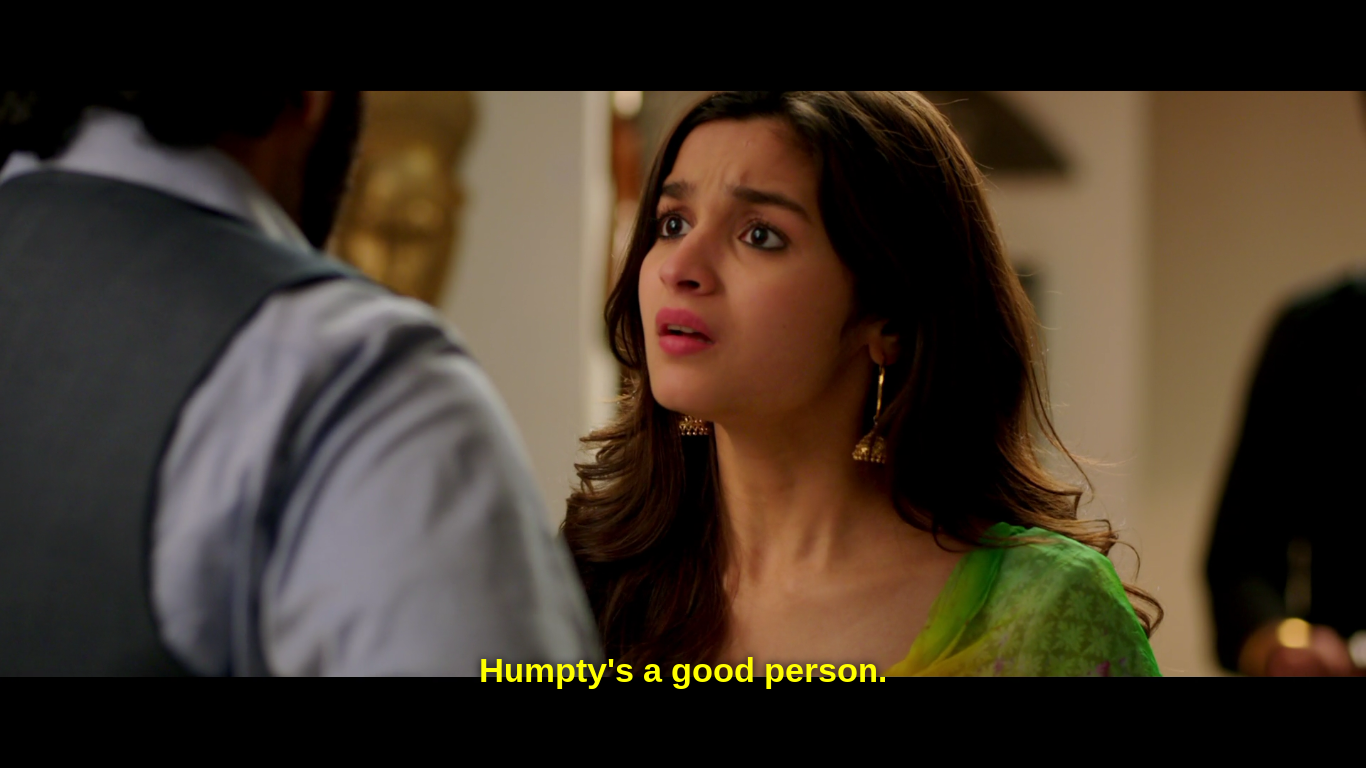
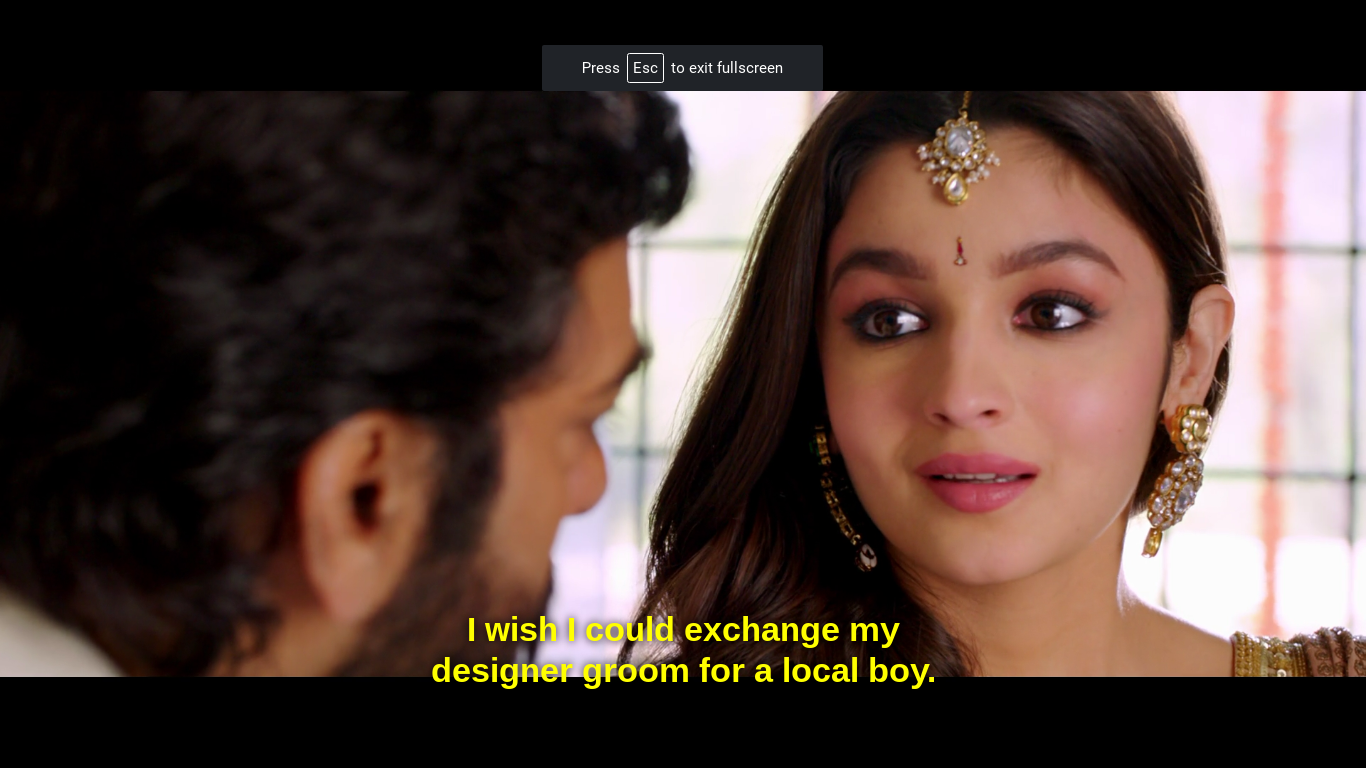
Screenshot 2016-04-23 at 5.07.55 PM.png

In the film, Kavya’s father, Mr.Singh, finds himself in a dilemma. Her daughter loves Humpty, who doesn’t have much to amount for financially. However, her marriage is already fixed with a man who is the perfect match in his opinion. Mr.Singh tries to immediately break Kavya and Humpty’s relationship, but seeing his daughter’s persistence he gives Humpty a chance.  

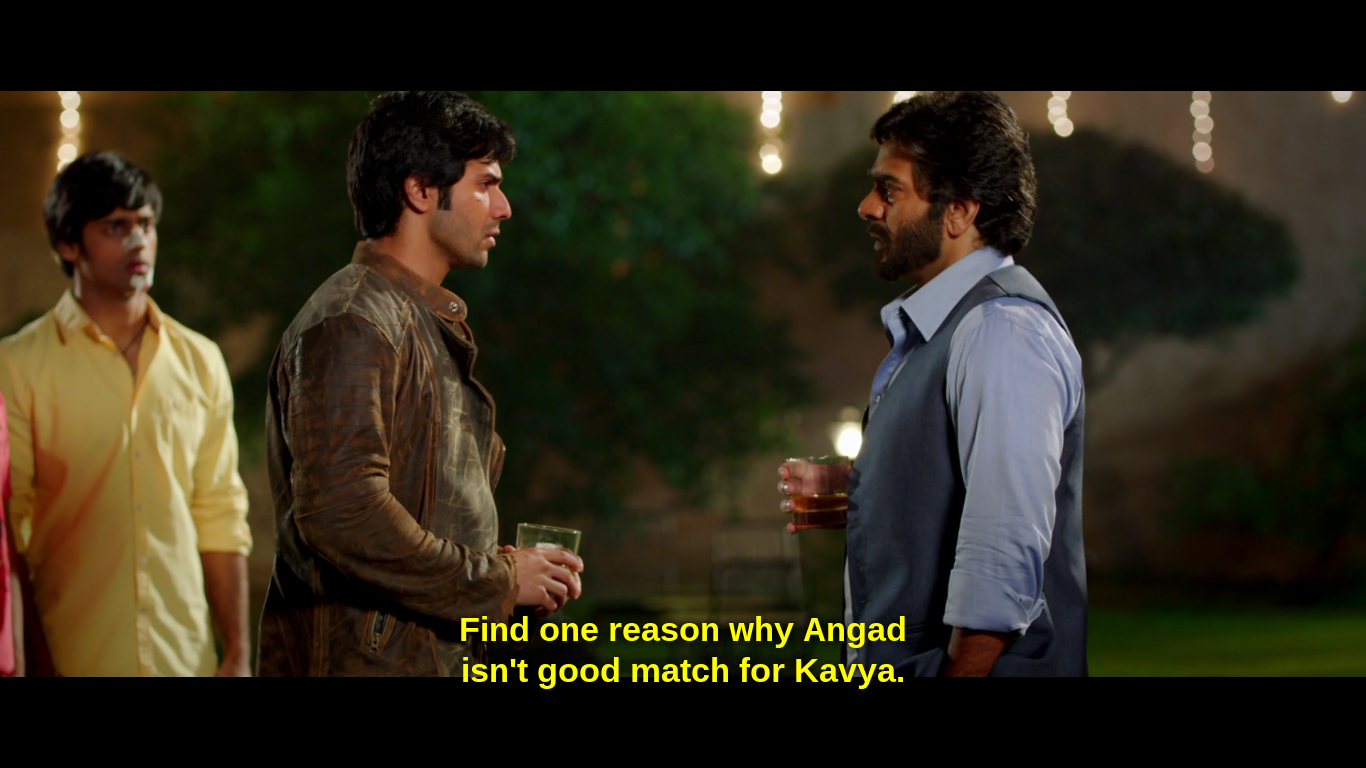
Screenshot 2016-04-23 at 5.11.42 PM.png

The conditions are simple. Humpty has to find just one reason why Kavya’s shouldn’t marry her fiance. This shows that even from the start, Kavya’s father is measuring Humpty on his brains and wit, not just his bank account. He wants to put Humpty in his shoes

“Fear not, Baptista, we will content you.”

(Act V, Scene ii, 139-140)

During this scene, Baptista finds out that Cambio is actually Lucentio. At first, he is completely outraged. He sternly asks why Lucentio married his daughter without his blessing. Vincentio comforts him, by promising that Baptista will be content with what Lucentio will be able to offer. Everyone in this time period knows that a father wants nothing more than a financially stable husband for his daughter. Vincentio understands and can promise money to Baptista, who’s now worried about this new identity reveal. After the promise, Baptista quickly forgives Lucentio for his trickery. Even though he knows nothing about Lucentio other than his finances, Baptista doesn’t mind his daughter’s marriage with him anymore and doesn’t ask any questions.

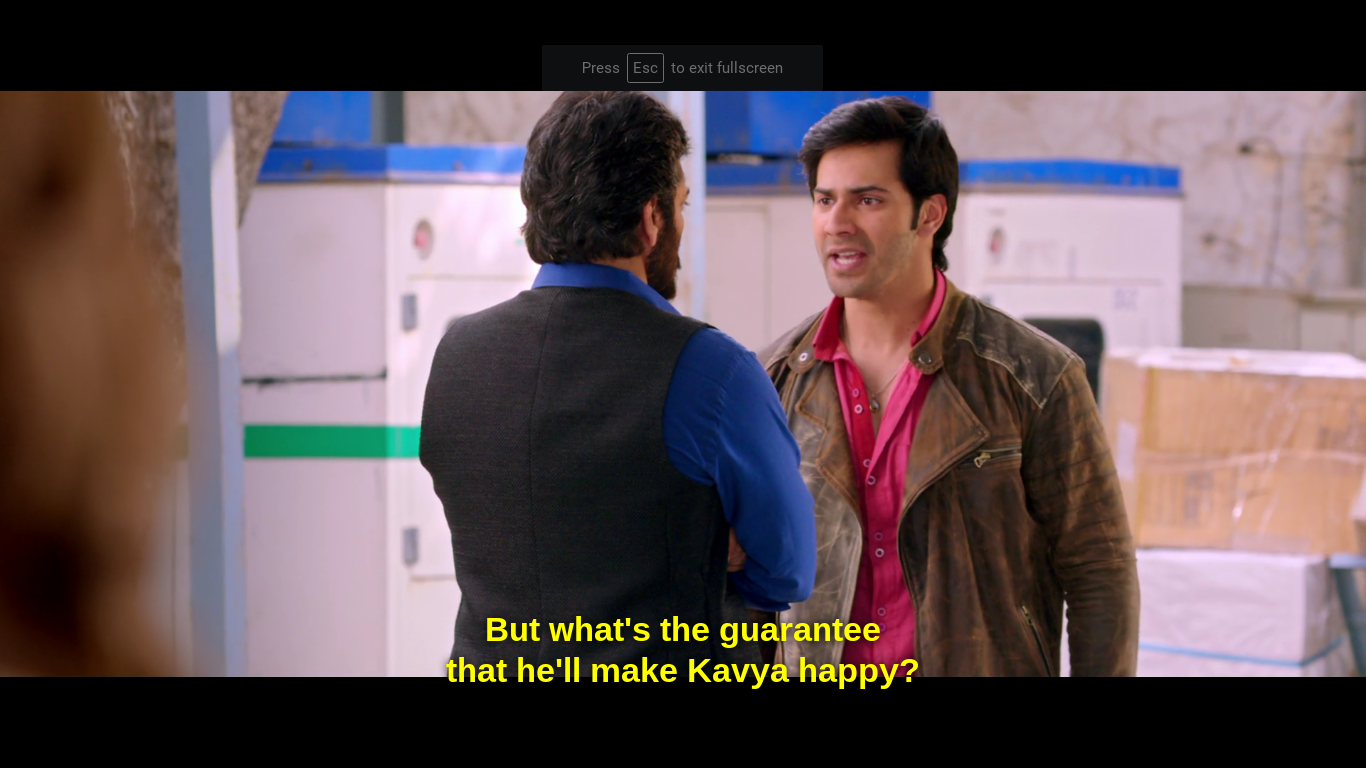
Screenshot 2016-04-23 at 5.23.32 PM.png

By the end of the film, Humpty realizes that there’s nothing wrong with Kavya’s fiance. In fact, he’s an amazing guy. However, there was no guarantee that the perfect suitor would make his daughter the happiest. He tells Mr.Singh that people weren’t created to be perfect. It is the strength and love of a relationship that helps make two people perfect. Still, Mr.Singh is not fully convinced. Kavya’s wedding with Angad proceeds.

Screenshot 2016-04-23 at 5.22.28 PM.png

It took his daughter to give Mr.Singh the final push towards acceptance. She doesn’t beg, just simply speaks her heart. Humpty and Kavya love each other very much and would figure the rest out. Humpty reminds Mr.Singh of himself as a young man. Once a simple mechanic when he met his wife and now a successful businessman. Soon enough Mr.Singh realizes that Humpty is the one for his daughter. Humpty is smart, sweet, humble and everything that one could ask for in a partner. Mr.Singh happily gets his daughter married to Humpty.

The simple fact that Mr.Singh gets his daughter married to Humpty even though his financial situation does not change throughout the movie shows reinforces the idea that the 21st century dad understands that there’s more than money to happiness to a marriage. Though initially Kavya’s dad doesn’t approve, he takes the time to listen to his daughter and her feelings. Per her request, he gets to know Humpty and eventually changes his mind. It’s all about what his daughter wishes for, finds happiness in and loves. By the end of the movie, everyone is ecstatic. Kavya gets Humpty, her father’s blessing and a fun filled wedding!

Screenshot 2016-04-23 at 5.50.29 PM.png


1 Comment

Presentation Donald Trump (Parts One and Two)

Posted by Ali Driggers in English 3 - Pahomov - C on Thursday, March 10, 2016 at 7:19 am

https://www.wevideo.com/view/605807475
https://www.wevideo.com/view/605517422
Be the first to comment.

Literary Lens Benchmark: Real Housewives of Atlanta

Posted by Nyla Moore in English 3 - Pahomov - C on Wednesday, March 9, 2016 at 11:05 pm

Be the first to comment.

Literary Lens Analysis: Emperors New Groove

Posted by Kara Heenan in English 3 - Pahomov - C on Wednesday, March 9, 2016 at 8:49 pm

https://youtu.be/Ktgj2usijLo

by Kara, Haisha, Rifah and Logan

Be the first to comment.

Mad Max: Fury Road Literary Lens Benchmark

Posted by Kevin Bowser in English 3 - Pahomov - C on Wednesday, March 9, 2016 at 8:29 pm

Be the first to comment.

Hunger Games Literary Lens Analysis: Q3 Benchmark

Posted by Ella Petersen in English 3 - Pahomov - C on Wednesday, March 9, 2016 at 10:25 am

https://www.youtube.com/watch?v=fCjQG9dU6yQ
Be the first to comment.
86 posts:
← Prev
  1. 1
  2. 2
  3. 3
  4. 4
  5. 5
  6. 6
  7. 7
  8. 8
  9. 9
Next →
RSS

ENG3-3

Term
2015-16

Other Websites

Launch Canvas

Blog Tags

  • Pahomov 1
  • English 3 1
  • Pah 1

Teacher

  • Larissa Pahomov
Slate (skeleton-v3 PHP 8 prototype) · Location: 1482 Green St · Shipping: 550 N. Broad St Suite 202 · Philadelphia, PA 19130 · (215) 400-7830 (phone)
×

Log In