• Log In
  • Log In
Slate (skeleton-v3 PHP 8 prototype)
Slate (skeleton-v3 PHP 8 prototype) Learn · Create · Lead
  • Students
    • Mission and Vision
  • Parents
  • Community
    • Mission and Vision
  • Calendar

English 3 - Pahomov - C Public Feed

Create a Post

  Women End Up Wearing the Pants

Posted by Larissa Pahomov in English 3 - Pahomov - C on Thursday, April 28, 2016 at 8:24 am

Comparing The Taming of the Shrew” to “ The Back up Plan”

By Jamira Terrell

In “The Taming of the Shrew,” it is proven  that romantic love within relationships is mainly controlled by men and the desire to possess the other person.  In “Shrew,” Petruchio swears that he can have his way with Katherine no matter what she wants. In contrast, Zoe from “The Back-up Plan” takes on the “manly” role and becomes the possessive and dominant one within the relationship.

Zoe in the movie; reflects Petruchio from “Shrew” because she is the dominant character just like Petruchio in the play. They share some of the same key roles, emotions, tactics, and determination to gain what they want within their relationship. Throughout the movie, Zoe gains the support of her friends because they know how badly she wants to have a baby, likewise, Petruchio also gains the support of his friends. Also, the romantic relationships within “Shrew” and “The Back-Up Plan” were both forced. Zoe did not like Steve in the beginning of their relationship; instead,she wanted him for one reason to be able to have his baby. Although there are many similarities, Zoe, unlike Katherine, actually has feelings for Steve once she grows closer to him. Likewise, Petruchio was pursuing Katherine, whereas Zoe was pursuing Steve, until a change of events when Steve messes up and he ends up chasing after her. The differences allow for a peaked interest in both scenarios;Allowing the viewer to see that women have accessible power and control either equal or more than men these days. But at the end of the day, both parties in the situations must maintain the same love for each other in order for the relationship to be deemed a romance.

“I am ashamed that women are so simple to offer war where they should kneel for peace, or seek for rule, supremacy, and sway when they are bound to serve, love and obey.”

-Katherine, (Act 5, Scene 2, Line 177-180)

In this part of Katherine’s speech, given after a bet that was placed, she is explaining women’s loyalty to their men. The bet placed was to see who’s woman would come to them first when summoned. Being as though Katherine was not only the first, but only woman to come when called, Petruchio won the bet. Katherine was surprised at the fact the other women did not adhere to the needs of their partner. In her speech Katherine emphasizes the notion that women should surrender to their man and everything that they do should be in benefit of him; what he wants, he gets. In the time period of this play, it was imperative that women remain inferior and passive within relationships or else, the would not make good wives. From little, girls were raised knowing that they not only should get married, but were obligated to, and there would be no marriage without a form of loyalty.

Zoe finds herself in a similar situation as she tries to explain to Steve what her plan is for their future, but at the same time how she does not plan to fall in love with him but yet, they go their separate ways.

Image result for the backup plan movie

In this scene from "The Back-Up Plan," Zoe nervously explains to Steve that her future plans are to fall in love, get married, and have a baby, but not necessarily in that order. More like, have a baby, get married, and fall in love. Throughout the movie, Zoe is always anxious and nervous about every little thing she does. She is afraid, that something, or someone, may mess up her plan to have a baby, unlike Petruchio, who in the movie knows exactly how his plan is going to work and doesn’t fear that anything will mess that up for him.

"It's awful, awful, awful. Then a small moment happens, that's so magical. That makes it all worthwhile."- Steve

Steve tries to kindly get Zoe to understand that certain things in life can not be forced. It is all catalyzed by a small event. Knowing that Zoe is worried that, because she is getting older, she will no longer be able to carry a baby for much longer, he tries to console her by letting her know that things will happen at the least expected times. Although, Petruchio and Katherine seem to not agree. Given that Petruchio is forcing what he wants within a relationship, and Katherine has to abide; same way that Zoe is forcing what she wants and Steve has to abide.

“Thy husband is thy lord, thy life, thy keeper, thy head, thy sovereign, one that cares for thee, and for thy maintenance commits his body to painful labor both by sea and land…”

Katherine, (Act 5, Scene 2, Line 162-170)

Towards the end of the play, Katherine gives a speech devoting herself to Petruchio. She knows and accepts the fact the her husband, being a man that he his, has the right to control her and have complete dominance over her. This is an attribute that she becomes accustomed to, so much that she believes that her love and obedience to Petruchio is not even enough to thank him for the role he plays in her life; dominant and superior. She ends by saying “Too little payments for such a debt.”

In conclusion, both the movie and play prove that love and relationship are controlled by the desire to possess the other, but it does contrast the idea that dominance is not only a role that men play. In the end of the movie, Zoe ends up with twin babies, falling in love with a man that she never thought twice about, and having a grand wedding. Petruchio, at the end of the play, wins over Katherine and her loyalty to him. Both the movie and play end just the way the protagonists anticipated; with love, loyalty, and feeling of accomplishment.


1 Comment

Love or Money?

Posted by Yasmeen Collins in English 3 - Pahomov - C on Wednesday, April 27, 2016 at 12:33 am


Love or Money?

Comparing "Taming of the Shrew" to "Something’s Gotta Give"


In the novel "The Taming of the Shrew" it is proven that Petruchio and all the other men fight to have the opportunity to marry Katherine or Bianca. In the 2003 movie "Something's Gotta Give" the main character Jack Nicholson is rich and owns tons of businesses. He shows interest in young women only and they rush to catch any opportunities to be with him. The young woman in the movie is viewed as a gold digger and is seen negatively in society.

Both Jack and Petruchio share similar stories, but there thought process is different. Money plays a role in both situations, but with the movie Jack just wants a young woman to have sexual relations with while Petruchio wants a housewife with children. Dowry is brought up a lot throughout the novel and the men discuss how they don't want to get matched with someone who is poor. So, the main priority is the money, but women have to settle and just go along with it. In the novel, this shows how women are being used, but in the movie the man is using the woman in one way and the woman is using him in another. "These text show that money has always had a big influence on relationships, but that has changed over time as women have more direct access to earning and keeping money. As a result women’s status in relationships have changed a lot and improved. They are more equal now. "


"And therefore if thou know, One is rich enough to be Petruchio's wife..."

(Act l Scene 2, 67-68)

In this quote, Petruchio explains to Hortensio he’s looking for a wealthy wife. He later marries Katherine whose father and family are very wealthy. Petruchio has no intentions of marrying a woman he loves or has anything in common with. He prefers a woman he can tame and a woman with money.


Erica caters to Harry as he recovers from a heart attack. He continuously tries to come on to her and plays his tricks like Petruchio.


Screenshot 2016-04-24 at 5.52.45 PM.pngScreenshot 2016-04-24 at 5.53.23 PM.png

In this scene Harry is trying to woo Erica by holding conversation and coming onto her. In the play Petruchio does something similar when he confronts Katherine and constantly follows her around trying to win her over.  


" I come to wive it wealthily in Padua; If wealthily, then happily Padua."

(Act 1, Scene 2, 76-77)


Here Petruchio explains how marriage is what he wants, but money is the key. He explains how marriage brings happiness not from love, but from having a lot of money. To him that his what makes a relationship successful.


Jack hops from woman to woman, but has yet to think about settling down or finding a woman that actually suits him.


Here, Jack is staying at the beach house with his young girlfriend Marin. The house is very nice, with a view, and is spacious. In “The Taming Of The Shrew” Petruchio would have wanted to marry Marin because she’s young and pretty, but also comes with money to support herself and show off. As mentioned in my intro both Harry and Marin are using each other. She wants a man with money and he wants a young girl who can keep him interested and feeling good about himself.


" Hortensio: I promised we would be contributors, and bear his charging of wooing wharsoe'e. Gremio: And so we will, provided that he win her.

(Act 1, Scene 2, 218-220)


Marriages are treated like business deals in this play between Katherine's father and the man she’s marrying. Everything is set up and decided between the men and women are just expected to follow along with all the decisions they make. In the movie, you can see that Harry chooses to break up with Marin for her mother Erica and she agrees to it.

As the movie starts Harry is considered a player and gives out his money to young women he’s sleeping with. He explains that he only dates women under 30, but as the movie progresses he begins to have heart attacks, panic attacks, and other health problems due to the sexual relations with these different young women.


At the end of the movie, Harry falls in love with a woman named Erica who is his age and ends up marrying her. He comes to realize that he can be happy with a woman his age. Also, Marin the woman Harry left finds a husband her age and has children. She becomes independent enough to manage her own money and not follow after a man has seen in “The Taming of the Shrew”.


Works Cited:

  • Shakespeare, W. (1992). The Taming of the Shrew (B. A. Mowat & P. Werstine, Eds.). New York, NY: Washington Square Press.
  • "Something's Gotta Give (film)." Wikipedia. Wikimedia Foundation. Web. 27 Apr. 2016.


2 Comments

When Katherine Met Petruchio

Posted by Harrison Freed in English 3 - Pahomov - C on Tuesday, April 26, 2016 at 11:31 pm

Or, When The Taming of the Shrew Met When Harry Met Sally

William Shakespeare’s The Taming of the Shrew is a tale of spousal abuse and marital intrigue. Its main conflict is between Petruchio and Katherine, a suitor and an unwilling bride, respectively. While some of its observations remain pertinent, it is less than timeless. More updated representations of romance can be found in modern romantic comedies, like 1989’s When Harry Met Sally, which focuses on, yup, Harry and Sally. Their relationship is, for most of the movie, more nebulous than the one presented in The Taming, but by the end of the movie, the characters are married. Where they are separate are the ways in which those characters reach marriage, and those different ways reflect the time periods that both works were written in. The different ways that the main characters of The Taming of the Shrew and When Harry Met Sally approach marriage prove that power is more evenly spread in a modern romantic relationship than in a historic one.

Petruchio has rather low standards for marriage. In Act 1, Scene 2, lines 61-62, he explains this plainly. “I come to wive it wealthily in Padua; If wealthily, then happily in Padua.”

Katherine’s father is rich, so Petruchio deems to court her. Katherine, who is known for her rude, violent behavior, is somehow not opposed to marriage, be it generally or personally. In fact, in Act 2, scene 1, line 33, Katherine worries that “I must dance barefoot on [my well-tempered, attractive, and therefore oft-courted sister’s]  wedding day.” A wedding would seem mutually beneficial, then, but their first meeting leaves Katherine angered. She simply dislikes Petruchio. After a long argument in which Katherine tells Petruchio that, essentially, she’ll never marry him, Petruchio says to Katherine’s father:


“Father, 'tis thus: yourself and all the world,

That talk'd of her, have talk'd amiss of her...

And to conclude, we have 'greed so well together,

That upon Sunday is the wedding-day.”

Katherine says to Petruchio:

“I’ll see thee hang’d on Sunday first.”

(Act 2, Scene 2, lines 280-289)


Regardless of her prior interest in marriage, she has made something very clear. She can’t stand Petruchio. She would rather kill him than marry him, if one is to take her words literally. Marriage has historically been seen as the final goal for women, especially in an era where very limited options for work were available to them. For Katherine to refuse marriage, after acknowledging that she has basically succumbed to the societal pressures, means that she bears an impressive amount of hatred for Petruchio. Regardless of her wishes, though, Petruchio married her that Sunday.

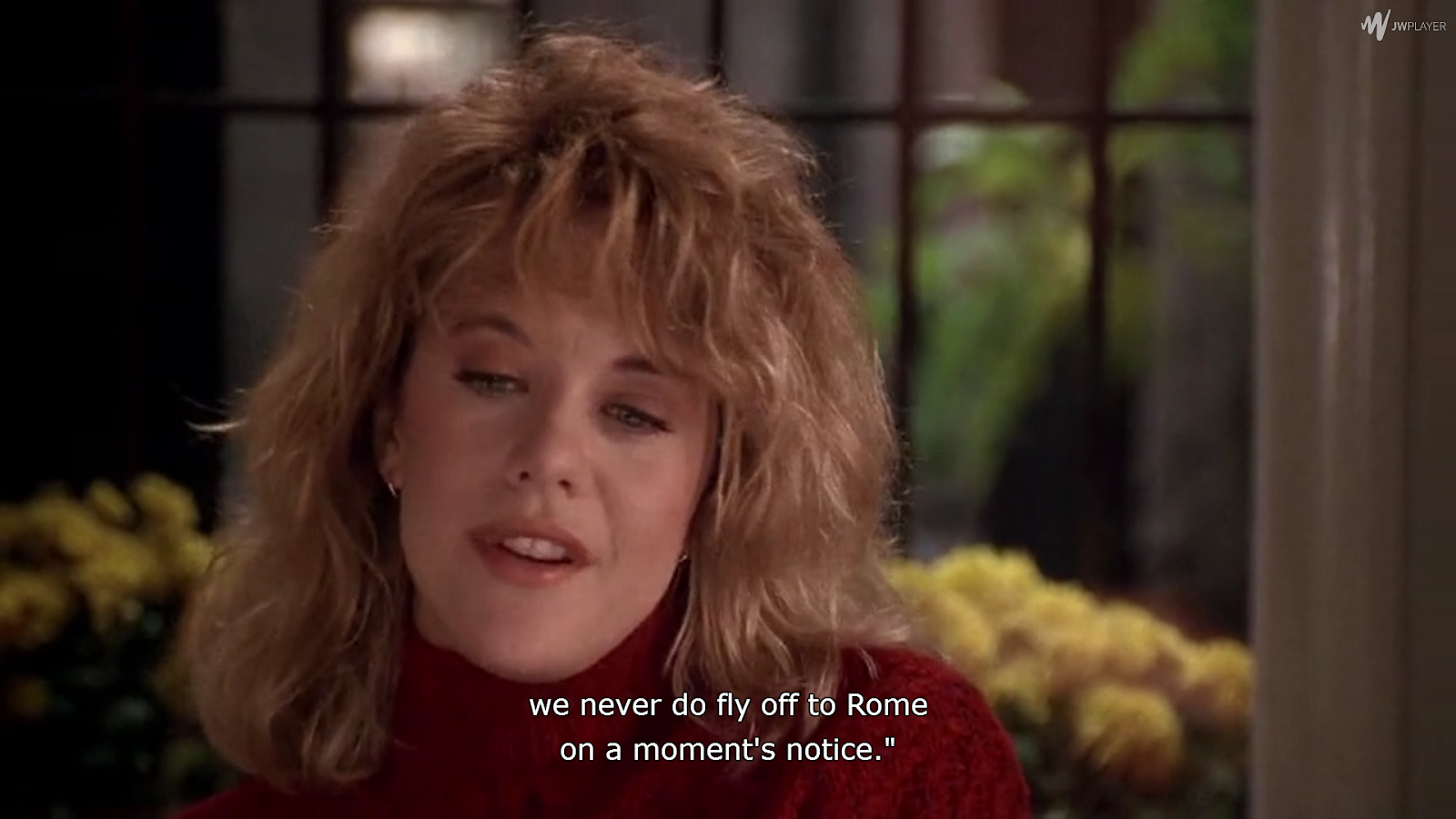
Like Katherine, Sally wants marriage. When she informed her boyfriend Joe of this interest, he told her that he didn’t share that interest. Recognizing their different motivations for a relationship, Sally pragmatically broke it off with Joe. Sally recounts to Harry, “We wanted to live together, but we didn't want to get married because every time anyone we knew got married, it ruined their relationship… Joe and I used to talk about it, and we'd say we were so lucky we have this wonderful relationship, we can have sex on the kitchen floor and not worry about [kids] walking in. We can fly off to Rome on a moment's notice... And [at the circus, a] man had [a little kid] on his shoulders, and she said, ‘I spy a family.’ And I started to cry. You know, I just started crying. And I went home, and I said, ‘The thing is, Joe, we never do fly off to Rome on a moment's notice.’”


Where Katherine was married against her will, Sally was denied marriage. What’s different about these situations is that Sally was allowed to break up with her significant other when she wasn’t getting what she wanted from a relationship. Katherine got absolutely nothing she wanted from her relationship with Petruchio, but because renaissance-era Italy was less progressive than synthpop-era America, she was not allowed to end the relationship. The power of termination was in the hands of Petruchio, or even in the hands of her father. It certainly wasn’t in her own hands. Sally’s ability to end her relationship is a distinctly modern one.

After the wedding, Petruchio took it upon himself to make a more compliant, mild-mannered Katherine, through the time-honored traditions of gaslighting, torture, and just plenty of abuse. If one is to, again, believe that Katherine speaks without sarcasm, then it would appear that he was successful, as Katherine said to two insolent wives:


“I am ashamed that women are so simple

To offer war where they should kneel for peace;

Or seek for rule, supremacy and sway,

When they are bound to serve, love and obey.

Why are our bodies soft and weak and smooth,

Unapt to toil and trouble in the world,

But that our soft conditions and our hearts

Should well agree with our external parts?

Come, come, you froward and unable worms!

My mind hath been as big as one of yours,

My heart as great, my reason haply more,

To bandy word for word and frown for frown;

But now I see our lances are but straws,

Our strength as weak, our weakness past compare,

That seeming to be most which we indeed least are.”

(Act 5, Scene 2, lines 170-185)


Strong women don’t last in this era. The odds are stacked too strongly against them. So, when Katherine, a once-defiant woman, goes on and on about the inferiority of the female gender, it is clear that all traces of her personality have all been replaced with the vision of her imagined by Petruchio. She not only accepts the marriage that she had once been so fully opposed to, she accepts her role, the woman’s role, as a servant.

Harry experienced a similar change in opinion regarding the dynamics of romance. In his youth, he confidently asserted that women and men can’t be friends due to the possibility of sex always hanging in the air. But after around a sexless friendship with Sally, his mind began to change. In reflection, he told her, “You know, you may be the first attractive woman I've not wanted to sleep with in my entire life.”


Sally managed to change Harry’s mind, and in a rather effortless way. She didn’t need to resort to such extreme measures as Petruchio did to get Harry to come over to her way of thinking. In fact, her friendly presence was all that was required to change Harry’s beliefs. That a woman could change the mind of a man is uniquely modern, especially considering Katherine’s conclusions about women’s inferiority.

Marriage was an apparent goal to Katherine and Sally. Katherine denied marriage with Petruchio; Joe denied with Sally. Katherine was too bold to do deny as she did, and so her personality was erased, whereas Sally managed to change her male friend’s personality quite passively. The differences in era, the dichotomy of “then and now,” make their situations quite different. Per old traditions, Katherine was stripped of self for having fight in her. In the modern case, Sally was actually able to change Harry. The gender reversal shows a greater equality in power among both genders in a heterosexual relationship. Sally was able to break up with Joe, while Katherine was forced to marry Petruchio. Sally’s freedom would not exist in that older era. The power granted to her by the passage of time put her on equal footing with all of her male counterparts. Her ability to remain independent, to date those she’d like to, and to express whatever opinion she has is an ability granted by modernity and its progressive tendencies.


2 Comments

Expected

Posted by Haisha Hahsy in English 3 - Pahomov - C on Tuesday, April 26, 2016 at 11:22 pm

In The Taming of the Shrew one can see how Baptista, the father of Katherine (also known as Kate) and Bianca, has a certain standards for the men his daughters would marry. Katherine being lucky even to just get married, due to her bad attitude. While his second daughter, Bianca is to marry a man that fits his requirements or at least approaches his requirements. In the year of 2002, during My Big Fat Greek Wedding, a woman falls in love with a non- Greek man. Which does not fit her father’s requirement, for he wants a Greek husband for his daughter.   This makes her love life more complicated than she wanted. The Taming of the Shrew and My Big Fat Greek Wedding both have characters in which are not giving up till they get their wanted spouse.


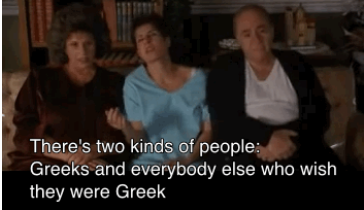
While taking in account their thoughts and requirements of family members, Bianca’s and Toula’s fathers both have requirements for their daughter's spouse. There is a difference in what the expectations are while one is looking for the wealth (Baptista), the other father Gus is looking for the right ethnicity. This shows how parents still have high expectations and requirements for their child's spouse. Even though in modern era people have more freedom to love and marry who they want. Diminishing the power of parents, for today the younger generation is not frowned upon (as much) if they don’t listen to their parents.  Yet still parents have their say and expectations in their child’s marriage. Toula’s father, Gus from My Big Fat Greek Wedding shows how proud of a Greek he is. In the scene below, Gus states:

Screenshot 2016-04-26 at 1.04.33 PM.png


This quote shows just how stuck up Gus is about being Greek. Always telling his family and especially his unmarried daughter about how Greeks are the best and that no one else can be like them; meaning that ‘you can only marry a Greek boy for he is the best.’

In The Taming of the Shrew Baptista has different expectations for each daughter for the attitudes they have. For Katherine his eldest daughter Baptista just wants her to get married. But due to her sour attitude towards all especially men, it is hard to find a suitor for her. With saying such, he also wants Katherine to get married before Bianca. Bianca is known to be much more fair, sweet, and kind. Meaning that everyone wants to marry Bianca while they are all being held back by the older sister which cannot find a spouse to marry her.  In act 2, scene 1, lines 361-364


Baptista:

“Content you, gentlemen. I will compound this strife.

‘Tis deeds must win the prize, and he of both

That can assure my daughter greatest dower

Shall have my Bianca's love.“


Here Baptista tells suitors of Bianca, that are fighting over who will marry Bianca; Baptista responds to both of them saying that whoever has more to offer (Deeds), wins and gets to marry his daughter. Deeds meaning wealth. Who ever has more, wins the ‘prize.’  In My Big Fat Greek Wedding the father of Toula, has the key requirement of her spouse being a greek boy. In the scene below, Toula is in the car with her father and narrates listing the three things nice Greek girl are supposed to do in level


“Because nice Greek girls, are supposed to do three things in life. Marry Greek boys, make Greek babies, and feed everyone till the day we die. “


Screenshot 2016-04-26 at 12.24.40 PM.png


It seems that there is one mission for Greek girls and then after that there is nothing else. Just to meet the required spouse and then make children and keep being the housewife. In The Taming Of The Shrew Kate and Bianca have been given a mission to get married and to take good care of their spouse.  


“Page

My husband and my lord, my lord and husband,

I am your wife in all obedience.

SLY

I know it well. (Induction.2.107-109)”


Here in the induction Sly has no doubt understanding that he is the dominate one in this relationship. Giving him a raise in thought and control. Showing how in a relationship how love it not only counted for but how the control in the relationship; changes many keys.


Screenshot 2016-04-26 at 1.46.31 PM.png

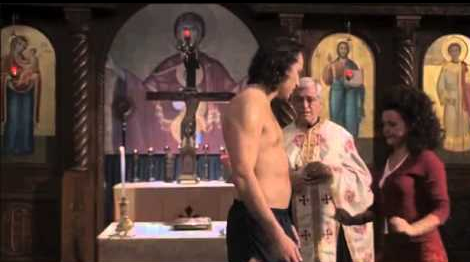
Here Ian is getting baptised in order to fit one of the many requirements in order to marry Toula. Her father stated that Ian must be baptised in order to marry Toula. Gus tops everything off by saying,


“It is your lucky day to be baptised into the Greek Orthodox Church!”  


Later on his friend, Mike states how Toula’s family has Ian wrapped around her little finger. Ian tells Mike that he loves her and will do anything in order to be with her. Here there is a different definition of love; that you will do anything in order to keep your spouse happy and to be with them. Yet the control is used in different ways. In The Taming of the Shrew control is used in order to tame others and for that person to only get what they want. Toula’s family may be doing the same thing; just the other person in the relationship has to pay the toll. Ian does it for love, as Katherine coops with some of the things Petruchio says in order to just get to what she wants. Like a bribe ‘I will take you to your father if you prove my control on you.’


Petruchio:  I say it is the moon.

Katherina:  I know it is the moon.

Petruchio: Nay, then you lie; it is the blessed sun.

Katherina: Then, God be bless'd, it is the blessed sun;

But sun it is not, when you say it is not;

And the moon changes even as your mind.

What you will have it nam'd, even that it is,

And so it shall be so for Katherine(Act IV, Scene 5 ).

  Love has many tolls in which it’s romance may not last forever. Yet the control is something that most try at in order to show the love in the relationship. That control can also be used when trying to make the spouse meet up with the requirements. Parents have always had a huge say in their children’s spouse. With the requirements they made in order to have a good spouse for their child in order to set them for a ‘good’ future. The child’s say today is what has really changed. For when Kate got married to Petruchio she did not agree, and never tried to marry him. She was just put into that spot where she had too. While Toula had much more say and actually got what she wanted; to marry Ian. In this era the child has more say yet as requirements may differ at points in the end the one with more control, makes the other partner change in order to fit certain requirements.


1 Comment

What’s Love but a Little Honesty?

Posted by Kevin Bowser in English 3 - Pahomov - C on Tuesday, April 26, 2016 at 11:10 pm


Comparing “The Taming of the Shrew” to “Hitch”


With “The Taming of the Shrew”, Shakespeare introduces the historic idea of love, and it’s definitive nature of being solely for the economic and personal gain of an individual. All of the characters featured in the play are tailored around the idea that marriage, unlike society’s mythological perception, is not built upon love. On the other hand, Andy Tennant’s Hitch (2005), presents a modernized interpretation surrounding the meaning of love as well as its marital counterpart.


While some audiences may interpret the actions of Alex Hitchens to be similar to those of Petruchio, a large majority of viewers will see the contrast in personality between the two. Petruchio’s main objective throughout the entire play is to not only marry Katherine, for her wealth, but to successfully implement his dominance over her life. As opposed to most women during that era, Katherine is outspoken and rebellious to the many forms of oppression society had for women. This genre of society, consequently produced high standards that well-intentioned men unfortunately have to overcome in modern time. Yet, Hitch embraces these skeptic aspects of women and enjoys acting as a consultant, just as Tranio did for Lucentio, so as to guide innocent men to healthy, long-lasting relationships. These texts reflect that today, people believe that an authentic relationship needs to maintain the notion of honesty so as to prevent the historic one sided nature of a romantic union.


"And woo her with some spirit when she come! Say that she rail, why then I'll tell her plain, she sings as sweetly as a nightingale"


(Act 2, Scene 1, 177-180)


In this scene, we see a ponderous Petruchio lingering outside his soon-to-be fiance’s chamber. The suitor has just been blessed by Baptista, father to his love interest. The audience observes Petruchio reciting a remedy for subduing Katherine in the verbal joust that will surely ensue. As the quote portrays, he plans on utilizing reverse psychology, which is his definition of charming Katherine. However, instead of pursuing Katherine for her qualities as an individual, the perks of being married to her which include her large dowry as well as her beauty, outweigh the romantics in Petruchio’s mind.  


Hitch finds himself in a similar predicament in the film, however, his actions lack villainous intent.


In this scene of the movie, we see the first encounter Hitch has with Sara Melas in a nightclub. Prior to their conversation, Sara had already dismissed a guy that attempted to pursue her, to no avail. And it is revealed by Hitch, as well as her body language, that she has come to the club in order to relax and enjoy the scenery. As a man trying to charm a woman, Hitch is left at a severe disadvantage in the sense that he is trying to come off sincere while Sara has already judged him as a “pig” with the intentions of seducing her.


"‘Tis deeds must win the prize, and he of both that can assure my daughter greatest dower shall have my Bianca’s love."


(Act 2, Scene 1, 361-365)


In this scene, we see Baptista contemplating the marriage proposals of two suitors. He is faced with the somewhat difficult decision of what offer is best for his daughter. And unlike modern marriage prepositions, which are centered around the happiness and love of both individuals, this proposal is encompassed around money. As the quote suggests, Baptista is basically offering his own child off to the highest bidder as if she were an object. And despite the fact that the dowry is for the wife, this future union would be to the benefit of the suitor because Bianca’s love was essentially void in the arrangement.


Hitch describes his true intentions as a “Dating Consultant” to a distraught Sara.


In the movie, through coincidental circumstances Sara has discovered Hitch’s occupation as a romantic consultant for men, which she believes is a scam to help men seduce women. This scene emulates the honesty behind Hitch’s passion during a speed date activity, which coincidentally serves as the setting for his explanation. In perspective, the protagonist acts as a catalyst that helps men essentially disarm the protective nature women have, so as to genuinely love them. Suitors in The Taming of the Shrew, such as Petruchio, are the embodiment of sleazy men that ultimately led to how women view men in pursuit of their female counterparts.


At the conclusion of the movie, Hitch comes to a more profound comprehension of his love for Sara and expresses it to her. The same can not be said for Petruchio and his wife Katherine, who seemingly relinquishes to the submissive role of a wife. Unlike the film, Shakespeare leaves the play’s conclusion to audiences interpretation of whether the shrew (Katherine) was actually tamed by her husband or whether she enacted a ploy. Either way, these texts reflect that the love apparent  in both individuals will prevail over relationships that are built upon dishonesty and conceit.


Works Cited


  • Shakespeare, W. (1992). The Taming of the Shrew (B. A. Mowat & P. Werstine, Eds.). New York, NY: Washington Square Press.


  • Hitch (film). (2005, February 11). Retrieved April 25, 2016, from https://en.wikipedia.org/wiki/Hitch_(film)


2 Comments

The Taming of the Cher

Posted by Colin Pierce in English 3 - Pahomov - C on Tuesday, April 26, 2016 at 10:48 pm


The Taming of the Cher

An analysis of Taming of the Shrew and Moonstruck


In The Taming of the Shrew, Petruchio subtly manipulates Katherine throughout the text from despising him to being in love with him. He does this so that he can inherit her father’s property when he dies. In the movie Moonstruck, Nicolas Cage’s character, Ronny, does the same thing to Cher’s character, Loretta, in order to get revenge on his brother, Johnny, who is her fiancée. Petruchio and Ronny both have ulterior motives for going after their respective female love interests. These similarities show that relationships between couples often involve manipulation and gain for one person and not the other. Although these stories might appear like typical romances on the surface, they actually show men using women for their own purposes, no matter what era they take place in.


“Petruchio: Then tell me, if I get your daughter’s love, what dowry shall I have with her to wife?; Baptista: After my death, the one half of my lands, and, in possession, twenty thousand crowns.”


(Act 2, Scene 1, lines 126-129)


This conversation between Petruchio and Baptista, Kate’s father, displays the motive that Petruchio has for wanting to marry her. Baptista tells Petruchio that when he dies, Petruchio will inherit half of his land, as well as 20,000 crowns when they are first married. 20,000 crowns is worth around $9,000 today.


When Ronnie and Loretta first meet, Ronnie explains to her that there is bad blood between him and his brother, Johnny, her fiancée. He believes that he was responsible for the loss of his hand. This establishes a reason that Ronnie might want revenge against his brother, and one way to accomplish that would be to steal his fiancée.


“Katherine: Forward, I pray, since we have come so far, and it be moon, or sun, or what you please. And if you please to call it a rush candle, henceforth I vow it shall be so for me.; Petruchio: I say it is the moon.; K: I know it is the moon.; P: Nay, then you lie, it is the blessed sun.; K: Then God be blessed, it is the blessed sun.”


(Act 4, Scene 5, lines 14-21)


In this scene, Petruchio tries to convince Katherine that the light in the sky is from the moon, and not the sun. When she finally agrees with him, he reverses his position and says that the light is from the sun, not the moon, and she agrees with him. By doing this, Petruchio is forcing Kate to agree with him because she knows he won’t stop until she agrees.


In the first scene in Ronnie’s apartment, Ronnie and Loretta are arguing about whether or not he should be mad at his brother. Then during the argument Ronnie flips the table and kisses her. Loretta is hesitant and pulls back, but then decides to accept the kiss. After this, Ronnie picks her up and says “I’m taking you to the bed.” It’s important to note that in this scene, all of the romantic actions are initiated by Ronnie and are not expected by Loretta. In this way Ronnie is, in a sense, forcing Loretta to participate. This is similar to the previous scene in Taming of the Shrew because Petruchio forces Kate to agree with him by getting her into a state where she can only say yes.


In conclusion, the plots of Taming of the Shrew and Moonstruck are similar because both involve the male main character manipulating a female love interest into falling in love with them so that they can achieve personal gain. Even though this is not as prominent in Moonstruck as in Taming of the Shrew, it is still evident if you analyze the behavior of Ronnie, who is the equivalent of Petruchio. Petruchio manipulates Kate by subtly forcing her to agree with him on trivial things so that she will start agreeing with him on larger things, and Ronnie manipulates Loretta by making her participate in romantic acts with him and getting her used to the idea.


Works Cited


Shakespeare, William, Barbara A. Mowat, and Paul Werstine. The Taming of the Shrew. New York: Simon & Schuster, 2014. Print.


Moonstruck. Dir. Norman Jewison. Perf. Nicolas Cage and Cher. Metro-Goldwyn-Mayer, 1987. DVD.

1 Comment

Deception, Rejection and Acceptance

Posted by Logan Smith in English 3 - Pahomov - C on Tuesday, April 26, 2016 at 10:27 pm

(Comparing “The Taming Of The Shrew” and “The Other End of The Line” )


Parents always want what’s best for their children, especially when it comes to marriage. Many parents feel that they should choose who their children marry. This may be a family tradition or a way to insure their children are financially safe. Even if parents don’t chose who their children marry they still give want to give their blessing. This is clearly shown through the play “The Taming of The Shrew” by Shakespeare. Baptista has two daughters, the oldest is Katherine and the youngest is Bianca. Bianca, being younger and tamer than Katherine, gets the most suitors. Were as Katherine viewed as a bad-tempered shrew doesn’t get any suitors, still her father wants her to get married first. The only difference between Baptista's decision in who his daughter marry is that Katherine can marry for love whereas Bianca will marry for financial stability. In the 2008 movie “The Other End Of the Line” the main character Priya’s father does the same thing.

Priya works at a credit card call center in India, at this center she has to pretend to be an American girl named Jennifer from California. One of her clients is Granger Woodruff, who makes commercial for a hotel in San Franciscan. As they talk on the phone she finds out more about him and the American things that he likes to do. For example his friend is getting married and Granger is setting up one last adventure for him. One thing that interest Priya is adventure, but there is only one problem her father. He hates her job and thinks she should have a regular job. Not only is he pressuring her to change her job but is also pressuring her to get married to the man he chose.

Both Baptista and Priya’s father have the same idea to chose who their daughters marry but they had different ways of dealing with the suitors. Take for example Katherine she had the choose to marry for love, while Priya had to marry because it was what her father wanted. These text reveal that fathers have the best interest for their daughters but they don’t realize when they are unhappy, which pushes their daughters to make distracted decisions.  

“Baptisia: I know not what to say, but give me your hands. God send you joy, Petruchio. Tis’ a match.”

(Act 2/Scene 1/Line 337)

In the following part of the book Baptista is excitedy allowing Petruchio to marry Katherine. Katherine on the other hand is not so excited. Before Baptista walked into the room Katherine and Petruchio were arguing, Petruchio was constantly trying to compliment Katherine while she shot down each attempt. But once Baptisia came into the room Petruchio claimed that they were in love, even though Katherine animatedly told her father they weren't. Her father ignored her protest and allowed Petruchio to marry Katherine.

Screenshot 2016-04-17 at 8.26.02 PM.png

Katherine’s problem is similar to Priya’s. Priya’s father has chosen a good family for Priya to marry into but first he makes Priya meet the family. Once Priya meets the man she is suppose to marry she notices they have nothing in common. Priya wants to travel and move to a different house. While the man she has to marry wants to stay in his mother's house and doesn’t want to travel anywhere. Like Katherine, Priya doesn’t want to marry the man her father choose.

Both fathers want what’s best for their daughters so they pressure their daughters into marrying someone they don’t love. The only difference is that Katherine gets married to Petruchio and changes who she is. While Priya won’t compromise her happiness and dreams.

Quote 2 From the Play:

“Lucentio: I have it, Tranio.

Tranio:  Master, for my hand, Both our inventions meet and jump in one

Lucentio: Tell me thine first.

Tranio:You will be a school master. And undertake the teaching of the maid: That’s your device.”

(Act 1/Scene 1/Line 191-198)

In this quote Lucentio is creating his plan with his servant Tranio to pretend to be a schoolmaster, Cambio, to woo Bianca and get closer to her. Lucentio has to pretend to be someone else because Bianca’s father Baptista isn’t allowing the suitors to get close to Bianca until Katherine is married off.

Lucentio’s use of deception is similar to Priya’s but Priya is using deception as a means of an adventure.  

Screenshot 2016-04-17 at 8.11.58 PM.png

In this scene from “ The Other End Of The Line” Priya is at her job at the credit card center. Her job is to provide credit card assistance, if there are unusual charges to inform the owner. While she talks to her client, and soon love interest, Granger she hears about the things he does, like spend money in himself. What catches her interest the most is when he mentions that he is throwing one last adventure for his friend.  After hearing about Granger’s finally adventure for his friend she decides she wants an adventure before she gets married to a man she doesn’t. She travels to meet Granger as Jennifer, her fake identity, at the hotel he is staying at. But once she gets there she doesn’t have the courage to meet Granger, until he accidentally falls into her, she then proceeds to introduce herself as Priya not Jenifer. Her father’s constant pressure to marry a man she doesn’t pushes Priya to want to leave and have one last adventure before she is forced into marriage.

The “The Taming Of the Shrew” and “The Other End Of the Line” are very similar. Both Lucentio and Priya use deception to get what they want. Also like Katherine, Priya is being forced into a loveless marriage. Though the “The Taming Of the Shrew” and “The Other End Of the Line” are similar in many ways they are also very different. Unlike “The Taming Of the Shrew”, Priya’s father learns that Priya can’t be forced into a marriage because she has too many dreams and already loves Granger. He soon accepts that and doesn’t force her into marriage. In the end of both the play and the movie the couples ended up together.


1 Comment

Love at First Sight... Whether They Chose it or Not

Posted by Arianna Haven in English 3 - Pahomov - C on Tuesday, April 26, 2016 at 8:04 pm


Comparing the Shakespeare play, “Taming of the Shrew,”

to modern day movie, “50 First Dates.”


By Ari Haven


         In the Shakespeare classic, Taming of the Shrew, and the modern romantic comedy movie, 50 First Dates, “love at first sight” is a common theme portrayed between the main characters of both texts. The two texts also show characters that attempt to keep the relationships from happening, but the soon learn that the power of love at first sight overpowers everything else. Taming of the Shrew shows Lucentio, a young man sent off to attend college, falling in love with Bianca, a young maiden from a rich family, the first time he sees her in town. Baptista, Bianca’s father, warns Lucentio that Bianca is not available for courting, but Lucentio doesn’t care. He decides then and there that he cannot survive without Bianca and, with a servant’s help, devises a plan to marry her.

         Similarly in 50 First Dates, Henry, a marine veterinarian working in Hawaii, is enchanted by a young woman’s beauty the first time he sees her at a local diner. We soon find out that the young women’s name is Lucy, and that she suffers from short term memory loss due to a car crash that she was in ears before. Lucy wakes up every morning thinking that it is October 13th, the day of the accident, and lives a normal day. Every night, her memory resets, and she doesn’t remember anything from the previous day.

         After their first encounter at the diner, Henry can’t stop thinking about Lucy. Lucy’s father and brother tell Henry to stay away from Lucy and the diner in which they first met, but Henry can’t give her up. So, he too devises a plan to see Lucy everyday even though her father won’t allow it. Eventually, Henry earns the respect of Lucy’s family, and works with them to help Lucy understand what happened to her. Everyday Henry explains who he is, and has to convince Lucy to fall in love with him (even though they are married). Although, the task of getting her to fall in love with him everyday is not hard because there was love at first sight when they first met.

         Both texts reflect that if someone interferes with love at first sight, the two people in love will just find another way to be together. This shows that whether lovers are in the Shakespearean era or modern day, the time period does not affect the strength of love.


“I perish, Tranio, if I achieve not this young modest girl.”

(Act. I, Scene I, Lines 157-158)


         This simple declaration of “love or death” from Lucentio speaks for itself. After seeing Bianca for the first time, he turns to his servant and dramatically states that he will “perish” if he doesn’t have Bianca. It is indeed love at first sight when Lucentio sees Bianca. This is a testament to the idea that a person in love will go great lengths in order to be with the person they love. Even though Lucentio has only seen Bianca for a few moments at this point in the play, he decides that the only thing that will stop him from marrying Bianca, is death. Lucentio and Bianca’s “love at first sight” can be compared to the first time Henry and Lucy met.


         As shown in the scene above, Henry’s first interaction with Lucy is a pleasant one. After seeing Lucy from across the diner and falling in love with her beauty, Henry walks over to her says hello. Lucy and Henry start chatting, and she invites him to sit down with her. They spend the morning sitting in the booth (pictured above), getting to know each other. She can’t help but fall in love with him, and he with her, so Lucy invites him to breakfast again the next day. In the time before he sees her again the next day, Henry is told by Lucy’s family and friends not to see Lucy again because she suffers from short term memory loss, and will not remember who he is the next day. He tries to stay away, but very quickly realizes he cannot live without her.

         The initial interaction between Henry and Lucy differs from the interaction between Lucentio and Bianca because Bianca and Lucentio did not actually talk to each other and Lucy and Henry talked and laughed together for the whole morning. However, it can be argued that both periods of time and interactions are considered love at first sight because it was the first time both Henry and Lucentio saw Lucy and Bianca. Whether they met for a few moments or a few hours, the power of love will not let anything get in the way.


“You will be a schoolmaster and undertake the teaching of the maid: that’s your device.”

(Act I, Scene I, Lines 196-198)


         This quote shows Lucentio’s effort at courting Bianca through a mischievous plot. They overhear Baptista saying that Bianca needs a teacher so she stays focussed on her studies instead of flirting with men. Lucentio pretends to be a school teacher in order to spend time with Bianca. This is his way of avoiding Baptista’s ban on courting Bianca. In this plan, Lucentio would get to “woo” Bianca in a private setting while pretending to teach her, without her father finding out. The optimistic outcome of their crazy plan ends up coming true. After Lucentio reveals his true identity to Bianca, she falls in love with him. They tell Baptista about their relationship only after their secret wedding, and he accepts their relationship because his daughter is happy. The “enchantment” of love causes Lucentio to do anything he needs in order to be with Bianca. Similarly, in 50 First Dates, Henry comes up with a plan to spend time with Lucy without her father knowing.


IMG_1689.PNGIMG_1686.PNG

         Lucy’s father warns Henry to stay away from Lucy and the diner where Lucy and Henry first met. To get around Lucy’s father’s rule, Henry instead meets Lucy everyday on the side of the road while she is on the way to the diner. Since Lucy doesn’t remember who Henry is due to her memory loss, Henry comes up with a new plan each day to get Lucy to stop. One day he pretends there is road work so that Lucy has to stop. Another day he gets his friend to beat him up so that Lucy will stop and help him. Everyday Lucy stops to talk to him for one reason or another, and everyday he reintroduces himself to her. Although she does not remember him the next day, he gets a chance to talk to her and learn more about her each day and that is what he really wants. Eventually, Lucy’s father and brother find out about Henry’s scheme. Instead of stopping him, they let him continue seeing Lucy because they realize that Lucy is always happier on the days she talks to Henry.

         A large difference between Henry and Lucy’s relationship and Lucentio and Bianca’s relationship is that Lucy’s father found out before they got married and still allowed the relationship to happen. While Baptista didn’t find out about Bianca and Lucentio’s relationship until after they got married, and it is unclear whether he would have allowed it if he found out earlier.

         In the end, both Henry and Lucentio do not let anything get in the way of the person they love. They both weave a plan in order to get closer to Lucy or Bianca. The fathers of both Bianca and Lucy realize that they cannot get in the way of love, and that Bianca is happier with Lucentio and Lucy is happier with Henry even if it is not what they originally wanted for their daughters. This shows us that no matter what time period people in love live in, not many people will get in the way of love if it makes the people they care about happ. Love is timeless and will continue to conquer all.


2 Comments

Power Possession Has Changed

Posted by Ali Driggers in English 3 - Pahomov - C on Tuesday, April 26, 2016 at 6:40 pm


Taming of the Shrew (play) and Guess Who (movie)


The movie Guess Who is about a white man about to marry a black woman, and the woman’s dad disapproves of the relationship and is trying to stop the wedding. The play The Taming of the Shrew is about a relationship between a man named Petruchio and a woman named Katherine, and the marriage is one Katherine is forced into by Petruchio. The relationship was not one where Katherine was happy due to being forced into the marriage. These two texts show that Relationships used to be forced and have women submit to men, but now it is the other way around because dad’s don’t control marriages,  women have more rights and agency in their personal lives than they did hundreds of years ago, and now men are constantly trying to meet and exceed their standards instead of it being the other way around.


The play has a forced marriage. Petruchio wanted to have a lot of money, and Katherine and her family did have a lot of money. Petruchio then figured out how to marry her. He offered to marry her. Once she said no, he went and got the dad’s permission to marry Katherine.


"Quote from Play"

“But sun it is not, when you say it is not, and the moon changes even as your mind.” -Katherine


(Act 4, Scene 5, line numbers 22 to 23)


This is Katherine complying with her husband Petruchio. Petruchio is very controlling and dominant towards Katherine, and was trying to tame her. Katherine acts crazy at times, and Petruchio was trying to fix that. Eventually, Katherine acts calm and submissive towards Petruchio, and that quote right there proves it. She is saying that he is always right even when he is wrong. That is  literally saying that she will not argue with him at all. This is now showing the power that Petruchio has over her at this moment. It is clear that Katherine is unhappy, and is trying to deal with this forced marriage as best as possible. She wants to get out of it, but her husband and dad have all of the control. So unless Petruchio wants to leave her, she is stuck in the marriage.


IMAGE GOES HERE


In the movie, there is a plot of a Percy trying to stop a relationship. He does not like the fact that his daughter, Theresa, is dating a white man named Simon. Percy does not approve of it at all, and he starts hanging out with Simon to see whether he was crazy or not. The dad in the play, Baptista, was happy for the forced wedding and approved of Petruchio. He did everything he could to make that wedding happen. That was a huge difference between the dads. One is completely approving, and one is really upset about her daughter’s relationship. Plus, Theresa breaks up with In the movie, there is a plot of a Percy trying to stop a relationship. He does not like the fact that his daughter, Theresa, is dating a white man named Simon. Percy does not approve of it at all, and he starts hanging out with Simon to see whether he was crazy or not. The dad in the play, Baptista, was happy for the forced wedding and approved of Petruchio. He did everything he could to make that wedding happen. That was a huge difference between the dads. One is completely approving, and one is really upset about her daughter’s relationship. Plus, Theresa breaks up with Simon by choice. Percy wanted that to happen, but Theresa’s choice to break up with Simon was not a decision made by Percy. Katherine never had such freedom, since Baptista’s word was the final one. Theresa had full control over the situation.


“I know not what to say, but give me your hands. God send you joy, Petruchio. ‘Tis a match’”-Baptista


(Act 2, Scene 1, 337 to 338)


“No shame but mine. I must, forsooth, to be forced to give my hand, opposed against my heart”- Katherine


Act 3, Scene 2, 8 to 9


This is Baptista approving of his own daughter’s forced marriage to a man she clearly does not even like. Petruchio is happy due to the fact that he will also get Baptista and Katherine’s money. That is the entire reason he wanted to get married in the first place. So now, a relationship where there is no freedom has just been approved of. Katherine is clearly very angry, and she keeps on showing it. She wants nothing to do with Petruchio whatsoever, but must deal with him and the marriage due to her being powerless and having no rights.


IMAGE GOES HERE


This scene is very long, and takes places after the breakup of Theresa and Simon. It’s when the dad, Percy, goes to talk to Simon before he renews his wedding vow, because that was the day Percy and his wife, Marilyn, were supposed to have their wedding vows renewed. Percy finds out that Simon left his job because his boss was racist towards his interracial relationship. Percy finds that honorable, and says that he should try to get back with his daughter. He now approves of the relationship. Percy starts singing, and then Simon comes in and sings out of nowhere. He apologizes to Theresa, and they get back together, Percy announces their engagement, and Simon is now accepted as part of the family. But Theresa had a choice whether to accept Simon or not, unlike Katherine. The dad did not force Theresa to be in a relationship the way Baptista did to Katherine. And Simon had to prove to Theresa that he was worthy of a second chance. So, Theresa had all of the power.


  What these works of art show that marriage and relationships should be things chosen by consent of both people, not by one man, and not even by somebody’s parents. There was a time where women had little to no power in relationships. That is also different now since the United states gives all genders equal rights. This has given women the power to control their relationships, and has made men need to submit to them. Guess Who takes place in 2005, while Taming of the Shrew takes place in the 1000s. Back in that time, there was no such thing as a woman having power and freedom over her own marriage and relationship. It was unheard of back in those days. Now women make many rules in relationships, as well as expectations. Now men are pressured to meet them, and pressured to be a good husband/boyfriend. The movie Guess Who proves that. So, the conclusion is that marriage has changed due to women having freedom, and the domination roles being reversed.


3 Comments

Who's In Control?

Posted by Nyla Moore in English 3 - Pahomov - C on Tuesday, April 26, 2016 at 5:43 pm


Comparing The Taming of the Shrew to Clueless


The movie “Clueless” is about the life of a rich highschool girl named Cher who is trying to find the right guy in a school full of people who don’t seem to meet her criteria. In the end, she realizes that the guy she overlooked in the beginning is the right person for her.  In “The Taming of the Shrew”, a drunken man is lied to by a nobleman and is told that he is a nobleman as well. The drunken man believes this story and the real nobleman puts on a play for him. In the play, Petruchio marries Katherine and “tames” her because she is known to be a “loud-mouth”. In both the movie and the play, the characters have an idea of what they want their partners to be. They also have ideas on how each gender should act in the relationship. In “Clueless” and in “The Taming of the Shrew”, there are examples of male/female ideas of symbols and possession.


“For I am born to tame you, Kate,

And bring you from a wild Kate to a Kate

Comfortable as other household Kates.”


(Act 2, Scene 1, 291-293)


During this part of the play, Petruchio is telling his wife, Kate, that he is going to make her into the wife that he and society wants her to, a “comfortable” Kate. Petruchio sees Kate as someone he’s “born to tame”, like she’s some kind of animal. Wives back then were looked to as servants for their husbands, which means that the husband was in control or possession of the wife. Petruchio is making that happen by making Kate into the woman that she’s "supposed” to be.


clueless69.jpg


During the movie, a new student comes to Cher’s school, named Christian. In Cher’s eyes, her is the perfect guy for her and tries everything in her power to try and get him to like her. Unlike the “The Taming of the Shrew”, Cher doesn’t feel the need to change Christian into the man she wants him to be like Petruchio did with Katherine. Even though Cher wanted Christian to be more romantic with her, she never expressed that to him or made him change in any way like Petruchio did.


“Say she rail; why, I'll tell her plain

She sings as sweetly as a nightingale.

Say that she frown; I'll say she looks as clear

As morning roses newly wash'd with dew.

Say she be mute and will not speak a word;

Then I'll commend her volubility,

and say she uttereth piercing eloquence.”


(Act 2, Scene 1, 164-170)


Before Petruchio entered Katherine’s room to win her over, he practiced what he was going to say outside her room. Looking at how their relationship was in the end and seeing what his only intentions were for marrying her, it’s safe to say that what he said wasn’t genuine. In society and even more back then, a man is supposed to ask a woman to marry them and a man is expected to be the “romantic” one to win over the woman. In this case, Petruchio didn’t really win over Kate, even though they got married. However, he did do what men were expected to do back then, which is a symbol of how much they love the woman. On the other hand, the woman is supposed to fall head over heels in love with the man, which clearly didn’t happen in this case either.


clueless-cher-christian.jpg


To win Christian over, Cher did everything she could to make him like her. In this scene, she invited him over her house for a “romantic” night. She did everything from changing her outfit multiple times, choosing the right lighting, trying to make cookies, and many other things to impress him. She expected him to be romantic with her as well, cuddling with her as they watched a movie and giving her his coat when she got cold. Unfortunately, he didn’t do any of these things because he was gay, but Cher did all of this because she really liked him. This is similar to “The Taming of the Shrew” because both Petruchio and Katherine tried to win over the people they wanted to be with. The roles were switched in the movie and the play, the woman being the one to impress the man, but there were still symbols that each gender was supposed to portray in both productions.


“The Taming of the Shrew” and “Clueless” both have examples of how men and women should act in a relationship. Both still have the underlying idea that men should be the provider and protector and women should be soft and listen to the men. In “Clueless”, this idea isn’t as prevalent as it is in “The Taming of the Shrew”. In both productions, the characters want their partners to be a certain way so they can play the roles that they are all supposed to follow. In “The Taming of the Shrew”, this was taken in a different direction with Petruchio trying to win over Kate but also seeing her a someone he owned and needed to train. In “Clueless”, Cher also tried to win over her crush Christian but didn’t expect him to change himself in any way. Both productions show how men and women should act in relationships in the past and in the present.  


2 Comments

Hard to Get

Posted by Kara Heenan in English 3 - Pahomov - C on Tuesday, April 26, 2016 at 5:38 pm


Taming of the Shrew and 500 Days of Summer

Relationships are often pictured as a man chasing after a woman he likes, and she falls right into his arms and they get married and live “happily ever after.” In “Taming of the Shrew,” a man named Petruchio chases a girl named Katherine. Katherine isn’t your average woman pictured in movies and fairytales, she is feisty and fights for what she believes in. Due to the time being, she is being forced to marry Petruchio even though she does not want to. In the movie “500 Days of Summer,” it is almost the same exact way. The main character, Tom, has spent his whole life searching for the woman of his dreams and to marry. He meets Summer. Summer doesn’t believe in love, and expresses that to Tom, but he doesn’t listen, they get into a highly romantic relationship, and she ends up leaving him heart broken. These two stories prove how women do not always have to fall for whichever man shows interest in them, that they are human and when they have the choice, they choose what they want and what is best for them in the long run. It depends on the societal rules of the time: Summer had the choice, Katherine did not because of how women were treated in those times.

“You lie, in faith, for you are called plain Kate, and bonny Kate, and sometimes Kate the curst.”

(Act II, Scene I, Line 179-180)

Katherine meets her soon-to-be husband Petruchio for the first time, and it is not a pleasant experience for her. He forces his way to her, despite her constant disapproval of him. Amongst their bickering, this line shows the fact that Kate is known as a “curst” among the town. This is because she chooses what she wants instead of being weak and fragile as a woman was supposed to be at that time.

The way Summer is seen is almost the same way:

Screenshot 2016-04-17 at 3.56.13 PM.png


One of Tom’s coworkers see Tom staring at Summer. He warns him that he hears that she is a bitch and starts calling her degrading words such as a “skank.” Tom looks disappointed, replying “Why do the pretty girls think they can treat people that way?” This is because Summer has turned many guys down, not falling for their charm and choosing her own path. Because of her rejection of love and relationships, men cannot dominate her so therefore they look down upon her. In Taming of the Shrew, Katherine was looked down upon and called names by men because she stood up to them and rejected them if she wanted to. Both women, Summer and Kate, faced ridicule for making their own decisions and choosing what they want.


PETRUCHIO

“Alas, good Kate, I will not burden thee, for knowing thee to be but young and light-” Petruchio

KATHERINE

“Too light for such a swain as you to catch and yet as heavy as my weight should be.”

(Act II, Scene I, 196-199)

Petruchio persists on winning Kate over. He even goes on a high speed chase to get to her. She tells him over and over that she does not want him, but he does not care. He knows she is a woman and that he can easily dominate her and make decisions for her. He knew that eventually she would marry him anyways, since everyone wanted Kate to be married very soon and he already had her father's approval.


Screenshot 2016-04-17 at 6.08.52 PM.png

Summer is sitting and chatting with Tom and his friend. The friend asks Summer if she has a boyfriend. She replies no, and the two guys are shocked and start asking her if she is a lesbian. She says no, she just likes being alone. She claims she doesn’t believe in love and has never been in it. “There’s no such thing as love, just fantasy.” Tom still proceeds and falls in love with her anyways. In Taming of the Shrew, Katherine was rushed to get married. It was unusual to be her age and not have a husband. She never expressed that she did not want a husband, however, by her stubborn attitude towards the men who wanted her, it shows she wanted to find someone she actually wanted and was not going to settle for just anyone. Summer and Katherine were both, as the quote says, “too light too catch.”


KATHERINE

“I see a woman may be made a fool,
If she had not a spirit to resist.”

(Act III, Scene II, 194)


Kate realises after marrying Petruchio that she was a fool. Although she did put up a great deal of resistance, her position as a woman resulted in what she did not want: to marry Petruchio. She is saying that if any women does not resist something that they don’t want at all, that they will end up getting it anyways.


Screenshot 2016-04-17 at 3.47.02 PM.png

Summer blatantly ends the entire relationship she had with Tom in one sentence: “I think we should end this thing.” Tom’s emotions and sadness are shown through this scene, he describes how well the relationship was going and how much he loves her and he knows that she is the one. Summer seems to be emotionless and careless, and compares their relationship to another relationship where a woman was murdered, her being the murderer. Tom’s emotions take over and he leaves the restaurant, while Summer yells, “Don’t go, you’re still my best friend!” Tom did not listen to Summer’s thoughts on love in the beginning, therefore he falls in love and she leaves him heartbroken. Summer and Kate’s resistance was blatant throughout both stories, however, both men did not listen to them.


Both Summer and Kate fight for what they want. They both allow themselves to make their own decisions on what they want and what is best for them. Although Kate obviously loses that fight, she still had her ideals on how she wanted her life to go. Kate and Summer both have a unique view on love for a woman to have: they do not need a man by their side. Even though at that time it was the norm to have a husband, Kate did not have one by her age. She denied every chance of having one because she did not like the person. Summer denied men, too, because she did not believe in love. Both women were ridiculed for crossing the boundaries of what they were supposed to feel towards love, which is the fairytale of dreaming about marriage and depending on husbands.
Be the first to comment.
86 posts:
← Prev
  1. 1
  2. 2
  3. 3
  4. 4
  5. 5
  6. 6
  7. 7
  8. 8
  9. 9
Next →
RSS

ENG3-3

Term
2015-16

Other Websites

Launch Canvas

Blog Tags

  • Pahomov 1
  • English 3 1
  • Pah 1

Teacher

  • Larissa Pahomov
Slate (skeleton-v3 PHP 8 prototype) · Location: 1482 Green St · Shipping: 550 N. Broad St Suite 202 · Philadelphia, PA 19130 · (215) 400-7830 (phone)
×

Log In