• Log In
  • Log In
Slate (skeleton-v3 PHP 8 prototype)
Slate (skeleton-v3 PHP 8 prototype) Learn · Create · Lead
  • Students
    • Mission and Vision
  • Parents
  • Community
    • Mission and Vision
  • Calendar

English 3 - Block - E Public Feed

Create a Post

Advanced Essay #4 Luke W-S: Discouragement

Posted by Luke Watson-Sharer in English 3 - Block - E on Monday, March 21, 2016 at 9:04 pm


A lot of my ​decision making and approach had to do with being honest with myself and to our prompt. When we began this unit I had a strong opinion for myself being a non interventionist so my goal was to consider other opinions as well. During my research I looked at other opinions that did not have to do with mine. I hope that I had a good a approach and my goals is to remain honest. Reflecting on my work my process could've been better as I missed class peer edits and only received 1 from another student although I asked others (I peer edited someone else's).

When we started the unit on war and how it not only affects soldiers but ideologies and people, I thought I could develop an “outside of the box” idea. I would defend the glory of revolution and, like the novelists, inspire change. Then, I realized my proposal may be blindly patriotic, or at least misinterpreted,  and too simplistic. Some authors celebrate revolutionary change by describing extreme denials of individual and community rights.  The descriptions are frightening.  Their books are best sellers and franchised  into movies. Meanwhile, similar conditions, although possibly not as extreme, occur in the United States and around the world.  Those in power may rally against the extremes described in the books but they are also denying individual and community rights. Works of fiction, often celebrated, may inspire revolutionary thoughts or radical ideals but, in practice, our society too often practices the dysfunctional and inequitable societies described in the novels.


During the mid to late 20th century, a number of works of fiction celebrated, or at least encouraged, revolutionary change or put a light on extreme compliance with government.  For example,  1984, The Hunger Games, Animal Farm, Fahrenheit 451, and The Giver, have been celebrated for their genius and importance to literature and/or  film. Most of these works have common themes:  militarism/war, censorship, obedience and various forms of oppression. In the dystopian novel, The Hunger Games, there is an all-out war between the districts and capital, knowledge is censored, people are denied access to “the forbidden zone”, and people are inspired by few revolutionaries such as Katniss. The Hunger Games is celebrated as a work of  “genius;” the conditions described in the novel are denounced as savage or at least unstable. At the same time, in the the real world, if a few people rise against the oppression of militarism and extreme censorship with a other few revolutionaries,  they may be labeled violent extremists. This characterization is false because those in power determine who is “extreme.”  For example, the United States government labels Islamists as terrorist yet some of the Islamists are challenging governments that openly censor, restrict movement of people, and detain people without due process. Who gets to determine what is extreme and what is “proper” forms of revolutionary change?

The 20th century literatures I have listed primarily feature forms of extreme oppression that homogenize society; sameness is a goal.  For example, the censorship in Fahrenheit 451 includes burning books and labeling reading a heinous acts. Currently, the Islamic State of Iraq and the Levant (ISIS), has destroyed ancient artifacts attempting to erase thousands of years of history.  In The Giver, only one man can see color or memory, as the “Receiver of Memory,” to ensure society preserves order and structure. Today, political rhetoric in the U.S. presidential debates often focuses on U.S. “greatness” and maintaining law and order.  If these are examples of oppression that should be opposed and rebelled against,  why aren’t they consistently opposed today?  While the U.S. is quick to rightly condemn the action by ISIS, isn’t the message of many candidates during the U.S. presidential debates also frightening and condemnable? Although what occurs in the United States may be more subtle or camouflaged, there are examples of censorship. There are also examples of praising order and structure for the preservation of those in power.  The United States has the  largest military in the world; the U.S. has or has attempted to overthrow 50 foreign governments since 1945 from Cuba to Angola to Vietnam.  Currently,  the National Security Agency (NSA) reads and monitors internet activity and phone calls including leaders of foreign governments to U.S. citizens.  People fighting for the rights of the people get ignored or dismissed by the mainstream media. During elections, some voices are silenced or labeled too extreme and too idealistic. Do not we see commonalities between our world and the stories we are encouraged to celebrate?.


Throughout history, those in power, “the establishment,” want to maintain their power. Sometimes, the conditions are extreme like in 1984:  never ending war, government surveillance, self-serving political leaders, and control of the people’s thoughts and actions. In the United States, we are assured 1984 can never happen. The United States began with a violent revolution  against colonial oppression to create a “free” nation “of the people, by the people and for the people.” This narrative is reinforced in the national anthem, the Pledge of Allegiance, many textbooks and in political speeches ending in “God Bless America.” But the U.S. government and modern day multinational corporations make this difficult. During British colonial rule, there were limits of economic and political rights for the elites.  Post revolution, there was still enslavement based on race and extreme poverty and denial of basic rights for most people. Today, the intersection of the U.S. government and multinational corporations leads to lack of workers’ rights such as a living wages, limited free speech as in the case of Edward Snowden and perpetual wars from drones to on the ground invasions.  While 1984 is celebrated as a novel, conditions condemned in the novel exist.
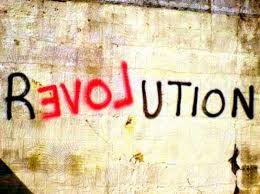

download (5).jpg


This is an important image that I felt continues to be powerful. I believe that this relates because as it’s uninspired partially by a violence part that many who believe in the cause for non violence but revolution on behalf of the people shows that there’s a possibility of a peaceful revolution


Why do we celebrate novels that challenge oppression and the powerful while accept inequitable and oppressive conditions?  Do too many people accept establishment politics as inevitable and therefore accept the current political system?  Would many people support even a nonviolent revolution?  Nonviolent revolutions, including the movements that expanded civil and economic rights, are necessary if we want to restore the rights of the people to rise against crony government and corporations. We have to do more than celebrate novels or novelists who write about oppression. A nonviolent revolutions can make visible the oppression and collaborate for concrete change.  This has occurred and is occurring around the world but, like the conclusions in many of the novels, injustice prevails.  Maybe, an “outside the box idea,” is to collaborate on making the novel a documentary - not just another movie.


Work cited:

"Social Revolution in India :Part 1." India Opines. India Opines, 21 June 2014. Web. 21 Mar. 2016.

Alexander, Theo. "The Story Behind 'Apocalypse Now': By Theo Alexander - Unsung Films."

Unsung Films. N.p., 09 Feb. 2012. Web. 21 Mar. 2016.

"George Orwell on Pacifism." Ben Norton. Ben Norton, 29 June 2013. Web. 21 Mar. 2016.

Price, Wayne. "Why I Am Not a Pacifist." Anarchist Library. Anarchist Library, n.d. Web. 21 Mar. 2016.

Greenwald, Abe. "Untangling the Pro-Intervention Argument - Commentary Magazine." Commentary Magazine. Commentary Magazine, 04 Sept. 2013. Web. 21 Mar. 2016.

McElroy, Wendy. "Henry Thoreau and 'Civil Disobedience'"Thoreau.eserver.org. Thoreau.eserver, 2005. Web. 21 Mar. 2016.

Be the first to comment.

Advanced Essay #4: What can violent films tell us about our obsession with violence?

Posted by Felix Schafroth Doty in English 3 - Block - E on Monday, March 21, 2016 at 8:48 pm

​This paper was my attempt to mix an analysis of this unit's topic and an analysis of war films. I used a lot that we learned from The Things They Carried and also some of my own research and conjecture. In putting the two ideas together, I came to the conclusion found at the end of the paper, but the process of writing the paper was the process of reaching the conclusion, not just explaining it. I found myself putting the ideas forth and then only connecting them at the end. I would like to do more research into the underlying psychology behind violent films, and in general how we react to role models (actors) doing something (violence). This could be imprinting, or it could be the tribal nature of humans, but I'd like to learn more about the psychology of violent films.

One of the hardest genres in film to get right is the war film. In an attempt to analyze film, one comes across this very tricky genre time and time again, and how hard it is to make a good war film. This may arise from the natural intricacies of telling a war story, and even the complicated nature of violence itself. I myself am interested in finding out how to make a good war film, and how this can apply to society’s greater, more general obsession with violence.

Storytelling is a constant battle to keep people engaged. A good storyteller will use all the tools in their tool belt to accomplish this goal: reveals, flashy visuals or details, twists, etc. Books, films, even songs use these same ideas and tools. In making a war film, the audience, we can assume, is already interested in the subject matter (and perversely so I might add). Years of western culture and civilization have trained them to love Hollywood shoot-em-up blockbusters and gory, violent video games. The fact that a war film can keep people entertained with its gore and violence is something addressed in two quotes from an interview with Tim O'Brien, the author of The Things They Carried, a prime example of a good war story. The two quotes (quotes two and three on this document) both suggest a different way of keeping the audience entertained: one way being a violent perverse attraction to violence and war and guns and bombs and death, the other being the immediate urgency that a war story and its consequential mortality brings to other morals, like love, relationships, and fairness.

Take, for example, the scene in Saving Private Ryan where the old veteran tears up at the grave, and then falls to his knees, bringing his family running. The shot shows an old veteran kneeling at a white cross tombstone, one of many that look the same in a graveyard of soldiers. The veteran kneels at the right of the frame, looking at the tombstone at the center of the frame. The tombstone splits the frame in half, separating the veteran from his family standing off in the distance. They are all dressed similarly, and so is the veteran, but their attention is (naturally) directed all over the place, some towards the veteran, some aimless, some amongst each other. The tombstone, while one of many just like it, is particular to this man, and keeps him separated visually from his family, as if they could never experience the things he has experienced, and so they can never truly connect with him. As the veteran falls down, the family runs up to him. The urgency of this experience is amplified by the family's own urgency, but is already engaging because of our subconscious awareness of mortality in this war story. The rest of the film may be engaging for that reason too, and also because of our "pornographic" infatuation with violence and war, but this specific scene just goes to show how themes can be amplified and morals can be engaged with when faced with the blatant mortality of war.

Many war stories attempt to cover different perspectives. Quote number eight from the O’Brien interview explains more about this. The Things They Carried covers only the perspectives of the soldiers, and while all of the different stories may extend the perspectives, they're still a perspective heard from another perspective; a story within a story. The book only covers one perspective. When the soldiers confront the corpse of a Viet Cong soldier, they are in fact confronting another perspective. The story does not extend past what the soldiers (in fact what O'Brien) saw of this new perspective. A good war story should, therefore, not extend to unknown perspectives, but just analyze them from the known perspective. It is like looking into another house from your own house. You cannot see what your window does not reveal.

The question to answer is this: what can violent films tell us about our obsession with violence? The answer itself is simple, although arriving to this conclusion might be a little more complicated. The reaction to and popularity of violent films are the most measurable insight into violence that those films can give us. Of the top ten all time highest grossing films (according to this list on the-numbers.com), eight of them featured violence. Of the infinite number of topics and plots to be covered in a film, violence is not featured in so many of them, and yet the most popular films usually feature violence, if not center around it completely. It should be an evident insight into the human psyche to see that our most popular films are those that glorify, romanticize, and practically endorse violence. If we see our favorite actor beating the crap out of some dude, aren’t we going to do the same? It’s the simple psychology of following a role model, and if the movies you see everyday promote violence, how can you not practice it?

We have a “pornographic” interest in violence, which extends to an obsession. While war films are feats of storytelling, and enhance the story being told, they definitely end up promoting violence. War films are an insight into our obsession with violence, because violence enhances morals, and makes our mortality come to the surface, making everything else more real. We love seeing more violent films because we’re obsessed with violence and the way it affects storytelling. This ends up endorsing violence, and making it both more accepted as well as more practiced by society. Violent films show us that our obsession with violence stems from its effect on storytelling, and that this promotes violence in our society.

Works Cited

"All Time Highest Grossing Movies Worldwide." The Numbers. Nash Information Services, LLC, n.d. Web. 18 Mar. 2016. <http://www.the-numbers.com/movie/records/All-Time-Worldwide-Box-Office>.

Interview with Tim O’Brien

O'Brien, Tim. The Things They Carried: A Work of Fiction. New York: Broadway, 1998. Print.

Be the first to comment.

Advanced Essay #4: A Nonviolent Society

Posted by Kareem Davis in English 3 - Block - E on Monday, March 21, 2016 at 8:14 pm

This essay was inspired by the war unit we are now in. I choose to write about violence vs nonviolence and how they clash, but also come together. In this world we have advanced so much from where we came from, but still there's ideas and principles that should be implemented to create a more tolerable world. I more so focused on whether you can have a society rooted in nonviolence or not, and then it goes into how I feel about it all. This is how it all came together. 


The world we live in has vastly changed through the years. New ideas, new possibilities, new understandings of what should be done. Some may say for the better while others say for the worst. It’s all really a personal opinion on your take for how things are. This world has both good and evil co-existing to have a balance between the two. An equilibrium on a spectrum that should probably never tip to one’s favor, but through the years it always seem to fluctuate from being equal. That’s something that we all have to deal with, and I fear it’s only going to be an even bigger problem as I grow older.


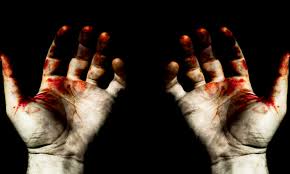
Image result for violence

In this image you have two hands. Both have blood on all of the fingers plus the thumb. This white man’s hands are held out forward as if he’s thinking about what just happened. Maybe somebody he knew just died in his hands, or he just got finished from making someone bleed from whatever he did. The possibilities are endless to what I may think happened, but only he could tell me the real story. The story behind why he now has blood on his hands, and what is going through his head at this point. Was it all a setup, was this all his plan, or is just all a misunderstanding on my part. Not everything is what is seems, but even with this glimpse of the whole picture, you would assume the worst or maybe that’s just something some people do.

We advance ourselves everyday. New ideas turn into new possibilities, which bring new promise to the world we live in. Our brains work together to show that the human mind is endless. From what we wear, to eat, to what we use everyday. Advancements in our technology make us superior to others, but also instills fear to those around it. It can be used to help or harm depending on who wields it. America embraces the idea of militarism, using it almost as a superpower. Warfare, new implications of drones to inflict massive amounts of damage, use for reconnaissance, and help to assassinate HVTs. They use the human interaction in order to pilot and ensure that with each strike they kill the intended target. A job where we have to come together for the greater good, but at whose expense for when civilians are in the radius.


Nonviolence, a new art that’s hard to master. A concept involving conquering fear, a inner peace to be reached, and willing and able to accept others. Martin Luther King Jr, Nelson Mandela, Rosa Park, examples of these things that can come to mind automatically. They valued nonviolence as their weapon to fight against the society they lived in. Each wanted to create a world where they would rather live in. One where you’re free. One where they no longer have to fight, but they only embraced nonviolence. They knew they couldn’t add to the fire already taking the lives of those around them, but still they had to keep the pressure for change. They evolved with the world around them to better fight, but still never breaking their promise. Maybe more need to follow in their footsteps to have a better chance at change. Maybe violence only adds more uncontrolled anger, but if able to control it, maybe there can be a new change. Just think about this, “how do we deal with extreme violence without using force in return…”


Engulfed in the way that society was created. Having the idea that you need to have both sides in order to have a “perfect society” if it even exists. Violence and nonviolence go hand and hand. Both need to exist in order for there to be a real balance. It’s like a yin-and-yang, good and evil, they co-exist for the balance to be complete in the world. Without a general balance it tips to one side and society falls off. A take over of one side whether good or evil, but usually it tips over to be more evil. Racism in America, enslavement, or just a take over of another country all categorize as the evil taking over. In their mind they may believe that they’re right, but for those underneath them now, they see them as wrong. It’s all determined by who is in power, and so with that I can’t believe we can have a society rooted in nonviolence. They need to both exist or who can say what’s right from wrong.  


Be the first to comment.

Advanced Essay #4: Social normality and Violence

Posted by Xavier Carroll in English 3 - Block - E on Monday, March 21, 2016 at 7:20 pm

​

Intro:

In english, we have been studying violence and militarism. I found this unit to be inspiring. The essay below is about how violence changes life around us and creates an endless cycle. Unlike the past advanced essays, this one is very factual. I feel like this essay should demonstrates a skill for analysis and critical thinking.


Essay:

Violence has a long standing history in society. Violence is ingrained in human nature in many ways. An understanding of violence now plays a key role in many of our social interactions. Some people have even evolved to be more aggressive because as as a society we reward aggression.
One known genetic activity that predisposes people to physical aggression is a low activity form of monoamine oxidase. Monoamine oxidase is an enzyme that deconstructs key neurotransmitters. According to Brown university this is much more common in countries with a history of war. Even though Darwinism isn’t easily applicable to the modern man because of the complexities of human attractions, The fact that this gene can still be found suggest that there is some benefit to aggression in the modern day. And there is. For whatever reason people find aggression to be dominating and it’s often confused for assertive. Although a society such as ours could never condone outright violence between it’s members, a functional type of aggression is encouraged. We see this on Wall Street, where aggression, greed , and a type of barbarism are thought of as the essential qualities of a good stock broker. We see this type of aggression in radical groups, where it’s often confused for passion.
Behavioral evidence of how are sour social interactions have been altered by violence can be seen in the way we treat the natural  phenomenon fight or flight.Most people are familiar with the fight or flight instinct. It’s what compels you to either flee from danger or address it head on. We often reward and cherish the instinct to fight while we shame those who follow the flight instinct. This illustrated in the book “The Things We Carry” by  TIm O’Brien. In the book he states that the primary motivation for fighting in the Vietnam War for many soldiers was, they would be embarrassed not to. They feared being called cowards by their contemporaries. This is profound because of what it says violence in America. Circumstances aside, many of the characters believe pacifism is weakness and something to be ashamed of. This severe and negative connotation seem inherently wrong. Pacifism is objectively beneficial. All major religions agree that pacifism is a virtue. This fear of non-violence is abnormal, but strong in our society. During World War I, a man named Evan Thomas refused to fight because he thought it was immoral. He was court martialed and prosecuted. During his prosecution, a debate about cowardice verse pacifism arose. The prosecutor is quoted as saying “The very foundation of every civilized government from the first beginning of history down to the present time has been based absolutely upon force of arms… Gentlemen, if we don’t punish these cowards who appear in this land like the sore spots on our bodies to the fullest limit of the law, this government cannot survive.”

The image above shows two little boys playing. One is pinned to the wall by the other. The one pinned to the wall has a fake gun pressed to his brow. Both boys are smiling vigorously, but the one on the wall appears to be on the edge of laughter. The image as a whole is a disturbing look at how violence changes social normalities. American culture is saturated in violence. Violence is so present that even children have an intimate relationship with the concept. They grow numb to the sight of gore. Acts of violence become casual or even humorous. The negative effects of childhood exposure to violence are well documented.  Children who are exposed to this violence learn at an early age that some forms of violence are an acceptable way to solve problems.
Intervention with behaviors that model this mentality in their children  fail to suffocate these ideas in the long term. Data from the Department of Justice states that those who are exposed to violence at a young age have an increased risk of falling into criminal activity. Specifically violent crime, which demonstrates a lack of awareness of acceptable social interactions. These people have permanently altered views on social norms which stand to protect us against such violences as rape, petty murder, and assault.
In conclusion, Violence alters social normalities, which in turn allows for  more violence. This creates a positive feedback loop that has the potential to alter human societies in such a way that it affects us on even the most obscure and unexpected ways. We’ve seen it affect us on both a genetic and philosophical level.

Work cited:

Sontag, Susan. "Regarding The Torture Of Others." The New York Times. The New York Times, 22 May 2004. Web. 21 Mar. 2016.

http://www.nytimes.com/2004/05/23/magazine/regarding-the-torture-of-others.html?_r=1


"African Americans in the Vietnam War." African Americans in the Vietnam War. Illinois University, 20 Dec. 2009. Web. 21 Mar. 2016.

http://www.english.illinois.edu/maps/poets/s_z/stevens/africanamer.htm


O'Brien, Tim. The Things They Carried: A Work of Fiction. New York: Broadway, 1998. Print.


Rose McDermott. "Some People Just Like to Fight." Political Violence a Glance. N.p., 03 Feb. 2014. Web. 21 Mar. 2016.

http://politicalviolenceataglance.org/2014/02/03/some-people-just-like-to-fight/


Thomas, Louisa. "Give Pacifism a Chance." The New York Times. The New York Times, 27 Aug. 2011. Web. 21 Mar. 2016.

http://www.nytimes.com/2011/08/28/opinion/sunday/what-is-pacifism-good-for.html?_r=0


"Facts about Children and Violence." Facts about Children and Violence. The Department of Justice, n.d. Web. 21 Mar. 2016.

https://www.justice.gov/defendingchildhood/facts-about-children-and-violence


Be the first to comment.

Advanced Essay #4:American Ties

Posted by DuBois Stewart in English 3 - Block - E on Monday, March 21, 2016 at 12:55 pm

​


I chose to write about this topic because no one else was writing about it and it was a good idea at the time. I didn't have many options, and this was the one I could do the most with. I had a lot of sources, but I didn't quote any of them so I had to go back and find at last one to quote in my paper for some solid factual evidence. I didn't have much of a process, I just wrote the paper and was done with it.

There is a picture of people protesting the Vietnam War in the streets. There is a crowd of people on a street holding a sign above their heads that says:”Our real enemy is U.S Corporations and the rest is hidden behind other protesters. You can tell they’re angry, but stand tall. All the people in front have their arms linked, a sign of unity and strength. This image represents what Ii’ll be talking about in my advanced essay. This represents the people at home, angry and outraged at their friends, and family being sent off to fight in a war that isn’t necessarily theirs. In this essay we'll will be exploring the question of what america is trying to protect if it isn’t the people they send to fight for them. There are many answers to this question already, believing that war is the equivalent of a squabble between two children over something relatively insignificant. Unfortunately, in this situation, there is no parent to separate the two, so what could’ve been solved with a few words has now escalated into a full on fight between the two parties. This is war, if America isn’t putting the lives of its people before all else, there is no point to war.


The first aspect of war that shall be explored about is the aftereffects of it, specifically how veterans of war are celebrated once they return home. In particular, I want to talk about the Vietnam veterans. In one the bloodiest, longest, and most brutal wars of the century, the Vietnam veterans had probably gone through some of the toughest ordeals as soldiers, many of them only just out of high school. Because of this, many of them had looked to drugs and alcohol for comfort during the war to keep them sane.The U.S government knew this, and what did they do? They started outlawing all of the drugs that the soldiers had depended so heavily on left and right. IN an article in the New York Times, author Tim Hsia says this

“The Vietnam War casts an equally large shadow over American society. The Vietnam War exposed underlying racial issues, whether the elite had to serve, the role of the media, and distrust toward government.”

Being so addicted that they couldn’t stop. The older veterans, having more experience, were able to mostly re adjust to living in the States, but most of the younger ones couldn’t cope with the complete change and ended up resorting to crime to get by. The U.S noticed this, and that they were also exhibiting symptoms but was extremely reluctant to give aid to the 700,000 veterans that were in need of it. Even after agreeing to help them, treatment was stalled which only further progressed the veterans’ anxiety and trouble with adjusting to society."

Simply stating what I said before, this passage really highlighted the extent of America's lackluster response to the soldier's return, and the aid they required to blend in with the American society yet again. I feel that instead of taking reponsibility for what they were completely and totally responsible for, America shied away from its problems. In this way, their reluctance to treat the veterans and the lukewarm welcoming back to the states showed me the capacity for which america could really show indifference to the well being of their people


The second aspect of war that was a significant reminder of America’s treatment of citizens was the countries who weren’t even officially considered U.S citizens yet claimed to be U.S territories. For starters, how many people knew that Guam was a U.S territory? Probably not that many. Do you know what percentage of their people were drafted into the army in the War on the Philippines and the Spanish american war? 12.5%. That's an insanely high percentage. To put it on a scale, for every 8 people living in Guam, 1 of them was sent off to war. That meant every person living there knew someone who was either at war or was already a veteran of war. However, for being one of the most devoted people to the American cause, they received the smallest amount of money for treatment after the war. In a way, it’s like the U.S completely forgot that they were at the war at all. Even worse, Guam was given a representative in the U.S senate, yet they can’t vote. They are also affected by the laws passed in America, so it would only make sense for them to be able to vote for who will lead them. Even though america’s slogan is the home of the brave, land of the free, we shouldn't feel as confident sporting that knowing that thousands of miles away, there’s a country that is a U.S territory, yet treated like aliens. Is this the extent of America’s ability to serve and protect its people? Is this really the country we live in?


In conclusion, i’d have to say that we protect some, but not all of our citizens. America has many deep dark secrets that have yet to be uncovered, but hopefully they’ll begin to get better as time passes. The biggest concern right now is taking care of our citizens overseas like Puerto Rico, and Guam. After we tackle those issues, the hard part will be over, and the experience gained from those situations being solved will further evolve America as a country that can capably take care of its citizens.


Be the first to comment.

Advanced Essay #4: "Now & Then"

Posted by Sherell Messing in English 3 - Block - E on Monday, March 21, 2016 at 11:57 am

​My goals for this writing were mostly to inform. I wanted to compare how much the world has changed because it is important to see how differently things are done and understood. I wanted to make my thoughts clear to myself as well as the readers. When I felt as though my writing was complete I was satisfied with the results. I think my argument was strong, but there is always that thought that I could have done something to make it a little better,
Letter-to-a-Homeless-Person

Violence and nonviolence is not the same today as it was in the past. The image above shows an example of the mindset people have today. This image shows a man in a black body suit holding another mans head to look away from the homeless man lying on the ground. The homeless man is leaning against a piece of cardboard that is leaning against a building made of marble bricks, that is clearly not his own. The man in the black bodysuit is a physical version of our fears. The homeless man represents the reality that we need to face.

Fear has always played a big part in History. History is not just a subject in school, but a topic in life. If you were to ask somebody about what they first learned in History you are guaranteed to get an answer including Martin Luther King Jr. He is known as the king of nonviolence, and he has made many changes with this method. “Perhaps a more tragic recognition of reality took place when it became clear to me that the war was doing far more than devastating the hopes of the poor at home.” This is from his Beyond Vietnam speech in New York, NY on April 4, 1967. This specific quote was interesting to me because he was basically saying the true reality of what was happening was not revealed to him until the situation got worse. But as people learned in early History classes, the time in which MLK was alive the level of nonviolent protests was popular and favorable for the future which is now our present time.

Speeches and sharing ideas are some of the great ways nonviolence was supported during MLK marches and meetings. Today we still hear stories about history but ideas and thoughts are more vaguely and strongly made aware to others as individuals today. The way we talk and the specifics of what we talk about are said angrily. Our views on situations that happened in the past can be expressed strongly enough to change the tone of a story and make the person listening understand in a negative way resulting in the butterfly effect of whisper down the lane. Some might say stories can never contain the full truth. Others might say truth is build off of stories, vice versa. In a way “truth” and “story” can be the same and different at the same time.

The same way stories can be ingrained in our society militarism is also ingrained in our society in almost every way possible. By contrasting how most people deal with war today and in the past it is easy to see that people are way more aggressive and violent today. We would rather take action to make a faster change than to sit around and wait for a “maybe” kind of answer. Militarism is ingrained in our society as a way to show pride in our country. It is also seen as a way of protecting what is yours, as well as hurting what is not. Depending on the type of individual you are you will fall into at least one of these three categories. When I watch older movies that include parents watching their children be sent off to war, they go to “serve” their country. Today the reason would be to fight for what is right, not to serve the country. Some go into the field to have the power and authority to kill just because. We try to use nonviolence as a form of protesting today but some thoughts do not start with this.

Nonviolence was a very large and powerful way of protesting in the past. Our people today brush the thought of nonviolence out of their minds with no reflex to the cold chill it brings to some. “A true revolution of values will soon cause us to question the fairness and justice of many of our past and present policies.” I believe this is what happened to change the way we protest for change. I believe that we questioned the fairness and justice and did not like what we seen. This resulted in a hidden revolution. The revolution included switching from nonviolent tactics to violent ones. Because people today question everything to make sure they are being treated equally there is no doubt in my mind to know that we will never again be a society rooted in nonviolence.

How does war and violence change people? The real question to ask should be “How does it not change people ?” War has been a part of my everyday life even when I did not know it. My country was at war, my family, and even myself. I realized how my attitude has changed over time as well. I would react calmly to situations as a young child but now, if I know something doesn't feel right, I will stand up for others and myself. War and violence has not changed people in this generation because we are so accustomed to it being in our lives. It all depends on the time frame you include or talk about.


Bibliography


"Beyond Vietnam**." Beyond Vietnam**. Web. 17 Mar. 2016. <http://kingencyclopedia.stanford.edu/encyclopedia/documentsentry/doc_beyond_vietnam/>.


"Fighting with Nonviolence." Scilla Elworthy:. Web. 17 Mar. 2016. <https://www.ted.com/talks/scilla_elworthy_fighting_with_non_violence?language=en#t-314454>.
Be the first to comment.

Advanced Essay #4

Posted by Jacob Norman in English 3 - Block - E on Monday, March 21, 2016 at 11:45 am

War, war never changes. Throughout time, leaders have used their ability speak to sway large masses of people. In more recent times leaders have used the weaponry and resources they have in order to influence allies and enemies, however, the combination of successful public speaking and frighteningly deadly super weapons creates a dangerous society that may put to much trust in their leader and the use of weapons of mass destruction.

In the United States’ Democratic society, we believe we have elected officials that are supposed to represent the majority of the citizen’s political beliefs. Many politicians do represent the voice of the people who elected them. When politicians give public speeches, their rhetoric can be quite intense. Sometimes, these speeches can get even more heated when it comes to ideas around managing the United States defense system and foreign policy. The combination of overly aggressive politicians and the stockpiling of government weapons such as nuclear bombs can be dangerous and lead to a more aggressive society. This heated debate often leads to violent attitudes in the country’s society.

During the height of the Cold War, in 1960 at a United Nations meeting in New York, Russian Premier Nikita Khrushchev grew impatient on the topic of Russian decolonization to fellow world leaders and representatives. Khrushchev banged his shoe against a table to silence the members of the United Nations. Khrushchev then approached a podium in a large room filled with hundreds of his peers. In his speech addressed to the U.S. and the Western world, he said “[the USSR] will bury you.” Although there is debate on the validity of the event of Khrushchev banging his shoe, this moment in history of Khrushchev with the shoe represents the beginning of an increase of foreign hostility in the Cold War that included the threat of nuclear warheads. It was Khrushchev’s line “We will bury you” that set forth the Red Scare and Cold War. Khrushchev’s speech is one of the main contributing factors to the increase of distrust and hate of the U.S.S.R. and encouragement to outdo the Russians in a battle for nuclear power. In the decade before Khrushchev’s speech (1950 -1959) the U.S. spent an average of 147.31 billion dollars per year on military funding and purchases. The average amount of military funding per year in the following decade (1960-1969) was 171.61 billion dollars and even more in the following decade.

In former President George W. Bush’s speech on the possibility of the presence of “weapons of mass destruction” in Iraq, he provided several types of solutions to combat the potential threat. One of the solutions was to increase military spending for soldiers abroad and to increase spending for American nuclear arms. As part of the Bush Administration’s promise to keep the U.S. safe, they tried to increase funding for the “upgrading” of nuclear weapons for things like nuclear “bunker busters.” The combination of former President Bush’s on Iraq’s “weapons of mass destruction” with attacks on the Twin Towers on September 11th that lead to an increase in military funding for nuclear arms and a vendetta among many civilians against Iraq and people of the religion of Islam. Shortly after the terrorist events on September 11th, Anti-muslim hate crime increased by over 1,000%. The amount of anti-muslim hate crimes per year decreased significantly after 2001 but have yet to get close to the numbers they were before September 11th, 2001.Funding for military research increased in the U.S. during the Bush Administration, at a rate comparable to that of the time of the Cold War, yet the war continued. Peace was not made with more bombs.

Based on a research study performed by Nathan Kalmoe, a political science doctoral candidate from the University of Michigan, found that violent political rhetoric does fuel more violent attitudes, especially in younger people. In Kalmoe's first survey, 412 adults read two political advertisement texts (one violent, the other non-violent) for two U.S. House candidates where certain words related to violence were changed in the text. During the altering of the ads, no person or group of people were targeted. Respondents were asked about their aggression levels and interest in violence against political leaders. It was found that adults who read aggressive advertisements had “strong predispositions to support political violence.” It was also found that young adults were more likely to adopt violent attitudes after exposure than older adults.

The results of speeches given by Khrushchev and former President George W. Bush resulted in an increase of public fear of an enemy of which little was known about. The result of the speeches lead to the stirring up of fear and encouragement for greater military funding especially towards development of nuclear arms. In more recent times, politicians have become more focused on reducing the amount of nuclear arms to create a more peaceful society; not just within their own country but globally as well.


Sources:

  • Wittner, Lawrence S. "George Bush's Addiction to Nuclear Weapons."History News Network. History News Network, 4 Nov. 2005. Web. 17 Mar. 2016. <http://historynewsnetwork.org/article/11167>.

  • "Full Text: Bush's Speech." The Guardian. Guardian News and Media, 17 Mar. 2003. Web. 18 Mar. 2016. <http://www.theguardian.com/world/2003/mar/18/usa.iraq>.

  • http://object.cato.org/sites/cato.org/files/pubs/pdf/pa114.pdf

  • Wadley, Jared. "Violent Political Rhetoric Fuels Violent Attitudes." Phys.org. N.p., 5 Jan. 2011. Web. 16 Mar. 2016. <http://phys.org/news/2011-01-violent-political-rhetoric-fuels-attitudes.html>.

  • Hadley, Stephen J. "The Iran Primer." The George W. Bush Administration. The United States Institute of Peace, n.d. Web. 19 Mar. 2016. <http://iranprimer.usip.org/resource/george-w-bush-administration>.

  • Ingraham, Chris. "Anti-Muslim Hate Crimes Are Still Five times More Common Today than before 9/11." Washington Post. The Washington Post, 11 Feb. 2015. Web. 19 Mar. 2016. <https://www.washingtonpost.com/news/wonk/wp/2015/02/11/anti-muslim-hate-crimes-are-still-five-times-more-common-today-than-before-911/>.


khrushchev_shoe
khrushchev_shoe
Be the first to comment.

AdvancedEssay#4+LukasSupovitz-Aznar

Posted by Lukas Supovitz-Aznar in English 3 - Block - E on Monday, March 21, 2016 at 10:25 am


Lukas Supovitz-Aznar

Advanced Essay #4

When I first started this unit about war I was immediately intrigued about the concept of why we are so involved in war. My first thoughts were that their has to be a method to our madness, but the more I learned the more I felt mislead. While writing this essay I wanted to lead the reader to a more knowledgable reason on how recruitment goes down. I tried my best to keep my opinion out of this topic, and just write with factual content. I think I did that, but still provided interesting content that would make the reader want to keep reading more. In synopsis I am happy I picked this topic because I was enlightened myself.

Hundreds of men stand in front of our flag, pledging their allegiance to this country. This photo is a powerful, yet common photo of a bunch of young men showing their dedication to the country; the same country that betrays them in many ways. In the background is the American Flag, and it shows that they will all fight for the cause. Sometimes the cause is not identified but these men are still willing to risk their lives. This has been a trend, where men who are mislead by their country still are loyal and extremely proud to represent the country. Throughout history, war has been an important topic for all countries.

Since the beginning of the United states, we have always been very involved in all different kinds of war. Recently war has come under attack, specifically by the United States recruitment system.  Army recruitment happens all around the country, and these recruiters come to thousands of high schools to get kids who are not yet ready to sign up for war. An important topic to note is that most recruitment goes on in towns of poverty, or where not much goes on. Kids are often lured into a lifestyle that they are not yet ready to live, and the recruiters know this but it is necessary for them to do to keep the strongest military in the world. According to the New York Times article “Army recruiters say they feel pressure to bend the rules” it states “He has been bending or breaking enlistment rules for months, he said, hiding police records and medical histories of potential recruits. His commanders have encouraged such deception, he said, because they know there is no other way to meet the Army's stiff recruitment quotas.”  This shows that recruitment is often unfair and this idea of a quota to sign people up is wrong. Although some recruits are not interested in serving for the country, others are. “By the Army's own count, there were 320 substantiated cases of what it calls recruitment improprieties in 2004, up from 199 in 1999, the last year it missed its active-duty recruitment goal, and 213 in 2002, the year before the war in Iraq started. The offenses varied from threats and coercion to false promises that applicants would not be sent to Iraq. Many incidents involved more than one recruiter, and the number of those investigated rose to 1,118 last year, or nearly one in five of all recruiters, up from 913 in 2002, or one in eight.” To be sent to war in an unfamiliar country without actually having any motive to do so is unjust, and one out of eight is a pretty large portion. Yet still many kids grow up with the dream of joining the military, and that is something to be proud of. The real crime is the lies that the recruits are told, such as “College will be payed for”- New York Times. This is very unfortunate, and for many they end up resenting how they served in the military because they were lead to misconceptions through the recruitment process. For a promise like college being payed for to be broken is very tragic, so most suggest to get everything in writing before actually signing up for the military.

The larger picture is how do people get away with the lies that they tell to these high school students. What tends to happen is that the recruiters have a quota to meet, so they have to get a certain amount of people to join. But it would be completely untrue to say that all recruiters lie to get more people to join, because some are totally honest. Most agree that the best way to get more people to join is to be completely honest. But some are not honest, which is a brutal reality of the war. What should be pride in serving our country turns into a sales tactic. All recruiters are put through sales training which impacts the people who they recruit. It feels like an injustice that people have to be sold the military, and it is not just of free will. For something as serious and harmful as war, it is scary to think that a teenager can make such a large decision without knowing the consequences. People are legally allowed to risk their lives at war before they are allowed to drink. Children start being sold the pride of being a soldier before they are able to speak. 

Sources :

http://www.nytimes.com/2005/05/03/us/army-recruiters-say-they-feel-pressure-to-bend-rules.html?_r=0

"Pressure to Bend the Rules." New York Times. New York Times, 3 May 2005. Web.

http://www.beforejoiningthemilitary.com/most-common-recruiter-lies-told-to-recruits-joining-the-military/"

5 Lies Recruiters Tell Recruits Joining the Military." Before Joining the Military. N.p., n.d. Web. 21 Mar. 2016.

http://www.armytimes.com/story/military/careers/2015/03/02/army-recruiter-secret-tactics/24081395/

"Secret Tactics of Successful Army Recruiters." Army Times. N.p., n.d. Web. 21 Mar. 2016.


US-Military-with-Flag
Be the first to comment.

Advance Essay #4 : Leader's Authority

Posted by Ashlye Fitzmaurice in English 3 - Block - E on Sunday, March 20, 2016 at 11:15 pm

​ Going into this particular unit, I wasn't really sure what to expect. I found that starting off with Tim O'Brien's story, Things We Carried, it gave me the feel of what I wanted to write about. At first, differentiating storytelling and truth, was a huge interest that I had. But then, when I came across an article in Yes! Magazine, the story behind a chief changing and improving a city known of high crimes and homicides, I found that I would and could go off in many directions discussing leaderships and power. And after discussing my idea with Mr. Block and my table mates, I found that it was great topic to write about. With that being said, below is my piece touching upon leaderships, authority, change, and more. 

The angry crowd continued to roar as a staff leader and assistant gave their speech. Citizens, disappointed and acrimonious, continued to stand for their submit. A man, standing far back, reflecting upon the crowd, is holding a sign, “Put the System on Trial”. With the plan of moving forward, the crowd is not satisfied. A few heads are drawn elsewhere while others capture the moment taken on their devices. The rage continues, having the leader to project her voice even with the use of a megaphone. With stern look, the city has made a decision, leaving citizens oblivious and unpleased.

In this world of power, greed, and destruction, we live our everyday lives following the law’s that Congress agreed to put against society. But not everybody follows. It is clear that we have a group who follow and stick to the law, but then we have those who break and go against it. And reality proves that people do not follow.

With the question, how does the authority of a leader affect a population? Yes! Magazine, writes and touches upon the issue with . According to the Police Violence is Not Inevitable article, a police chief, Magnus, who originally stationed in Fargo, North Dakota, was authorized to take role in one of the most high crime rating cities, Richmond, California. With his six month success as chief in Fargo, city officials took risk in wanting to replicate that success where Magnus can greater the community and lower the ratings of homicides. Being that Fargo is known as the safest and whitest place in America, the switch on Magnus having to flee to Richmond with diverse races, it gave him an opportunity to test his power.

Magnus, noticing the lack of engagement in the neighborhoods, suggested that policemen should spend less time in their cop cars and more time on their feet. He later found that by hiring a diversity of officers, it benefited the community.

“‘When you have a department that doesn’t look anything like the community it serves, you’re asking for trouble, no matter how dedicated and professional your employees are,’ he says. ‘So an ongoing mission for us here is to hire the highest-quality people that represent that diversity of the community, across the board. I don’t even just mean from racial, ethnic, or gender standpoint. I mean in terms of life experiences, being connected to neighborhoods, growing up either Richmond or cities like Richmond.’”

Therefore, having a majority of one race can cause trouble that many do not see. As wrong as it sounds, having the same background as to the residences, it releases (what can be) tension and fear because they are around their own kind. With that being said, Magnus’s power in improving Richmond, it’s given the city a benefit of decreasing the rate of homicides. Sadly and shortly enough, a out break on a shooting occurs .

“On September 14, a fatal encounter took place between Wallace Jensen, an officer on foot patrol, and 24-year-old Richard Perez III. Already on probation for a previous gun incident, Perez was intoxicated and resisted arrest after a liquor store clerk reported that he had been shoplifting. According to the responding officer, Perez tried to wrestle his gun away. The three bullets fired at Perez resulted in Richmond’s first deadly “officer-involved shooting” since 2007. Some in the victim’s family wondered why the officer failed to use his Taser or nightstick to subdue Perez. The family retained a civil rights lawyer, who has threatened to sue the city.”

Many, like his family, question the reasoning for the shooting. Jensen could have used any other weapon to threaten Perez, instead he went for the weapon that caused to jump to conclusion. But then you have a side where many would say it was self-defense. At the end of the day, there will always be two sides, but one decision made. And as far as the system decides to investigate, they choose whether Jensen pays or goes.

With that being said, as much as Richmond risen- from the time Magnus had arrived to the outbreak of the shooting, his ability to heal the city and prevent any harm is absurd. Yet, his leaderships and capability of improving the city was noticed. Because of his duties, he has proven that as a leader, leaders influence. His work has shown that driving a population into a certain direction, its outcome may or may not always work. And as far as preventing harm in the community, he has shown that his power is to guide but it may not always end in his favor.


Work Cited


"Police Violence Is Not Inevitable: Four Ways a California Police Chief Connected Cops With Communities." YES! Magazine. Web. 20 Mar. 2016.


Be the first to comment.

Advanced Essay #4 The Cause of Gun Violence

Posted by Zeshawn Rahman in English 3 - Block - E on Sunday, March 20, 2016 at 9:09 pm

Intro:​
While writing this piece, I started off on Militarization. From militarization, I found some sources and tried to create a pro-militarization argument, but it kept getting back to guns. After having a conference with Mr. Block, I narrowed my focus from the general militarization to Police Militarization, and guns v. violence in America. This was also stopping me from finishing the piece; and I submitted the annotated bibliography late. I needed a resolution. I found that mental health was an important aspect in the gun rights argument, so with Mr. Block's advice, I made an argument that more effort should be put toward mental health institutions to prevent crime. I kept argument of arming police forces because I found that it ties into my essay very well. I really enjoyed writing this piece, and hope you enjoy reading it just as much! Please note that the Essential Question I used was the following: "In what different ways is militarism engrained in our society?"

The Cause of Gun Violence

In this modern age, there is much discussion on the place of weapons in society. Some argue that the display and usage of powerful weapons may be detrimental, due to appearance of these weapons in the hands of police officers, and civilians alike. It is reflected in many studies that the presence, or usage of civilian firearms do not have a direct correlation to increased violence, sometimes even leading to reduced violence. Even in the most restricted states, many crimes occur with legally-bought firearms. When examining these cases more deeply, a trend is revealed: mentally-ill perpetrators. In order to better protect against these attacks, arming police forces with military weaponry and vehicles would only benefit society. While some may argue that gun bans or such are beneficial, these proposals would only limit the Second Amendment, while crime continues. The only true way for society to reduce crime would be to improve access to treatment for mentally-ill individuals, and improve the armament of our police forces.
First, allowing law-abiding citizens to own and use firearms does not create violence. The areas where there are more guns may even have less rates of crime and violence. In a Harvard University study, the following data were shown “...violent crime did not increase with increased gun ownership nor did it decline in periods in which gun ownership was lower.” This quote clearly shows that guns, in have not caused an increase or decrease in violence. The key words “violent crime did not increase with increased gun ownership” make the point that areas with higher gun ownership typically do not have more violence than those with lower gun ownership. In fact, areas with more restrictive policies toward gun ownership seem to have more violence. This is shown by data from research in European countries. In Russia, gun ownership is at a rate of 4000 guns per 100,000 people. The number of murders in Russia are 20.54 per 100,000 people. While these numbers may seem small, this is very large compared to, say Macedonia. 16,000 individuals in Macedonia, out of 100,000, own guns. The murder rate in Macedonia 2.31 per 100,000 people. This data shows that a more militarized society, one with more weapons, is safer than one with less weapons. When using both statements in conjunction, one can come to the realization that more guns may actually equal less crime.
After a heist in North Hollywood, California, there has been an influx of military-grade weapons to the police forces. On February 28, 1997, when police responded to the terror attacks, they were met with a group of two heavily armed criminals. It is now know that “They were dressed in black coveralls and ski masks. They were bulked up by 40 pounds of body armor and carried select-fire Kalashnikov rifles, handguns, an HK-91, and fully auto AR-15.” This type of armament was not expected by police, who were armed with standard issue, 9mm caliber pistols and light Kevlar vests. It is important to note that select-fire means that a weapon can fire in both semi- and fully- automatic. This is critical because all firearms sold to civilians are limited to semi-automatic only, meaning that they had been converted by the attackers.
When the police responded, they were unable to contain the threat, and twelve officers and eight civilians were wounded by the robbers. As quoted “At that time, patrol cops' basic armament consisted of semi-automatic pistols and 12-gauge shotguns. While this wasn't the first time patrol officers had been outgunned by professional criminals, patrol officers had never before been engaged in such a protracted, high-intensity firefight.” This further makes it clear that militarization (usage of military gear) of the police forces would have been beneficial in stopping the attackers. When considering the proposed, military-grade weapons that would have been given to the police, the first weapon-system that comes to mind is the AR-15, or M16 variant. This is a 5.56mm rifle platform that can defeat body armor when paired with the correct ammunition. In order to defeat the bank robbers, police actually used AR15 rifles from a nearby gun store, eventually containing the threat. When we consider the benefits of having such a weapon system, it is clear that militarization allows society to be further protected by the police, and gives the police an ability to prevent attacks from happening.
Another example of this is the San Bernardino terrorist attacks that occurred recently. The police response was only four minutes, but 14 civilians were killed. Interestingly, the terrorists were armed with semi-automatic AR-15 rifles, similar to what the North Hollywood shooters used. Over 380 rounds were fired by police, though only 76 were fired by the shooters. The whole ordeal lasted four hours. The terrorists illegally acquired the guns from their neighbor, and modified them. There is a magazine capacity restriction in California, though the terrorists used illegal high capacity ones. They attempted to modify one rifle to fully automatic, and were found with dozens of IED’s and bomb-making materials. They were revealed to have radical beliefs, even aligning with those of mentally ill. Although the terrorists were able to inflict much harm, this was before police had arrived. When forces responded, equipped with military gear, they were quickly able to contain the threat. If the police hadn’t been armed with such weapons, a North Hollywood scenario could have repeated.
Instead of focusing political goals, and funding on restricting the right of the Second Amendment, there should be a focus on mental health in society. In almost all cases, a shooter is often one with a condition that allows them to commit these acts of violence. A case study that explains this is that of Isla Vista, in California. Elliot Rodger shot and stabbed those near the University of California campus, and ended up murdering six. Two key factors to assess in this situation are: 1) gun restrictions, and 2) Affected public health state. This state is defined as the ability for an individual with a mental illness to receive treatment, and prolonged administration of drugs to those with such illness.
California is a state with very restrictive gun legislation. Specific types of firearms restricted include semi-automatic rifles with ‘military-style’ features, including flash hiders, high capacity magazines, and pistol-grips among other things. This is stated California codes §12280, §12285, and §32310 respectively. In order to assess the rating of California from the anti-gun perspective, it received first place, as least friendly to criminals. Along with specific restrictions presented in the codes, it is shown that California is indeed a very restricted state in terms of gun laws. Along with this, California has an ‘F’ rating for affected public health rate. This is defined as a lack of inpatient commitment to treatment, lack of outpatient commitment to treatment, availability of emergency evaluation, and finally, use of laws to prevent crime. As quoted from the Treatment Advocacy Center, “17 states earned a cumulative grade of “D” or “F” for the quality of their laws.” This quote clarifies that the general affected-public health state is low in California, yet also in the rest of the United States.
When one examines this evidence, there is a clear correlation. In this case, California has a very restrictive gun policy, yet a very poor rating for affected-public health rate. Under California's Code Section 5150, as quoted “…a person, as a result of a mental health disorder, [who] is a danger to others, or to himself or herself [a professional may take] the person into custody for a period of up to 72 hours for assessment, evaluation, and crisis intervention, or placement for evaluation and treatment in a facility.” For this law to be applicable to an individual, they must be “a danger to others or to himself.” When determining if Rodgers was a threat, of aforementioned type, they recorded polite and courteous behavior, thus not regarding him as a threat. This behavior prevented police from either searching him for weapons, or detaining him. Due to the prevention of police actions by the law in California, Rodgers was able to open fire on a campus and murder six people.
When looking more detailed at Rodgers, it is shown that the restrictive gun laws did not prevent him from committing murder. Rodgers had passed the Federal Background Check, many other requirements, and legally purchased 3 firearms. In a state with such restrictive laws, it seems incredible that such an act could have occurred. This elucidates the fact that if society puts efforts into restricting firearms, there will generally be no benefit. Instead of preventing crime, millions of law abiding citizens would be restricted their Second Amendment right to self-defense, and yet: mentally ill individuals could still commit acts of terror. This shows that a focus on mental health would be a way to prevent shooting, and crime in general.
Therefore, while some may argue that weapons are detrimental to society, it is clearly not so. In fact, it is shown in countless studies that firearms do not cause violence. Although some may point to appearance of our police forces as an argument, this military gear ensures safety. In many gun-restricted states, crimes occur with firearms, and places where many own firearms tend to have less violence. The perpetrators of mass shootings, and crime in general tend to be mentally-ill. These individuals commit violence even though firearms are heavily regulated. The lack of mental health treatment in these cases is shown to be a direct cause of violence. The only correct way for civilization to reduce crime would be to improve access to treatment for mentally-ill individuals, and to improve the armament of our police forces.


Works Cited


"2013 State Scorecard." Brady Campaign to Prevent Gun Violence. N.p., n.d. Web. 20 Mar. 2016.

"Are Mass Killings Associated with Untreated Mental Illness Increasing? - Backgrounder." Treatment Advocacy Center. N.p., n.d. Web. 20 Mar. 2016.

Brady Campaign to Prevent Gun Violence. N.p., n.d. Web. 20 Mar. 2016.

"CA Codes (wic:5150-5155)." Official California Legislative Information. N.p., n.d. Web. 20 Mar. 2016.

CrimAdvisor. N.p., n.d. Web. 20 Mar. 2016.

"How the North Hollywood Shootout Changed Patrol Arsenals - Article - POLICE Magazine." POLICE Magazine - Law Enforcement News, Articles, Videos, Careers & Podcasts. N.p., n.d. Web. 20 Mar. 2016.

McCabe, Bret. "Does the militarization of American police help them serve and protect?" N.p., Web. <hub.jhu.edu/magazine/2015/spring/aclu-militarization-of-police>.

"Mental Illness, Mass Shootings, and the Politics of American Firearms." PubMed Central (PMC). N.p., n.d. Web. 20 Mar. 2016.

Notitle. N.p., n.d. Web. 20 Mar. 2016.

NSSF | National Shooting Sports Foundation | Firearms Industry Trade Association. N.p., n.d. Web. 20 Mar. 2016.

"Opinion: The Real Gun Problem is Mental Health, Not NRA .com." CNN. N.p., n.d. Web. 20 Mar. 2016.

"Reports, Studies, Backgrounders." Treatment Advocacy Center. N.p., n.d. Web. 20 Mar. 2016.

"State Survey." Treatment Advocacy Center Reports. N.p., n.d. Web. 20 Mar. 2016.

Treatment Advocacy Center Reports. N.p., n.d. Web. 20 Mar. 2016.

"War Gear Flows to Police Departments - The New York Times." The New York Times - Breaking News, World News & Multimedia. The New York Times, n.d. Web. 20 Mar. 2016.

"WOULD BANNING FIREARMS REDUCE MURDER AND SUICIDE?" Harvard Law School. N.p., n.d. Web. 20 Mar. 2016.


Be the first to comment.
111 posts:
← Prev
  1. 1
  2. 2
  3. 3
  4. 4
  5. 5
  6. 6
  7. 7
  8. 8
  9. 9
  10. 10
  11. 11
  12. 12
Next →
RSS

ENG3-2

Term
2015-16

Other Websites

Launch Canvas

Teacher

  • Joshua Block
Slate (skeleton-v3 PHP 8 prototype) · Location: 1482 Green St · Shipping: 550 N. Broad St Suite 202 · Philadelphia, PA 19130 · (215) 400-7830 (phone)
×

Log In