• Log In
  • Log In
Slate (skeleton-v3 PHP 8 prototype)
Slate (skeleton-v3 PHP 8 prototype) Learn · Create · Lead
  • Students
    • Mission and Vision
  • Parents
  • Community
    • Mission and Vision
  • Calendar

English 3 · Pahomov · A Band Public Feed

Create a Post

One-Sided

Posted by Ailin Li in English 3 · Pahomov · A Band on Tuesday, April 17, 2018 at 9:10 pm

One-Sided

Comparing Taming of the Shrew to 13 Going on 30


In the Taming of the Shrew, it is clear to the reader that romantic relationships revolve around what the male desires. Although it is not said clearly, it can be seen through the actions and the words being exchanged. In the movie 13 Going on 30, their way to determine who has more power and gets the better relationship with the desired one are those who are the most popular. These two relate because it includes people who seek the best for themselves that eventually get to where they want.


In The Taming of the Shrew, one of the main characters, Petruchio, does not stop but to ensure that Katherine becomes and remains his wife. Katherine is in a learning and adapting process during this relationship. Petruchio also approaches her in a manner that is not considered mean. In the movie, 13 Going on 30, the main character Jenna, wants to be the most popular and have the most attractive guy as her boyfriend, until something backfires. She wishes to be 30, only having it come true. Just like Petruchio, she wants to make everything her way and just like Katherine, she learns to change. These two stories show us that when it comes to marriage and love, there is also one who fights harder and does more so that there can be a relationship.


Petruchio: “Thou must be married to no man but me. For I am, he am born to tame you, Kate. And bring you from a wild Kate to a Kate Conformable as other household Kates.”

Page 95, Act 1, Scene 2, Lines 290-293.

In this scene, it was around the time of when Katherine and Petruchio first met, Petruchio already had the idea of marrying Katherine, set in his mind. They exchanged conversations when they first met. Katherine was a bit harsh with her words and Petruchio was calm. Petruchio is stating how he is the man Katherine should marry. He will also be the one to “tame” her. Petruchio saying that Katherine is to only marry him means that he has this idea of how life will be for her without even asking how she feels. He makes the decision based on what he wants. Taming her meant that he wanted to change her. He says things like this which shows that he believes that he has authority and that he should be listened to. Katherine has to act a certain way and do certain things so he can be satisfied. She has to do more to keep what they have, intact and together. She has to put the effort while Petruchio says what should be done.


In the movie 13 Going on 30, there was this one scene where it was Jenna’s birthday and she threw a party. She also invited all the popular kids over. When the doorbell rang, she told her current bestfriend at the time to play music as she excitedly ran to open the door. He eventually left to get something and she implied that she didn’t care because it didn’t affect her and her current status. Just like Petruchio, she had authority over her best friend, making herself happy. During this birthday party, she controlled where her best friend stayed and made him get things ready so that the popular kids that were coming would be welcomed nicely. This is like Petruchio because they both had decisions for the benefit of themselves. They display acts of leadership which makes people want to follow because they eventually do in the scenes. In the relationship between Matt and Jenna, Matt is constantly finding himself helping out Jenna and doing what she desires to keep her happy. This allows Jenna to pay attention to him. Jenna has other things on her mind while Matt only has her in his mind. Matt is doing what he is being told to do to keep her happy and their current friendship positive.


Katherine: “No shame but mine. I must forsooth, be forced To give my hand, opposed against my heart, Unto a mad-brain rudesby, full of spleen, Who wooed in haste and means to wed at leisure.”

Page 117 Act 3. Scene 2. Lines 8-10.


In The Taming of the Shrew, Petruchio and Katherine are indeed married, but it was a difficult process getting there. Katherine began with a breakdown. Petruchio was late for their wedding. She agreed to marrying a man who sought control, only to be left to look like a fool in the beginning of the ceremony. She only had the option of complaining about it because it was all she was capable of doing so. As long as she did her job in giving Petruchio what he wanted, even if she was upset, their relationship together was fine. Petruchio showed up late to their own wedding and he didn’t apologize, but ignored the fact that his soon-to-be wife was upset and carried along. Katherine had to put up with him and just accepted it. This allowed them to move on.


In the movie 13 Going on 30, there was this one scene where Matt was getting married to someone, someone that wasn’t Jenna. Jenna and Matt had reconnected in that time period and did more than what best-friends normally did. They both knew they felt more than just friends towards one another. Jenna goes inside the room and says something along the lines of “You shouldn’t be getting married, not unless it’s to me.” She wanted them to work as more than friends, but Matt saw it a different way, even though deep down he knew he didn’t. He wanted to remain friends although he did possess a large amount of love for her. Jenna agrees and goes away. Just like Katherine, Jenna has to accept what is happening for the better of their relationship. If they act accordingly, they will avoid other problems and be able to move on, leaving the other significant other satisfied, and keeping the relationship they still have with one another, alive.

Katherine: “Thy husband is thy lord, thy life, thy keeper, Thy head, thy sovereign, one that cares for thee,”

Page 219. Act 5. Scene 2. Line 162-163.


In this scene of The Taming of the Shrew, everyone was gathered in a place, dining together and talking amongst one another. Katherine then decides to speak up and make a speech. When she finishes her speech, it is clear that her whole perspective on how she should act changes. She has now convinced herself that the correct way to act is by acting the way Petruchio wants. She is the one in the relationship that must do keep them both satisfied in order for the relationship to keep moving forward. She also states it herself. By her words, she is allowing herself to give into what Petruchio wants as if it is what is right and what she should be doing. Petruchio seems to be having indirect control over her. She has to do more than Petruchio does to hold them both together.

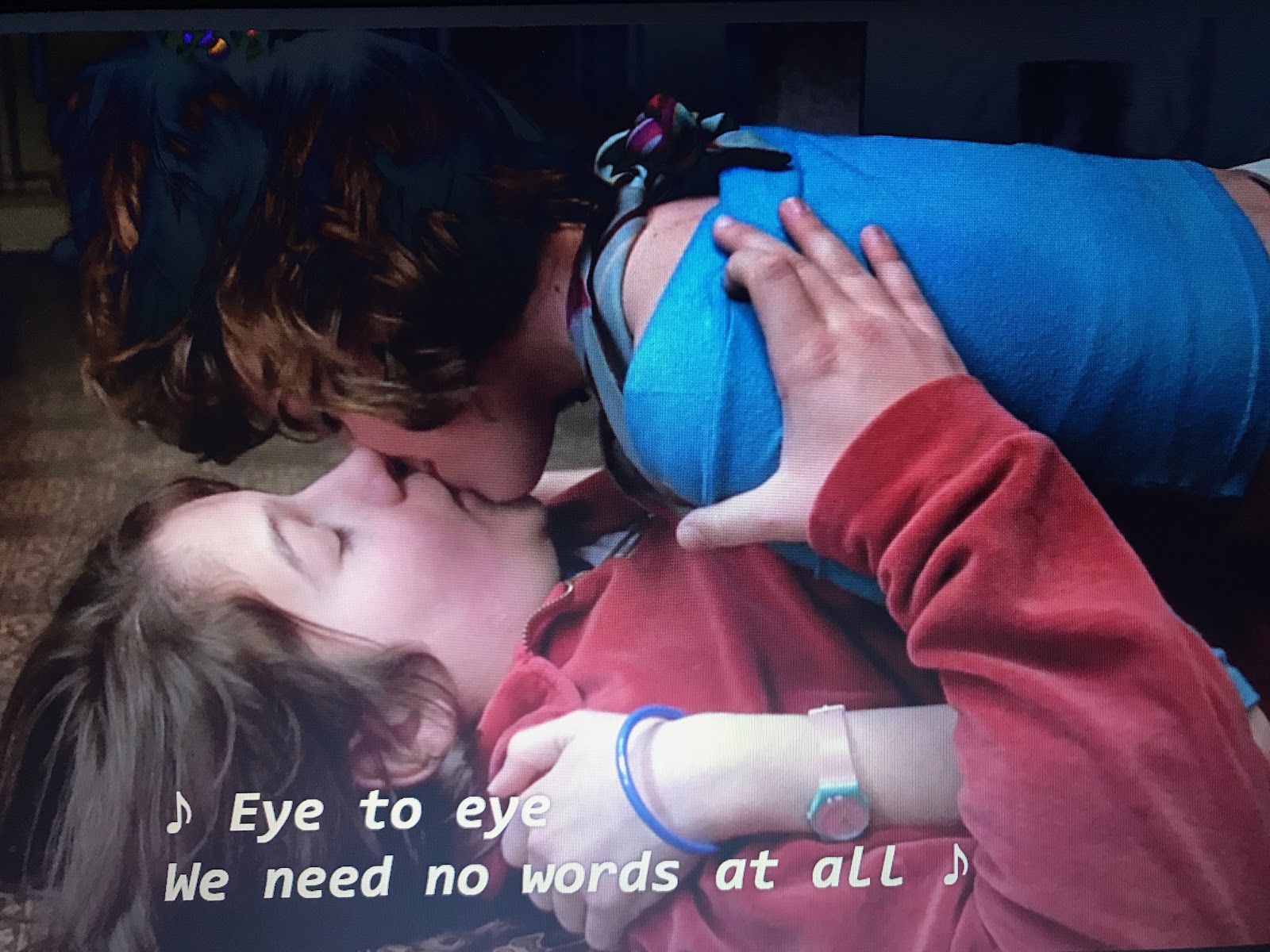
In the movie, 13 Going on 30, at the end of the movie, Jenna returns to her 13 year-old self, only realizing what she has been missing out on. She is back into her closet and when she hears her best friend Matt, she quickly opens the door, runs to him and kisses him. She realized, from future her, when she was 30, that Matt was someone she couldn’t lose, the second she open the door, she secured him for herself, jumping on him and kissing him. She makes this action to make sure Matt becomes hooked, which he does, allowing Matt to be Jenna’s. Jenna relates to Katherine in this because they both took it a step further in their relationship to make sure things would be secure between both characters in both relationships.
Although the idea of love and how people should act towards their significant other has changed around time, certain parts of still very much the same. Love seems to be more one-sided whether it is intentional or not. Equalness in love is hard to find and see. It is easier and more likely to find one doing more than the other in a relationship.


Be the first to comment.

A Tale of Love and Deception

Posted by Catherine Long in English 3 · Pahomov · A Band on Tuesday, April 17, 2018 at 8:23 am

A Tale of Love and Deception

Comparing "Taming of the Shrew" to "Love Love You"


As "The Taming of the Shrew" brings the idea of expectations on relationships that the women or women role in a relationship should be obedient to the male role. Petruchio sets the expectations for Katherine, that since he is the husband/man the wife/lady should be obedient to them. Katherine ends up being obedient to Petruchio’s every call. Unlike Bianca and the widow to their respected husbands, Lucentio and Hortensio. Love Love You is a Thai film about a Gump and Nai’s relationship with new complications coming into their lives. Gump moves into a new apartment with a guy and Nai’s old flame comes back from China. In the movie Gump is seen as the women role in the relationship, while Nai takes up the man role based off of actions. Gump follows Nai like a lost puppy in love most of the time, too shy to do anything or say something when it’s needed to be said. Nai on the other hand does what he wants eventually causing problems within their relationship.

In both Love Love You and Taming of the Shrew, relationship expectations are known. With the Taming of the Shrew, both Katherine and Petruchio the relationship expectations are more pronounced. Gump and Nai’s relationship is more flip-flopped, but still noticeable by the character’s actions. Katherine and Petruchio’s relationship sort of started with dishonesty and deception leading to obedience, meanwhile Gump and Nai’s relationship started with obedience but along came dishonesty and deception. In the Taming of the Shrew, relationship expectations are more pronounced and in modern times it’s not as pronounced but obedience still lingers in the air. Relationship expectations go hand and hand with dishonesty or deception.


"Katherine, I charge thee tell these headstrong women. What duty they do owe their lords and husbands."

(Act V, Scene II, 144-146)


In this scene the husbands were making a bet to see who’s wife is more obedient to them. The widow and Bianca didn’t go to their husbands call, while Katherine did. The wives, widow and Bianca disagreed with needed to be obedient to their call. So Petruchio ends up demanding Katherine to tell Bianca and the widow that the wives duty to their husbands. Dusty meaning how obedient they really are. Petruchio forces Katherine onto his ideal marriage and obedience since he’s the man of the relationship. He makes their relationship expectations known to the other newlywed couples surrounding him. Petruchio wants it all be pronounced.

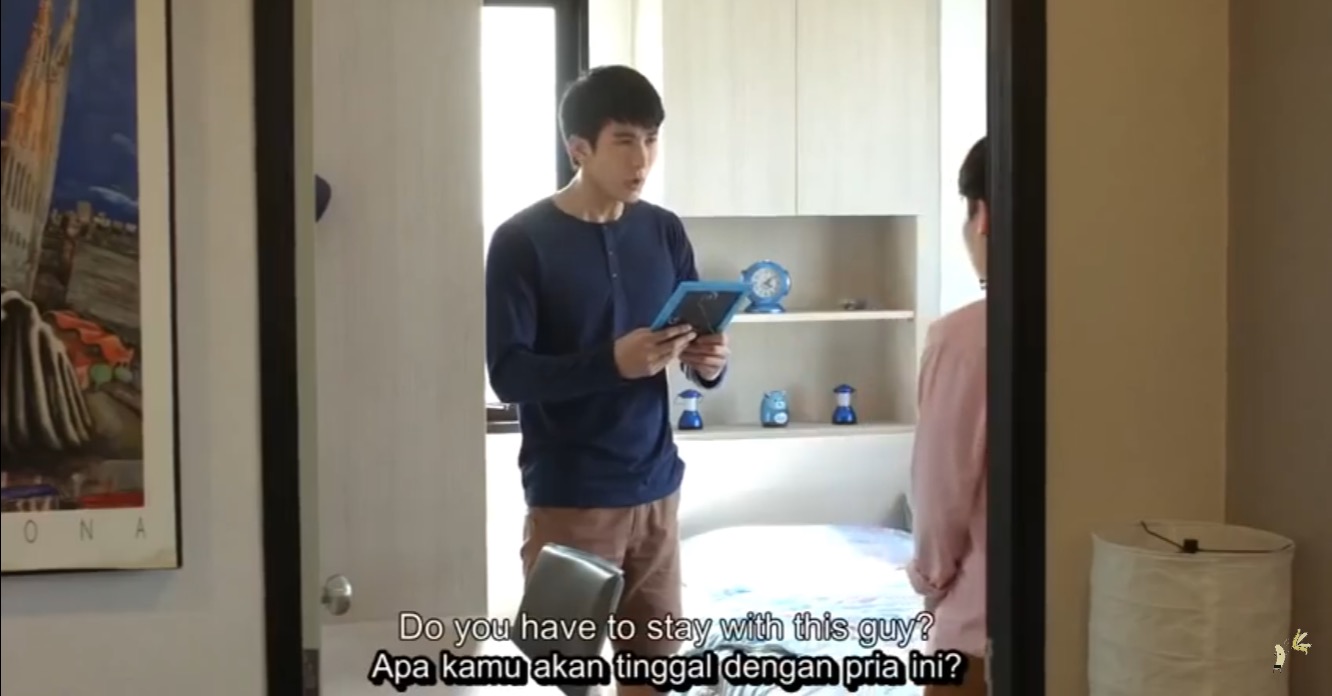
A scene in Love Love You follows the similar obedience ways as the Shrew. Only this time it’s not a demand and out of guilt.


Within this scene, Nai finds out Gump is moving in with a fairly attractive man and complains that he doesn’t want Gump to live there. Out of guilt and obedience, Gump ends up apologizing to Nai about moving in with Sunz for a while. Gump and Katherine are similar yet different, both of them are obedient to the male role yet they do it in different ways. Katherine started lashing out at first and eventually gives into to Petruchio, causing her to be more obedient towards him. While Gump is shy and doesn’t speak up, naturally being obedient to the male role. The relationship expectations on the two relationships take different tolls on the characters lives.


"Be patient, gentlemen. I choose her for myself. If she and I be pleased, what’s that to you? ‘Tis bargained ‘twixt us twain, being alone, That she shall still be curst in company… Give me thy hand, Kate. I will unto Venice to buy apparel ‘gainst the wedding day. --- Provide the feast, father, and bid the guests. I will be sure my Katherine shall be fine."


(Act II, Scene I, 321-336)


Petruchio’s whole spiel was pretty much a lie to Baptista and everyone else. He was only willing to marry Kate for the money and the dowry he gets for marrying her. This all started the deception and dishonesty between Katherine and Petruchio.  Katherine at first was reluctant to listen to Petruchio’s wish to marry her, as most men revolted her due to bad temperment. During the spiel Petruchio was spitting, he said, “She hung about my neck, and kiss on kiss, she vied so fast. Protesting oath on oath, that in a twink she won me to her love.” Earlier on in Shrew Petruchio’s character was basically established that he liked money and only did things for himself. He was dishonest in his feelings towards Katherine, eventually leading him to place the relationship expectations.


Nai’s old flame came back from China, causing Nai to rekindle with him. On the other hand, Gump has no idea about their past relationship together.  


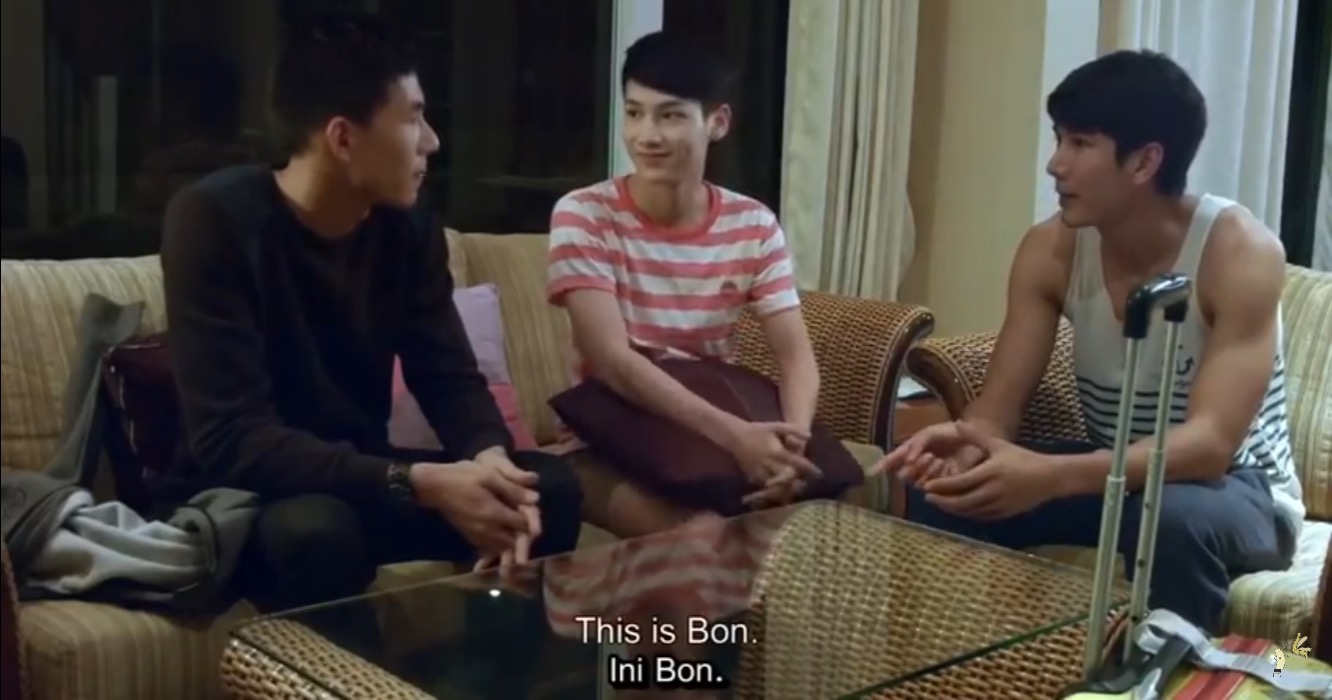
Bon went to visit Nai while Gump was over. Nai introduced them to each other, while lying to Gump in the process saying Bon was just his high school classmate, when in reality Bon was Nai’s old flame. Since Gump was deceived he went along with Nai’s lie. Believe Bon was only a classmate, but later on realizing how close the two were. Nai was worried to tell Gump the truth about Bon, so he lied. In the end breaking the trust of their relationship slowly. Petruchio on the other hand lied to Katherine in the first place, deceiving her into being an obedient wife. Both Nai and Petruchio lied to their significant other for their ow2n good, ending in two different results in their relationship.


Thus, in the end the obedient Gump stopped talking to Nai for a while after spotting an unforgivable scene while Bon and Nai were completely drunk. Being deceived once more thinking Nai was shot at a party, just to get Gump to confess his true feelings. Gump’s obedience lead to dishonesty and deception within their relationship, while Petruchio and Katherine’s honesty and deception lead to obedience eventually. Thus creating the three things, dishonesty, deception and obedience in relationship expectations to go hand in hand. Modern day romantic comedies sometimes lay on the same principle, just in a different formation.


Be the first to comment.

Visual Essay

Posted by Kyianna Thomas in English 3 · Pahomov · A Band on Monday, April 16, 2018 at 8:37 pm

     The Taming of the Shrew has a desire to show you different relationship styles. One of the Main characters in this play was named Petruchio. He was the man who knew how to use clever words to get women. There is also Kathrine who was married to Petruchio, she was not always interested in him. Later on Petruchio tame Katherine into the women he wanted her to be. What Happens In Vegas has a comedy based laugh and keeps you wanting to wonder if relationships are like theirs.  There are two main characters, Joy and Jack they both were in Vegas. They got drunk and woke up married. Joy character is happier but she can be feisty if she wanted. Then Jack is a man who is all about the women and sport who lives an average man life. Both pieces demonstrate the conflict between the ideal way to develop a relationship against how relationships often realistically develop, and how the expectations of an ideal relationship are out of reach.

PETRUCHIO

To her, Kate!

HORTENSIO

To her, widow!

( In Act 5 scene 2)

       This was a scene where Petruchio and Hortensio made a deal to see who would could use this woman. Society would look at this and believe that relationship today come about because of bets that friends make with each other. This could also show you how relationship could be taken as a game and not actually a real life problem. Boys could look at this a being a player and girls could look at this as getting played. This shows you that the development of relationship are based upon other people that are not in a relationship.


        In this scene from What happens in vegas it portrays to society that love is just something that comes with luck. The couple is showing that marriage can come easy and it doesn’t take long to do. This couple was just sitting in a bar, than waking up the next morning marriages. This shows to society that love is drug that can make you do crazy thing and regret it later. Love is a symbol to how the people in the society should look at it, which then later on makes the audience struggle with how a relationship is supposed to be developed


Why, sir, I trust I may have leave to speak,

And speak I will. I am no child, no babe.

Your betters have endured me say my mind,

And if you cannot, best you stop your ears.

My tongue will tell the anger of my heart,

Or else my heart concealing it will break,

And rather than it shall, I will be free

Even to the uttermost, as I please, in words

( In Act 4 scene 3)

    In the Taming of the Shrew this was a scene that showed of petruchio actions toward Katherine after they got marriage. He started to control her by telling her what she could wear and what she couldn’t wear. This is showing to society that when a man does not like what you wear or what you are doing they have a say so in how they could change it. This could lead to why women began to feel insecure about themselves. This could also be a reason on why men have the mindset if one can do it then why can’t I.

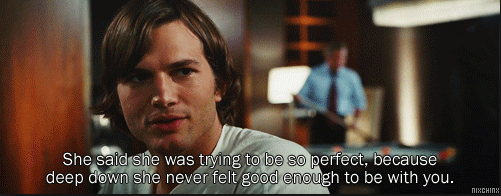
      In this scene Jack is talking about Joy is trying to be so perfect but in reality he never was perfect for him. Society men would look at this as if men are supposed to talk women as jokes. Men is the society could began to believe that this is how you are to treat a girl when it comes to her feelings and how she cares. This is teaching that girls are not [perfect and guys they will never be so this movie does a bad job at portray how a guy should look at a female. It’s as if a girl is not perfect for you then he's not perfect at all.

       In conclusion to this relationships are looked upon differently in many ways. Movies and books could give a general impression on how a person should feel about it but it never actually tells you how to feel. Society are always watch the the actors and authors to see how they would describe the best development for how a relationship should be. This is why both pieces demonstrate the conflict between the ideal way to develop a relationship against how relationships often realistically develop, and how the expectations of an ideal relationship are out of reach.


Sources:

https://www.google.com/search?rlz=1CADEAC_enUS670US671&biw=1366&bih=629&tbm=isch&sa=1&ei=FRLhWsaJEIPw_AaepL2IBg&q=what+happens+in+vegas+subtitles+club+scene&oq=what+happens+in+vegas+subtitles+club+scene&gs_l=psy-ab.3...16809.22272.0.22582.15.12.3.0.0.0.131.869.10j2.12.0....0...1c.1.64.psy-ab..0.1.128...0i24k1.0.ZJE4sHAlNEc#imgdii=L4mEXiC0U_HZkM:&imgrc=oCMf9MyWlwnlSM:

https://www.google.com/search?q=what+happens+in+vegas+club+scene&rlz=1CADEAC_enUS670US671&source=lnms&tbm=isch&sa=X&ved=2ahUKEwiRspjpy9baAhVGON8KHXAlB2EQ_AUoAnoECAAQBA&biw=1366&bih=629#imgrc=BWG_n3AEOe3yFM:


Be the first to comment.

Control in a Relationship

Posted by Jakob Klemash-Kresge in English 3 · Pahomov · A Band on Monday, April 16, 2018 at 11:52 am

Control in a relationship

Comparing ‘Taming Of The Shrew’ to the film Begin Again.’


The Taming of the Shrew by Shakespeare is a  family drama. The story opens with Baptisia a merchant who is the father of two girls. Katherine who is the eldest strong-willed and awkward. His younger daughter, Bianca is more beautiful and kind.   Baptisia wants his older daughter Katherine to get married before his youngest daughter will be permitted to do so.


Tranio and Lucentio come to town from Verona. Lucentio is a well-off man and Tranio is his servant. Lucentio falls in love with Kate; he falls in love with right away. Lucento dresses like a tutor so that he can be in the household were Kate lives. Tranio takes on the profile of Lucentio. Another man named Tranio and Lucentio come to town from Verona. Lucentio is a well-off man and Tranio is his servant. Lucentio falls in love with Kate; he falls in love with right away. Lucento dresses like a tutor so that he can be in the household were Kate lives. Tranio takes on the profile of Lucentio. Another man named Petruchio comes from out of town to Hortensio's house which is his friend who is also interested in Bianca. Horensio has a plan, and he convinces Petruchio to marry Kate.   Baptista has a lot of money, so when he gets married to Kate the marriage will come with a large dowry. This will clear the path for Bianca to marry. In the movie Begin Again Gretta is dating a songwriter named Dave Kohl, they move to New York when Dave gets a major record deal. With Dave's new issues he has new temptations for other girls. When a couple is married the husband has more control over the wife and the spouse is forced to do things that they don't want to do.


 "Quote from Play" (Act 1, Scene 2, 75 and 76 )


“ I come to wive it wealthy in Padua; if wealthy then happy.”


The quote is from the Taming of the Shrew, Petruchio was the one speaking here. The quote shows how Petruchio feels about marriage. Petrucio knew that had money and had the plan to get some of the money in the form of a dowry by marrying his daughter Kate.  Petruchio wants to marry for money, not love. This shows he is in love with the money, not his wife.


This is Dave and Gretta Talking about their relationship and Gretta leaves Dave showing he does not control her.


Dave did not have control over the relationship between him and Gretta. In the time and setting of the play women are married to men, the husband has power and the spouse is forced to do things that they might not like, but they do it because there married.


"Quote from Play"


(Act 5, Scene 7, 175)


"Thy king, Thy Governor."


This quote is again a part of Katherine's speech at the end of the book. Katherine was saying that the husband is the king and they can control the wife. Back then the husband had more control of the wife; the husband would work and provide for the family while the wife stays home. This brings the theme control; this shows that the husband has the power of the relationship because the wife is saying my husband is the king.


Gretta and dave fighting  this shows that Dave does not have control over the relationship.


In the movie, Dave Kohl goes to L.A for his music career, and then comes back to New York. He plays Gretta a new song that he made, the song talked about another girl who was touring with him. He cheated on Gretta, and this made Gretta mad and she left him. This is the opposite of the play because the wife believes that the husband is the king and he can do whatever he wants. Dave did not control Gretta.


Quote from Play"


(Act 5, Scene 2 ,176)

" Even such duty as the subject owns the prince"


This quote is again a part of Katherine's speech at the end of the book. Katherine was saying that the husband is the king and they can control the wife. Back then the husband had more control of the wife; the husband would work and provide for the family while the wife stays home. This brings the theme control; this shows that the husband has the power of the relationship because the wife is saying my husband is the king.


Gretta is forced to perform here showing that she has to do things she does not like


This can be compared to the Movie Begin again because Greta is forced to perform her music and ends up finding that she has great talent. Being forced to do something that worked out for her. I believe that Katherine was forced to say the speech and ended up loving her husband.


When women are married to men, the husband has control and the spouse is forced to do things that they might not like, but they do it because they're married. The play the Taming of the Shrew is older than the movie Begin again. Since the film is more contemporary the view has changed. Back then, the husband had total control over their spouse, but now the spouse will stand up for there self. Divorce was not common back then but now if the relationship does not work the spouse can leave their husband. When women are married, they are forced to things they don’t like; this is true because Katherine did not want to perform that speech and Gretta did not want to perform, but they both did it because they are married.


Be the first to comment.

Forced Relationships

Posted by Alexandrea Rivera in English 3 · Pahomov · A Band on Monday, April 16, 2018 at 8:48 am

2018 Movie Visual Essay-Rivera
1 Comment

Desiring the Perfect Marriage

Posted by Alan Li in English 3 · Pahomov · A Band on Monday, April 16, 2018 at 7:51 am

Desiring the Perfect Marriage

The Taming of the Shrew and Gone Girl


In The Taming of the Shrew, Shakespeare uses Petruchio to show how a husband could "train" his undesirable wife to be something he would seem fit through his actions with Katherine. By “training” her, Petruchio is able to put Katherine into submission by suppressing her free will and her former unpleasant self. David Fincher's Gone Girl takes a similar approach to marital manipulation through Amy. In the story, she would constantly manipulate Nick's emotions to the extremes as a consequence of him cheating on her with Andie by framing him of a crime he initially has no idea of.

In both The Taming of the Shrew and Gone Girl, marriage would revolve around control and infatuation rather than the actual love between two people. In The Taming of the Shrew, Petruchio would rather change Katherine rather than love her for who she is and in Gone Girl, Nick would get emotionally manipulated by Amy while having to come to terms that she is not the person he initially thought she was. Although deception is still prevalent in marriages, the thought of romantic love is maintained through the perception one has for another, which is infatuation. However, unlike The Taming of the Shrew, besides the swap in gender when it comes to who is in control of the relationship, even though Amy is the one in the marriage who is orchestrating Nick's life against his will, she desires a Nick who is not necessarily his real self. From that, this shows that when it comes to marriage today compared to back then, women can be deceptive as men in relationships and in love while being able to choose the men they want to have.


"Thy husband is thy lord, thy life, thy keeper,

Thy head, thy sovereign, one that cares for thee,

And for thy maintenance commits his body

To painful labor both by sea and land,

To watch the night in storms, the day in cold,

Whilst thou liest warm at home, secure and safe,

And craves no other tribute at thy hands

But love, fair looks and true obedience—

Too little payment for so great a debt.

Such duty as the subject owes the prince,

Even such a woman oweth to her husband."

- Katherine (Act V Scene 2 lines 155-165).

This is noted by Katherine at the end of the play when her husband bets that she would be the most obedient wife compared to Bianca and the widow. After experiencing the torment Petruchio would put her through such as not letting her sleep at night or not allow her to obtain a dress she ends up liking, Katherine has no other choice but to submit to her husband. This is evident to the reader when she states, “Thy husband is thy lord, thy life, thy keeper, Thy head, thy sovereign, one that cares for thee.” By referring to him with terms such as “lord”, “keeper”, and “head”, she submits to Petruchio’s dominance over her will in their marriage by the end of the story. With the choice to have no one else to love her or have a man who would destroy her former self, there is no doubt that Katherine will choose the latter when it comes to being with the only man she could ever have, not because her actual self would be loved by that man.    


Like Katherine, in this situation, Nick has no choice but to submit to Amy’s pressure. This scene is where Nick announces on national television that he and Amy will be having a child. When he states, “We’re honest with each other,” it tells the audience that their marriage mainly consists of lies since they have been deceiving each other and have been dishonest to each other the entire movie, but Nick has no choice but to lie. Throughout the movie of Gone Girl, Amy deceives Nick into getting caught for committing a crime he initially has no intentions of perpetrating. As for Nick, with the accusations of how horrible of a person he is for cheating on his wife and how he might be the culprit for the alleged death of Amy, Nick cannot do anything else or express himself. Due to that pressure, he has to pretend to the masses that he and Amy are a happy couple. Amy, unlike Katherine, does not have to worry about her husband leaving him since she is the one in control of the marriage.  


"Look, if you love me, stay."- Katherine

(Act III Scene 2 line 176)

"Grumio, my horse."- Petruchio

(Act III Scene 2 line 177)

The quotes that are stated by Katherine and Petruchio occur during their wedding. In this scene, Katherine wants to stay at the wedding while Petruchio wants to leave. When Petruchio refuses to stay despite Katherine claiming that he is in love with her if he chooses to stay, it shows that Petruchio does not love Katherine for who she actually is. He does not care about what Katherine wants and would commit to actions that would harm her for her “own” sake. As a result of taking Katherine along with him even though she wants to stay, Petruchio proves how he would manipulate her into committing to matters she would not initially oblige to.


In this scene, Amy tells the audience her thoughts of the murder and her plans to ruin Nick. This is reminiscent to Petruchio manipulating Katherine to coercing to things she does not want since in Gone Girl, Nick does not want to be framed for murder and Amy knows this to be the case but she still orchestrates it to get Nick arrested. However, unlike The Taming of the Shrew, Amy deceives Nick to get revenge on him for cheating on her, not necessarily to make him a better person like what ends up happening in Katherine’s case. When Amy states, “He actually expected me to love him unconditionally,” the audience could see how Amy has Nick fooled to believing that and how she would not actually love him unconditionally despite being married to him. This can explain why she is willing to have revenge on him and why she is willing to hurt him: she does not love his actual self.


“You lie, in faith, for you are called plain Kate,

And bonny Kate, and sometimes Kate the curst,

But Kate, the prettiest Kate in Christendom,

Kate of Kate Hall, my super-dainty Kate—

For dainties are all Kates—and therefore, Kate,

Take this of me, Kate of my consolation:

Hearing thy mildness praised in every town,

Thy virtues spoke of, and thy beauty sounded—

Yet not so deeply as to thee belongs—

Myself am moved to woo thee for my wife.”

- Petruchio (Act II Scene 1 lines 179-189)


During Katherine’s first encounter with Petruchio, Petruchio claims that people refer to her as Kate, not Katherine despite her denial. In addition to denying her words as true when she states that people call her by the name of Katherine instead of Kate, Petruchio compliments to her in outlandish ways like calling her “bonny Kate”, “the prettiest Kate in Christendom”, and the “dainties are all Kates”. Despite it being the first time where he actually talks to her, it is clear that Petruchio idealizes Katherine rather than trying to understand her true self because if he is actually in love with Katherine, he would have trusted her when she states that people call her Katherine rather than pushing it aside as a lie. To add up to his idealization of her, without any thoughts or incentives to understand her, it shows how Katherine as a person is no valuable to Petruchio compared to his desire to marry her. Although it could be argued that Katherine is actually value to him since he is willing to marry a person who has a bad and undesirable reputation in the story, if he is truly in love with Katherine, he should try to get to know the person he is marrying instead of fantasizing about her while not trusting what she says.   


Similar to Petruchio, Amy ends up falling in love with Nick’s persona on television, not Nick himself. After coming back from hiding, Amy only realizes that Nick is not the person from his persona on television and that he wants her back so he would not be seen as a murderer in the masses, not that he actually has any affection towards her. This leads to her being somewhat different from Petruchio in The Taming of the Shrew because although she has been manipulating Nick to the point where Nick has to be desirable to her to get her back to him similar to how Petruchio tries to manipulate Katherine to winning her affection, she has known what Nick can actually be like as a person due to her long marriage with him. In addition to knowing that Nick is not as desirable as she has wanted to believe prior to her life with him, she knows that Nick has been hiding his affair with Andie from her and has tried to lie about it on TV. Despite knowing Nick as an actual person, his past, and how dishonest he can be, she ends up getting fooled anyway when she comes back to Nick solely because of her idealization of him on TV.

In a lot of ways, characteristics in marriages back then are still around today like manipulation, conceit, and idealization. With many changes to societal norms such as women being given more opportunities now than ever before, this can be surprising to those who have expected society to be a lot different than before. Although there is no doubt that times have changed long after Shakespeare’s times, now that women have more marital rights, women like Amy can potentially be Petruchio when it comes to maintaining traditional characteristics of what marriage has always been. This changes how people see courtship today since with Amy actually being the one taking control of her marriage with Nick instead of the victim of that abuse, people can no longer assume that Amy is the damsel in distress while Nick is the villain without ignoring the implications that can have to victims of domestic abuse like Nick. Overall, to leave on a final note, when Nick tells Amy, “Yes, I loved you and then all we did was resent each other, try to control each other. We caused each other pain,” Amy replies, “That's marriage.”

Works Cited

“The Taming of the Shrew.” SparkNotes, SparkNotes,

nfs.sparknotes.com/shrew/page_246.html.

Milchan, Arnon, et al. Gone Girl. Twentieth Century Fox, 2014.

“The Taming of the Shrew.” SparkNotes, SparkNotes,

nfs.sparknotes.com/shrew/page_138.html.

“The Taming of the Shrew.” SparkNotes, SparkNotes,

nfs.sparknotes.com/shrew/page_90.html.


2 Comments

Emotions Aren't Always Visible

Posted by Wedage DeSilva in English 3 · Pahomov · A Band on Monday, April 16, 2018 at 1:35 am

Comparing "Taming of the Shrew" to "Just Go With It”

Shakespeare's Taming of the Shrew shows how love can be perceived in many ways and how it may conflict with a character's state of mind. The root of love stems many questions within itself, and can be very hard to boil down to one sole ideal. Because of this, people who may believe themselves to be in love can find themselves questioning this fact and second guessing their feelings. This idea is seen throughout Dennis Dugan's Just Go With It. 


In comparison with Taming of the Shrew, Just Go With It follows the story of a middle aged man named Danny who wants to find a synthetic love after being cheated on by his wife on his wedding day. Taming of the Shrew showcases the idea of a man named Petruchio who comes across as having a double sided personality- on one end, he is a man of honor who has endured many struggles while on the other he is a mercenary seeking to marry for wealth. Both pieces prove that the idea of loving someone is best approached when both parties have an understanding for one another because love isn't stagnant, but rather that something that develops through the progression of a relationship. 

"I come to wive it wealthily in Padua; If wealthily, then happy in Padua."

(Act I, Scene II, 76-77)

In this quote, Petruchio conveys how he wants to be wed to a rich woman whom would make him happy. This shows how his idea of love is not the ideal idea but a philosophy he decides to live by. It also presses the idea of being in a relationship can be deceiving when one is in it for the money.

Danny in 'Just Go With It' also finds himself against a women who opposes his view points on their relationship.

just_go_with_it_1
just_go_with_it_1
In the middle of the film from 'Just Go With It' Jennifer Anistons character "Katherine Murphy" confronts our protagonist (Danny) about his ideas in their made believe relationship. As Katherine had to pretend to be Danny's wife throughout the film to avoid Danny from getting his feelings hurt from the woman he had met at the club named Palmer. This relates to the quote above due to the two ideas Petruchio views and Danny views not being something that's ideal to the other characters.  
​"Be patient, gentlemen. I choose her for myself.
If she and I be pleased, what's that to you?
'Tis bargained 'twixt us twain, being alone,
That she shall still be curst in company.
I tell you, 'tis incredible to believe"

(Act 2, Scene I, 321-326)

In this quote Petruchio obviously lies when he says Kate has agreed to marry him. This shows how deceptive he is when it came to the 'marriage' as he wanted riches and did not care for the actual 'love' involved in the relationship. 

This quote also shows a truth into Danny's life in 'Just Go With It." 

photo_49730.med
photo_49730.med
In the middle of the film, Danny and Katherine are on a date. Danny's facial expression indicates that he is not enjoying the date that they are on . In relation to the quote above, Petruchio seems to be cunning as tells lies and tries to get into a marriage for riches. Danny on the other hand is also cunning in a way in which he initially wanted Katherine to pretend to be his wife and this artificial relationship took a turn to bite Danny in the butt. 
In conclusion, the Taming of the Shrew in comparison to Just Go With It both had the idea of relationships being deceptive and unwilling to change for the better. The Shrew had the idea of Petruchio wanting to be in a wealthy relationship in which he could prosper. While Danny in Just Go With It wanted to be in a relationship in which he would no longer get hurt, but ended up making many lies to cover up that he is single when he met Palmer (the girl of his dreams). Danny could have been honest but due to his past experiences he was confined into being a deceptive person in the relationship.
5 Comments

The Great Chase

Posted by Ayala Silverman in English 3 · Pahomov · A Band on Sunday, April 15, 2018 at 10:52 pm

The Great Chase

A comparison between “Taming of the Shrew” and “Ella Enchanted”


In the play, “The Taming of the Shrew,” there is a character, Lucentio, who has just arrived in Padua for school. When he first arrives, he happens to see another character, Bianca, who he immediately falls in love with and strives to meet again, even though she has no idea who he is. In the movie, “Ella Enchanted,” Prince Charmont is escaping from a frenzied horde of fangirls when he runs into Ella of Frell, who is not his biggest fan. While Ella is not excited to have run into him, Prince Charmont expresses hope in seeing her again.


Both the play and the movie have characters who fall in love with another after a brief encounter, expressing interest in trying to get closer to the other character. In the “Shrew,” Lucentio is new in town and nobody knows him, which gives him the hope that he will be able to gain Bianca’s attention and then affection. “Ella Enchanted” differs from the play since Prince Charmont is well known throughout the kingdom, however, he hopes to use his popularity to win Ella over in the beginning. These texts reflect that when someone falls in love with another person, regardless of whether or not they knew each other (or if one likes the other), they will try to pursue them in order to get a “happy ending”.


"...But see, while idly I stood looking on, I found the effect of love-in-idleness, and now in plainness do confess to thee that art to me as secret and dear as Anna to the Queen of Carthage was: Tranio, I burn, I pine! I perish, Tranio, if I achieve not this young modest girl.”

(Act 1, Scene I, 152-8)


At the beginning of the play, Lucentio is introduced as a student who has recently moved to Padua to continue his education. Upon his arrival, Lucentio witnesses a scene between Baptista and two suitors of his daughter, Bianca. After becoming enraptured with Bianca almost immediately, his hopes are dashed when Baptista makes it clear that Bianca’s sister must be married before she could be wed. Instead of becoming discouraged, Lucentio comes up with a plan to get closer to Bianca without her father becoming suspicious -- he’s going to act as her teacher. The reader can see that despite having several obstacles (e.g. barely knowing the girl and the father wanting the older sister to be married first), Lucentio is going to do whatever he can in order to get to Bianca. This quote shows Lucentio’s infatuation with Bianca and his want to acquire her.


Similarly in “Ella Enchanted,” Prince Charmont immediately takes an interest in Ella after running into her.


Screenshot 2018-04-11 at 11.19.09 PM
Screenshot 2018-04-11 at 11.19.23 PM

Prince Charmont had been visiting Frell when a mob of his fangirls began to chase after him. While escaping, Prince Charmont runs into Ella as she is walking home, and tries to hide behind her. Ella, who is avidly against royalty and their treatment of the kingdom’s species, is not thrilled by this turn of events and brushes him off. Prince Charmont isn’t used to this treatment from the ladies and develops an interest in Ella. Despite Ella’s attempts at driving him away, Charmont insists on seeing her home. Unlike in the “Shrew,” Charmont and Ella interact before Charmont starts to like her and wants to pursue her. He hopes that by being courteous, she will warm up to him and eventually return his feelings. Prince Charmont’s infatuation with Ella when they first meet is much more subtle than Lucentio with Bianca -- he simply hopes that they’ll meet again instead of trying to trick her by impersonating her teacher.


“I read that I profess, The Art to Love.” “And may you prove, sir, master of your art.” “While you, sweet dear, prove mistress of my heart.” (They move aside and kiss and talk.)

(Act 4, Scene II, 8-10)


After Lucentio acted as Bianca’s schoolteacher, he tells her his true identity. While skeptical at first, over time she warms up to him despite his deceit. Though they have only known each other for a few days, the affection between them has grown. The dialogue between Bianca and Lucentio demonstrates to the reader how a person can fall in love with another and have the chase come to fruition. Besides verbally confessing their love for each other, there is also a physical display of affection that really seals the deal.


The budding romance between Lucentio and Bianca can also be seen between Prince Charmont and Ella.


Screenshot 2018-04-11 at 10.26.07 PM

Ella and Prince Charmont are resting in an giant’s pub after several days of adventure. The two are sitting by the fire together and talking about their lives prior to meeting each other, along with other current events. After an especially touching moment where Ella tells Charmont that he will be a good king, he decides that he wants to kiss her. Similar to the scene from the play, this moment between Ella and Charmont shows the beginning of their relationship and how Ella was able to overcome the prince’s shortcomings (much like how Bianca overlooked Lucentio’s lies). This scene and the scene from the “Shrew” both reflect that a strong bond can be formed in only a few days as long as the effort is there.


“Gentlemen, importune me no farther, for how I firmly am resolved you know: that is, not to bestow my youngest daughter before I have a husband for the elder.”

(Act 1, Scene I, 48-51)


At the beginning of “The Taming of the Shrew,” Baptista is trying to drive away Bianca’s suitors by explaining that his eldest daughter had to be married first. In this way, Baptista is interfering in both Bianca’s love life as well as her sister’s. He wants to force someone to marry the older sister while also trying to find a better suitor for Bianca. In this way, Baptista is an obstacle in Lucentio’s path on his way to Bianca.


Although not a parent, Ella’s step-sister, Hattie, plays a similar role as Baptista in “Ella Enchanted”.


Screenshot 2018-04-11 at 11.17.06 PM

Ella and Prince Charmont have just met and are arguing with each other when Hattie bumps into them. Hattie is shown to be an expressive fangirl of Charmont, and gets jealous upon seeing Ella close to the prince. Even though her reasoning for interfering and end goal differs from Baptista, she is also trying to prevent a relationship happening between Charmont and anybody but herself. Hattie realizes that there are already romantic feelings growing between her step-sister and the prince, and she wants to avert those feelings -- thus, becoming an obstacle in Charmont’s path to Ella.  


In both the play, “The Taming of the Shrew”, and the movie, “Ella Enchanted”, the main couples -- Lucentio and Bianca, and Charmont and Ella -- successfully marry each other in the end. In these cases, the pursuit of a person resulted in the “happy ending” for the characters involved. Even though this isn’t the most realistic scenario, there is a grain of truth in that when something or someone is desired, then it is worth striving towards.


Works Cited

Haver, Tommy O, director. Ella Enchanted . Netflix, Miramax, 2004


Shakespeare, William. The Taming of the Shrew. Edited by Barbara A. Mowat and Paul Werstine, Washington Square Press, 1992.

5 Comments

Married to Money

Posted by Amaris Ortiz in English 3 · Pahomov · A Band on Sunday, April 15, 2018 at 10:39 pm

Married to Money

Comparing The Taming of the Shrew to My Fake Fiancé

The Taming of the Shrew shows that marriage as an economic institution has been around for a while, or in other words, both parties do it for the money involved. In this play, Baptista, a father of two daughters, Bianca and Katherine, has to deal with multiple suitors trying to gain the attention of his two very different daughters. Bianca is the youngest so she must wait until Katherine gets married. Multiple suitors want Bianca, who is seen as the more level-headed sister, while Katherine only has one man who thinks he can change her ways. Shakespeare wants the reader to see that emotions don’t really play a primary role in marriage. Money plays the main role in which man gets to marry one of Baptista’s daughters. The more money they have, the greater chance they have with getting married to one of them.

In the 2009 movie My Fake Fiancé, Jennifer and Vince meet at a mutual friend’s wedding and decide to get married for the monetary benefits. Both of them were in need of money and didn’t have any real feelings toward each other. Like The Taming of the Shrew, money has a primary role in the movie. These texts reveal that, while men are not as expected to offer money to the future wife’s family, marriage is still viewed as an economic institution rather than solely being based on love.


“I come to wive it wealthily in Padua;

If wealthily, then happily in Padua.”

(Act 1, Scene 2, Lines 76-77)


In this scene, Hortensio is sort of pitching an offer to Petruchio about marrying Katherine so that he can be able to marry her younger sister Bianca. Petruchio is being very straight forward in his response about his opinions on marriage and money. Now that he is in Padua, he wants to find a wife that has money so that he can continue to live happily. This part of the text shows the importance this character believes money has in a marriage. Rather than saying he will be happy meeting the woman he will eventually marry, he says that he will be happy when he marries a woman with money. This sets aside all other aspects of the woman like her looks, her personality, or if she even loves him. Jennifer and Vince find themselves in a similar discussion about money when they first meet each other.

In “My Fake Fiancé,” when Vince and Jennifer first talk about how many gifts the bride and groom are getting, Vince says “I guess in theory It’s like a savings account. We’re supposed to get that money back one day when we get married.” Both Vince and Jennifer view the wedding as something that is just bringing in money for the bride and groom. Rather than talking about the couple being in love, they focus on what the couple is going to be receiving because they are getting married, such as money or gifts, and how they will benefit from that. It makes them think of their own future wedding in a similar fashion when comparing it to money they will receive back. Like Petruchio, they value the monetary aspect of getting married.


“I promised we would be contributors

And bear his charging of wooing whatsoe'er.”

“And so we will, provided that he win her.”

(Act 1, Scene 2, Lines 218-220)


At this point in the play, there are multiple suitors trying to go after Bianca. As stated before, Katherine must get married first. Hortensio and Gremio are still trying to talk Petruchio into marrying Katherine in order for them to be in competition to win over Bianca. They even go as far as saying they will cover Petruchio's expenses. The discussion of who will “win” either sister is highly based on how much the man can provide for her as well as offer her father. This applies more to Bianca since she is the only one with more than one suitor. This is more of a business deal rather than a competition of who can win over her heart. The discussion of who will “win” Bianca plays in societal idea of what it means to be husband and wife. That the husband should be able to provide for the wife and the wife should please the husband. That wives should aim to be “trophy wives” or simply let the man do all the work and bring in all the money. The situation between Jennifer and Vince is completely based on the money they will bring in from wedding gifts.

In this scene, Jennifer and Vince are discussing the fact that Jennifer just lost furniture during her move and Vince owes someone over 10 grand due to gambling. In order to fix this, they decide to stage a fake wedding. Vince says, “It’s perfect. I’m in. We stage a fake wedding. We invite everyone that we know. You register for all the stuff you want to replace, I get to keep all the cash.” Both Jennifer and Vince are agreeing to use the wedding as a way to support themselves financially. Like the suitors, money determines their future actions. If not enough money is offered from the suitor, they can not get married to Bianca. If it weren’t for the money involved, Jennifer and Vince wouldn’t be discussing a marriage. In this case, the societal roles of the husband having to provide for their wife does not apply because they don’t plan on forming an actual relationship after they get what they wanted from the fake wedding.


“Be patient, gentlemen. I choose her for myself.

If she and I be pleased, what's that to you?

'Tis bargained 'twixt us twain, being alone,

That she shall still be curst in company.”

(Act 2, Scene 1, Lines 321-324)


When the other men see how Katherine is talking to Petruchio, they begin to question whether or not they have a successful relationship. Petruchio thinks that the “bargain” made over the couple, specifically between him and Baptista, should be kept to themselves and not important to the other men. It doesn’t matter how rude Katherine is to him as long as he still has an amount of money agreed upon with her father. Petruchio’s opinion shows that the qualities of the woman don’t really matter to him as long as her or her family has money. He doesn’t see the negative behavior of him or his wife as a reasoning for the marriage not to work since they are both pleased with having money. Jennifer and Vince fall into a similar situation when they reveal that neither of them are happy with the other person’s attitude.

In this scene, Jennifer was finally able to get in contact with Vince in order to talk over a deal that will make money for the both of them. Although this deal involves a marriage, her and Vince aren’t very fond of each other. This doesn’t stop them from going through with the plan. Like Petruchio, they know what they are getting themselves into and the behavior each will have to deal with but they still get married for the money. To both of them, whether or not they actually like each other is important. Petruchio knows about Katherine’s bad attitude from what Bianca’s suitors told him and Vince and Jennifer already butt heads at the wedding when they first met.

The similarities between the movie and the play show that over the years, the audience can still relate to that topic. This idea of marriage being an economic institution leads to people getting into relationships for the monetary benefits. Families during the time of Shakespeare’s writing would want to get married for the wealth while the modern day version of it was Jennifer and Vince using the wedding gifts to benefit themselves. Even though the play and the movie were created centuries apart, the ideas of marriage as an economic institution are still relevant to people today.


Works Cited

My Fake Fiancé. Dir. Gil Junger. ABC Family, 2009. DVD.  

Shakespeare, William. The Taming of the Shrew. Folger Shakespeare Library, 1992.
4 Comments

Visual Essay By: Miguel Rivera

Posted by Miguel Rivera in English 3 · Pahomov · A Band on Sunday, April 15, 2018 at 10:25 pm

Miguel Rivera

Ms. Pahomov

English 3

16 April 2018

Control is the Key to Any Relationship

Clueless and The Taming of the Shrew

Love and its legitimacy has caused many debates over the years. Shakespeare's The Taming of the Shrew(1590s) shows how control has more to do with relationships than actual feelings. He shows this through the relationship between Petruchio and Katherine, which involves Petruchio consistently demanding that Katherine change her personality and agree to fictitious ideas just for the sake of saying he could do it. Katherine has to stay with him due to the pressure of the institution of marriage. Amy Heckerling's Clueless (1995) displays a similar relationship between characters Dionne and Murray, as Murray constantly disrespects and invalidates Dionne.

Although Shakespeare's work and Heckerling's film take place three centuries apart, the theme of control is prevalent in both portrayals of romantic love in relationships. In both relationships, the male is seen controlling their partner and showing disrespect. Murray does it by purposefully doing or saying things he knows Dionne dislikes, such as calling her 'woman', to get a reaction from her. Petruchio uses physical and mental abuse to force Katherine into a docile state. Not only does this show how men abuse their power in relationships, but also how women are pressured to stay in these relationships despite being mistreated, as Dionne and Katherine are. Both these texts show how societal pressures cause women to stay in toxic relationships, which in turn instills more power in men causing them to be more controlling.


“Katherine: Now must the world point at poor Katherine; And say ‘Lo, there is mad Petruchio’s wife, If it would please him come and marry her.’”

(Act III Scene II, 17-20)

In this scene, Katherine is waiting for Petruchio on their wedding day. Katherine is telling her father, Baptista, about how she would be unhappy in their marriage if it happens. Petruchio not showing up on time to the wedding was one of the first things that he did to control Katherine and disrespect her. He knows that the wedding day is important to Katherine like many women during this time. Petruchio has power over her if he makes Katherine wait for him. He knows that Katherine would wait for him because she is pressured by her father and society to get married. Also, Katherine is fearful of the public option and how others would see their marriage. She doesn’t want people to think that she was left at the altar or marrying a mad man. In Clueless, Dionne also feels a social pressure to stay with her boyfriend who is not respectful.


In this scene of Clueless, Dionne is talking to Cher about how Murray was constantly paging her over the weekend then Murray walks up to Dionne. He confronts Dionne about not answering his pager and calls her “woman.” The word “woman” is something that Murray knows Dionne dislikes, but he constantly says it throughout the movie. It is a way for Murray to control Dionne and make her feel like she doesn’t has a voice. The use of the word “woman” tells Dionne that she doesn’t have control over his words. Also, the word causes Dionne to have a negative reaction and get upset. Murray enjoys this reaction and attention that he gets from Dionne. Murray knows that he can disrespect Dionne in this way because he is popular and having a popular boyfriend is a status symbol for Dionne like many other girls in their high school. Dionne is willing to handle his disrespectful comments to keep her popular boyfriend. This is similar to the relationship of Petruchio and Katherine because Katherine is also fearful of public opinion and being alone.  


“Petruchio: Now by my mother’s son, and that’s myself, It shall ne moon, or star, or what I list, Or e’er I journey to your father’s house. [To Servants] Go on and fetch our horses back again,-”  

(Act 4, Scene 4, 7-15)

In this scene, Petruchio and Katherine are on their way to Baptista's house. Petruchio says that the moon is the sun, but Katherine knows that he is wrong. When Katherine corrects Petruchio and says that the moon is the moon, he threatens to take Katherine back home and not allow her to visit her father. Katherine agrees with Petruchio’s claim that the moon is the sun because he has power over her and could control her. If she disagrees with him then she wouldn’t be able to leave their house or see other people. The idea that Petruchio wants Katherine to believe anything that he says, even things that are nonsense, is to belittle Katherine. Katherine is not able to push against his control because it would end with Katherine being abused in some form. In other words, the institution of marriage and public option are forcing Katherine to stay with Petruchio. Petruchio is using these social pressures to control Katherine.


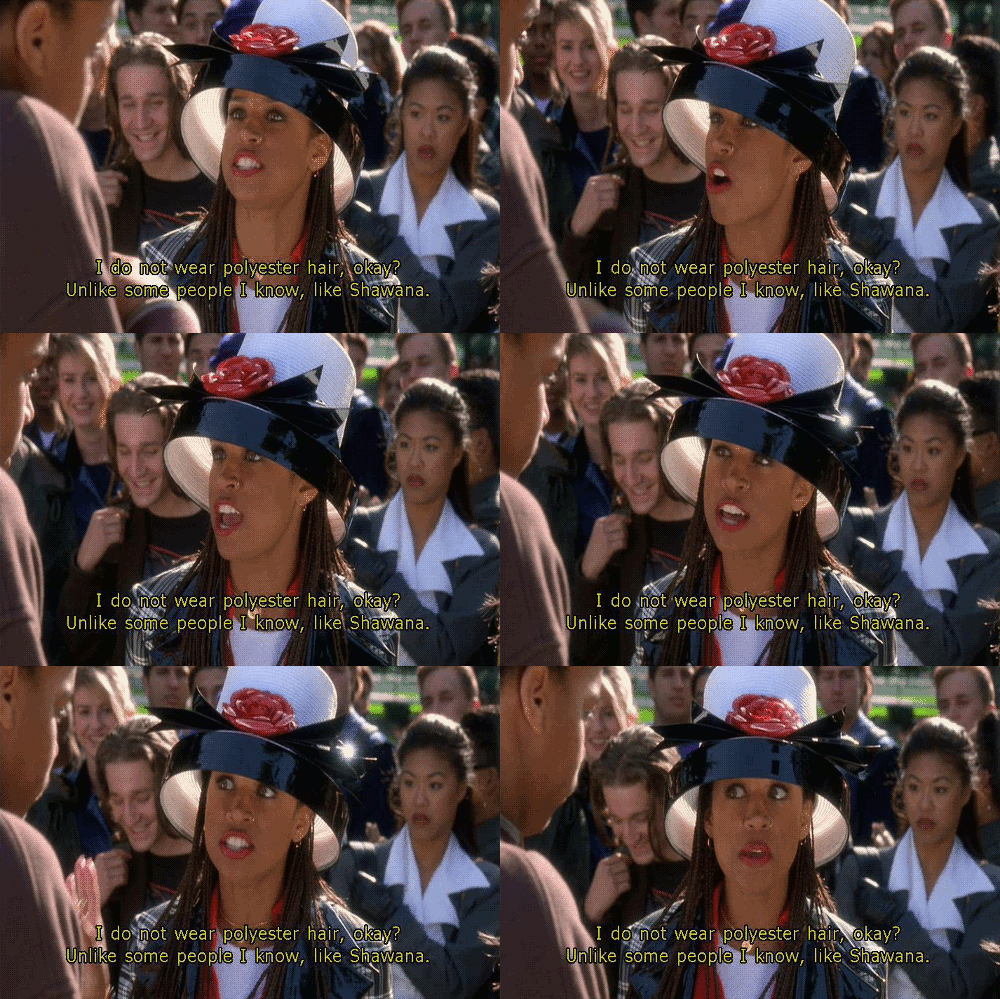
In this scene of Clueless, Dionne confronts Murray about cheating on her. Murray tries to convince Dionne that the hair that she found in her car belongs to her. However, Dionne knows that she doesn’t wear that type of hair. Murray tries to distort the truth just like Petruchio. Dionne, unlike Katherine, has more power in her relationship. This causes Murray to shift the focus on the hair found in the car to inferring that Dionne is moody or emotional because “it is that time of the month.” Instead of making Dionne believe in a lie like Petruchio did with Katherine. This reaction belittles Dionne and causes her to lose focus on the cheating. It rails the whole conversation and Murray doesn’t have to tell the truth. The rails of the conversation leave viewers feeling that cheating is a topic that is not that important. This scene reinforces the norms that “boys would be boys” and an angry woman must be on her period. These social norms create pressure for women to accept the disrespectful behavior of men.


“Katherine: I never saw a better-fashioned gown, More quant, more pleasing, nor more commendable.”

(Act 4, Scene 3, 106- 109)

In this scene of The Taming of the Shrew, a tailor makes a gown for Katherine, but Petruchio doesn’t like the dress. He says that the dress is ugly and not in style, but Katherine loves the dress and wants to wear it. In the end, Petruchio doesn’t allow Katherine to wear the dress, but he pays the tailor for making it. Petruchio wants to control everything about Katherine down to her clothes. He wants Katherine to be codependent on him causing Katherine to change her personality. She changes from being strong and independent to being obedient and passive to Petruchio.


In this scene of Clueless, Murray and Dionne are at a house party. Dionne is running around for most of the party trying to find Murray. When she finds Murray, he is cutting all of his hair. He doesn’t let Dionne know about it. Murray is controlling Dionne by changing his image. He takes one of the most important things that Dionne cares about the public image by cutting his hair and embarrassing her. A bald head is something that Dionne doesn’t find cool or popular. Murray is cutting his hair two weeks before picture day. Murray shows Dionne that he has all the control in the relationship by cutting his hair and that he doesn’t care about the opinion of Dionne. This is similar to the scene with the dress and Katherine because it shows the male in the relationship taking away something that the female in the relationship wants. Petruchio takes away a dress from Katherine and Murray takes away a good image from Dionne.

In Clueless, the relationship of Dionne and Murray is toxic because of the controlling actions by Murray. Control is also the main reason for the toxic relationship of Petruchio and Katherine in The Taming of the Shrew. The idea that works three centuries apart can have very similar relationships shows that audience throughout the ages can relate to controlling relationships.


Work Cited

“The Internet Movie Script Database (IMSDb).” The Internet Movie Script Database, www.imsdb.com/scripts/Clueless.html

Rudin, Scott, Amy Heckerling, Alicia Silverstone, and Paul Rudd. Clueless. Hollywood, Calif: Paramount Pictures, 1995.

Shakespeare, William B. The Taming of the Shrew. Ed. Barbara A. Mowat and Paul Werstine. New York, NY: Washington Square, 1992. Print.


5 Comments
118 posts:
← Prev
  1. 1
  2. 2
  3. 3
  4. 4
  5. 5
  6. 6
  7. 7
  8. 8
  9. 9
  10. 10
  11. 11
  12. 12
Next →
RSS

ENG3-027

Term
2017-18

Other Websites

Launch Canvas

Blog Tags

  • Public 1
  • Homepage 1
  • kylie Jenner 1
  • Fashion trends 1

Teacher

  • Larissa Pahomov
Slate (skeleton-v3 PHP 8 prototype) · Location: 1482 Green St · Shipping: 550 N. Broad St Suite 202 · Philadelphia, PA 19130 · (215) 400-7830 (phone)
×

Log In