• Log In
  • Log In
Slate (skeleton-v3 PHP 8 prototype)
Slate (skeleton-v3 PHP 8 prototype) Learn · Create · Lead
  • Students
    • Mission and Vision
  • Parents
  • Community
    • Mission and Vision
  • Calendar

English 3 · Pahomov · B Band Public Feed

Create a Post

  Reader Profile: Ms. Pahomov

Posted by Larissa Pahomov in English 3 · Pahomov · B Band on Wednesday, September 28, 2016 at 9:19 am
Photo on 9-28-16 at 8.59 AM #2

Ms. Pahomov hates it when strangers ask her “what book are you teaching in your English class right now?” Usually it means they want to just talk about what they liked to read (or not) in high school. When she was in high school, people told her she was a “fast reader,” and that was a bad thing for her, because she often read too quickly and missed the details. There are a lot of books she likes better now that she slowed down when reading, like “The Great Gatsby,” which she has probably read ten times at this point, each year when she teaches it. She is proud of the fact that she has the stamina for long books, but is more likely to carry around something that is 200 pages or less in her backpack.

One of the great sadnesses of her school year is that she uses so much of her brain to read and respond to student work that she has limited capacity to read on her own. She also recently discovered that she is old enough to have read books and COMPLETELY FORGOTTEN what they are about. Take, for example, the novel “Cat’s Cradle” by Kurt Vonnegut. She is certain she read it as a teen, but a student asked her about the plot recently and she couldn’t remember a thing. She is a little bit worried that this represents the rest of her life: forgetting things and having to go back to them.

One of her great joys of the school year is when she gets to read alongside her students in class. Her plan is to re-read “Cat’s Cradle” as soon as she finishes “Bone” by Fae Myenne Ng. The hardest time for her to read is on a plane or train. She always tells herself that she will, but she’d much rather listen to music and look out the window. She is a little bit ashamed of the fact that she never reads in German anymore, although she can. Never enough time!

Be the first to comment.

Children's Voice

Posted by Athalia Tan in English 3 · Pahomov · B Band on Sunday, April 23, 2017 at 11:53 pm


Play: The Taming of the Shrew

Movie: Blended


The movie Blended and the book The Taming of the Shrew share common themes on love and romance. Although they are made hundreds of years apart, they share a common ground. The movie Blended, is about two single parents getting together with the help of their children, even though at first they didn’t approve of it. In the book, Shrew, there was a father who wanted to give his daughters in marriage to the suitors that seeked them. Both the movie and the book revolves around the family’s interference on courtship. In the book, the father had was involved, but in the movie the children were involved. Therefore, in the 21st century, kids are allowed to interfere or have a say in their parent’s relationships just like how parents were interfering with their children's relationships.


“Baptista:

Gentlemen, importune me no farther,

For how I firmly am resolv'd you know;

That is, not to bestow my youngest daughter

Before I have a husband for the elder.

If either of you both love Katherina,

Because I know you well and love you well,

Leave shall you have to court her at your pleasure.”

(Act 1, Scene 1, lines 48-54)


In the book, there were many suitors who wanted the second daughter of Baptista, Bianca, because his first, Katherine, has a nasty attitude. However, Baptista said that he wants Kate to marry first and then Bianca. However, in the movie Blended, the kids has the say whether or not they approve of their parent’s new partner or not.


Screenshot 2017-04-21 at 12.44.19 AM.png

(0:28:10)


In this particular scene, Lauren’s sons shows that they don’t like Jim. Her oldest son, Brendan, called his mom a liar and stormed off after he thinks that his mom likes Jim. Since Lauren was a single mom, she’s been trying to see if she can date other guys. However, her boys doesn’t approve because from time to time, they still contact their father.  Like in the Shrew, Baptista doesn’t approve of Bianca’s suitors because he hasn’t given away his first daughter. Similarly, both situations had a wall that they need to go over before they can approve. In the movie, the boys weren’t over their dad and in the book, Baptista still needs to wed his first daughter. This shows a lot of how children interfered with their parent’s relationship and it’s just considered normal. After the little dispute, when Brendan stormed off, Lauren knew that he was mad and just let him be. While in the Shrew, Baptista was the one who had a say in everything because he’s the father.

“ Baptista:

I know not what to say; but give me your hands.

God send you joy, Petruchio! 'Tis a match.” 2.1. 327-328

(Act 2, Scene 1, lines 327-328)


In Act 2 of the Shrew, Petruchio is willing to marry Kate for wealth. He knew that Kate isn’t wanted by many so he wants to make a deal with Baptista for wealth. Petruchio convinced him with the idea that he actually wants Kate because of her beauty and personality, when in reality he was just needy for money. On the contrary, in Blended, the two families coincidentally met at a family bonding retreat in Africa that made the kids realize how much of they need the other parent.

Screenshot 2017-04-21 at 1.25.32 AM.png

(1:24:11)


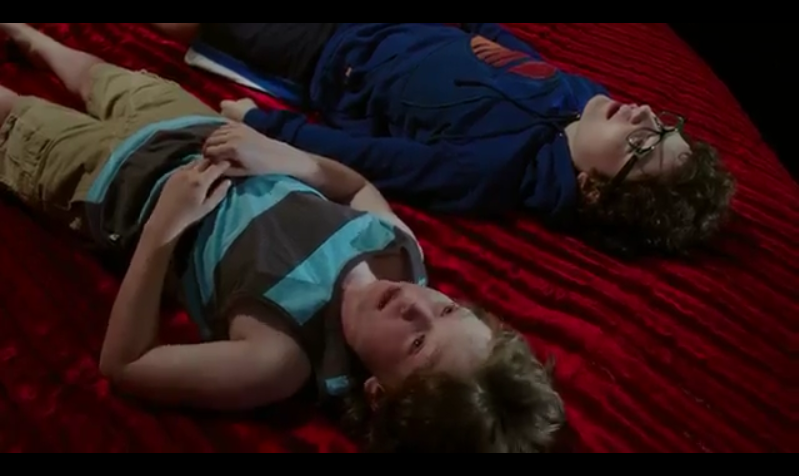
In the scene above, Lauren’s boys, Brendan and Tyler, were in bed talking about how their day went with Jim. Since their dad didn’t really have much time for them, when Jim was there to teach them some sports, they enjoyed it. In comparison to the Shrew, both families goals were to just have fun on the trip and not worry about each other. But, since Jim’s daughters were in need of a mother figure in their life and Lauren’s sons were in need of a father figure in theirs, they were in need of each other. Those examples shows that children  can interfering with the parent’s relationships because they can have a major impact on how the parent think about the other person. In that specific scene, Lauren said that it was nice of Jim to help her sons hit the ball and boxing which can lead to have other feelings. On the other hand, a couple of hundred years ago, the dad was the only one who had the say in giving away his daughter in marriage. The dad, Baptista, was the only one who gets to marry his daughters.

According to both the movie Blended and the book Shrew, society’s  view towards love has changed over hundreds of years. The movie Blended was made in 2014 and it shows the involvement or interference children can have on courtship and dating. Despite the fact that the book Shrew was made in 1594, only the father, Baptista, interfered in the courtship and dating of his daughters during that time. Therefore, as time passed, kids now have a say in their parent’s relationships without it being considered rude.


Works Cited

Shakespeare, William, Barbara A. Mowat, and Paul Werstine. The Taming of the Shrew. New York: Simon & Schuster Paperbacks, 2014. Print.

Blended. Dir. Frank Coraci. Warner Home Video, 2014.


3 Comments

The Deception of the Shrew

Posted by Lotus Shareef-Trudeau in English 3 · Pahomov · B Band on Sunday, April 23, 2017 at 11:21 pm

Deception of the Shrew

Comparing “The Taming of the Shrew” to “Man Up”


"The Taming of the Shrew" is a play about a man who tames Katherine, the most harsh, outspoken woman, into a mild, obedient wife. Man Up is a movie about a woman, Nancy, who pretends to be a man's, Jack, blind date.


In both the play, “The Taming of the Shrew, ” and the movie, “Man Up,” there is a common theme of changing oneself in a relationship. In “The Taming of the Shrew” both Katherine and Lucentio go through drastic changes for their relationships. Lucentio takes a more superficial approach to this, disguising himself as a school teacher to get closer to Bianca, whom he has fallen in love with. Katherine’s transformation is much more thorough than that of Lucentio’s. She trades in her fighting and rebellious spirit for that of someone much more docile and submissive, becoming who Petruchio, her husband, wanted her to be. In “Man Up” the main character, Nancy, emanates both of Katherine and Lucentio, disguising herself as someone she is not as well as undergoing a change within.


Unlike Lucentio, Nancy does not disguise herself as someone that is of a lower class. instead her disguise made her a better prospect, in her love interest, Jack’s, eyes, than she normally would be. This meant that when her true self was revealed it was a disappointment to her love interest. Though both characters disguise themselves in order to pursue their romantic interest, in Nancy’s dawning on what would be appealing characteristics in her disguise her reveal makes her seem pathetic and untrustworthy. Lucentio, on the other hand, disguises himself as someone that has less prospects than he does normally, which made his reveal a much more positive thing, as it was a good surprise that he had money and power and land, in the end he comes out seeming like a good guy. Nancy also resembles Katherine in that they both change themselves for their love interest. The difference between the two is that throughout the entirety of “Taming of the Shrew” people are fighting to make Katharine into who they want her to be and in the end they succeed. In the movie, “Man Up,” Nancy has to shed the mask she has put up to make other’s happy and learn to just become herself, instead of someone else. These texts show that in relationships people feel the need to change themselves for their partner, but human’s outlook on this “deception” has changed overtime, once not only acceptable, but appealing in a partner, now looked down upon as two faced and insufficient.


Act I Scene I (62-66)

KATHARINA

“I'faith, sir, you shall never need to fear: I wis it is not halfway to her heart; But if it were, doubt not her care should be to comb your noddle with a three-legg'd stool and paint your face and use you like a fool.”


In this quote Katherine is speaking to Hortensio who had just told her that she would find no one unless she was kinder, and milder. She responds with a sharp remark, telling him that she would hit him in the head with a stool. This quote shows Katherine’s strong will in the beginning of the book and her attitude towards the idea of changing for a man.


This attitude that Katherine holds is the same that our main character in “Man Up,” Nancy, has towards people generally suggesting she change herself in order to find a relationship.


Train Scene

Screenshot 2017-04-19 at 6.48.16 PM.png

Jessica

I think it’s exactly what you need

Nancy

Why is everyone always telling me what I need?

Jessica

Perhaps if they’re always telling you, you should listen.

Nancy

I think you need to shhh.

In this scene Nancy meets a woman on a train that tries to tell her that she should read a self-help book after overhearing Nancy’s phone conversation with her sister where she describes the terrible date that she had the other night. This scene shows how Nancy’s character in Man Up is like Katherine. She is abrasive and unpleasant to be around. People are constantly trying to butt into Nancy’s romantic life, telling her that she needs to be different than she is, much like Katherine in Taming of the Shrew. Nancy goes through the Katherine transformation early in the movie, deciding to change herself to please someone else, using Lucentio’s method of pretending to be someone that she is not. Throughout the rest of the movie the audience is watching her shed that disguise she had initially put on and how her love interest has to come to terms with who she really is, and how he, in fact, comes to fall in love with her true self instead of the front she had put on. This is a large contrast between the movie and the play where the entirety of the Taming of the Shrew revolved around changing Katherine’s character to be more desireable, Man Up focused on forcing other people to accept Nancy as she is, instead of having her change. This shows how, in our modern day, we believe that love comes only with honesty and the acceptance of a partner’s flaws, as opposed to attempting to erase all flaws that one may dislike about their relationship, that was more acceptable the 400 years ago that Taming of the Shrew was written.

Act 1, Scene 1 (210-215)

LUCENTIO

“I will some other be, some Florentine, some Neapolitan, or meaner man of Pisa. 'Tis hatch'd and shall be so: Tranio, at once uncase thee; take my colour'd hat and cloak: When Biondello comes, he waits on thee; but I will charm him first to keep his tongue.”

On seeing Bianca, Lucentio falls in love with her. After hearing of the conditions that Baptista has put his daughter under, making it so that Bianca could not be wed until her sister, Katherine, is married off, Lucentio makes a plan. He decides to disguise himself as a schoolmaster who would teach her in order to get close to her, because he was not allowed to court her.

This is the same approach that Nancy takes on meeting Jack. Because he already has a date, she is not supposed to “court him,” so instead she pretends to be his date in order to get to know him better.  

Station Scene

Screenshot 2017-04-19 at 7.12.09 PM.png

Jack

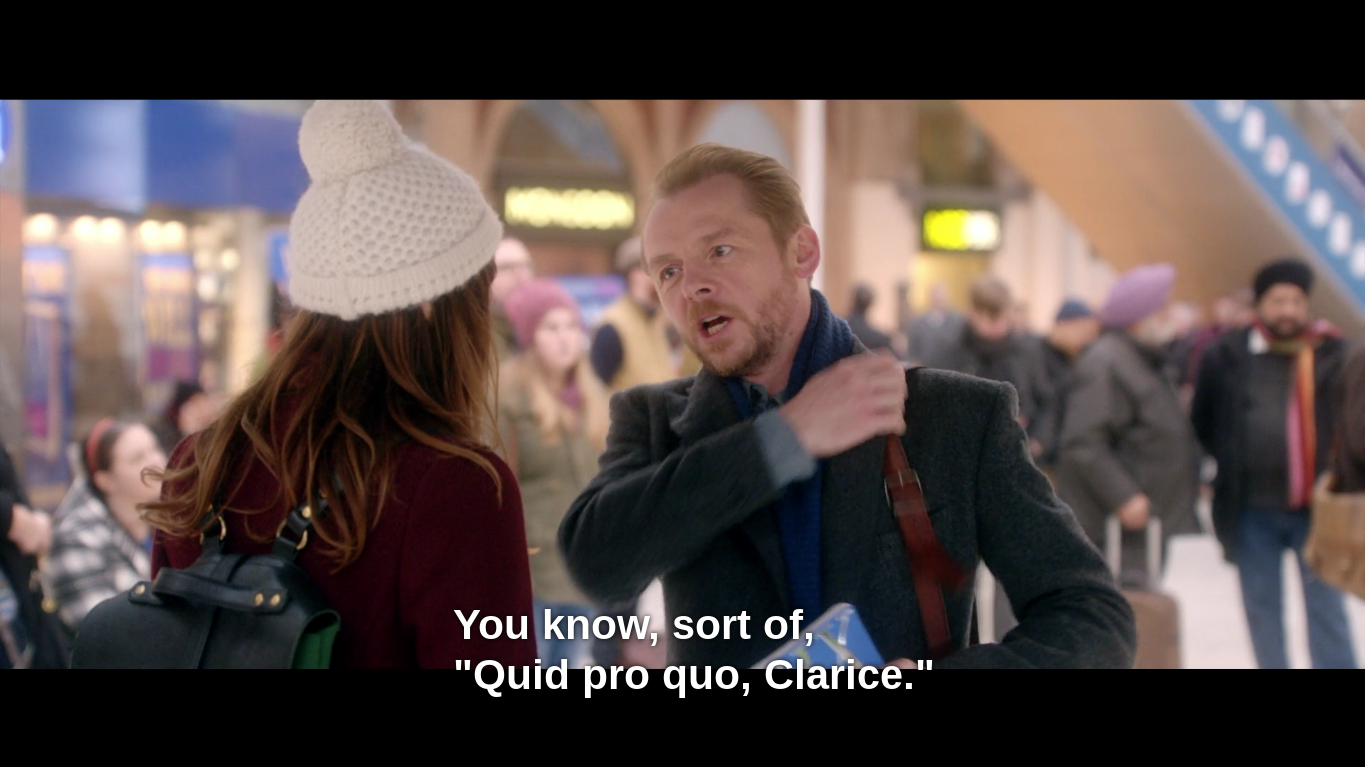
Usually when in this situation, I would say something and then you’d say something back. And then we’d talk a little about what we’re gonna do and exchange ideas. You know, sort of, “Quid pro quo, Clarice.”

In the beginning of the movie we hear this same phrase when Nancy decides to stay in her hotel room instead of attend the wedding party because she is nervous about meeting the man that her friends have set her up with, and instead stays in her hotel room to watch her favorite movie, Silence of the Lambs.

Up until this point, when Nancy met Jack and was mistaken for Jessica she made a few feeble attempts at explaining that he had the wrong girl, but Jack kept talking over her and cutting her off without listening to her, which is somewhat similar to Katherine’s protests against her marriage to Petruchio. When Petruchio told Baptista of Katherine’s feelings towards him, Katherine did protest somewhat, but Petruchio would cut her off and override what she was saying with his explanation of how much affection she felt for him in private and how they were to be married.

After Jack references Nancy’s favorite movie though, Nancy stops protesting altogether and pretends to be Jessica. As soon as she found Jack worth pursuing, she was willing to lie to get him. This behavior makes her much like Lucentio, as he saw Bianca from afar for only a short time, fell in love with her, then decided to dawn a disguise in order to get closer to her. This is, essentially, the same thing that Nancy does with Jack.

Jack

As the book says, ”what are you waiting for?”

Nancy

I am waiting… for you.

Act I, Scene I (232-241)

LUCENTIO

“Sirrah, come hither. ‘Tis no time to jest, and therefore frame your manners to the time. Your fellow, Tranio here, to save my life, puts my apparel and my count’nance on, and I for my escape have put on his; for in a quarrel since I came ashore I killed a man and fear I was descried. Wait you on him, I charge you, as becomes, while I make way from hence to save my life. You understand me?”

In the previous quote, Lucentio was talking to Tranio about his intent to “charm” Biondello, his other servant. In this quote we see Lucentio in action. He lies to Biondello, telling him that he must disguise himself because his life is in danger so that Biondello will keep his identity hidden. In order to keep his deception going, he needs to employ other people to help him, getting his servants in on the plan as well.

Nancy must also get other people to play along with her deception, but she is less cunning than Lucentio and, instead of lying, she has to make a deal with him so that he will keep her secret.

Bowling Alley

Screenshot 2017-04-19 at 7.28.00 PM.png

Nancy

Hey, Sean, I’m out bowling with a man, a man who might actually have some potential and not in just that he’s a really good bowler type way. Do you know--hey--so don’t ruin it for me. All right? Just be cool.

Sean

Okay, I will.

Nancy

Yeah?

Sean

Uh-huh. If you give me a blow job

Nancy

You what?

Sean

Take it or leave it.

Once Nancy begins lying to Jack, it gets more and more elaborate and she needs to employ other people to help her keep up appearances. When Jack and Nancy go bowling together, Nancy runs into an old classmate of hers, Sean. To stop him from revealing her identity she has to make a deal with him, promising in the end to give him a kiss. This relates to the way that Lucentio had to include other people into his plan so that he would not be revealed when under cover. Because Nancy is not as well thought out as Lucentio, this deal she makes with Sean ultimately leads to her untimely discovery in a bathroom stall where Jack walks in on them about to kiss. In both Nancy and Lucentio’s situations, they find that they have to do more and more to keep up their appearances, but in Nancy’s case, the more elaborate the lie gets, the deeper a hole she seems to be digging for herself. This is because people today have a more negative outlook on lying to win someone’s heart, because we value honesty more than what might have been thought of as a “romantic gesture” in “The Taming of the Shrew”.


Act 5, Scene I (124-128)

BAPTISTA

“Now fair befall thee, good Petruchio! The wager thou hast won, and I will add unto their losses twenty thousand crowns, another dowry to another daughter, for she is changed as she had never been.”

In this quote Baptista, Katherine’s father, is praising Petruchio for taming Katherine. He sees this change as positive, where as now, society views the docile submissive woman as a negative attribute and a change for the worst.  

Bowling Alley (Katherine)

Screenshot 2017-04-23 at 8.07.37 PM.png

Sean

It would appear that I finally have you under a barrel, Nancy Paterson. Indeed you are clearly not the girl you used to be once. Cool and confidant. Now…stealing other women’s dates from under clocks.

When Sean finds out what Nancy is doing he notices how much Nancy has changed. Nancy used to be a girl who was confidant, who said what she wanted and didn’t care about what others thought, much like Katherine in the beginning of the play. Upon meeting her again, Sean sees that she has changed from that once “cool and confident” girl and into someone who feels the need to sacrifice who she really is to win the heart of men. Sean feels superior to her because this act is seen as weak and pathetic nowadays, where it was simply expected of a wife in the play.

These portrayals show us that being deceitful in a relationship today is more frowned upon than it once was. In the play, “Taming of the Shrew,” love for a spouse or a prospective spouse could be proven by the lengths one would go to for them. Something such as lying is romantic, something such as obeying your husband is desireable. Nowadays women fight to end these social expectations put upon the female gender. Because of today’s climate towards strict gender roles, the kind of change that Katherine underwent in “Taming of the Shrew” is now something that society would think outdated and distasteful. Nowadays, disguising oneself to win the heart of a romantic interest is not seen as sweet but deceitful, as showing one’s “true” self is more valued than it once was.

Works Cited

Shakespeare, William, Barbara A. Mowat, and Paul Werstine. The Taming of the Shrew. New York:

Washington Square Press, 1992. Print.

Man Up. Dir. Ben Palmer. Perf. Lake Bell and Simon Pegg . N.p., n.d. Web.
Be the first to comment.

Beauty is the key to a man’s heart

Posted by Nadia Green in English 3 · Pahomov · B Band on Sunday, April 23, 2017 at 11:14 pm


Beauty is the key to a man’s heart  

Comparing “The Taming of the Shrew” to “Shallow Hal”


“The Taming of the Shrew”, was a play written by William Shakespeare. The story was about suitors trying to marry two prestigious daughters. Katherine, the eldest daughter was not fancied by many men. Most people would describe her as discourteous. Bianca the youngest daughter on the other hand was the complete opposite of her sister. There were many pursuits of marriage but Katherine was to be counted before Bianca could. This caused Petruchio, Katherine's only suitor to become interested in her. However it was for the money and assets he would obtain after the marriage. The movie “Shallow Hal” is about a middle aged man having unrealistic high standards for women. Hal only makes advances with “attractive women,” while ignoring and even shaming  the women who he feels is not the physical standard that an average woman should be.


In the movie “Shallow Hal,” the main character Hal judges women based off of their physical appearances. Beauty is a requirement for Hal in order for him to pursue a relationship. However, it blinds him from the internal beauty that a woman may have. It seems that Hal views women as a trophy or a piece of property. The play “The Taming of the Shrew,” mentions the value of women which wasn’t presented as much. Petruchio, a suitor in the play, believed that his wife Katherine was his property once they were married. Hal and Petruchio both feel that they can control women to suit their own liking. Although Hal and Petruchio have different agendas, the play and the movie show that no matter the time period women have high standards inflicted onto them from men, causing women to develop insecurities and self hate.


“And woo her with some spirit when she comes! Say that she rail, why then I’ll tell her plain She sings as sweetly as a nightingale. Say that she frown, I’ll say she looks as clear As morning roses newly washed with dew…..”

(Act 11, Scene 1, 177-181)


In this quote, Petruchio talks about his plan to “woo” Katherine, the woman who he was pursuing. He created a specific plan to make sure that he will be able to think ahead to convince her to fall for him, or at least make her have interest in him.   


This shows that no matter if a woman protests, a man will try and control her. This idea is seen throughout the play as well as the movie.

(Timestamp, 9:07)


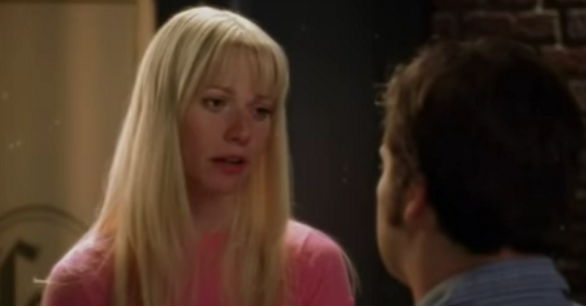
In this scene, Hal is trying to pursue a relationship with a woman. She timidly tells him that she is not physically attracted to him because she wanted to spare his feelings. Hal tries to convince her that attraction comes later in a relationship. He speaks to her as if her opinion does not matter, because he was out to get what he wanted: her. After a long back and forth they went their separate ways. After the woman leaves Hal gives her a look as if she is disgusting. Hal was experiencing the way he treated women. The difference is Hal feels that there is something wrong with the woman and not him, which is why he gave that look at the end. What is interesting about what Hal said is that attraction coming later in a relationship only applies to men. There is a double standard for men and that is proven in both the movie and play.

“That hearing if her beauty and her wit, Her affability and bashful modesty….”

(Act ll, Scene l, 51-53)


In this scene Petruchio was talking about how much he likes Katherine. The first thing that he talks about is her beauty, which shows he prioritizes it over her other traits. When men talk about women in the book they tend to list their beauty before anything else. When women are held to very high beauty standards, it can create insecurities because they may not feel like they fulfill those standards. When it was time for marriage between Katherine and Petruchio it was difficult for the both of them adjusting to each other. Petruchio wanted to control Katherine but she was defiant, which resulted in physical restraints.


This proves that a relationship cannot only rely on beauty or it will not last. “Shallow Hal” depicts a relationship being about the inner beauty and having an understanding that each person is respected in all areas.

(Timestamp 44:06)


In this scene of the movie, Hal and Rosemary are walking together towards Hal’s apartment. When they both reach the apartment building Hal talks about what he loves and likes about Rosemary, his main interest is her body. He tells her that she is beautiful and that she is not fat, when in actuality she is. At this point in the movie Hal sees the inner beauty of women instead of just their appearance. In Rosemary’s case she is overweight and is not “attractive” in Hal’s definition. Rosemary knows that a guy like Hal doesn’t come around and she was surprised that he took a liking to her. When Hal starts to compliment her, she is not able to bear it. In Rosemary’s eyes Hal loves everything she hates. She feels like she isn't beautiful because of the pressure society puts on her. This caused her to doubt the love that Hal professed to her, because she doesn’t know what it feels like to be truly loved when she couldn’t even love herself.


Across the different time eras there are the same requirements for love and a relationship. The book and the movie show that there have been consistent pressures on women. The unrealistic expectations for women caused them to not know what love truly is, because instead of loving themselves they try to alter themselves so others can love them. The women in both pieces have shown that they were controlled by men and it has resulted in negative affects.  
Be the first to comment.

Whats all the buzz about romance?

Posted by Thomas Wallison in English 3 · Pahomov · B Band on Sunday, April 23, 2017 at 10:59 pm

Whats all the buzz about romance?

Comparing The Bee Movie to Taming of the Shrew


In William Shakespeare’s “Taming of the Shrew”, a clear theme is the men taking the leading role of romantic relationships. They act as protectors and ones who take care of the women, as well as initiators of the relationship, which is shown through Petruchio to Katherine, and various suitors to Bianca. In the film “The Bee Movie”, this idea managed to sneak its way in as well, with Ken acting as a protector of Vanessa from various things he deems as threats. However, unlike in “Shrew”, Ken is not the full leader of the relationship, as their relationship was eventually broken off by Vanessa, something that would have been nearly impossible in the 1400s. These texts reflect that although the role of men being the leaders of a romantic relationship has shifted more towards equality for both parties, role of men as a protector has remained present through time


"Thy husband is thy lord, thy life, thy keeper...one that cares for thee, and for thy maintenance commits his body to painful labor...whilst thou liest warm at home, secure and safe "

(Act 5, Scene 2, 155-160)


No characters show this relationship of men being the protectors as clearly as Petruchio and Katherine, who says the above to her sister, Bianca, and to a widow married to Hortensio during a long speech on why women ought to be obedient to their husbands. With this, she is making a point using this as evidence. It is a given at this time that the husbands are the protectors of their wives, who stay at home safely. There is no protest of this by any of the other men or women at this point in hearing her speech, showing that this was in fact the expectation of the men in relationships at the time.


In this scene, Barry is violently confronted by Ken in an attempt to protect Vanessa, his girlfriend, from a bee, who he notices as a threat. However, there was no real threat, nor was there any indication from Vanessa that the bee was any threat--in fact, Vanessa immediately attempted to stop Ken from attacking Barry as soon as she could. However, he immediately attacked it off of an instinct that his girlfriend was in danger and she needed to be protected.


"And, for that dowry, I’ll assure her of her widowhood, be it that she survive me, in all my lands and leases whatsoever. Let specialties be therefore drawn between us, that covenants may be kept on either hand."

(Act 2, Scene 1, 116-120)


This quote, spoken by Petruchio to Baptista, is in regards to negotiations being done between them so that Petruchio has Baptista’s blessing in him marrying Katherine. In order for that to be the case, Petruchio has to offer something to Baptista, and he offers that if he were to die before Katherine, all of his possessions would go to her.

The success of this offer shows that when negotiating a marriage, what the father is looking for is for there to be a promise of safety for his daughter. What Petruchio is basically saying is that Baptista has nothing to worry about, for Katherine will be “assured of her widowhood.” Baptista then agrees to the marriage because the expectation of Katherine being protected has been met.

In this scene, Ken again confronts Barry in the bathroom, but under different circumstances. Ken now understands that Barry is not a physical threat to Vanessa, as this is later in the movie and they have become acquainted, but he instead perceives him as an emotional threat, trying to manipulate Vanessa. This is clearly shown through the line he uses to instigate this fight, “I’ve just about had it with your little mind games.”

It’s clear that the relationship between Vanessa and Ken is not as male-dominated as the one between Katherine and Petruchio. Vanessa had the jurisdiction to terminate the relationship later in the story, something that would have been difficult for Katherine to do. However, that doesn’t mean that the expected role of each person in a romance has changed completely, which is clear from the protective role that Ken feels he has to play, even when there is no imminent danger.


Works Cited

Shakespeare, William, G. R. Hibbard, and Margaret Jane Kidnie. The Taming of the Shrew. UK: Penguin, 2015. Print.

DreamWorks Animation ; Columbus 81 Productions ; Pacific Data Images ; produced by Jerry Seinfeld, Christina Steinberg ; written by Jerry Seinfeld and Spike Feresten & Barry Marder & Andy Robin ; directed by Steve Hickner, Simon J. Smith ; head of character animation, Fabio Lignini. Bee Movie. Hollywood, Calif. :Paramount Home Entertainment, 2008. Print.


3 Comments

Does Honesty in the End Truly Matter>

Posted by Elani Gonzalez-Ortiz in English 3 · Pahomov · B Band on Sunday, April 23, 2017 at 10:47 pm


Play: The Taming of the Shrew

Movie: Two Weeks Notice


In the play The Taming of the Shrew there is a lot of deception throughout all of the relationships. Lucentio lied to Bianca about his identity because he wanted her to fall in love with him and Petruchio lied to Katherine about an arranged marriage because he felt like that was the best decision. In the movie Two Weeks Notice George lies to Lucy about a community center he plans to tear down because he does not want to hurt Lucy. In the movie and in the play the characters lie to their ‘partners in the relationship’ because they believe it is the right decision. In the end every single relationship ended up together even though they lied to their partners.  The similarity in all their actions shows that audiences believe deception does not have a long standing effect on a couple in love.

In the play The Taming of the Shrew honesty and deception play a big role. Throughout the entire play every single relationship had a lie but in the end everyone had a happy ending. Petruchio, a man who wanted to marry for dowry and happiness, lied to his wife Katherine. He deceived her into marriage.


Quote 2: Act 2 Scene 1, pg 95, Petruchio is talking to Katherine, line 282 “Marry, so I mean, sweet Katherine, in thy bed. And therefore, setting all this chat aside, thu sin plain terms: your father hath consented that you shall be my wife, your dowry ’greed on, and, will you, nill you, I will marry you. Now Kate, I am a husband for your turn, for by this light, whereby I see beauty, thy beauty that doth make me like thee well, thou must be married to no man but me. For I am he am born to tame you, Kate, and bring you from a wild Kate to a Kate conformable as other household Kates.”


In this quote this is what Petruchio is saying to Katherine about their “arranged marriage”. He lied to her about having to be married, he only wanted to marry her because he wanted dowry and a wife. He told her that he and father made an agreement and that they will be married. This causes Katherine to believe she must marry Petruchio so she does. She obeys her father and proceeds to try and have a functioning marriage.


In Two Weeks Notice, George, the face of a company, lies to Lucy, his ex-lawyer, about a community center.


Screenshot 2017-04-21 at 1.00.41 AM.png


Here is when Lucy finds about the tearing down of the community center. The community center is where Lucy spent most of her childhood and George’s company plans on tearing it down. The community center was the deal between George and Lucy, if the community stayed unharmed then Lucy will be George’s lawyer. Because George was unable to keep his promise Lucy feels as though George just lied to her the entire time and that she got played. George did not want Lucy to find out about the community center because he did not want to hurt her. This compares to The Taming of the Shrew because in the play and in the movie the men felt that their lie was best for the relationship and their partner. In the Taming of the Shrew and Two Weeks Notice the men in the relationships told lies to protect the females in the relationship. Even though they were lied to the women stayed in the relationships.  


In The Taming of the Shrew, Lucentio, a man who fell madly in love with the beautiful girl Bianca, lied so that Bianca would fall in love with him.


Quote 3: Act 1 Scene 1, pg 47, Lucentio is talking to Tranio, line 243 “And not a jot of “Tranio” in your mouth. Tranio is changed into Lucentio.”


In this quote Lucentio is telling Tranio his plan about disguising themselves as one another.. He did this because Lucentio, dressed as Tranio, would be able to become Bianca’s school teacher. Lucentio needs to do this because of Bianca’s overprotective father. Bianca is not allowed to marry until her sister Katherine married and because Katherine was not married and had no suitors Lucentio decided to pretend to be a school teacher to get close to Bianca. Bianca and Lucentio end up falling in love but their entire relationship is a lie. Their entire relationship is a lie because Bianca does not know the true identity of Lucentio, she believe he is a school teacher when that is not the case. She does not know that the only reason he is her school teacher is to get close to her.


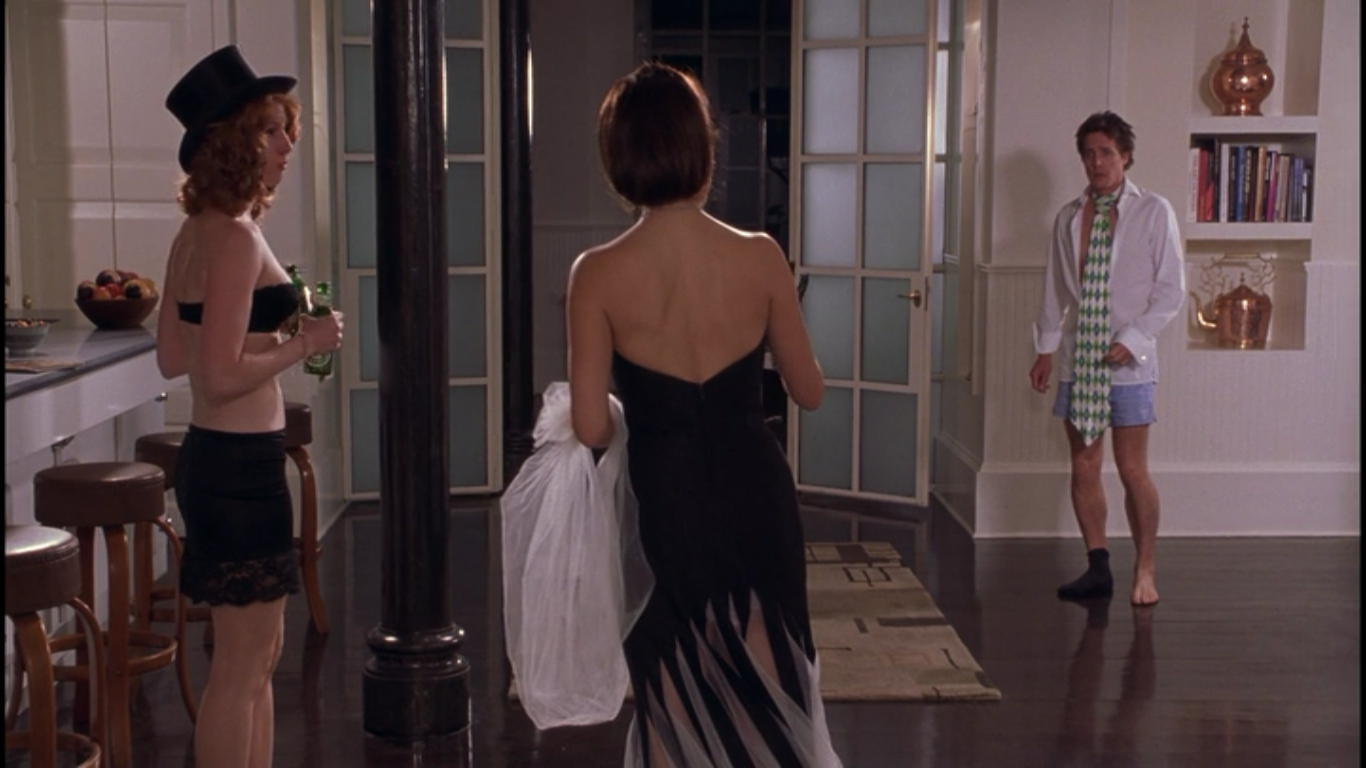
In this scene Lucy walks in on George and June, a woman who wants George. George and Lucy are currently undressed and under the influence of alcohol.

Screenshot 2017-04-21 at 6.57.36 AM.png

Throughout the movie June seemed to be jealous of Lucy. June was the replacement for Lucy when resigned but June was very flirtatious with George knowing that Lucy and George were forming a relationship. When Lucy and George had a fight June decides to intervene and ‘comfort’ George. They end up kissing and participating in some sort of sexual activity. Lucy end up going to George’s house to resolve their issue when she sees June and George together. George lies to Lucy and tells her nothing is going on even though they are both clothesless. Once again the man in the relationship attempts to lie to protect the woman in the relationship.


In the play and in the movie every relationship has lies but it never truly mattered in the end. Society’s attitudes towards dating and relationship show that honesty and deception do not matter when the couple is in love. In The Taming of the Shrew both relationships end up happy and in Two Weeks Notice the relationship ends happy as well. The couples seem to be more in love if anything else therefore if the couples are in love it does not matter if someone lies in the relationship.


Work cited

  • The Taming of the Shrew : William shakespeare

  • Two Weeks Notice: Marc lawrence


4 Comments

English 3 Visual Essay

Posted by Matthew Yemola in English 3 · Pahomov · B Band on Sunday, April 23, 2017 at 10:34 pm


Tons of sexual fantasies at first sight

The taming of the shrew and Blue is the warmest color


“The taming of the shrew” follows the story of a group of men pursuing a women named Bianca in there own deceitful ways while another man named Petruchio tries to marry Bianca's sister. This is similar to  the movie “Blue is the Warmest color”. The movie is based around a teenage girl named Adele who struggles with her sexuality after having a lesbian encounter with a friend.


In “The taming of the shrew” One of the potential suitors name Lucentio stands out from the rest as the most devoted to getting her. The first time he see’s Bianca he is yet to have any interaction with her and claims that he will make her his wife. This is similar to a scene from the movie “Blue is the Warmest color”. A day after Adelle’s encounter with her friend she is walking down the street when she see’s Emma, a girl with blue hair who she finds very attractive. Although they have to actual interaction Adele starts having deeply sensual fantasies about Emma.  People don’t fall in love with each other but instead use love at first sight as an excuse for sexual desires people have when they first meet someone they find attractive.


”I pray sir, tell me, is it possible that love should of a sudden take such hold”

(Act 1, Scene, 1 Pg41)

This quote comes from Tranio speaking with Gremio after he first meets Bianca. He is describing to Gremio how much he believes he loves Bianca and is asking Gremio if it is possible for him to already love someone this much. Even though this is just Tranio's first time meeting her he is already convinced that he is in love. The interaction he had with Bianca herself was short and public so it isn't as if he was able to get to know her. He is basing this love on purely seeing her. Bianca is described as being beautiful and it isn't hard to imagine this love is coming from imagining himself with her sexually.


Much like Tranio's first encounter with kate Adele feels a similar feeling when she first lays eyes upon Emma

Blue colors.jpg

This scene from “Blue is the warmest color” is from Adele and Emma’s first sight of each other. Emma is walking by with her current girlfriend while Adele is walking past after recently kissing one of her friends. There are no words during this scene but body language tells it all. The moment the two pass each other they lock eyes and continue to look at each other after walking passing by. They both give each other a double take after breaking eye contact as well. After seeing Emma, Adele’s mind runs rapid with extremely vivid thoughts of a potential love life with Emma. Her thoughts take a more sexual turn later in the day as her thoughts become more imaginative. This proves the point that at first sight the feelings you feel for someone are more sexual than love.

”Happily to wive and thrive, as best as I may. Crowns in my purse I have and goods at home, And so am come abroad to see the world”

(Act 1, Scene 2, Line 57-59)

This quote is from a scene where Petruchio is speaking with some of the potential suitors for Bianca. He is telling them that he is new in town and wishes to “wive and thrive” while he’s here. He asks the men if they know anyone who he could potentially attempt to wive, who also has a healthy amount of money. The men point him in the direction of katherine, Bianca's sister. Without ever even meeting katherine and being described her looks he decides that he will be the man to wive her and make her his own. This is based purely on her looks and money.


Petruchio isn't the only person who wants to marry based on looks, so does Emma in this bar scene from the movie.


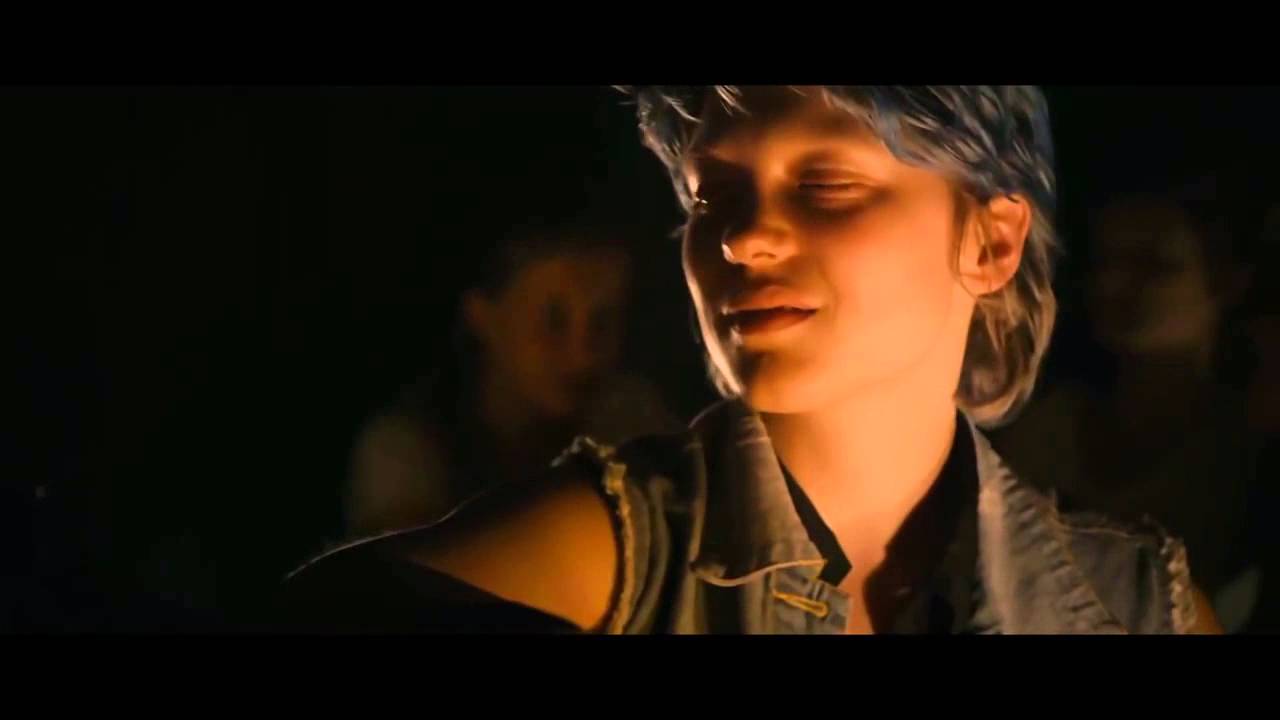
Blue colors yay.jpg

This scene is from later in the movie when Adele and Emma first actually interact with each other. They are in a lesbian bar that Emma often visits and Adele is brought there by a friend. Emma is here to look for a mate after her previous girlfriend left here. While sitting at bar Emma takes notice of Adele and begins to watch her. As time passes Adele is approached by people and put into a rough situation. Seeing this as her time to pounce Emma rushes in to save Adele after creepishly stalking her throughout the night. The stalking of adele and making a decision to bail her out of a sticky situation was based purely on Adele's looks.


Even though Adele and Emma seemed almost meant for each other in the movie and evened seemed as times to be interested in each other, their relationship still failed. Katherine and Petruchio on the other hand though end up happily married after being extremely dysfunctional for the first few days of their relationship. Both of these movies show us that at first sight there is never love no matter how much people may tell themselves it's there, but rather love develops over time.  

2 Comments

Whipped into Shape

Posted by Nicholas Shaw in English 3 · Pahomov · B Band on Sunday, April 23, 2017 at 9:52 pm

In “Taming of the Shrew”, it's a perfect portrayal of the fact that control itself has been a part of relationships for centuries However, men are always the controller in shown relationships, making women inferior. If the roles were reversed that would portray a different type of control.

50 Shades of Grey is about a sexually controlling man named Christian Grey, who is also a wealthy and successful billionaire who has never had a “committed” relationship, only several ‘friends with benefits’. He then falls into a relationship with Anastasia Steele, where he manipulates and controls her into being in a relationship with him.

Katherine and Anastasia actually have a lot in common. Their friend, or in the case of Katherine; their sister, is looked upon as the favorable woman, and guys are lured more to their sister/friend rather than themselves. Anastasia’s Friend, Kate is straightforward similar to Christian, and they would be a good match, but Christian wants to be in a relationship where he can control his significant other, exactly in the type of relationship Petruchio wants to be in; where he has complete control over Katherine.

Throughout the movie, Anastasia makes several references to her mother’s relationships, love life, and past husbands, and se would fall into the “Love at first sight” category, but is never in true love with any of her past four husbands. Ana’s mother could be similar to Katherine; in the fact that she’s had many past suitors but none of them could “tame the shrew” that is Anastasia’s mother.


In the scene above, Christian is being interviewed by Ana, who is filling in for Kate because she had something else to do. Ana asks a question about whether Christian Grey is gay, because it’s never been public that he’s been in a steady relationship that didn’t end after a one night stand. He responds with a short answer; and in a quick reply she asks “So you’re a control freak?”; and he respond with “Oh, I exercise control in all things, Miss Steele.” Christian shows an amount of control in both his life and the relationship; and throughout the movie demonstrates this control onto Ana. He manipulates and controls Ana into being his “perfect girlfriend”, both sexually and emotionally.


PETRUCHIO

I say it’s the moon.


KATHERINE

I know it is the moon.


PETRUCHIO

Nay, then you lie. It is the blessèd sun.


Act 4, Scene 5, Lines 18-20


Katherine is naturally snarky and repulsive to many men; but Petruchio has undergone the task to “tame” her. After starving her of food and sleep; he almost makes her comply to a false fact; that during the daytime it’s the moon and not the sun showing. Petruchio states that it was the moon, when it was really the sun shining. He used the fact that she was food deprived and sleep deprived; and he had the two things she really wanted, to control her. He uses his own advantages; not only because he is the male in the relationship but also because he has the two things she desperately needs, so she is forced to comply to his demand; so she is being controlled by him because of the things she needs.


Just like Anastasia in Fifty Shades of Grey, she’s being manipulated and controlled by the man in her life. Anastasia is being deprived of her own sexual needs, while Katherine is being deprived of her food and sleep. They are forced to comply to decisions they don’t want to be a part of; with Katherine it being whether it’s the sun or the moon; but with Anastasia it’s the fact that she was almost forced to experiment different forms of sex, such as BDSM.


In the scene above, Anastasia leaves Seattle, and Christian is being a clingy boyfriend, where he wants to be updated in what she’s doing and where she is 24/7, no matter the time. He’s also constantly updating himself about her life; and keeping her in check with her decisions with a constant presence in her life. A little later in the scene she tries to push away; but as to be expected Christain comes to her and reassures his dominance in the relationship, and forces his presence onto her; making him in control yet again through the movie.


PETRUCHIO

The fouler fortune mine, and there an end.


KATHERINE enters.


BAPTISTA

Now by my bolidam, here comes Katherina!


KATHERINE

What is your will,sir, that you send for me?

Act 5, Scene 2, Lines


In the scene above, Petruchio, Hortensio, and Lucentio are having a competition as to whom goes to their husband after being called upon. Both Bianca and the widow refused to come out to the husbands, but when Petruchio had called in Katherine; she came in. She had tried to disobey Petruchio’s orders earlier in the book, even in the example I had above where she had said he was wrong; but eventually she gave in.


Just like Katherine above, Anastasia had refused Christian's orders at first. However, after being constantly pressured just like Katherine was by Petruchio; Anastasia falls into Christian's orders and does what he pleases. Both Katherine and Anastasia were controlled, manipulated, and belittled by their husband figures in their life. They were abused by being deprived of the things they needed the most; in the case of Katherine it was food and sleep, and for Anastasia it was sex.


Both the movie 50 Shades of Grey, and also the book Taming of the Shrew; show portrayals on how control is a heavy influence on modern day relationships and past relationships, and still exhibits a heavy influence on how people act in life and in relationships. Both the movie and the play show that control is a huge factor in the dynamics of a romantic, or sexual; relationship.
1 Comment

Luis-Manuel Visual Essay

Posted by Luis-Manuel Morales in English 3 · Pahomov · B Band on Sunday, April 23, 2017 at 9:52 pm

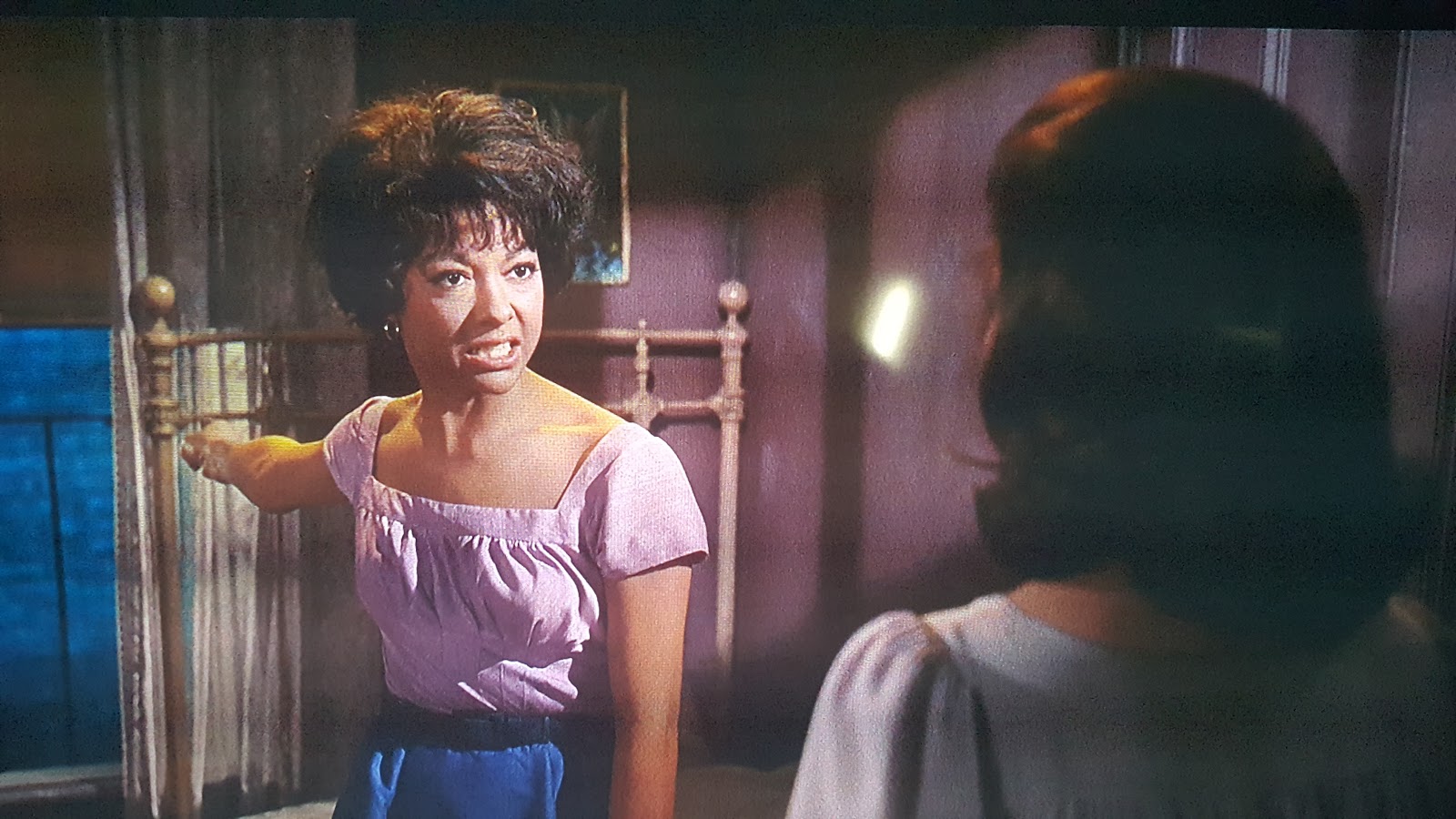
Bernardo and Baptista's Great Agenda Debacle.

Comparing themes of male ideals in courtship/dating from The Taming of The Shrew and West Side Story, by Luis-Manuel Morales


Oftentimes, parents or parental figures will use their authority to prioritize their agendas and overlook the wishes of their children. In Taming of the Shrew and West Side Story, Baptista and Bernardo are the parent figures of each play respectively. Baptista, the actual father of Katherine, and Bernardo, the older brother of Maria, have their priorities. Baptista remains loyal to his finances, and Bernardo remains loyal to the Sharks,his gang fellow Puerto Ricans. When Petruchio comes along, Baptista sees him as a financial gain, and arranges the marriage between him and his daughter, Katherine. Maria, on the other hand, falls in love with Tony, a white teen who is a member of the rival clique, the Jets, and Bernardo wants nothing of it. Bernardo tries to hook her up with a fellow Shark  Puerto Rican Chino. In both of these stories, the judgements of the male parental figures are blurred by bias and personal agendas, upholding reputations or the importance of gain, and they use their authority  to secure those desires.


““I know not what to say, but give me your hands. God send you joy, Petruchio. ‘Tis a match.” Baptista, Pg. 97, Act 2 Scene 1, Lines 337-339


In the Taming of the Shrew, Baptista offers his Daughter, Katherine, to Petrucio, due to the offer he strikes with him. They agree to terms on property shares if either men or Kate herself passes away. Petruchio then goes to woo Kate, however fails with her, but makes it appear as such and Baptista apoves. Throughout all of this, Baptista looks over his daughter's desires and hooks her up with a wealthy individual. Considering the deal, his previous wishes to have her mary first, and an opportunity to wed her given her reputation, he gladly ignores any obvious signs given by his daughter that she does not wish to marry him.


20170423_175934.jpg

“Get your hands off American! Stay away from my sister!” Bernardo


In West Side Story, 2 gangs in New York during the late 1950’s are constantly at a battle for their turf. The white Jets and Puerto Rican Sharks go to a dance in a neutral part of town. There, Maria, brother of the leader of the Sharks, locks eyes with Tony, an on and off member of the Jets. As the two fall for each other, Bernardo swoops in and snatches his sister away from Tony. He yells at her “Couldn't you see he’s one of them!” Still staring at the boy she just fell in love with, she replies, “No, I saw only him.” After a small altercation between both gangs, Bernardo instructs Chino to take Maria home, even though she wants to stay at the dance. In this case, Bernardo ignored his sister's wishes and desires and keeping loyal to his agenda, he sends her home with his original date, Chino, and arranges to meet with Riff, leader of the Jets, later on in the evening.


“Go, girl. I cannot blame you thee now to weep, For such an injury would vex a very saint, Much more than a shrew of [thy] impatient humor” Baptista, Pg, 117, Act 3 Scene 2, Lines 29-32


As Katherine and Baptista await Petruchio on wedding day, Kate flips out and storms off stage. Although it is an important day for both characters, Baptista dismisses her outburst as is if where nothing, almost saying ‘excuse my daughter and her shrew behavior’. Not really caring for his daughter but putting her feelings down to elevate his importance and show that this wedding is of bigger priority to him and not the bride.  


20170423_200332.jpg

“Forget that boy, and find another! One of your own kind! Stick to your own kind!” Anita

After Bernardo and Riff are killed in the rumble, Maria asks a beat up Chino if Tony is ok. Chino, in shock of the question, frustratingly informs her that Tony killed her brother. Her brothers actions earlier in the story at the dance not only made her and Tony closer, but erased her worry for Bernardo and Tony became her main priority. Bernardo’s agenda and his power trip messed up the family dynamic. However, even in death, his message lives on through his widowed girlfriend, Anita. After explaining to Maria what had happened and it was a big mistake, Anita arrives home and Tony leaves. Knowing that her brother's killer was just there, She screams at Maria to date her own kind and forget about him. Still not taking Maria's feelings and true desires into consideration, the Parental unit of Bernardo and Anita neglect Maria's feeling all the way through, and don't stop to take in exactly what happened at the rumble and Marias love for the boy.


In both The Taming of the Shrew and West Side Story, the judgements of the male parental figures are blurred by bias and personal agendas, upholding reputations or the importance of gain, and they use their authority  to secure those desires.  In each story, the parental units make choices which ultimately benefitted them but used their children or loved ones and left them with the negative side effects, not them. As a parent there is a certain level of trust and acceptance you must give up that allows to to make clear, wise choices that take in the beliefs and desires of all involved to do what's best for the family, yet often times, and in the cases of Bernardo and Baptista, they’re biased, selfish choices left a trail of disaster in their wake, and unfortunately didn’t impact them the most, but the children they are supposed to care for.


Works Cited:

  • Wise, R., & Robbins, J. (Directors), & Lehman, E. (Writer). (1961). West Side Story [Motion picture on Blu Ray Remastered]. United States: United Artist.

Shakespeare, W. (1992). The Taming of the Shrew (B. A. Mowat & P. Werstine, Eds.). New York, New York: Washington Square Press.
2 Comments

The "Power" Of Love

Posted by Quran Riddick in English 3 · Pahomov · B Band on Sunday, April 23, 2017 at 9:10 pm

The “Power” Of Love

Comparing The Taming of the Shrew Play to the movie “Pretty Woman”


In the movie “Pretty Woman” the two main characters are Edward Lewis and Vivian Ward. Vivian was a really attractive young lady, however she wasn’t able to pursue her big dreams and goals because of many bad decisions she had made, with the addition of falling in love with the wrong type of boy. She worked as a prostitute with her roommate and best friend, Kit, on Hollywood Boulevard. While doing her job, she ran into a wealthy businessman named Edward. Edward is a second generation business tycoon and has became really successful because of it. He also happens to look at relationships as a headache. His previous relationships hadn’t lasted too long and his former partners benefited more from the relationship than he did because of the fact he is wealthy. Edward’s former wife currently lives in one of in his big “ex-condos” as he calls it and a former girlfriend is living, and supposedly moving out of, one of his apartments. Edward and Vivian obviously live two different lifestyles, however connect because of many similarities as individuals throughout such two separate styles of living.


Essentially, the modern film, Pretty Woman, and Shakespearean play, The Taming of the Shrew, both present the idea that ultimately men always have a more powerful “say” in a relationship compared to a woman and the only way for the woman to have some sort of equality is to obtain her own weight in the relationship, meaning having her own money, good career, and such.  


"I come to wive it wealthily in Padua, If wealthily, then happily in Padua."


(Act 1, Scene 2, Line 76-77)


Petruchio has an interest in marrying Katherine, who’s father Baptista, is working hard to find a man for his daughter to marry. Katherine is described as quick tempered, prone to violence, and really against anyone who has a desire to marry her. However, Baptista wants Katherine as the older daughter to get married before her younger, more desired sister Bianca. Petruchio is quick witted, eccentric, and really boisterous. He has a desire to marry Katherine as she meets his expectations of a wife, she is really wealthy because of her father. On the other hand, Baptista treats his daughter marriages as business as he presents his daughter’s “love” for the highest bid. Basically the man who can promise his daughters the most money and best lifestyle.

In a relationship, society has made it seem as though it’s only about love. And the honest truth is that they are often not, and many failed relationships reflects this enduring belief. The effect of everyday life comes into play in a relationship and if there are big differences or disagreements it can definitely impact the love and happiness in a relationship. In the quote above, Petruchio made it clear the happiness with a woman was established for him by her having money. As a man, it’s embedded in Petruchio mind to rule with an iron fist and fulfill his duties as a husband, by taking care of his “wealthy wife” even though because she has money and everything should be available for her to not need assistance from anyone. Money in marriage brings Petruchio happiness, this is obviously the case for every man but this is a great, yet realistic example of how categories of life can impact two individuals who fall in “love” with each other and want to share a life together.


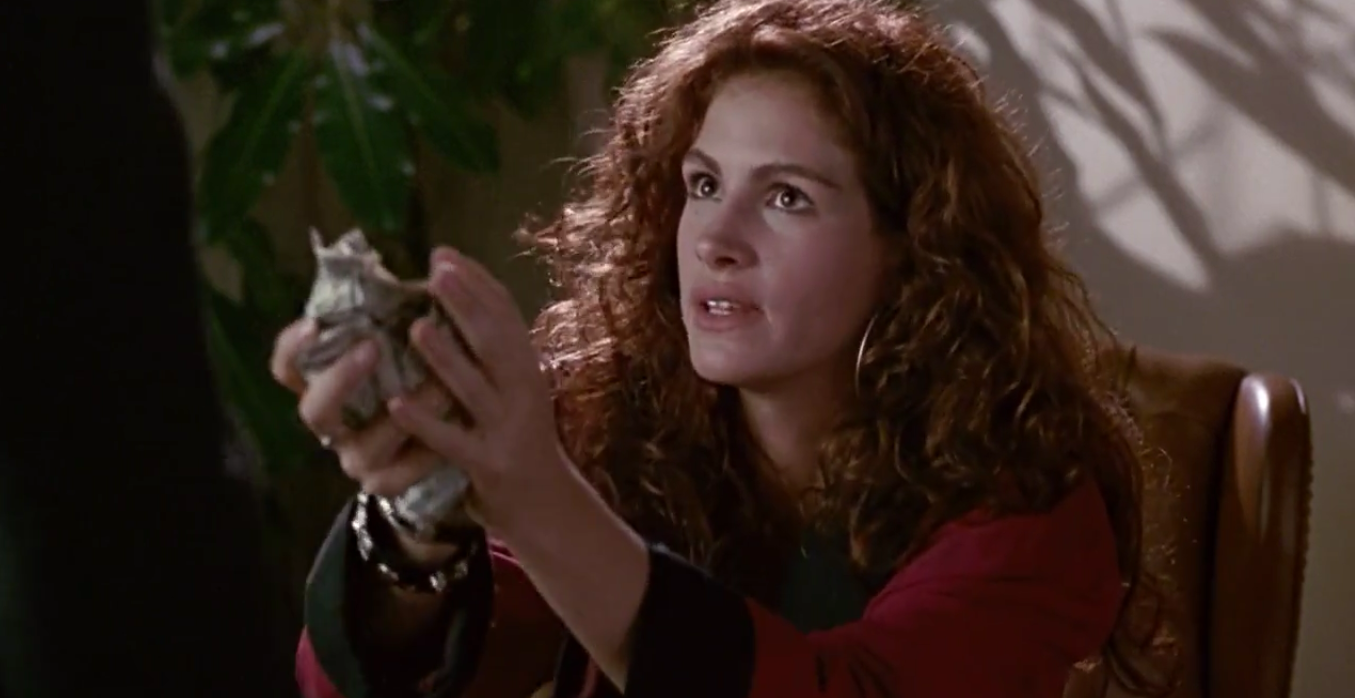
When it comes to money and love in a relationship with the man having a powerful status because of it, Pretty Woman shows this as well in a few scenes. Here is one of them below.


Screenshot 2017-04-21 at 4.29.27 AM.png


In this scene, Edward pays for Vivian to stay with him for the rest of the week, basically acting as a lady friend for important business meetings and such. However, because of how she acts and dresses which is the total opposite of the people Edward hangs around(people of more money and class) he gives her money to basically be someone she isn’t or that’s really in her but she doesn’t know how to bring it out by buying more presentable clothes like a new dress instead of the short skirt she wears at work. Vivian can’t deny her appreciation for this man giving her all this attention, time, and money as she is used to men approaching her only wanting one thing. Because of this her standards are low when it comes to relationships. Comparing this to Taming of the Shrew, both show how good or bad money can really be in a relationship. Of course it’s not all about the money in both cases, more so not with Pretty Woman however the promises of one giving a lot hard-earned money to someone else expecting nothing in return besides possibly sex is something that down the road can be the rise or fall of that relationship. It raises the question of what would happen if money were to run out or, usually since the man is the breadwinner, (especially during these times 1590s for Taming of the Shrew and late 1900s for Pretty Woman) the question of the woman being a golddigger comes about. Both relationships between Petruchio and Katherine and Edward and Vivian are surrounded by the greed of money for at least one of the partners, it creates an imbalance and sometimes a relationship isn’t strong enough to work through the disparity.


“I will be master of what is mine own. She is my goods, my chattels; she is my house, My household stuff, my field, my barn, My horse, my ox, my ass, my anything. And here she stands, touch her whoever dare”

(Act 3, Scene 2, Line 235-239)

Throughout The Taming of the Shrew, the play heavily gives the perception of how men are obligated to play a big role in their relationship. The expectations of a boyfriend’s role is showed more as the breadwinner, dominant partner, and influenced the direction of the relationship more compared to the woman involved. In this scene of the play, Petruchio explains when he becomes the husband of Katherine, his dominance in the marriage will be shown. He has the belief that women have little to no legal rights of their own and everything will go through the dominant partner(being himself) in the relationship. This scenario compares with society in the recent years and how mankind has made it acceptable for relationships to be like this. The attitude of a man has to have as a boyfriend or husband is a protector and a person who is going to take care of his woman. If the man doesn’t have this mentality and pride to pursue the expectation of being the “man” in the house, he is looked at as feeble. In a male’s perspective, for a female to look at him in a respectful way it’s mandatory for the man to understand how powerful he is without being controlling.


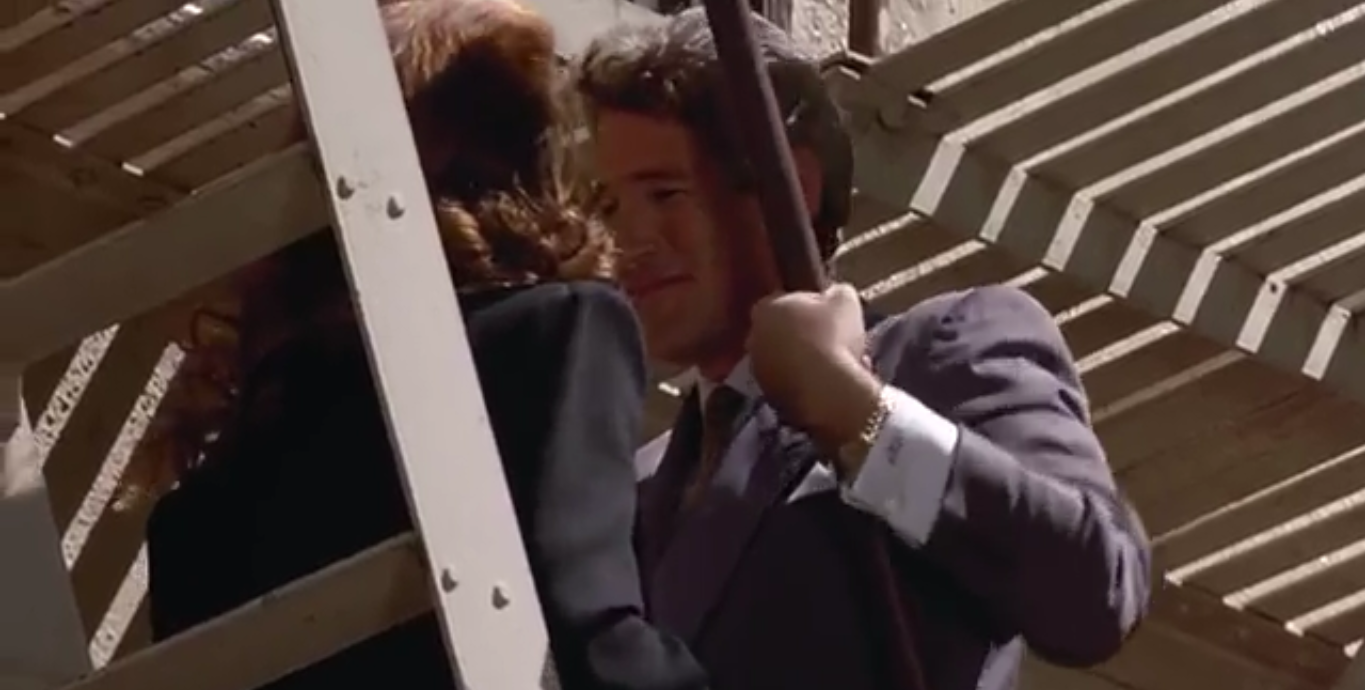
“A woman doesn’t want a weak guy, she wants a prince charming to save her like she’s a princess” These are words that Vivian told Edward when they were talking about dream relationships.    


Screenshot 2017-04-23 at 1.19.00 PM.png

Previous to this scene in Pretty Woman taking place both Edward and Vivian admitted to each other they had deeper feelings even though that wasn’t included in the plan. The plan was Edward paid Vivian three thousand dollars to be his beautiful woman friend to bring to business meetings and such. For Vivian, this wasn’t anything new as she have been paid by men on multiple occasions to perform acts as that was her job as a prostitute. However, the job of a prostitute is to never fall for one guy since her job consists of her being with plenty men. When Edward and Vivian both expressed their feelings, Vivian told him the prince charming quote meaning she wanted a guy that could be there for her, not only just put her financially in a better position as she was as a worker on Hollywood Boulevard. Because of consistent work, Edward didn’t think he could make the time on a daily to play the family man which resulted into the Vivian thinking her happiness in the future of the couple would never truly be met. Vivian knew because of Edward’s desire to work all the time he could never be her prince charming and the dream guy she always wanted. On the other hand Edward just wanted to get Vivian off the streets to pursue a relationship with her. That was enough for him but Vivian needed more. Comparing this to the Shrew play and society, this brings the point that the male’s role and decisions can impact a relationship more than a females because of the man having more power and expectations in the relationship.


When it comes to courtship/dating Pretty Woman and The Taming of the Shrew presented the idea that the status of a man in a relationship has a bit of a high ranking compared to his lady’s status. Both pieces gives off the perception that the male is the dominant partner as he is the protector, provider, and most importantly the decision maker who will take responsibility of the outcome because he is the strength of the partnership. Even in this day and age, this is the case with many relationships where if the man isn’t the breadwinner(most case scenarios money is power) it makes him look weak, but on the other hand is acceptable if the woman isn’t the breadwinner. The power a man possesses as the dominant partner holds great responsibility that women are capable of but shouldn’t be in control of when there’s a man involved, and in many cases giving men a higher position in the relationship.


2 Comments

Charles's Visual Essay

Posted by Charles Velazquez in English 3 · Pahomov · B Band on Sunday, April 23, 2017 at 7:22 pm

The Purpose of Marriage

The play, “The Taming of the Shrew” displays marriage as a priority for the men that it  follows. As two suitors Petruchio and Lucentio beat out other suitors in order to marry Baptista’s daughters Bianca and Katherine. Even though they have differing reasons; Petruchio, in order to obtain the wealth Katherine has and for Lucentio, to obtain the one he loves. It depicts the role marriage has in the Elizabethan era. In “Crazy, Stupid, Love”, the main character Cal after learning that his wife (Emily) wants a divorce, meets a guy named Jacob who is bachelor. Jacob teached Cal how to pick up women in order to get over his wife. With that said, as the movie goes on he realizes that his wife is the only girl he wants and wounds up fighting to get his wife back. Jacob as the movie goes on met a woman named Hannah who he started instead of just having a mindless one night stand. The play and movie both has to do with marriage/courtship but shows as time went on woman obtained more ownership in who they want to marry.


“Content you, gentleman. I will compound this strife. ‘Tis deeds must win the prize, and he of both That can assure my daughter greatest dower Shall have my Bianca’s love. Say, signior gremio, what can you assure her.”(Act 2, Scene 1, line numbers 365-)


In this scene Lord Baptista is talking to two potential suitors; Gremio and Tranio, for his daughter Bianca. Tranio is dressed as Lucentio, the man who actually wants to marry Bianca. Baptista wants to see what these men has to offer his daughter and him, promising Bianca’s hand in marriage to the richest man. This scene shows how marriage was arranged and the daughter has no choice in the matter. Marriage is seen as a business transaction by Baptista instead of a badge of love. In order to marry Bianca, Lucentio goes as far as becoming Bianca’s tutor to get closer to her and have tranio play as him. Showing that this marriage is really important to him and that he truly does like Bianca. In order to get her though he has to convince Baptista that the marriage will benefit him as well.

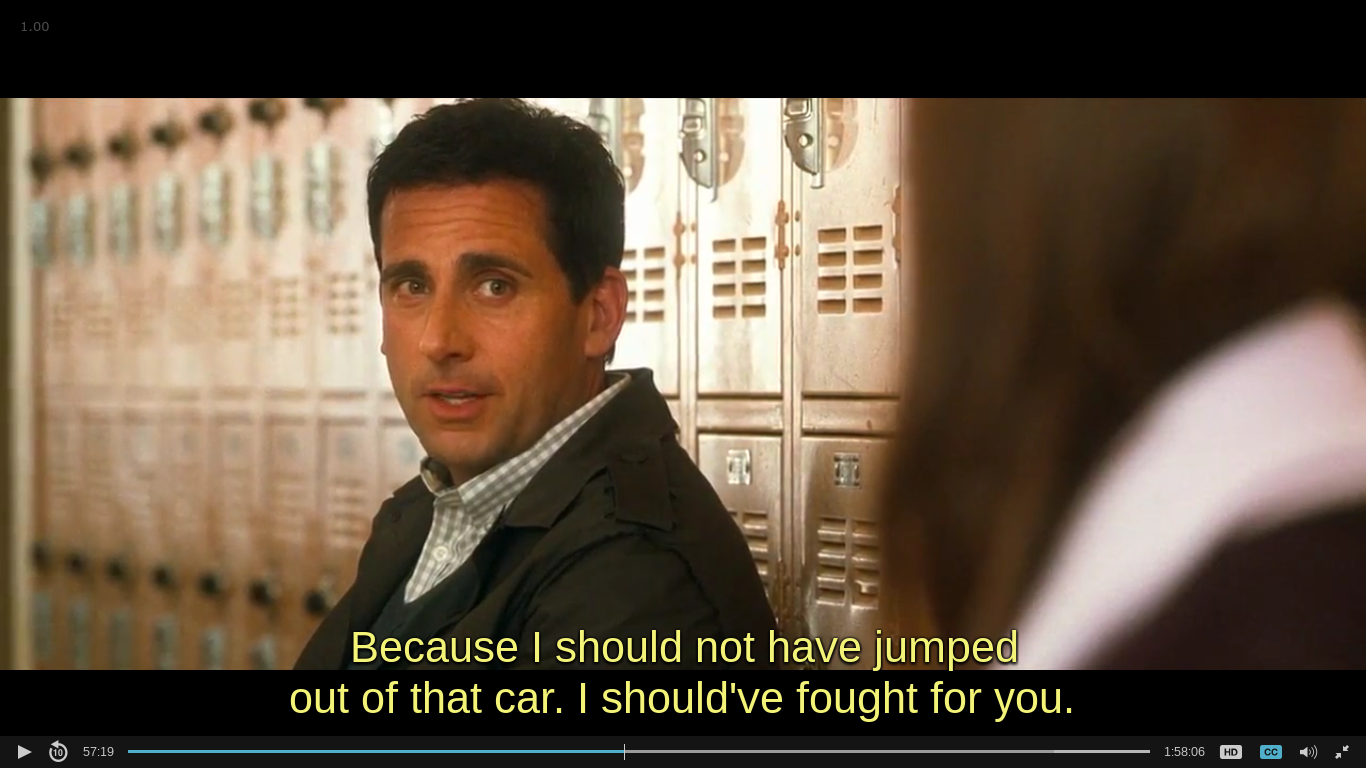
Screenshot 2017-04-23 at 2.46.34 PM.png

    In this scene Cal and Emily are about to go into a parent teacher conference for their child Robbie. Cal confesses that he hates himself for not fighting for her even after finding out Emily cheated in him. He states,” I should’ve fought for you. You fight for your soulmate. At least that's what our thirteen-year-old tells me.” This scene shows the emotion connection that Cal and Emily has. Unlike the Taming of the Shrew suitors, Cal is already married but the way he confesses to her can be compared. Cal married Emily because he loved her while Lucentio had to prove himself to the father before he was able to marry Bianca. The movie reflects that in the modern age women have way more control of choosing who they want to marry than what is reflected William Shakespeare’s play.
        

"Marry, so I mean, sweet Katherine, in they bed And

therefore, setting all this chat aside, Thus in plain term: your father hath consented That you shall be my wife."

(Act 2, Scene 1, line numbers)


    This part of the play has to do with Katherine and the suitor her dad has allowed to marry her, Petruchio. Petruchio is trying to train Katherine into becoming the perfect wife for him by complimenting her when she does something he likes and punishing her when she does something he deems wrong. Katherine does not want to marry Petruchio, but since Petruchio has Baptista’s blessing what she wants doesn’t really matter. Since Petruchio is very manipulative as well, he is able to talk his way out of situations that may have stop the marriage. This scene in the play reflects the way marriage was perceived in William Shakespeare’s era (1558-1603). Where marriage was seen as a business opportunity in which both families involved would benefit. It also shows that the father has majority of the say in who the daughter is going to marry.  

Screenshot 2017-04-23 at 2.50.37 PM.png

In this scene, the movie reached its climax as Cal plans of winning Emily back was interrupted by Jessica’s Dad and Jacob. He found out that Jacob is dating his daughter Hannah and Cal does not like that at all. Calling Jacob a womanizer, while Jessica’s Dad thought that Cal was having a relationship with his 17 year old daughter. Jessica babysat for Cal and Emily, she had a crush on Cal throughout the movie but nothing ever happened. This scene reflects how a women has way more power in who she chooses to be in a relationship/marry because Hannah was introducing Jacob to the family. Even though Cal does not want her dating Jacob, it is socially acceptable for Hannah to not listen to her father. Katherine does not have this luxury as she has to marry whoever her Dad sees fit. This shows that the modern era of marriage is about love and compatibility than just furthering a family’s power.

Overall, “The Taming of the Shrew” and “Crazy, Stupid, Love” even though they are fictional works, shows society views on marriage in the Elizabethan and modern era. From the play’s perspective, marriage was seen as a tool to gain more power and prestige. From the movie’s perspective, marriage is more complicated and has to do with the emotional connections between two people. Showing that the purpose of marriage has changed over the years and is always subject to change.

Work Cited:

Shakespeare, William, G. R. Hibbard, and Margaret Jane Kidnie. The taming of the shrew. UK: Penguin , 2015. Print.

Crazy, stupid, love. Dir. Glenn Ficarra. Perf. Steve Carell. Https://gomovies.to/film/crazy-stupid-love-4635/watching.html?ep=503677. N.p., n.d. Web. 23 Apr. 2017.

"Elizabethan Wedding Customs." Elizabethan Wedding Customs. N.p., Feb. 2017. Web. 23 Apr. 2017. <http://www.william-shakespeare.info/elizabethan-wedding-customs.htm>.
5 Comments
155 posts:
← Prev
  1. 1
  2. 2
  3. 3
  4. 4
  5. 5
  6. 6
  7. 7
  8. 8
  9. 9
  10. 10
  11. 11
  12. 12
  13. 13
  14. 14
  15. 15
  16. 16
Next →
RSS

ENG3-024

Term
2016-17

Other Websites

Launch Canvas

Blog Tags

  • alec baldwin 1

Teacher

  • Larissa Pahomov
Slate (skeleton-v3 PHP 8 prototype) · Location: 1482 Green St · Shipping: 550 N. Broad St Suite 202 · Philadelphia, PA 19130 · (215) 400-7830 (phone)
×

Log In