• Log In
  • Log In
Slate (skeleton-v3 PHP 8 prototype)
Slate (skeleton-v3 PHP 8 prototype) Learn · Create · Lead
  • Students
    • Mission and Vision
  • Parents
  • Community
    • Mission and Vision
  • Calendar

English 3 · Pahomov · B Band Public Feed

Create a Post

  Reader Profile: Ms. Pahomov

Posted by Larissa Pahomov in English 3 · Pahomov · B Band on Wednesday, September 28, 2016 at 9:19 am
Photo on 9-28-16 at 8.59 AM #2

Ms. Pahomov hates it when strangers ask her “what book are you teaching in your English class right now?” Usually it means they want to just talk about what they liked to read (or not) in high school. When she was in high school, people told her she was a “fast reader,” and that was a bad thing for her, because she often read too quickly and missed the details. There are a lot of books she likes better now that she slowed down when reading, like “The Great Gatsby,” which she has probably read ten times at this point, each year when she teaches it. She is proud of the fact that she has the stamina for long books, but is more likely to carry around something that is 200 pages or less in her backpack.

One of the great sadnesses of her school year is that she uses so much of her brain to read and respond to student work that she has limited capacity to read on her own. She also recently discovered that she is old enough to have read books and COMPLETELY FORGOTTEN what they are about. Take, for example, the novel “Cat’s Cradle” by Kurt Vonnegut. She is certain she read it as a teen, but a student asked her about the plot recently and she couldn’t remember a thing. She is a little bit worried that this represents the rest of her life: forgetting things and having to go back to them.

One of her great joys of the school year is when she gets to read alongside her students in class. Her plan is to re-read “Cat’s Cradle” as soon as she finishes “Bone” by Fae Myenne Ng. The hardest time for her to read is on a plane or train. She always tells herself that she will, but she’d much rather listen to music and look out the window. She is a little bit ashamed of the fact that she never reads in German anymore, although she can. Never enough time!
Be the first to comment.

2FER #7

Posted by Zoe Khan in English 3 · Pahomov · B Band on Friday, April 28, 2017 at 9:57 am

Sunflowers hold the meanings of adoration, loyalty and longevity. Yellow, the common colour of sunflowers, has many meanings; freshness, happiness, positivity, clarity, energy, optimism, enlightenment, remembrance, intellect, honor, loyalty, and joy. Sunflowers are meant to lift spirits, and bring happiness and joy to any person who sees them. They’re named after the sun, which is often associated with happiness and smiles all on its own. They’ve also been used a food source for thousands of years. Taking this into account, sunflowers should be recognized as the best, and most important flower.

Sunflowers, having originated in the Americas sometime in 1,000B.C., were used to supply food for anybody who needed it. When European explorers discovered the flower, they spread it throughout Europe and eventually the rest of the world. Everywhere across the entire world was talking about the beauty and usefulness of sunflowers. Today, the flowers seeds are used for cooking oil and margarine making, as well as being edible on their own. Their seeds alone provide a quick, cheap foodsource to people who need it. They’re nontoxic to the environment, and help prevent pollution while still producing food.

In some native cultures, Sunflowers have been used as religious symbols. They hold many meanings to different people, and their importance is worldwide. Sunflowers are known to help fight depression, as well. Not only are they the symbol of happiness, and the sun, the nutrients in their seeds raise Serotonin levels, which helps nerve function. It’s not clear if they can fully cure depression, as no one really knows if curing depression is fully possible, but they do help. Even if they’re not curing depression, in some organizations they’re used as a symbol of the fight against depression.

Sunflower seeds are also really great for physical health. While being nutrient and vitamin enriched, they’re full of healthy fats that help fight many diseases. They help reduce the risk of heart diseases, certain types of cancer, balances blood pressure, and combats bone conditions like osteoporosis. Their high vitamin E content also helps with skin health, and keeps the body healthy for much longer.

Sunflowers are beneficial in many ways, especially in a person’s mental and physical health. They have ties to religion, and provide natural and safe food sources with their seeds. People all over the world have been benefiting from the flower for thousands of years. For these reasons, they deserve to be recognized as the most important flower.


Sources:

ProFlowers. "History and Meaning of Sunflowers." ProFlowers Blog. N.p., 10 June 2015. Web. 28 Apr. 2017.

Project, Start, Jennifer Bourn, and Jennifer Bourn. "Meaning Of The Color Yellow |". Bourn Creative. N.p., 2017. Web. 28 Apr. 2017.

"Want To Help Fight Depression? Plant Sunflowers". Choices. N.p., 2017. Web. 28 Apr. 2017.

"Sunflower Seeds Are Answer From Nature To Antidepressant Drugs". NaturalNews. N.p., 2017. Web. 28 Apr. 2017.

"Sunflower Seeds: Benefits, Nutrition & Recipes". Dr. Axe. N.p., 2017. Web. 28 Apr. 2017.


This is my best 2Fer because it's about a topic I actually enjoyed writing about. Most of the 2Fer's have been written last minute, or in the moment, on topics I didn't really care about, or they were so rushed it didn't even make sense as to why I was writing them. This time, though, I actually enjoyed writing it, and I feel like I still could've done better but I'm happy with the end result.


Be the first to comment.

Amelie and the Taming of the Shrew

Posted by Mohamed Bah in English 3 · Pahomov · B Band on Thursday, April 27, 2017 at 10:56 am

Amelie is a french film made in 2001 about a strange girl with an affinity for observing and playing with sand. She finds this man who is obsessed with pictures, and she starts pulling strings in order to get with him. She makes an entire scheme including pictures and cryptic messages to get to him. This is similar to Shakespeare’s Taming of the shrew in that Lucentio comes up with a similar scheme that also ends up wor Courtship is portrayed through these pieces of media in time as being all about acting like someone you’re not in order to achieve marital goals.

Be the first to comment.

Whose the Daddy?

Posted by Jamal Hampton in English 3 · Pahomov · B Band on Monday, April 24, 2017 at 10:38 pm

JamalsVisualEssayTemplate
Be the first to comment.

Two Can Play that Game

Posted by J'Lynn Matthews in English 3 · Pahomov · B Band on Monday, April 24, 2017 at 9:18 am

Comparing the play, “The Taming of the Shrew” and the the movie, “High School Musical: 2”.

The play The Taming of the Shrew unifies ideas of possessions for show. These possessions are not just common objects, but they are also people. Characters of the play, like Katherine and Petruchio, both demonstrate these ideas. The movie, High School Musical: 2, also share these ideas about possession. The rich and talented Sharpay tries her best to exercise her status to trick and win over Troy, another talented student.


For those who are familiar with the High School Musical franchise, it is known how manipulative Sharpay Evans can be. She already has the fortune, but she also wants fame and she will do whatever it takes to get it. Sharpay’s main gist for wanting Troy is to sing with him during the talent show. Because he is very talented, together they will attract many people, making Sharpay famous. In the play, The Taming of the Shrew, Petruchio is a fortune hungry bachelor. He wants to marry, but not just any woman. Petruchio wants a wealthy and well known woman that he can show off, and he will make sure he gets just that. Both the play and the movie show ideas of not just material possessions, but personage possessions too. These human possessions are ones that are worth swanking about. They can be shown off and advertised to benefit the braggart. They both the play and movie demonstrate that relationships are more about having a human possession to parade than actual love.


“...if I get your daughter's love, what dowry shall I have with her to wife?” - Petruchio Act 2/Sc. 1/Pg. 83


In this excerpt, Petruchio is asking Baptisia, Katherine’s father, what he may receive if he takes Katherine’s hand in marriage. Petruchio has already shared with Baptista what he can bring to the table; he is legally entitled to his father’s land and goods. Although her love is not enough for Petruchio, Baptista offers him half of his land and twenty thousand crowns as well. This exposes that courtship in this Shakespearean novel is centered around material wealth and what one can offer another, rather than love itself. This idea of courtship is also reflected in the movie High School Musical: 2. This movie takes place in a modern day setting. Sharpay wants to be with Troy for only one reason, his musical talent and she displays acts of interest only to win him over.


In this scene of the movie, Sharpay fairly expresses to Troy how cool her life is. Her father is arriving to a golf course via a helicopter and her parents own the country club he works at. Not only does she let him play golf with her and her parents, she gives him a pay bonus for it too. She is vaguely showing him what she has to offer to him, and by offering him all of these luxuries, she hopes to gain his interest. If he decides to be with her, he will get a fair share of her cool life.


“After my death, the one half of my lands, and, in possession, twenty thousand crowns.” - Baptista Act 2/Sc. 1/Pg. 83


The excerpt from the play also displays parental interference in courtship/dating. Because Baptista chose to respond to Petruchio with a dowry, offering him land and crowns, he has made an interference. He already had an influence of who Katherine gets to marry, but now he also has an influence on her partner as well. Petruchio only gets these treasures if he marries Katherine. This play logic is similar to the movie.


In this scene in the movie, High School Musical; 2, Sharpay invites Troy to dinner with her parents. Without his knowing his parents invites a college basketball player who can hook Troy up with a possible scholarship. After a long night of dinner and talking, Troy is put on the spot when Sharpay asks him to promise to sing with her. He faces the choice of either agreeing to sing with her and get the scholarship or not agreeing and upsetting her parents and throwing away his shot at college. Of course Troy agrees to sing in order to maintain Sharpay’s parents’ happiness, but deep down he actually did not want to do it.


“Say as he says, or we shall never go.”

- Hortensio Act 4/Sc. 5/Pg. 187


In this excerpt from the play, Katherine and Petruchio are arguing over whether the sun or the moon is in the sky. Katherine know it is the sun in the sky, but Petruchio will not agree with her. Hortensio, friend and wingman to Petruchio, insist that Katherine agree with Petruchio or the argument will never drop. Once Katherine gives in and agrees with Petruchio, he then rebuttals his arguments saying the sun is indeed in the sky and Katherine had just lied. Petruchio now sees Katherine as his puppet; he owns her. She will now do or say whatever he wants. At this point in the play Katherine goes along with Petruchio's ideas to avoid conflict with him. This tactic of “giving in” is also used in the movie.


In this scene of the movie, Mr. Fulton, the club manager, promotes Troy to a new position under Sharpay’s orders. This new position offers more money, less labor, and club benefits. Although the job comes with many benefits, Troy can no longer work beside his friends. Mr. Fulton insist that Troy be grateful and appreciate his new position. Troy, once again, goes along with the idea to avoid upsetting Sharpay and her parents. Sharpay now has control and some kind of ownership over Troy. She has the ability to make him agree to anything. The main reason why Troy continues to give in is because his college career is on the line.


Both the play, The Taming of the Shrew, and the movie, High School Musical: 2,  holds true to idea of having a human possession to show off. Although both forms of productions are based in different eras, they still hold many similarities to one another. Usually these kinds of behaviors exercised would not happen in the past if gender roles were switched, like they were in the movie. Society back then was strict and and more sexist than today’s modern era. This goes to show that not only men can obtain human possessions over the opposite sex, but women can too and with the help of parental influences.


Work Cited:

  • Shakespeare, William, Barbara A. Mowat, and Paul Werstine. The Taming of the Shrew. New York: Washington Square Press, 1992. Print

  • High School Musical: 2, Kenny Ortega, Walt Disney Studios Home Entertainment, Disney Channel, August 17, 2007


Be the first to comment.

Mask Off

Posted by Kara Lazorko in English 3 · Pahomov · B Band on Monday, April 24, 2017 at 9:11 am

Mask Off

Comparing “The Taming of the Shrew” to “Enchanted”


The whole representation of identities involved in a romance is characterized in Shakespeare's "The Taming of the Shrew," and is also interpreted in the movie "Enchanted." In "Taming of the Shrew," Lucentio and Tranio become different identities, tricking other characters in the book, trying to be loved as who they are pretending to be. Lucentio deceived Bianca by acting like he was someone else in hopes of her falling in love with him. Katherine was also deceived by Petruchio who tried to persuade her that there was an arranged marriage. Similarly, Giselle, the princess in “Enchanted,” constantly reminds the animals and people throughout the movie that you have to wear certain clothes and act a certain way in order to prove your love for someone; yet conflict arises when she receives help in the modern world from a divorce lawyer and encounters the downsides of relationships between couples. Both the play and the movie depict that false identities made for love eventually become revealed.


“Basta, content thee, for I have it full.

We have not yet been seen in any house,

Nor can we be distinguished by our faces

For man or master. Then it follows thus:

Thou shalt be master, Tranio, in my stead,

Keep house and port and servants as I should.

I will some other be, some Florentine,

Some Neapolitan, or meaner man of Pisa.

'Tis hatch'd, and shall be so. Tranio, at once

Uncase thee. Take my colored hat and cloak.”

(Lucentio, Act 1/ Scene 1, Line 204)


In this quote, Lucentio is explaining to Tranio that no one has either of their identities memorized. He continues to tell Tranio the rules and remembers to tell him to even act like him. Acting like Lucentio would mean telling the servants what to do as Lucentio would do himself. Finally, Lucentio assures Tranio that he will make up who he wants to pretend to be. Options included being a guy from Florence, Naples, or Pisa.


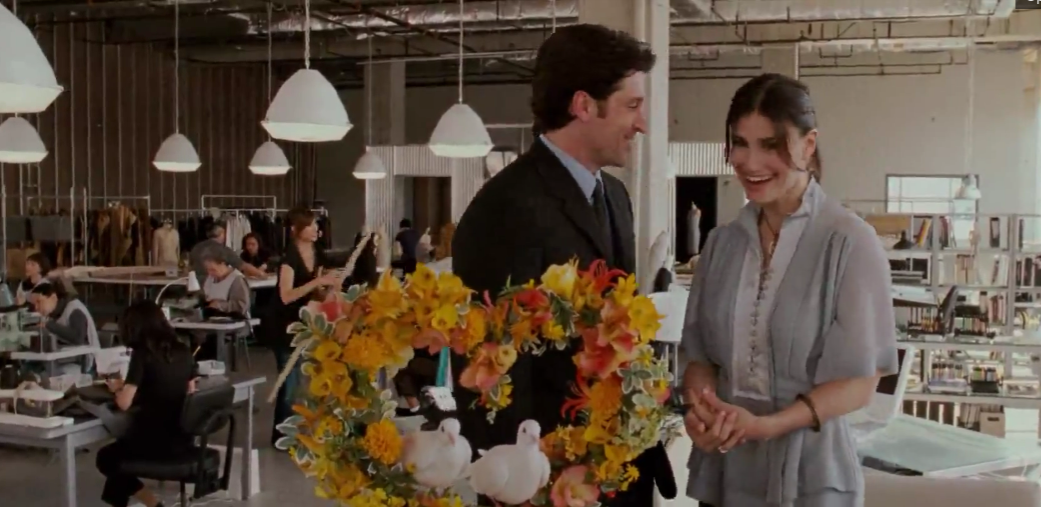
Robert encounters a similar situation, but is in forced in a position to play the role.


Screenshot 2017-04-24 at 5.01.45 AM.png


In this scene, Giselle finishes singing about all of the things that Robert could possibly do win back the heart of his fiance. She tells him to send her flowers, wear stuff that matches characteristics of her, and go completely out of your way. That’s why the song goes “ That’s how you know” because she is saying all of this grand gestures will prove whether you love or not. At the end of the song, she sends his fiance doves, flowers, and two tickets to the ball.  Instead of Lucentio, who chose to take on something that he is not, Robert was stuck in a role. The flowers were received, but also questioned by Robert’s fiance, because “it didn’t seem like him.”


In both “Enchanted” and “The Taming of the Shrew” they both portray the cover up and false interpretations of relationships.


“(to TRANIO) Sir, understand you this of me, in sooth:

The youngest daughter, whom you hearken for,

Her father keeps from all access of suitors

And will not promise her to any man

Until the elder sister first be wed.

The younger then is free, and not before.”


(Petruchio (to Tranio) Act 1/Scene 2/ Line 265)


In this quote, Petruchio is making it very clear to Tranio that Bianca is off limits due to her father’s request.  No one is allowed to have Bianca until Katherine is married to someone. Meaning that whoever wants Bianca has to wait, which adds conflict.


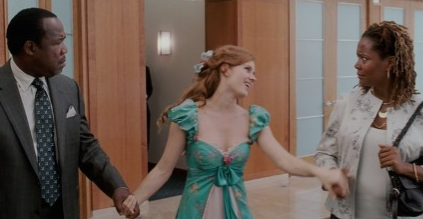
Giselle, like Petruchio, tries to teach ways of love to each other, yet it later becomes upsetting.

Screenshot 2017-04-21 at 8.04.01 AM.png


In this scene, Giselle gets the reality of marriage and relationships, and ends up witnessing the downfall of how they could be. She learns that not everyone is going to stay in love with each other. Robert then persuades Giselle to deal with the fact that the couple simply do not want to be together anymore, due to the many issues they were seeming to face. The couple in this scene were filing for a divorce, and later learn after Giselle’s reaction what they fell in love with about each other. Both Giselle and Petruchio try to highlight to other characters the standards of love.


Conclusion

Roberts ends up marrying Giselle, and Robert’s ex-fiance ends up going for Giselle’s prince. Petruchio ends up winning more than what was expected in the overall. Giselle seemed to have a deeper education on definitions and ways of love. Everyone does end up happy with their “true love.” The audience was shown that identities will eventually be revealed, yet aso be loved for who they are.

Works Cited

Shakespeare, William, Trevor Howard, Margaret Leighton, Miles Malleson, and Howard Sackler. The Taming of the Shrew. New York: Caedmon Records CDL 5211., 1972. Print.


Enchanted Written by Bill Kelly
3 Comments

The Taming of the Groundhog

Posted by Eleanor Shamble in English 3 · Pahomov · B Band on Monday, April 24, 2017 at 9:10 am


A comparison between Groundhog Day and Taming of the Shrew

The Taming of the Shrew has a bizarre title that sums up a large chunk of its plot. One of the main characters, Petruchio, ‘tames’ his wife Katherine through various tactics to be obedient and always agree to what he says. Two other characters, Lucentio and Bianca, had a very different relationship. Bianca was pursued by many suitors, but chose Lucentio because he was honest with her about who he was.

Groundhog Day is about a man named Phil who is stuck in a time loop where he is doomed to repeat the same day, groundhog day specifically, over and over and over. He is a news anchor and has a co worker named Rita, who he likes and tries to get closer to throughout the movie.

In Groundhog Day and The Taming of the Shrew, two specific tactics in relationships are used. Lucentio and Bianca’s relationship was built on honesty, while Petruchio and Katherine’s relationship was built on conflict prevention by one party, always Katherine, giving in to the other’s opinion. Lucentio and Bianca’s relationship was successful but was proved less so in the eyes of the book by the end. Both of these approaches were attempted by Phil, the protagonist in Groundhog Day so he could woo Rita, but unlike in the Shrew, the approach mirroring Petruchio and Katherine was inferior in the eyes of the movie. Essentially, in the time of the Shrew, consensus and agreement within a couple was valued over honesty and integrity, and in modern times, honesty and integrity is valued more.


“PETRUCHIO: Nay, then you lie. It is the blesséd sun.

KATHERINE: Then God be blest, it [is] the blesséd sun.”


(Act 4, Scene 5, Lines 20-21)


In this scene of The Taming of the Shrew, Petruchio and Katherine had an argument. Petruchio declared that the sun was the moon, but Katherine disagreed because it was the sun. He kept pressing her until she agreed, and then flipped his stance the instant she did so. The argument continued on for a while, and Katherine still echoed Petruchio in every way during it. Even though she didn’t really agree with his outlandish observations, she went along with it anyway.

In doing this, Katherine conceded to Petruchio’s ideal of a marriage- where a woman agreed with her husband without complaint. Later in the play, Petruchio places a bet with other newlyweds saying that his wife was the most obedient. He won, and their relationship was shown as the most successful in the eyes of the play. After the bet was won, Katherine was asked by Petruchio to lecture the other women about what it meant to be a wife, and said the following.


“[When a woman is] not obedient to his honest will,

What is she but a foul contending rebel

And graceless traitor to her loving lord?”


(Act 5, Scene 2, Lines 174-176)


According to Katherine, one who does not bend over backwards for her husband is a traitor to him and a ‘foul contending rebel’. She would rather agree with her husband who is blatantly wrong than to disagree and start an argument.


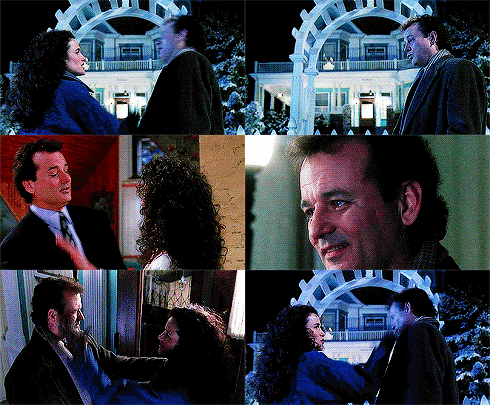
Image result for groundhog day date gif

In Groundhog Day, Phil and Rita go out on a date that emcompasses several loops. They have a conversation centered around Rita and her interests. One specific thing that was brought up in it was her choice to major in french literature, which he ended up saying was dumb and she got mad at him for it. He didn’t like that, so in the next loop he pretended like he thought it was a good idea. The conversation continued throughout the loops in that manner, she would say something he thought was dumb and he would say so and get rejected, and then would amend what he was saying to tailor to her interests.

He was, in a way, seeking to tame himself to do what Petruchio made Katherine do, agree with his date in every way. This tactic didn’t work out as well as he hoped.


"BIANCA: Now let me see if I can consider it. Hic ibat Simois, I know you not; hic est [Sigeia] tellus, I trust you not; Hic [steterat] Priami, take heed he hear us not; regia, presume not; celsa senis despair not."


(Act 3, Scene 1, Lines 44-47)

In The Taming of the Shrew, Lucentio disguises himself as a tutor for Bianca in order to become closer to her and attempt to gain her affection. When he reveals his true identity, she responds with the above. In a nutshell, she doesn't know him so she can't trust him. This was the issue with Rita and Phil, too.


Image result for groundhog day slap gif

After Phil attempted to woo her by mimicking her opinions, she said basically the same thing Bianca did when Lucentio introduced his real self. She says that she doesn't know him and proceeds to slap him, several times over the course of several loops. She doesn't value him mimicking her, she'd rather get to know him for who he really is. At the end of the movie, when he becomes a genuinely nice person, she ends up actually liking him. He was much better off becoming nice than echoing her and pretending to be nice. Groundhog Day pushes the thesis that in order to have a successful relationship, people must grow as people instead of avoiding doing that by just agreeing with everything someone said.

In Groundhog Day, the protagonist was more successful when he was a genuinely good person rather than when he was pretending to be one. This shows that in a more modern viewpoint, honesty is valued over consensus in relationships, rather than in The Taming of the Shrew, where consensus was more valued.

Works Cited

Groundhog Day. Dir. Harold Ramis. Prod. Harold Ramis. By Harold Ramis and Danny Rubin. Perf. Harold Ramis, Bill Murray, and Andie MacDowell. Columbia Pictures, 1993. DVD.

Shakespeare, William B. The Taming of the Shrew. Ed. Barbara A. Mowat and Paul Werstine. New York, NY: Washington Square, 1992. Print.


4 Comments

Woo Her to Wed Her!

Posted by Hadleigh Stammers in English 3 · Pahomov · B Band on Monday, April 24, 2017 at 8:04 am

Woo Her to Wed Her!

Comparing Shakespeare’s Taming of the Shrew to the modern film starring Jennifer Lopez, The Wedding Planner.


When comparing Shakespearean literature and modern film, although there are many differences in the ‘roles’ females and males share in a relationship, there is one thing in particular that may not have changed as much as one would think it would over the past hundreds of years-- the tactics that men use to gain the attention and affection of women. In Shakespeare’s The Taming of the Shrew, the audience is introduced to many suitors who are determined to earn the love of the beautiful and desired Bianca, and even a suitor who intends to gain the love from the not as beautiful and desired Kate, Bianca’s sister. These men show that they will go far lengths to prove their masculinity and power to their desired wives, believing that this will coincide with gaining female affection.


Similarly, in the movie The Wedding Planner, Eddie - although engaged to somebody else - falls in love with Mary, his wedding planner. Eddie uses similar tactics as the suitors do in attempts to gain the attention and affection of Mary. In both Taming of the Shrew and the modern film The Wedding Planner the male perspective of courtship and dating heavily revolves around 'wooing' and impressing a female to gain her affection, oftentimes attempting to prove worthiness through power and masculinity.


"Happily to wive and thrive, as best I may. Crowns in my purse I have and goods at home..."

(Act I, Scene II, 57-59)


In the quote above, Petruchio is talking to a friend, Hortensio. He is convincing Hortensio that he has what it takes to gain the affection of, and eventually marry, high maintanence Kate. He speaks as if his plan to do so is to impress her with the crowns in his purse and the goods he has to his name. Here, Petruchio clearly represents the idea that in order to impress his love interest, he must first wow her with his wealth and material possessions.

In The Wedding Planner, Eddie behaves similar to Petruchio in this regard when he is left hanging out with another man named Massimo, who is interested in Mary as well, while Mary and Eddie’s fiancé are touring a venue.


In this scene, while wandering the venue, the two men find the exercise room. They first get on the treadmills and Eddie soon notices that Massimo is going faster than him. He quickly turns up his treadmill to the highest setting. Next, they begin doing pull-ups. Eddie asks Massimo multiple times: “How many is that for you?” being sure to continuously one up Massimo’s pull-up count. It is comical because Massimo does not even seem to be competing with Eddie and instead, Eddie has this entire competition going on in his head. Slightly different from Shrew, yet still holding the same principal, it seems that in this scenario Eddie would like to prove that he is more ‘worthy’ than Massimo by showing his strength and masculinity, as if the more that he he appears to have, the more he will impress Mary.


"Madam, before you touch my instrument, I must begin with rudiments of art, To teach you gamut in a briefer sort, More pleasant, pithy, and effectual than hath been taught by any of my trade..."

(Act III, Scene I, 67-72)


In this quote another suitor, Hortensio, is speaking to his love interest, Bianca, while he is dressed up as a music teacher. In the play, Hortensio claims he does this so that he can get closer to her and possibly win her love sooner than one who does not think up such a great idea. As a reader, one may wonder: what is the point in dressing up as someone else to get closer to Bianca?

In the quote we can see that Hortensio would like to impress Bianca and tells her that he is one of the best music teachers, teaching the most “pleasant, pithy, and effectual” lessons than those that have been taught by any of his trade. Hortensio feels that he needs to act like someone smarter and of more power than who he really is to impress Bianca through his wisdom and mastery of his trade. This is why he chooses to dress up as a highly respected and esteemed music teacher.


In The Wedding Planner, Eddie takes a similar approach as Hortensio does when he ‘happens’ to save Mary from vulnerable and potentially harmful situations multiple times throughout the movie. Similar to Hortensio, Eddie believes that appearing as masculine and strong as he can will attract Mary. In a sense, Eddie is also attempting to impress his love interest by showing a mastery of his trade, which, in his case, is being a rugged 21st century man.

Although these pieces were created hundreds of years apart, the male opinions on courtship and dating, as well as the methods they use to attract and gain the attention of the women they are interested in have not changed very much over the course of time. In fact, the only differences arise when the time periods that they each are from come into play. In conclusion, these stories show that in our society, in order for a male to successfully court a female, he must impress her with his power and masculinity. Hence, it is expected that females must be attracted to these traits and will instantly fall in love with a man as long as he is strong, powerful, and manly.


Works Cited

Shakespeare, William, Barbara A. Mowat, and Paul Werstine. The Taming of the Shrew. New York: Simon & Schuster Paperbacks, 2014. Print.

The Wedding Planner. Dir. Adam Shankman. By Pamela Falk and Michael Ellis. Perf. Jennifer Lopez and Matthew McConaughey. 2001. DVD.


5 Comments

Should we fight others to grasp our true “LOVE”?

Posted by Kawthar Hasan in English 3 · Pahomov · B Band on Monday, April 24, 2017 at 8:03 am

Comparing "Taming of the Shrew" to "Vampires Suck”

In the play “Taming of the Shrew” by Shakespeare, he created a character (Petruchio) who became a suitor to his wife (Katherine), to show his audience how others will do anything but be themselves to get what they want out of their relationship. This play is similar to the romantic comedy “Vampires Suck”. It happened to be that the main characters (Jacob and Edward) find their way into doing some of the same things that the suitors did in “Taming of the Shrew” but only in this movie they pretended to be human in order to win Becca.


Although many can see that Petruchio and Edward have the same portion of affection and ambitions in their relationship and situation, their approach to the people that they love is a bit different. Petruchio’s goal is to force Katherine to love and respect him. On the other hand, Edward finds his way to manipulate Becca by showing his compassion and controlling her emotions. Now these two positions may present two different kinds of amusement, but it also represents how other belief system towards romance have innovated over time. Therefore, this reflects the enduring thought that no matter how many centuries ago that  men found their way of having so much power over their women, till this day they must have a ‘higher position’ in their relationship. Overtime this has caused a lot of conflict and disagreements in their relationships.


Katherine:

"Gentlemen, forward to the bridal dinner.

 I see a woman may be made a fool

If she had not a spirit to resist.


Petruchio:

They shall go forward, Kate, at thy command.

Obey the bride, you that attend her.

Go to the feast, revel and domineer,

Carouse full measure to her maidenhead,

Be mad and merry, or go hang yourselves.

But for my bonny Kate, she must with me.

Nay, look not big, nor stamp, nor stare, nor fret;

I will master of what is mine own.

She is my goods, my chattels; she is my house,

My household stuff, my field, my barn,

My horse, my ox, my ass, my anything.

And here she stands, touch her whoever dare...

(Act 3, Scene 3, Lines 225-239)


In previous quote that was mentioned, Petruchio and Katherine were having an argument about how she should act at the event. He basically told her to respect the bride when they attend the wedding. He also included how she is literally ‘his everything’ and everyone in and out of their circle should respect that. Usually in the play, whenever Petruchio is offering advice to Katherine he would say it as if he is saying an important speech. From the audience’s perspective it seems as though this is a way of commanding her to keep quiet and obey his instructions. This could cause Kate to build up with more anger being with Petruchio just for the fact of how he constantly control what she says or do. However, this did not ruin their marriage because he had won by taken and controlling the entire relationship
and allowing Kate to be his dutchess.

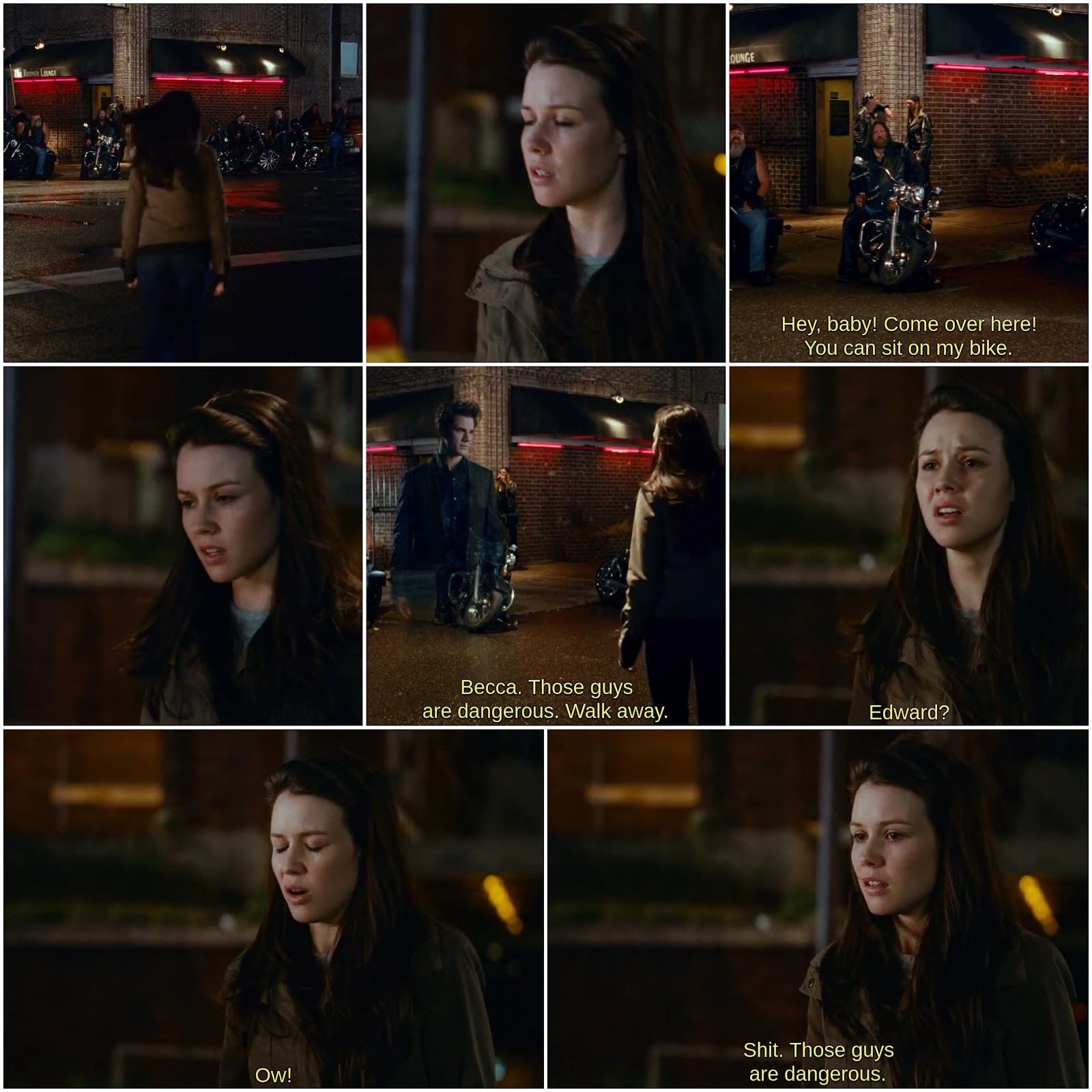
Becca finds herself in a similar situation in the movie however, Edward warned her more about her safety than her behavior.

BeFunky Collage.jpg


In the movie, Edward has been so controlling in their relationship that he even
appears in her head after he left and broke up with her. In this scene of the movie, Becca was hallucinating about Edward whenever she may do something “ricky” and Edward is warning her to not go and even talk to the creepy men on the motorcycles. She ignore him for a good minute by trying to talk to the motormen  and one of them hits her with a can, causing her to realize that the Edward in her head was right about the men. Connecting to the play the situation with Becca and Edward is more ‘severe’ than Petruchio and Katherine because they face more issues about their circle and relationship than people outside of their circle trying to harm them.


Katherine:

"My mind hath been as big as one of yours,

My heart as great, my reason haply more,

To bandy word for word and frown for frown;

But now I see our lances are but straws,

Our strength as weak, our weakness past compare,

That seeming to be most which we indeed least are.

Then vail your stomachs, for it is no boot,

And place your hands below your husband’s foot,

In token of which duty, if he please,

My hand is ready, may it do him ease.

Petruchio:

Why, there’s a wench! Come on, and kiss me, Kate"

(Act 5, Scene 2, Lines 186-196)


Katherine has made a long speech about how much she loves and care for her husband at the end of the play. This represents not only to the actors in the play but towards the audience of how Petruchio made sure she would transformed herself from an ignorant rude woman to a kind gentle lady. In the quote she was basically stating that; a woman should protect and support her husband, no matter what while a woman is at home unharmed and sound. Therefore, for equal exchange Petruchio would want her to just show respect and compassion in their relationship.


At the end of “Vampires Suck”, Becca did the similar thing that Katherine did by showing him she will do anything for him.

BeFunky Collage.jpg


In the last scene of the movie, the vampires Zolturi leader, Daro wanted Edward to turn Becca into a vampire or else they would have to suffer the consequences. This allowed Becca to show her love to Edward by accepting the Zolturi request. However, Edward would only turn her into a vampire if she says yes to marrying him, which in this scene she did. This made Becca prove her love and Edward


Works Cited (MLA Format):


https://gomovies.to/film/vampires-suck-10978/watching.html?ep=174058


"Vampires Suck." Gomovies.to. N.p., n.d. Web. 21 Apr. 2017.


https://www.befunky.com/features/collage-maker/


"Photo Editor | BeFunky: Free Online Photo Editing and Collage Maker." BeFunky. N.p., n.d. Web. 21 Apr. 2017.


3 Comments

Cold Hard Love

Posted by Opoku Kwateng in English 3 · Pahomov · B Band on Monday, April 24, 2017 at 1:01 am

Comparing  The Taming of the Shrew to Mean Girls

While reading the “Taming of the Shrew”, readers will notice that the book shows the use of a significant other as a status symbol. The same can also be said for a movie that aired more recently; “Mean Girls”. In both pieces the reader/viewer becomes introduced to the notion of a character needing another character romantically to be a status symbol, these characters go to great lengths to obtain the person that will boost their social status. This shows how relationships are more about increasing one's standing on the social pyramid then anything.

In the “Taming of the Shrew” the character attempting to boost their social standings is Petruchio. Petruchio wishes to become wealthy and successful and to do this he looks at the institution of marriage as his gateway into the land of prosperity and riches. To be more specific his gateway is the “shrew”, Katherine. This is best shown by Petruchio’s words in Act 1 Scene 2, when his servant Grumio explains to him the situation of Baptista and the marriage of his children.

“I come to wive it wealthy in Padua, If wealthily then happily in Padua”

(Act 1 Scene 2, 76-77)

This same mentality is also exhibited in the movie mean girls. Regina George the lead antagonist finds her social status threatened by another character Cady and her interest in Regina’s love interest, Aaron. The struggle for who will be higher on the pyramid is at it’s peak in the halloween scene. In this scene Regina shows her alpha status by kissing Aaron right in front of Cady.


maxresdefault.jpg

The comparison between Petruchio and Regina is extremely interesting. While Petruchio is attempting to obtain a better social status with marriage/relationship, Regina is attempting to maintain her social status. These forces that fuel the actions of these characters are enjoyable yet tie to a much bigger picture. Regina and Petruchio both feel a need to be high on the pyramid. However their positions differ therefore what the viewer learns also differs. Shakespeare has crafted a character who represents a mentality found in some countries. The mentality that a relationship is a mean to better one's own life. While in “Mean Girls” a case of a relationship being in need to, still possess ownership of your spot on the pyramid is crafted. Both pieces open the mind to the bigger question of why one must always be at the top, why is the bottom not good enough.

Another example of Shakespeare depicting the true nature of relationships is found in Act 3 Scene 2 when he describes what Kate is to him.


“I will be master of what is mine own.She is my goods, my chattels; she is my house,My household stuff, my field, my barn, My horse, my ox, my ass, my anything. And here she stands, touch her whoever dare.”

(Act 3 Scene 2, 235-239)


In this scene Petruchio starts to list all the things that Katherine is to him. However looking at it in depth will show another level. Petruchio is also listing the things that he will own or acquire by obtaining Katherine. All these things add to his wealth  and can only be obtained through his relationship with Katherine. Looking at Mean girls the viewer will also scene that deals with possessions.


Screenshot 2017-04-24 at 12.26.32 AM.png


“ You know Aaron really does like you. He's always talking about how unusual you are and it really pissed me off. Like this one time, I got this really expensive doll house from Germany, but I never played with it. So my mom wanted to give it to my cousin. But even though I didn't want it...

Cady: You begged your mom to let you keep it?

Regina: No. I threw it down the stairs.”


In both of these sections the characters are speaking metaphorically. Petruchio going through a list of things Katherine is to him is a nod to what Katherine is bringing him through their relationship. Regina reminiscing on the destruction of a childhood toy is a nod towards how even if she is not using Aaron she needs him to be there, and would rather destroy him then let someone take him. Both quotes may seem very different but they are focusing on the materialization of others for one's betterment. Petruchio has, figuratively and literally, added Katherine to the list of material items he is going to possess and Regina is showing how she would bring about the destruction of Aaron, her toy, so that no one else could have him and be a threat to her.


“The Taming of the Shrew’ and  “Mean Girls” are two pieces that upon first glance seem to be only for entertainment, however upon deep analysis the viewer will learn more about society. The viewer is able to see what a relationship means and in this case it is power. In both pieces two characters cling onto the person they are in a relationship with, in an attempt to maintain their social standings. This urge to remain at the top causes the characters to even materialize the person they are in a relationship with so that they’re higher social standings will be safe. Essentially “The Taming of the Shrew” and “Mean Girls” are two amazing pieces that give perfect examples of how relationships are not about love, but instead getting higher on the pyramid.


4 Comments

Taming of the Clueless

Posted by Tigidankay Saccoh in English 3 · Pahomov · B Band on Monday, April 24, 2017 at 12:40 am

As the “Taming of the Shrew” proves, the idea of women changing themselves to earn male approval  has been around for centuries.  In “Shrew”, the unorthodox and bold Katherine is eventually “domesticated” by her demanding husband , Petruchio.  Similarly, in the 1995 romcom, “Clueless”,  Tai Fraiserc, a carefree, archetypal  “ugly duckling” teenager, undergoes a makeover to fit society’s standard for beauty and win over the popular boys at her school.

Though Katherine and Tai both change something central about themselves for love, the context behind their transformations differ greatly. Katherine, for one, does not willingly change to fit the mold for an “acceptable” wife, but is instead “trained” by Petruchio to do so. By contrast, Tai is influenced to change her aesthetic by her glamourous friend, Cher, who thought she had her best interest at heart.These two situations differ in many aspects, but encompass the notion of women changing in respect to the men they desire. These works reflect that the pressure society puts on women to obtain male validation has stood the test of time, and in someway, has grown more powerful as even women reinforce this sexist belief that their worth is inextricably linked to their relationship with men.

clueless
clueless
Shallow and socially successful Cher is at the top of her Beverly Hills high school's pyramid. She decides to give hopelessly klutzy new student Tai a makeover. When Tai becomes more popular than she is, Cher realizes that her disapproving ex-stepbrother was right about her being misguided-and falls for him.
the-taming-of-the-shrew-1967-1015526-p
​In Taming of the Shrew, Baptista, a rich kind, is determined to get his oldest, often undesirable, daughter Katherine married before his youngest, most desired daughter, Bianca, is married. The "no one wanting to marry Katherine" problem is solved when Petruchio, a brash young man from Verona, arrives in Padua to find a wife. He intends to marry a rich woman, and does not care for how she acts as long as she makes him affluent. He then goes on a mission to tame Katherine, the shrew.
Screen Shot 2017-04-23 at 8.28.20 PM
In this excerpt from “Shrew”, Petruchio extrapolates on his multi-tiered  plan to tame Katherine, which includes matching her wit. For most of her life, Katherine was the most daring person in the room, so Petruchio proves to her that he can match her verbal acuity.  Consequently, Katherine's bold personality is dimmed when she realizes that she is no match for Petruchio’s quicker wit. This is one of several techniques he uses to make her subservient and docile. This shows how Katherine changes to please her husband, who prefers a submissive wife.

Screen Shot 2017-04-23 at 8.49.21 PM
The moment when Kate's outward transformation becomes clear is when she, Petruchio and Hortensio are on their way back to Baptista's house for Bianca's wedding celebration. Petruchio tests Kate by saying, "Good Lord, how bright and goodly shines the moon!" (IV.v.2).  Katherine obviously sees the sun, and engages in short banter about whether or not it is the moon or the sun shining.  When Petruchio threatens to miss the feast, Kate realizes that she must aquise.  Although this may seem solely comedic, it belies a significant revelation: Katharine is becoming more passive for Petruchio. The old Katherine would have called Petruchio out on his bluff, but instead Petruchio was able to coax the new Katherine into blindly believing what he wanted by reinforcing his control in their relationship.

Unlike Kate who ditches her sassy attitude, Tai Frasier of "Clueless" ditches her converses and flannel shirts to garner the appreciation of the boys who were socially acceptable to date at her school.
Screen Shot 2017-04-23 at 8.31.54 PM
In this scene, Cher( far left) and Dionne( far right) help Tai change her appearance to a chic sleek look after Tai attracts a "loser" ,Travis. Travis is from the long-haired, drug-smoking, lower-class skateboarder group, which Cher explains, "No respectable girl actually dates.".  Cher and Dionne thought a makeover was necessary in order to attract wanted male attention. Tai, who usually sports comfortable jeans and t-shirts, is pressured to lose weight, wear makeup, and stylish clothes in order to assimilate to higher status.
Screen Shot 2017-04-24 at 12.12.09 AM
In this Scene, Elton, the richest, most eligible bachelor at school, puts his hand around Tai because he is suddenly attracted to her after her makeover. Tai seems content with all the attention she gets from guys who had never even looked her way before. Like Katherine, she had to change something fundamental (her sense of style), in order to be appreciated by men. Not only does she change her appearance, she is encouraged to do so by Cher and Dionne, who have succumbed to society's unrealistic expectations for girls themselves.  They try to change themselves for men, while the male characters in the movie stay true to who they are the entire time,  whether that be a weed-smoking skater or a jock with a murky understanding of consent. The men felt no pressure whatsoever to change for the women, which is emblematic of a discrepancy in society.

In conclusion,  "Shrew" and "Clueless" reflect the idea that society pressures women to change themselves for men. Specifically in Clueless, the protagonist is indoctrinated to believe that her new friend needed a new makeover in order to attract the most popular boy at school.  This goes to show that not only does patriarchal society reinforce this notion, but women also reinforce it in themselves.
2 Comments
155 posts:
← Prev
  1. 1
  2. 2
  3. 3
  4. 4
  5. 5
  6. 6
  7. 7
  8. 8
  9. 9
  10. 10
  11. 11
  12. 12
  13. 13
  14. 14
  15. 15
  16. 16
Next →
RSS

ENG3-024

Term
2016-17

Other Websites

Launch Canvas

Blog Tags

  • alec baldwin 1

Teacher

  • Larissa Pahomov
Slate (skeleton-v3 PHP 8 prototype) · Location: 1482 Green St · Shipping: 550 N. Broad St Suite 202 · Philadelphia, PA 19130 · (215) 400-7830 (phone)
×

Log In