• Log In
  • Log In
Slate (skeleton-v3 PHP 8 prototype)
Slate (skeleton-v3 PHP 8 prototype) Learn · Create · Lead
  • Students
    • Mission and Vision
  • Parents
  • Community
    • Mission and Vision
  • Calendar

English 3 · Pahomov · A Band Public Feed

Create a Post

  Reader Profile: Ms. Pahomov

Posted by Larissa Pahomov in English 3 · Pahomov · A Band on Wednesday, September 28, 2016 at 9:12 am
Photo on 9-28-16 at 8.59 AM #2

Ms. Pahomov hates it when strangers ask her “what book are you teaching in your English class right now?” Usually it means they want to just talk about what they liked to read (or not) in high school. When she was in high school, people told her she was a “fast reader,” and that was a bad thing for her, because she often read too quickly and missed the details. There are a lot of books she likes better now that she slowed down when reading, like “The Great Gatsby,” which she has probably read ten times at this point, each year when she teaches it. She is proud of the fact that she has the stamina for long books, but is more likely to carry around something that is 200 pages or less in her backpack.

One of the great sadnesses of her school year is that she uses so much of her brain to read and respond to student work that she has limited capacity to read on her own. She also recently discovered that she is old enough to have read books and COMPLETELY FORGOTTEN what they are about. Take, for example, the novel “Cat’s Cradle” by Kurt Vonnegut. She is certain she read it as a teen, but a student asked her about the plot recently and she couldn’t remember a thing. She is a little bit worried that this represents the rest of her life: forgetting things and having to go back to them.

One of her great joys of the school year is when she gets to read alongside her students in class. Her plan is to re-read “Cat’s Cradle” as soon as she finishes “Bone” by Fae Myenne Ng. The hardest time for her to read is on a plane or train. She always tells herself that she will, but she’d much rather listen to music and look out the window. She is a little bit ashamed of the fact that she never reads in German anymore, although she can. Never enough time!
Be the first to comment.

Amélie’s Fabulous Shrew

Posted by Claire Byrnes in English 3 · Pahomov · A Band on Sunday, April 23, 2017 at 8:31 pm

Amélie’s Fabulous Shrew

Comparing “Amélie” and “Taming of the Shrew”


In “Taming of the Shrew”, deception in a relationship is used to woo a love interest when Lucentio disguises himself as a teacher to have access to the love of his life - Bianca. In Amélie (2001), the main character uses stratagems to hide her identity while moving her crush around like a chess piece.

Although Lucentio and Amélie both trick their love interests to win them over, Lucentio reveals his identity to Bianca right away while Amélie keeps her identity hidden from Nino. In the end, Lucentio and Amélie’s deceit pay off for the partners since Bianca and Nino are gifted with their heart’s desire. These pieces of media show that deception in relationships continue to provide the opportunity for one person to have power over the other in any relationship. The deception can seem wrong at first, but as long as the power is being used for working towards the betterment of the relationship, all turns out well.


“… this young scholar Гpresenting Lucentio, disguised as Cambioㄱ that hath been long studying at Rheims, as cunning in Greek, Latin, and other languages as the other in music and mathematics. His name is Cambio. Pray accept his service.”

(Act 2, Scene 1, 83-88)


Lucentio disguises himself as Cambio, a teacher, to be able to get close to Bianca, since her father, Baptista, is not allowing her to get married until her older sister, Katherine, does. Gremio, another of Bianca’s suitors, introduces him to Bianca and her family. This deception sets Lucentio up to interact with Bianca without her knowing his true identity. Lucentio has control over Bianca’s interpretation of him, giving him power. Instead of harming Bianca, Lucentio reveals his true identity to her, strengthening their blooming relationship.

Amélie is reluctant to reveal her true identity since she is not as confident as Lucentio.


Screenshot 2017-04-23 at 8.28.53 PM.png

In “Amélie”, Nino is positive that he has found the mysterious woman that led him to this cafe. Amélie denies her identity and retreats, leaving Nino disappointed but still intrigued. In this scene, Amélie has lost her mystery and her power, leaving her face to face to the man that she wants to impress. Unlike Lucentio, Amélie is shy and not confident that she will be able to win Nino’s affection right away. In an attempt to regain power, Amélie continues her deception to keep herself hidden away from the possibility of a rejection. Nino could have forced Amélie to reveal herself, making her uncomfortable, but he allowed her to stay in the dark. While Amélie’s denial is disappointing to Nino, it pushes him to become more passionate in his search for her, keeping their relationship playful.

Enter Katherine and Bianca Гwith her hands tied.ㄱ

“Good sister, wrong me not, nor wrong yourself, to make a bondmaid and a slave of me…. Unbind my hands…”

(Act 2, Scene 1, 1-4)

This quote shows that Katherine and Bianca are struggling to stay civil with each other since Bianca cannot be married until her sister does. This tension between siblings most likely results in her not enjoying being forced to stay at home. Her haste to get married supports the idea that she wishes to be freed and move on with her life before she is considered to be an “unmarriageable age”. Lucentio uses his disguise as an opportunity to win Bianca’s love and therefore, provide her with a way to get married.

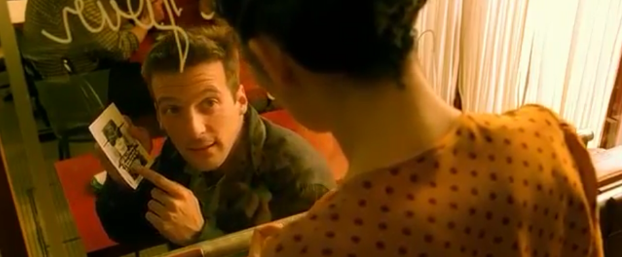
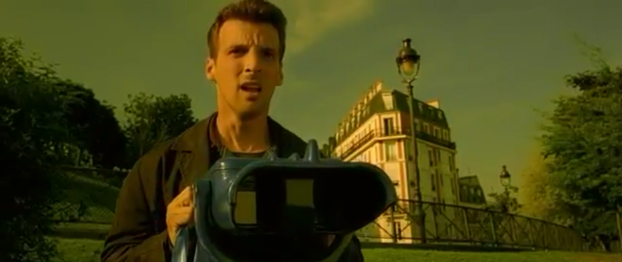
While Amélie’s identity is still a secret to Nino, they play a game of cat-and-mouse, with her leading Nino to specific locations. The first location is to binoculars (shown in the first image below) and the second location is a photo booth (the second image below).

Screenshot 2017-04-23 at 8.29.17 PM.png

Screenshot 2017-04-23 at 8.29.35 PM.png

Amélie uses arrows to guide Nino through the city to return his prized album back to him. He is guided to binoculars so that when he looks in them, he can see Amélie returning the album to his bike… and then running away. Amélie also shows Nino the secret of the photo booth repairman that causes him to be dumbstruck, since he believed the man to be a ghost. Amélie still does not reveal herself, which is different from “Taming of the Shrew”. If Amélie revealed herself after returning the album or amazing Nino with the repairman, the moment would have been equivalent to Lucentio revealing himself and gifting Bianca with the chance for her freedom. All of these gifts were given to the love interests through deception, but that dishonesty did not stop the amazement that Nino felt and Bianca’s amusement at Lucentio revealing his true identity.

In “Amélie” and “Taming of the Shrew”, both suitors use deception to gain power. Lucentio and Amélie’s dishonesty with their partners is glossed over because in the end, their relationships have improved. This proves that society places focus on the result of the relationship, not the developing process. Lucentio went around Bianca’s back to arrange their marriage, but they make a fine couple in the end. Amélie manipulated Nino but in the end, they are riding on a bicycle and smiling.


Works Cited

Amélie. Dir. Jean-Pierre Jeunet. Perf. Audrey Tautou and Mathieu Kassovitz. Twentieth

Century Fox Home Entertainment, 2001. DVD.

Shakespeare, William. The taming of the shrew. Ed. G. R. Hibbard and Margaret Jane

Kidnie. UK: Penguin , 2015. Print.
1 Comment

Shakespeare in Korea (Heirs & Taming of the Shrew)

Posted by Paul-Ann Whyte in English 3 · Pahomov · A Band on Sunday, April 23, 2017 at 2:47 pm

In Shakespeare’s “Taming of the Shrew”, there are many instances of courtship initiated by the males of the play. Almost 420 years later, there are many movies, shows and plays that shows males trying to court the love interest(s). This is especially true in the Korean movie “Heirs”. In “Heirs”, there are two male leads, Young Do and Kim Tan, who are both trying to court the love interest: Eun Sang. The two suitors use completely different methods that would seem illogical to most but had results different than what was to be expected. So although “Heirs” and “Taming of the Shrew” are from completely different time periods, they both use illogical means to woo love interest. This shows that the viewers of this movie believes that today’s society is more inclined to watch and believe that love is a game that is won by the most creative player.


In this scene, Kim Tan and Eun Sang get to school early and are by themselves. By this point in the relationship, Eun Sang and Kim Tan have* moved back to Korea and are now, coincidentally, are living together. Trying to pretend that she is from new money while still remaining as a normal student, Eun Sang has to distance herself from Kim Tan. Kim Tan is not pleased and tries to stay as close to Eun Sang as possible. Here, Eun Sang is walking a couple of steps in front of Kim Tan, allowing him to have a view of her neck.Kim Tan catches up to Eun Sang and takes her ponytail out. He ruffles her hair and most of it covers her face before saying,“ Keep your hair down. You look prettier with more of you face covered.” This quote is significant because just as Lucentio in Taming of the Shrew, Kim Tan does the most indirect way of giving the love interest a compliment. This can be shown in the play when Lucentio accepted the proposal that Tranio made to switch clothes with him to talk to Bianca instead of talking to her directly. “ Your fellow Tranio here, to save my life, Puts my apparel and my countenance on,And I for my escape have put on his;This relates back to the thesis because this is the set up that shows how creative both men are getting. Kim Tan will be hiding his true feelings by covering them up with rude remarks while Lucentio will be pretending to be a school teacher.


In this scene Eun Sang and Young Do are at a convenience store near Kim Tan’s house. Eun Sang, who had left the house early to get to school early, goes to the store to wake up but ends up half asleep on a table that Young Do inhabits. By this time, Young Do bullies Eun Sang at school but Eun Sang still stands strong which only makes Young Do like her even more and therefore bullies her more. Young Do attempts to wake Eun Sang up by shaking the table. After about thirty seconds of just staring at her and only receiving a groan as an answer, he proceeds to admit his true feelings to her stating “Why do you always sleep here? It makes we want to protect you.” This quote is significant because just as Petruchio, Young Do hides his true intentions under crude actions and words. This can be shown in the play when Petruchio states, “She ate no meat today nor none shall eat. Last night she slept not, nor tonight she shall not.” This is Petruchio hiding his true intentions, which is just to get the dowry, behind crude words and actions. This relates back to the thesis because it shows the other two suitors being creative to get the love interest.


In the end, the most creative man in ‘Heirs’ was Kim Tan, which won him the girl. Meanwhile, in ‘Taming of the Shrew’ both Lucentio and Petruchio won Bianca and Katherine respectively. These men were more creative and therefore won the girl. Congratulations Player, GAME OVER.
1 Comment

Baptista & Chasen: The Taming of a Child

Posted by Pablo Salvatierra in English 3 · Pahomov · A Band on Sunday, April 23, 2017 at 2:37 pm

Baptista & Chasen: The Taming of a Child

The Taming of the Shrew, Harold & Maude


“The Taming of the Shrew” presents a vision of romance in 16th century aristocracy, complete with the copious parental power afforded in these situations. Baptista is the widowed father of two daughters, the oldest of which is unruly or “shrewd” and the play’s plot centers around his plan to marry her off. “Harold & Maude” is a movie from almost four hundred years later, 1971. In it Harold’s widowed mother Mrs. Chasen tries to marry him off to a young cast of suitors she has selected, who are all in one way or another scared off by his eccentric behaviour.

While Baptista’s issue is his curst daughter Katherine, Mrs. Chasen’s issue is a quiet emotionally disturbed son. Baptista’s problem with Katherine is that she will be difficult to marry off given her personality. He hopes to find someone to marry her before she is too old, her personality could ruin her and his family's reputation with it. Mrs. Chasen seeks to use a marriage to fix Harold’s behavioural issues, which include staging elaborate fake suicides in an attempt to elicit a reaction from his mother. She sees this as a way to have Harold grow up. Both parents seek to find their child a partner who will solve what they see as issues with them. While these two texts present situations 400 years apart, with swapped gender roles, and different issues for the respective parents they both show that parents are given a role in society to find the “best match” for their children. Society dictates to parents that this “best match” is the one that gives them control over their children, and solves “behavioural issues”.

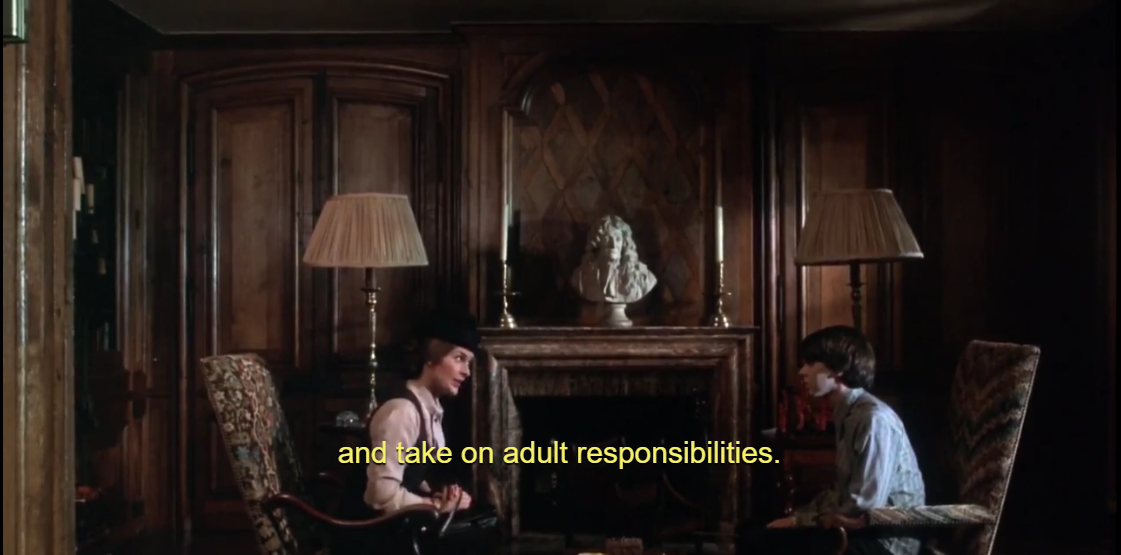
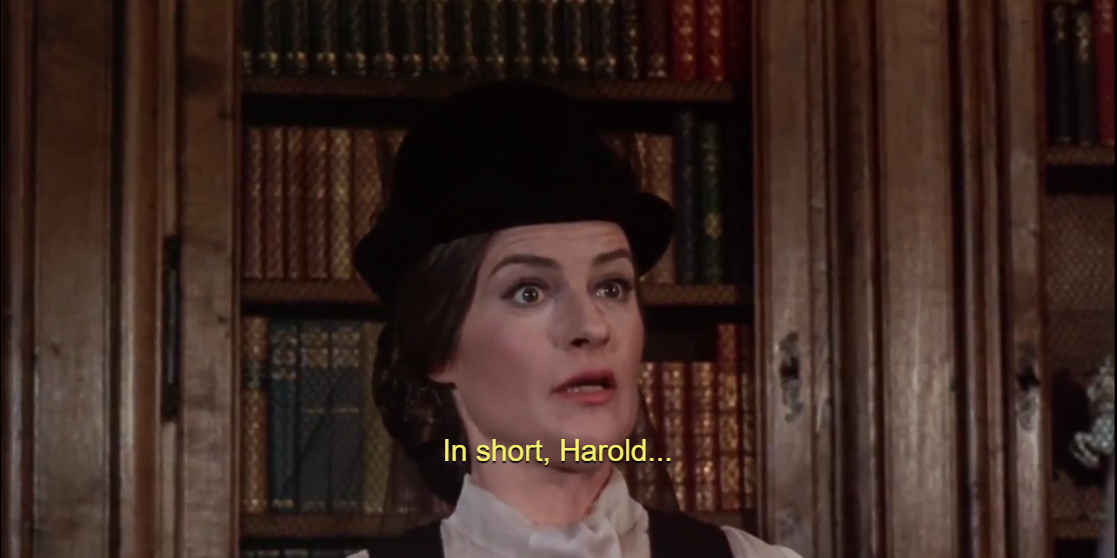
Harold & Maude 1.PNGHarold & Maude 2.PNG

Harold & Maude 3.PNGHarold & Maude 4.PNG

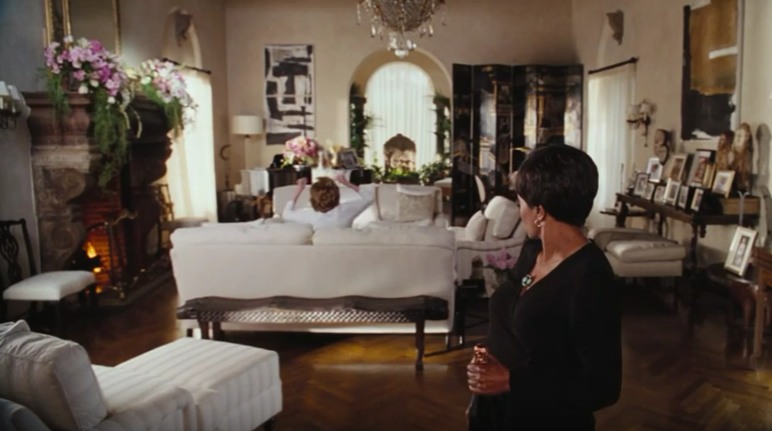
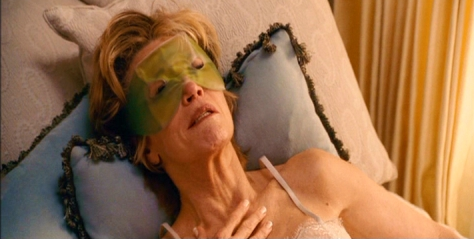
Early into Harold & Maude Mrs. Chasen instructs Harold that he must grow up. That he has lived an idyllic, soft childhood and it is time he became an adult. Mrs. Chasen’s solution to Harold’s behaviour is simple, she tells him that it is high time that he get married in order for him to mature, to straighten him out. In The Taming of the Shrew Baptista never expressly states that he wants to fix her personality with marriage, but this is an expression of the times in a way. Baptista’s primary and only concern with his daughter is getting her married, but once he has married her off to Petruchio and she comes back to him obedient he is overjoyed. It was his hope that marriage would make Katherine obedient, and we see this in his happiness at having this hope fulfilled. This quote comes from Act 5, Scene 2, Lines 124-128, right after has Petruchio won a wager involving who has the most obedient wife.

“The wager thou hast won, and I will add

Unto their losses twenty thousand crowns,

Another dowry to another daughter,

For she is changed as she had never been.”

Baptista is thrilled over this newfound submissiveness in his previously disagreeable daughter. Petruchio has successfully turned Katherine around, and made her into the daughter Baptista wanted to have. Just as Mrs. Chasen hoped to do with Harold, take his bad behaviour and fix it with a good marriage. Both of these parental figures used marriage as a sort of boot camp or training to mold their children into the people they wanted them to be, that would be easier to deal with. In fact, when Mrs. Chasen is struggling to find someone who will take Harold and his numerous eccentricities she orders him to join the military instead. Literally a boot camp meant to teach obedience, stamp out strange eccentricities, and make someone into a “man”. This is an equivalence of two things that should be very different, a union between two people and training for war. In both situations though the parents hope to use these institutions to “straighten out” their children.

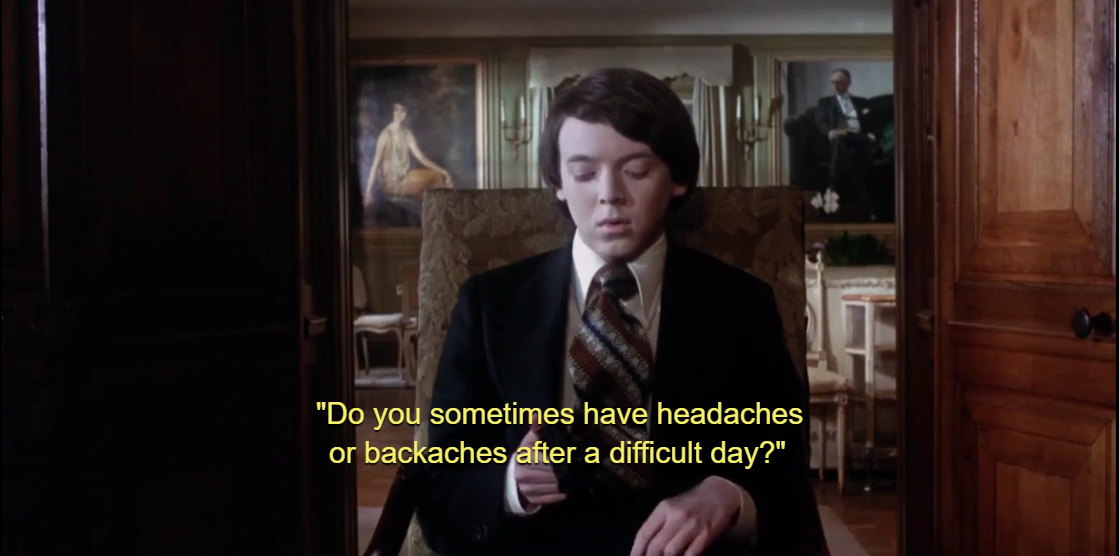
After Mrs. Chasen orders Harold to begin searching for a marriage, she decides to take matters into her own hands. She brings Harold a survey that will create his profile for a primitive version of an online dating website. Through the whole scene Harold doesn’t say one word, but his mother still successfully fills out the survey. Filling in her own opinion or life situation for many questions, often judgmentally.

Harold & Maude 5.PNGHarold & Maude 6.PNG

This is nothing compared to the amount of power Baptista has, where he can actually choose both his daughters’ future husbands. This means that he treats the entire marriage process as if he was a merchant, his primary concern not being someone to make his daughters “grow up” but whoever can offer the most amount of wealth. Illustrated here in Act 2, Scene 1, Lines 362-364

“Tis deeds must win the prize, and he of both

That can assure my daughter greatest dower

Shall have my Bianca’s love”

Mrs. Chasen and Baptista both hold power over their children, as most all parents do. They both use this power in attempts to control their child’s potential future spouse, Baptista being far more successful in his attempt. This attempt at control drives to the heart of what parental interference in relationships is trying to attempt. They seek obedience from their children as they had always had it before, and both look for what they want from their children’s suitors. They don’t look for what they think their children will like, but what they have decided they find desirable in a suitor. Baptista looks for money and Mrs. Chasen fills out the survey to her own liking, nowhere do their children’s desires enter into this equation. They see marriage as a path to compliance from their children, but for it to have the desired effect they must be certain the medicine is right. They set about searching for a suitor the same way one would locate the right boarding school for their unruly child.

These two pieces have completely different underlying themes and morals, but behind their main plots lies a commonality in the role of the parent in young love. Mrs. Chasen and Baptista are both in a situation where they have less control over their children as they grow up. So they both gravitate to find their child the “best match”, in a last bid to keep control and solve worrying issues of disobedience or perceived immaturity in their children. Over time though parents have lost power in choosing the next stage in their child’s life, as evidenced by Harold & Maude. No longer can they pick the suitor they most like regardless of their child’s wishes, the most they can do is attempt to influence their child’s choice. Demand their child get married, so they can find possible options that match their hopes for their child’s future. Mrs. Chasen’s failure shows that parents have lost so much of the power they used to hold, but that doesn’t stop them from still trying to control the future in a journey to find “the best match” and someone who will “straighten” their child out.


Sources:

1. Shakespeare, William. The Taming of The Shrew. UK: Simon & Schuster, 2004. Print.

2. Harold & Maude. Dir. Hal Ashby. Perf. Ruth Gordon and Bud Cort. Paramount Pictures, 1971. DVD. Web. 12 Apr. 2017.
2 Comments

Love is a Trainwreck

Posted by Sydnye Misero in English 3 · Pahomov · A Band on Sunday, April 23, 2017 at 2:21 pm

Love is a Trainwreck

The taming of the shrew, Trainwreck.


       The film "Trainwreck" centers around two complete opposites who come together. Aaron is a successful doctor, pursuing a not-so-successful, small time writer, Amy. Amy is a non-monogamous woman; embracing her sexual freedom. Aaron has yet to venture into his sexuality. Aaron’s sexual encounter with Amy means the world to him, yet all Amy expects is a one night stand. Amy, who has never gone on a second date with a man, sets low expectations of all her relationships. Even so, she secretly wishes she could find love but does not want to be tamed. On the other hand, Aaron expects her to buckle down and become wife material. In the play, ‘The Taming of The Shrew,” Katherine is a hot-headed, independent woman, who is searching for love but has no suitors. Petruchio, a rich suitor, takes Katherine's hand in marriage. Petruchio expects his wife Katherine to become wife material also, but by employing much more extreme tactics. Aaron is persistent and sweet, yet Petruchio is harsh and essentially tortures her. Although expectations in relationships have changed, these two sources show: If the pursuer is persistent, then their tactics of achieving love do not matter.

    Petruchio is a wealthy suitor looking to win Katherine’s hand in marriage. Katherine is a strong woman with a tongue like a wasp, which does not take kindly to many people. In anticipation of this, Petruchio enlists tactics to help win her love.

¨Say that she rail, why then I’ll tell her plain she sings as sweetly as a nightingale. Say that she frown I’ll say she look as clear as morning roses newly washed with dew. Say she be mute and will not speak a word, then I’ll commend her volubility and say she uttereth piercing eloquence. If she do bid me pack, I’ll give her thanks as though she bid me stay by her for a week.If she deny to wed, I’ll crave the day.”

(ACT 2 SC 1 lines lines 178-186)

In this quote, Petruchio has yet to meet Katherine: the woman he wishes to pursue, but he already holds expectations of their relationship and plans to counter this with his tactics. He describes his tactics to win the love of Katherine. The key to this tactic is persistence. Persistence will overcome the sharp tongue of Katherine.

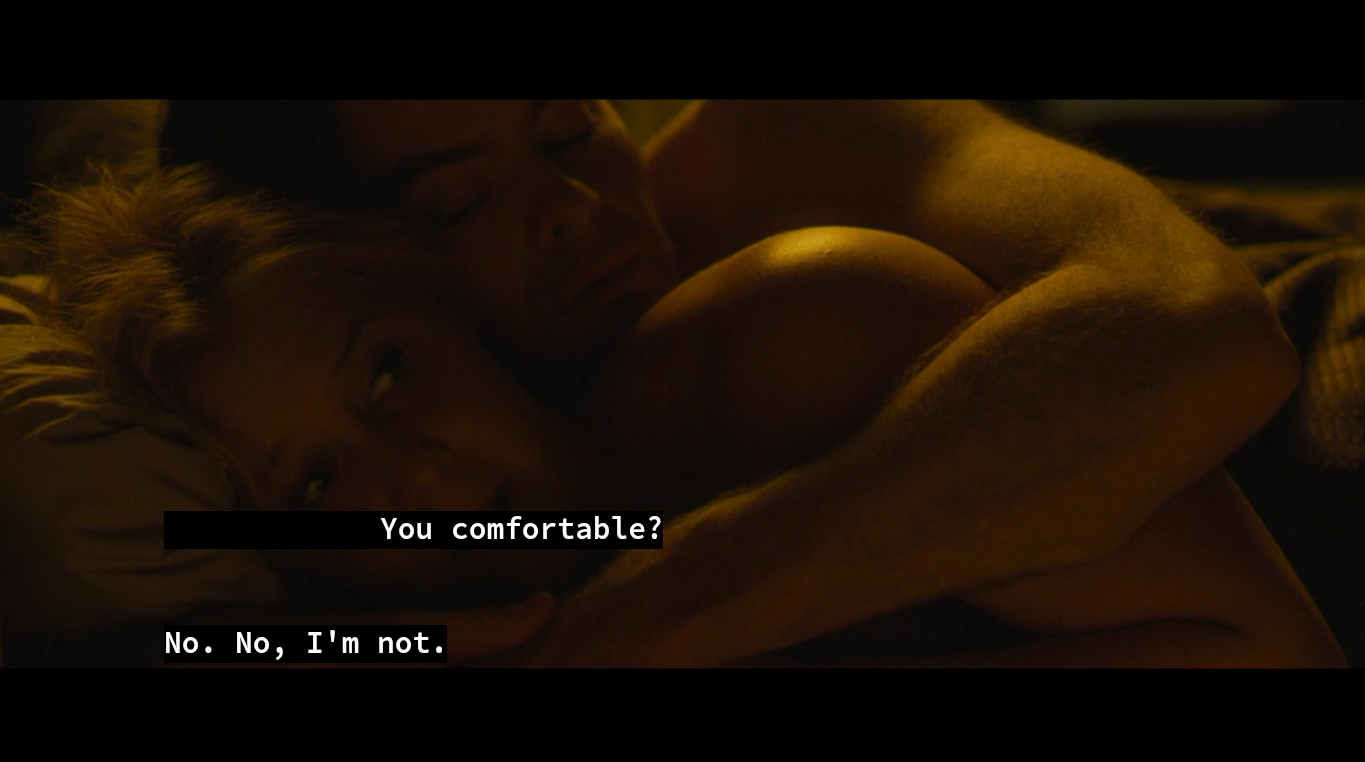
Much like Petruchio, Aaron is faced with a woman who does not want his affections and has entirely different expectations of the relationship.Screenshot 2017-04-19 at 3.21.33 PM.png

Screenshot 2017-04-19 at 3.19.32 PM.png


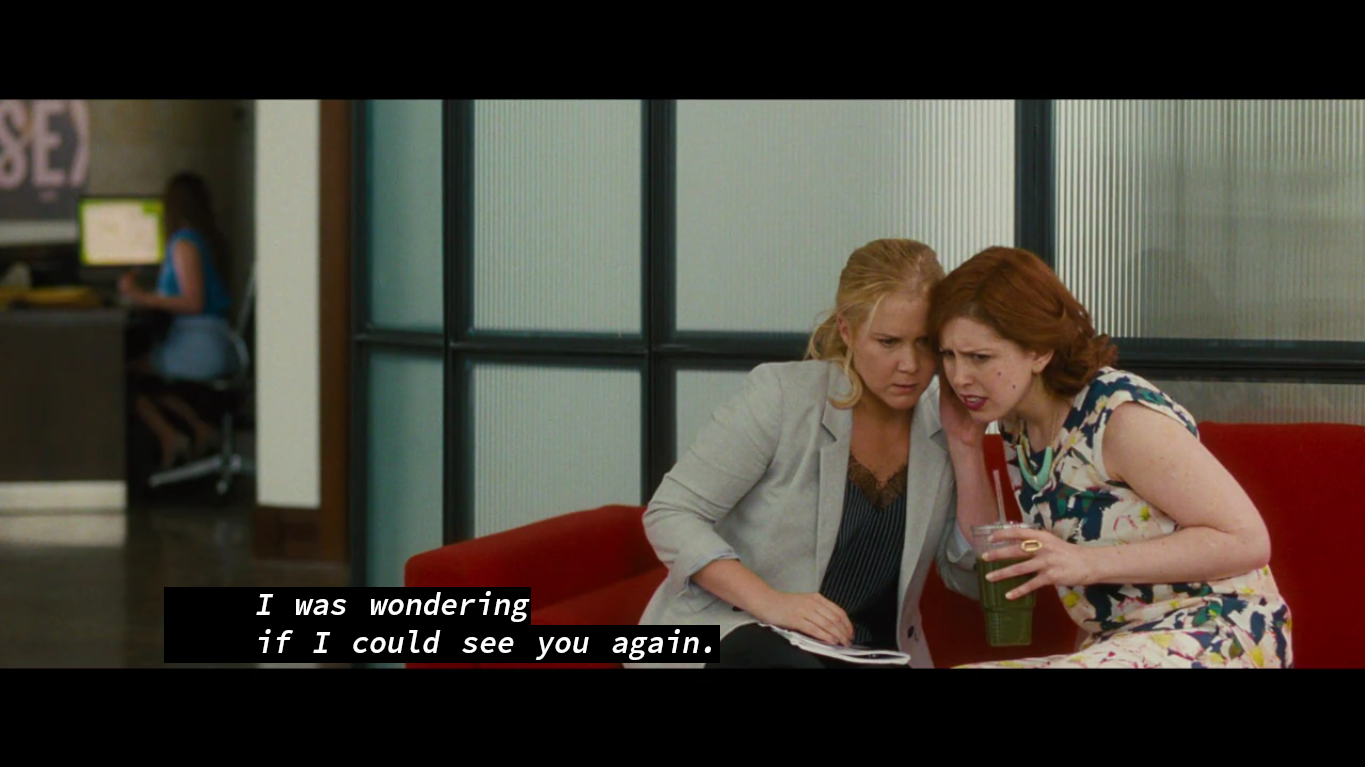
The main character, much like Katherine, is hard headed and blunt. Here we can see Aaron and her after having sex, she is clearly expressing discomfort. However, Amy stays the night, breaking her very own biggest rule: never sleeping over.The next day, Aaron calls to say that he had an amazing time and wants to see her again. This surpassess all of the initial expectations Amy had, a one night stand, and the persistence of Aaron bewilders Amy. Confused and flattered, she agrees to see him again. Although Aaron knows Amy was uncomfortable and did not

“Marry, so I mean, sweet Katherine, in thy bed. And therefore, setting all this chat aside, Thus in plain terms: your father has consented that you shall be my wife, your dowry’ greed on, and, will you, nill you. I will marry you.  

(Act 2, Scene 1, 282-286)

     At this point in “The Taming of the Shrew” Petruchio and Katherine find themselves in a heated argument. Katherine is not taking kindly to a man walking into her life and demanding that he will marry her. Katherine does not want this in her relationship, she expects a loving husband. “Will you, nill you” translates to “whether you like it or not.”

Aaron takes this same approach, by once again ignoring the clear rejection from Amy.


Screenshot 2017-04-19 at 4.07.31 PM.png

Screenshot 2017-04-19 at 4.07.51 PM.png

    Much like the Taming of the Shrew, we have the pursuer ignoring all obvious signs of being rejected. Amy explicitly says no she would not like to start dating him, but Aaron is not deterred in the slightest. Trainwreck is in a much less severe setting, as Amy is not being told she will marry Aaron, like Katherine is to Petruchio.

     In both “The Taming of The Shrew” and “Trainwreck,” men meet their match with the woman they are trying to pursue. Petruchio of Shrew has a very harsh demeanor of winning over Katherine, yet his persistence causes Katherine to defy her expectations of their relationship and find love with Petruchio. Similarly, Aaron insists on seeing Amy after she makes a strong impression, and wins over the woman who has never had a commitment in her life. This proves to show that love is unpredictable, and will shatter the expectations of any party.


Works Cited:


Shakespeare, William . Folger Shakespeare Library. Ed. Barbara Mowat and Paul Werstine. N.p.: Washington Square Press Drama, n.d. Print.


Trainwreck . Prod. Judd Apatow and Joshua Church. By Amy Schumer. Perf. Amy Schumer Bill Hader. Cinemax, 2015. Xfinity. Xfinity, 17 July 2015. Web. 20 Apr. 2017.


1 Comment

Money Hungry

Posted by Siani Davis in English 3 · Pahomov · A Band on Sunday, April 23, 2017 at 10:02 am

Money Hungry
Comparing “Taming of the Shrew” to “Monster in Law”

"The Taming of the Shrew" demonstrates that parental influence on relationships has existed over centuries. In "Shrew" the father of Katherine, Baptista, enforces the importance of wealth in marriage. In the 2005 movie "Monster in Law", the parent of the son to be wed values the same thing. Though in this situation, the parent fails in having this tactic affect the couple.

Though Baptista and Violla share a lot in common, such as their status and economic situations, the outcome they end up receiving regarding this specific scenario is different. They both enforce the importance of wealth when dealing with their children being wed, but in one scenario. Baptista is able to get what he wants, which is getting his daughter to marry a man who is wealthy. In the other situation, Violla is not successful in making her son marry a wealthy daughter. Even though this is the case, the parent in this second situation, Violla, still manages to drive the fiance crazy in lowering her self esteem. All in all, these stories reflect that parents definitely have an influence on marriage, though it has become less powerful in today’s society because wealth is not a huge value anymore; it is more of an addition. True love is valued more.


“Signior Baptista, my business asketh haste, and every day I cannot come to woo. You knew my father well, and in him me, left solely heir to all his lands and goods. Which I have bettered rather than decreas'd. Then tell me, if I get your daughter's love, what dowry shall I have with her to wife?” says Petruchio. “After my death, the one half of my lands and, in possession, twenty thousand crowns.” says Baptista. “And for that dowry, I'll assure her of her widowhood, be it that she survive me, in all my lands and leases whatsoever…” says Petruchio.

(Act 2 Scene 1, 120-132)

In this part of the play, Petruchio assures to Baptista, the parent of the woman to be wed, that he will bring to the table his wealthiness in exchange for some wealth on her part. Baptista then reassures that wealth will be granted. This shows money is an important factor to having a “successful” marriage.


The parent in the movie finds herself overwhelmed with frustration after meeting the bride and finding out she is not wealthy, which contrasts with the situation from the play.


Screenshot 2017-04-19 at 11.00.31 AM.png


In this early scene from “Monster in Law”, Viola is angrily fisting the air because she is upset about who her son has chosen to marry. Viola is upset for many reasons, but the one that seems to matter the most to her is that the bride has no money, which would be an addition to the family. Viola then makes this awful plan to split them up so she can have her way. Viola is in dire need of control of this situation, which compares to Baptista actually having full control of his situation when finding a suitable man to marry his daughter Katherine.


“Because I know you well and love you well, leave shall you have to court her at your pleasure.” says Baptista.


(Act 1, Scene 1, 53-54)


In this part of the scene, Baptista explains that he knows exactly what his daughter likes and wants. Therefore he has the right to choose who she weds, and when that happens thereof. Parents have a clear influence on how their children wed and this is reflected through the movie too.


In this scene, the parent in the movie is complaining about the wife and plotting all the awful things she plans to do to split the couple up, which compares with the situation from the play.

Screenshot 2017-04-19 at 12.40.39 PM.png

In this moment Viola says that she intends to find out all about the bride’s past, to find something that will make her son not love her anymore. She mentions again that the soon to be bride has no money and will not be a good match for her son. Which implies that she knows what her son wants best. She lives in a grand home, and has lost her job recently, so it makes sense why money will be of huge value to her. Viola feels that as a parent it is her responsibility to have a strong say in her son’s marriage.

The fact that in the end of “Monster in Law”, the parent’s intentions of having her son not marry this woman fails, shows what the modern audience wants to see. Of course everyone likes when the bad guys lose, and that is what happens in this movie. Throughout the film parent’s effect on the couple got weaker as the love got stronger, but still proves that parents can influence a marriage. Whereas in the play, the parent’s effect remained instilled in the marriage, allowing Petruchio to gain more wealth in the end.


Works Cited

“The Taming of the Shrew” by William Shakespeare

“Monster in Law”


1 Comment

Clueless Lens Analysis

Posted by Olivia Cooper in English 3 · Pahomov · A Band on Wednesday, March 8, 2017 at 9:14 am

Group Members:
Liv, Seyni, Tatiana, & Hannah
1 Comment

Literary lense Benchmark: Jamie Polson,Obie Hazzard,Tony Brown, and Scott La

Posted by Jamie Polson in English 3 · Pahomov · A Band on Wednesday, March 8, 2017 at 8:20 am

https://www.youtube.com/watch?v=1XpAyT-EJnY
1 Comment

Literary Lens Benchmark

Posted by Justin Mack in English 3 · Pahomov · A Band on Wednesday, March 8, 2017 at 1:09 am

4 Comments

Q3- Literary Lens

Posted by Gil Rosen in English 3 · Pahomov · A Band on Tuesday, March 7, 2017 at 10:05 pm

Members-
Gil Rosen
Madison Militello
Kaamil Jones
Emma Schwingel-Sauer 

3 Comments

Q3 Benchmark: Literary Lens Video

Posted by Cindy Chen in English 3 · Pahomov · A Band on Tuesday, March 7, 2017 at 8:48 pm

2 Comments
141 posts:
← Prev
  1. 1
  2. 2
  3. 3
  4. 4
  5. 5
  6. 6
  7. 7
  8. 8
  9. 9
  10. 10
  11. 11
  12. 12
  13. 13
  14. 14
  15. 15
Next →
RSS

ENG3-023

Term
2016-17

Other Websites

Launch Canvas

Teacher

  • Larissa Pahomov
Slate (skeleton-v3 PHP 8 prototype) · Location: 1482 Green St · Shipping: 550 N. Broad St Suite 202 · Philadelphia, PA 19130 · (215) 400-7830 (phone)
×

Log In