• Log In
  • Log In
Slate (skeleton-v3 PHP 8 prototype)
Slate (skeleton-v3 PHP 8 prototype) Learn · Create · Lead
  • Students
    • Mission and Vision
  • Parents
  • Community
    • Mission and Vision
  • Calendar

English 3 · Pahomov · A Band Public Feed

Create a Post

  Reader Profile: Ms. Pahomov

Posted by Larissa Pahomov in English 3 · Pahomov · A Band on Wednesday, September 28, 2016 at 9:12 am
Photo on 9-28-16 at 8.59 AM #2

Ms. Pahomov hates it when strangers ask her “what book are you teaching in your English class right now?” Usually it means they want to just talk about what they liked to read (or not) in high school. When she was in high school, people told her she was a “fast reader,” and that was a bad thing for her, because she often read too quickly and missed the details. There are a lot of books she likes better now that she slowed down when reading, like “The Great Gatsby,” which she has probably read ten times at this point, each year when she teaches it. She is proud of the fact that she has the stamina for long books, but is more likely to carry around something that is 200 pages or less in her backpack.

One of the great sadnesses of her school year is that she uses so much of her brain to read and respond to student work that she has limited capacity to read on her own. She also recently discovered that she is old enough to have read books and COMPLETELY FORGOTTEN what they are about. Take, for example, the novel “Cat’s Cradle” by Kurt Vonnegut. She is certain she read it as a teen, but a student asked her about the plot recently and she couldn’t remember a thing. She is a little bit worried that this represents the rest of her life: forgetting things and having to go back to them.

One of her great joys of the school year is when she gets to read alongside her students in class. Her plan is to re-read “Cat’s Cradle” as soon as she finishes “Bone” by Fae Myenne Ng. The hardest time for her to read is on a plane or train. She always tells herself that she will, but she’d much rather listen to music and look out the window. She is a little bit ashamed of the fact that she never reads in German anymore, although she can. Never enough time!
Be the first to comment.

Closing the Wage Gap

Posted by Emma Schwingel-Sauer in English 3 · Pahomov · A Band on Wednesday, November 2, 2016 at 11:35 am

In the United States today, women are getting paid eighty cents for every dollar a man makes. This is an average across all fields of work, but in recent years, professional athletes, specifically women soccer players, have brought this to the attention to both the nation and the larger world. Women athletes are tired of feeling underappreciated for their work compared to their male peers, and they aren’t the only working population who feel this way. Professional soccer players should be paid based on team and individual performance, not by views and attendance count.

In March of 2016, five top players on the Women’s National Team filed for unfair pay with the Equal Employment Opportunity Commission. The New York Times created a comparison of the women’s and men’s team finding in recent years the women's team has play as much as 50 percent more games than the men and doubling the men's team win count with 88 wins to the men's 44.  In this case, the Women are working more per year compared to men and they are doing much better than the men’s team. Many  competitions are based on statistics in this world, such as getting into college, based on how well an individual performs. At other regular jobs, people are paid based off of hours worked whether there is a pay per hour or salary, amount of time worked goes into it which should correlate with athletes too. Since women have a substantially larger amount of games played, therefore more minutes played than men, they should be paid more than men. The US Soccer Federation should be rewarding the team who continues to win, throughout the season and in international tournaments, instead of supporting the team that continues to lose.This helps base their income on performance and successfulness instead of views, which helps create  more equality in the wage gap for women.

What makes this situation even worse is that the male players are still getting paid more than women even with the increased profit the Women’s National Team has been producing in the past couple of years. PBS released a budget report from the US Soccer Federation predicting that the women's team will bring in over $17 million while their male peers are producing less than half of that in revenue. When the women are making a profit higher than the men in sales, even with less views and attendance, they should be getting paid more. The US Men’s National Team sales are predicted to go down which, should conclude to getting paid less. If men are getting paid more based off of views and the people who are coming to games, the merchandise being sold should be looked at too. Women’s sales are creating a much larger profit, and shouldn’t just being going to the clubs if the men are making money off of it. While it should be based on performance, if the board doesn’t change its salary distribution, sales and other profits should be looked into for paying women. If they are working harder and not getting paid for it, they need to be compensated in some other way. The better their performance gets, normally, the more memorabilia they will sell. Statisticians should look for correlation between these two to help women earn fair pay.

Another important concept to look at when it comes to fair pay is what the players are getting paid for. In an interview with the New York Times, Rich Nichols, the general counsel for the United States Women’s National Soccer Team Players Association, said, “Seventy-five percent of (their) compensation, the women have to perform at a world-beating level just to keep pace financially. And that victory tour money? The women had to play the extra games to get it. The men get paid just for showing up.¨ Even though the Men’s National Team hasn’t made it far in recent tournaments, they are still getting paid more than the women who have won multiple tournaments in recent years. Women have to do extra work to earn the same amount as the men regularly when the men aren’t even doing well. To earn 75% of what they are, the women have the be the best in the world. However the men continue to lose and are outperformed by other teams. Women should not have to continually being putting in more work and playing a lot more than the men just to earn the same amount of money. America needs to make way for equal pay. If the commissioners continue to do nothing about it, Americans need to step up and stand behind women and start supporting their careers as well.

This is one solution for this discrepancy that professional soccer players should be paid based on team and individual performance, not by views and attendance count. By paying men and women fairly for their work, a more equal society can be created. Although equal pay for women athletes may only seem important to women, it should in fact concern anyone who cares about an equal society. A high profile change in salary for these players could have a positive impact on youth and women alike looking up to women who lead as a role model and have the chance to work alongside and get paid the same as their male peers.


Works Cited

Das, Andrew. "Pay Disparity in U.S. Soccer? It’s Complicated." The New York Times. The New

York Times, 21 Apr. 2016. Web. 21 Sept. 2016. <http://www.nytimes.com/2016/04/22/sports/soccer/usmnt-uswnt-soccer-equal-pay.html?_r=1>.

Santhanam, Laura. "Data: How Does the U.S. Women’s Soccer Team Pay Compare to the

Men?" PBS. PBS, 31 Mar. 2016. Web. 21 Sept. 2016. <http://www.pbs.org/newshour/rundown/data-how-does-the-u-s-womens-soccer-team-pay-compare-to-the-men/>.


4 Comments

Drop It Like It's Hot

Posted by James Thomas in English 3 · Pahomov · A Band on Wednesday, November 2, 2016 at 11:30 am

Drop It Like It’s Hot

School. In the best possible world, it’s a cooperation-filled learning hub viewed as the definitive setting for young children and older adults alike. Yet, most people know that the opposite of this description is true. Schools today are most often competitively-fueled proving grounds that label students based on test scores and numbers instead of actual ability. This causes unimaginable stress to students who only want to graduate or pursue higher education so that their lives in the future won’t be bereft of money or pleasure. However, this could easily end up as a pointless endeavor, since many with high school and even college level educations are without jobs, unable to support themselves financially. Therefore, students are better off dropping out of high school than staying or pursuing higher education.

Today, high school graduates have difficulty finding jobs. Multiple studies and censuses have been completed by various companies to determine the ratio of graduates with jobs and those without. One of these companies is the Economic Policy Institute, which has written a paper on this very subject. For example, it says “For young high school graduates, the unemployment rate is 19.5 percent (compared with 15.9 percent in 2007).” The stats show that today, there is about a 1 in 5 chance that high school graduates will be without a job. This means that 1 in every 5 students will be without a job when they exit high school. This makes their high school education pointless since they can’t express their knowledge anywhere. Furthermore, the Economic Policy Institute’s paper goes on to say “For young college graduates, the underemployment rate is 14.9 percent (compared with 9.6 percent in 2007).” This means that if high school graduates do go on to pursue higher education and major in a certain field, there is a 1 in 6.667 chance that they will not get the job that they went to school for. This means that they have to pay back student loans for practically no reason. Thus, pursuing higher education only wastes students’ time.

Another reason for students to drop out is because of their stress levels. Many of the students in today’s world have been compared to mental patients in the 1950s. Students have to juggle their own school work, family responsibilities, health issues and wellness, religious responsibilities, and other activities in their lives every day. Managing all of this stuff on a daily basis can easily cause a ton of stress that overcomes the students. For example, the National Public Radio’s website has an article that describes one student named Nora’s mental breakdown after not receive a GPA of 4.0 after working viciously for it. “Nora ‘had a total meltdown, cried for hours,’ her mother, Jennie Huynh of Alameda, Calif., says. ‘I couldn't believe her reaction.’" This is obviously not the good kind of stress. This type of stress not mentally hurts the students but causes physical reactions to them too. Crying for hours on end is not good for the body. It can cause headaches and pain around the rest of a student’s body. It can even cause depression. However, as the quote above shows, this stress can easily affect the rest of a student’s family. Nora’s mother was shocked to see her daughter react this way to a GPA score. The article also goes on to say that Nora was irritated with her siblings a lot more, thus showing how school related stress can easily destroy family relationships. However, this kind of stuff would not happen if students dropped out of school instead of pursuing higher education.

In conclusion, the stress high schools cause combined with the fact that higher education has an unreliability factor in terms of acquiring a good job proves that dropping out of high school is the best option open to students. Students’ go to school in order to learn more about how they can prepare for and be the best at their future occupations. Today, students like Nora commit a slow and painful suicide as they struggle with and submit themselves to an institution that causes them to endure both physical pain and mental agony. Therefore, in order to save the future of this wave of students, they need to stopping being students.


Works Cited

  1. Davis, Alyssa, Will Kimball, and Elise Gould. "The Class of 2015: Despite an Improving Economy, Young Grads Still Face an Uphill Climb." Economic Policy Institute. Economic Policy Institute, 27 May 2015. Web. 26 Sept. 2016.

Neighmond, Patti. "School Stress Takes A Toll On Health, Teens And Parents Say." NPR. NPR, 2 Dec. 2013. Web. 26 Sept. 2016.
2 Comments

Money Does Affect Education

Posted by Cindy Chen in English 3 · Pahomov · A Band on Wednesday, November 2, 2016 at 11:27 am


A person’s education is considered essential because it places people in a box of being “intelligent” and gives them a better opportunity in finding a job. While being uneducated places people in a box of being “dumb” therefore, finding a job is a bit of a struggle. Due to the cycle of education and money, getting a quality education is not always a choice because of the fact that schools are not all free, so education is an investment in a person's life which means not everyone can afford. As a result, the biggest factor in how good of an education a person receives is not how smart they are, but how much money they have.

People who already have money are most likely to finish school than people who requires funding. The reason for this is because people who need cash has to work to support their family such as paying their bills or even school tuition or allowances. Based on an article published in the National Education Association, 30% of ages that ranges from 16-18 years old drop out of school due to working multiple jobs. The reason for these kids dropping out of school is because they have to take on so much responsibilities at such a young age which can lead to stress. If the person is unable to focus in school and does not attend frequently due to working multiple jobs, they are absent in their education. Therefore, they are lacking education since cash is something that everyone needs due to the fact that bills won’t pay on their own.

According to a report from the Albert Shanker Institute which is a nonprofit organization that honors the late president of Federation of Teaching, it stated that money matters and that people who have more money and use it correctly receive a better education. This is due to the fact that if the person seeking an education spends their money wisely, the people who do can basically get more help with their help of their rich parents when needed which equals more financial resources. This shows that people who have more money are able to buy more resources to help them excel in a subject that they are struggling with.

A better education includes being able to graduate college, and giving a person a better opportunity to be successful in their career. But due to the increasing cost of college, education has gotten harder, especially for the people who cannot afford to pay for their education. In the articles, College Board and Adventure In Education, it states four year classes in a public institution costs about twenty-three thousand eight hundred ninety dollars per year and can range up to thirty-two thousand dollars per year. The amount of payment needed for the tuition fees do not include the food, books, supplies, housing, or  transportation fee yet which costs nearly half of the price of the student’s tuition fee. Back in 2015,  based on College Board, tuition, room fees, and board costs about eighteen thousand nine hundred thirty one dollars. As of 2016, it has increased by 3.3% aka adding on an extra six hundred seventeen dollars. Although, different types of school varies from different amounts of tuition fees needed, a wealthier person can just go to the school they want to go to and pay it off. A person in the lower class has to work harder to satisfy their dreams which do not always go well.

The people with more cash have better advantages than people with less cash. This is because the people that are wealthier don’t even have to be smart and still be able to go to the school that person want to go too. In fact, the rich people can be the dumbest kid alive but be able to afford to get tutors to make them more wiser while a person who needs more financial support has to work harder to sustain their needs. Based on the article, Daily Mail, it states that being rich can actually increase brainpower. Researcher Dr. Kimberly Noble said, “This is the critical point. The brain is the product of both genetics and experience and experience is particularly powerful in moulding brain development in childhood.” People with less money are often more stressed out which can result in a bad behavior in school. Like the movie, Freedom Writer, Hilary makes the students write about their experience and some of them are caused by home problems. Not graduating college would affect the lower class knowledge and may force them to drop out of whatever dreams they have.

When asked, people with more money might say that they have their education hard, but on closer inspection, the people with less money have it harder. The rich people might say this because of the expectation their parent might expect from them. This results in them to be more stress out due to working multiples jobs and finding a job suitable for their living, it would result of them to have a higher rate of dropout from school which would interfere with their education. Even though, it is possible for people with less money to graduate and get a good education, it is more rare and most likely more stressful due to being indebted as well which would be difficult to pay off. Infact, based on Debt.org, it states that today the total U.S. student in debt is 1.2 trillions of dollars. This is a lot of money that needs to be paid off. This being said, the more money the person makes, the better education they get no matter how smart they are.

Works Cited:


"Education." Merriam-Webster. Merriam-Webster, n.d. Web. 24 Sept. 2016.


Baker, Bruce D. "Does Money Matter in Education? Second Edition." Shanker Institute. Bruce D. Baker, 2016. Web. 24 Sept. 2016.


By 2020, an Estimated Two-thirds of Job Openings Will Require Postsecondary Education or Training.[3]. "Fact Sheet: Focusing Higher Education on Student Success." Fact Sheet: Focusing Higher Education on Student Success. N.p., 27 July 2015. Web. 24 Sept. 2016.


Neatoday. "Why Students Drop Out: The Economic Pressures That Make Leaving School Unavoidable - NEA Today." NEA Today. N.p., 2015. Web. 24 Sept. 2016.


Does Spending More on Education Improve Academic Achievement? Retrieved September 24, 2016


"Student Loan Resources: Financial Aid & Loan Debt Management."

Debt.org News. Web. 27 Sept. 2016.


Fiona Macrae for the Daily Mail. "Does Being Rich Make You SMART? Academic Success Is Linked to Your Parents' Wealth, Study Claims." Mail Online. Associated Newspapers, 2015. Web. 27 Sept. 2016.


"Average Published Undergraduate Charges by Sector, 2015-16." - Trends in Higher Education. Web. 27 Sept. 2016.


"College Costs: FAQs." College Costs: FAQs. Web. 27 Sept. 2016.


"Great Synonyms for "money" on the New Thesaurus.com!" www.thesaurus.com. N.p., n.d. Web. 27 Sept. 2016.


2 Comments

Not Everyone's A Barbie Girl

Posted by Aniya Linder in English 3 · Pahomov · A Band on Wednesday, November 2, 2016 at 11:25 am

Aniya Linder

9/26/2016

A Band

“Why don't I have long straight hair, blue eyes, B-cup sized breasts and long legs? What is wrong with me?” On March 9, 1965, Barbie was introduced to the world. From that day forward, she was flying off the shelves. Many Americans think of Barbie as the quintessential plaything for young girls. However, the doll has a big problem.  That was the start of young black girls being brainwashed into thinking that having blue eyes, long silky hair, sunkissed skin, thin lips and a skinny nose was the only way a girl or woman could be considered beautiful as well as the only way to be accepted by society. For many years, European beauty standards are being taught and reinforced to all young girls, and specifically black girls, through Barbie dolls.

In 1939 the  “Clark Baby Doll Experiment” was conducted by Dr. Kenneth Clark, an African-American psychologist and his wife, Mamie Clark. The two  were both active in the Civil Rights Movement. The experiment was centered around the opinions of children. This experiment was to persuade the American Supreme Court during “Brown v. Board of Education” in 1954. The experiment tried to prove that separate but equal schools for blacks and whites were not equal in practice  which was against the law.  Dr. Clark conducted an experiment that involved them showing  black children a black doll and a white doll. He then asked a series of questions to see how they reacted to the different skin tones of the dolls. During the doll test, they are also asked which doll is the “bad doll” and most of the children said the black doll without being told a name, age, occupation, and or talent of the doll character. During the time of this test, white predominance was extremely active and the effect of it was extrusive.  White people gave African Americans a variety of names, such as monkey and banjo lips. Behind those names were a lot of animosities. African American men, women, and children were socially conditioned into thinking that they were monstrous and terrible people. It is easy for children to pick up the behavior that they see and hear so just imagine how easy it would be for a child to think that the men, women, and children around them are monsters along with the doll that laid lifelessly in front of them. Those children in that experiment were put through verbal abuse by another race , being constantly told that they're nothing  better than the ground they step on because of their skin,their nose, and their lips.

Mattel has made multiple attempts to make its dolls more diverse however they failed.  In 2014,  many department stores such as Walmart, Target, K-Mart, and others began to sell the African American Barbie doll collection. Most of the dolls of color were on sale and at extremely cheap prices, while the white dolls in some cases were 2-3 times the price.  There is a lot of controversy about this on the ABC news website. There is a photo of an African American doll placed next to a White American doll. Both are on sale but the African American doll is priced at $3.00 and the White American doll is priced at $5.93, the White American doll is practically doubled the price. Melissa O'brien a spokeswoman at a Walmart in Louisiana  says "... Both are great dolls. The red price sticker indicates that this particular doll was on clearance when the photo was taken, and though both dolls were priced the same to start, one was marked down due to its lower sales to hopefully increase purchase from customers... " Melissa O'brien a spokeswoman at a Walmart in Louisiana. To many customers, the implication of the lowering of the price is that's devaluing the black doll. Most African American parents would like to see the African American collection on shelves so that their daughter and or son doesn't have to automatically choose the white American Barbie doll. However, the lowered price reveals that  there are still little girls that don't want the African American Barbie. The parents of these young African American girls aren't the ones choosing which doll they'd rather play with- it's the young girls that are still drawn to what's been presented to them for years even though what's new is what resembles them the most.

This attraction to a white appearance goes way beyond dolls. On social media apps and sites such as Instagram, Facebook, Youtube and many other sites African American male and female celebrities  are changing themselves to fit in with society's beauty standards. Well, known celebrity Lil Kim took a picture to show her clearly bleached skin, beach blonde hair, and a nose job. This photo has been spotted on lots of social media sites so it's obvious that she isn't ashamed of the decision that she has made. There are thousands of African American women and even men who do this to have lighter skin because they feel as though it will fix their self-esteem issues. Female celebrities were children at one point as well, and they were and most likely still are affected by  European beauty standards that this society has created. To fit in, these women want to change themselves as much as they can to stay on top and be that woman that every little girl wants to be. A local musician in Cape Town South Africa Nomasonto "Mshoza” says "I've been black and dark-skinned for many years, I wanted to see the other side. I wanted to see what it would be like to be white and I'm happy, part of it was a self-esteem issue."  However, when these celebrities alter themselves to be a better role model they aren't understanding that they are doing the exact opposite. So when little girls see their celebrity role model change themselves it's definitely possible that they'll think that it's okay to change yourself according to everyone else's standards and that it's normal to not accept the way that you look.

Although the European beauty standards being taught and reinforced young African-American girls  through Barbie dolls  it may only seem important  to African-Americans , it should in fact concern anyone who cares about their child knowing embracing who they are  and that you shouldn't let European  beauty standards influence extremely low self-esteem. Young African-American girls need to know  that the racial background that they come from doesn’t make them flawed or less than their white counterparts. . The upcoming generations of African-American young women  need to know how to stay true to their roots so that it's reinforced to the other corrupted brains of other African-American young girls. When young African-Americans girls are offered little to no options to own dolls that look like themselves, it negatively influences their self-esteem and sense of identity.


Work Cited

"Barbie (doll)." Barbie Doll. Yona Zeldis McDonough, n.d. Web. 26 Sept. 2016.News about Barbie (Doll), including commentary and archival articles published in The New York Times.


The Clark Doll Experiment. Abagond, 9 May 2009. Web. 26 Sept. 2016.


Black Barbie Sold for Less Than White Barbie at Walmart Store. N.p., 9 Mar. 2010. Web. 26 Sept. 2016.

"Africa: Where Black Is Not Really Beautiful." Pumza Fihlani, n.d. Web. 26 Sept. 2016.


2 Comments

The Extrovert Ideal

Posted by Claire Byrnes in English 3 · Pahomov · A Band on Wednesday, November 2, 2016 at 11:25 am

The Extrovert Ideal


Albert Einstein, Rosa Parks, Steven Spielberg, Sir Isaac Newton, and Eleanor Roosevelt have been some of the most influential people in society. They are also all documented introverts. Sadly, these people are seen as the exception, as being among a few introverts who have become successful. According to societal stereotypes, a leader must be confident, not reserved; commanding, not quiet. In most cases, the world revolves around the extrovert, which in turn forces introverts to either conform or to cope in their own ways.

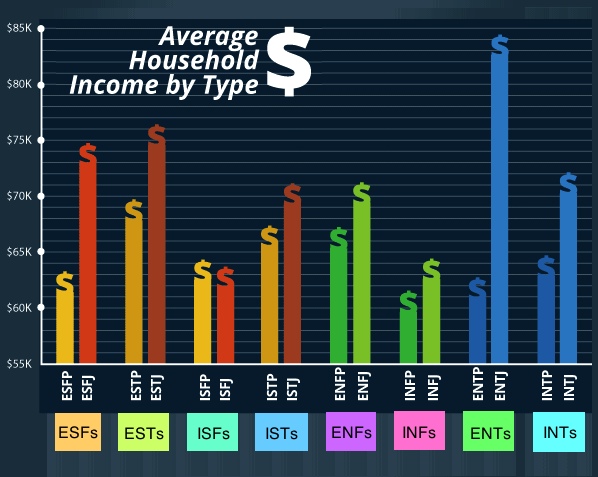
The main difference between introverts and extroverts is how they relax and recharge after a long day. There are many stereotypes surrounding introverts and extroverts; the main assumptions here are that all introverts are shy and all extroverts are outgoing. According to Saul McLeod, a psychology lecturer, the psychiatrist Carl Jung decided that extroverts have an “outward flowing of personal energy” while introverts have an “inward flowing of personal energy”. Jung also bluntly points out that “Our Western attitude is extroverted; value is put on being outgoing which we consider being well adjusted.” During the Industrial Revolution, Americans started to not only sell their product, but also themselves. An important part of business and eventually success, was to put on a confident, extroverted persona. Powerful leaders in business and other work fields had to be sure of themselves and forthright with their ideas - being reserved and reflective are considered weak attributes. Extroverts are seen as ideal in the workplace possibly because introverts can get overlooked, tend to be less driven by monetary gain and find self-promoting ‘distasteful’. Extroverts are also more likely to take on higher paying management roles resulting in the extroverted personality types earning more money, as shown in the “Average Household Income by Type” graph (Share):

average-household-income-3.jpg

The Extrovert Ideal is a phrase that describes the way that society rewards those with extroverted tendencies and leadership. In Susan Cain’s words from her book Quiet: The Power of Introverts in a World That Can't Stop Talking, “We live with a value system that I call the Extrovert Ideal—the omnipresent belief that the ideal self is gregarious, alpha, and comfortable in the spotlight...” The Extrovert Ideal is supported by many scenarios, one of which is the way that office spaces are organized. Many office spaces are open spaces, allowing collaboration and the sharing of ideas. For some work fields, such as education or small businesses, collaboration is extremely useful; instead of one mind there could be five people pouring over one problem. Many people think this way of working is essential, but it is wrong to assume that everyone holds it to that same standard. Introvert blogger, Matt Blodgett said, “By forcing your whole team into an open plan, you are effectively telling your introverts, act like an extrovert! All the time! If you don’t like this, there’s something wrong with you!” While extraversion is an attractive personality to most people, modern workplace culture made it into an oppressive lifestyle so that many introverts feel they need to conform. Society is built in favor of the extroverted. Introverts should not be forced to change their lifestyle based off of their office space and coworkers and should not be shunned because they work a different way.

Introverts may not be able to change the way that they recharge, but they can adapt and find ways to cope with the Extrovert Ideal. Laura Vanderkam has developed strategies to be confident while giving speeches to large groups of people. As an introvert, Vanderkam has had to cope with the expectation of being instantly skilled with public speaking. Vanderkam has not become an extrovert - she still struggles with her speeches and needs time to herself to recharge - but she has found ways to make the lecturing process easier for her through strategies to make public speaking more comfortable for her. For example, Vanderkam says that she has “the organizers [of where I am lecturing] put me in touch with a few audience members beforehand... When I say hello before the talk, they become friendly faces, nodding and smiling in seats near the front [of the audience].” By practicing and tweaking her public speaking technique, Vanderkam has found ways to make her more comfortable with something that an extrovert could attempt without hours of preparation. A stereotype is that all introverts, being shy, are terrible at public speaking. Vanderkam proves this stereotype wrong and defends introverts’ personalities, but since the world expects the ideal person to be an extrovert, introverts must find ways to cope.

Although the Extrovert Ideal may only seem important to introverts, it should in fact concern anyone who cares about how the world treats those who function differently. Society should accept introverts and extroverts for who they are. As attractive of a trait that extroversion is, it should not be an oppressive standard. If no space is made for introverts, then society will lose people who crave solitude that gives them time to formulate ideas without distraction, people who rely on their inner compasses, not external affirmation, and realistic listeners would can shape the world with the passion and strength.


Works Cited:

  1. Jung, Carl. "Jung's Theory of Temperaments." Philosophy Lander. Philosophy Lander, Web. 15 Oct. 2016. <http://philosophy.lander.edu/ethics/jung.html>.

  2. Blodgett, Matt. "The Open Plan Office and the Extrovert Ideal." Blodgett, Matt. Matt Blodgett, 2016. Web. 15 Oct. 2016. <http://www.mattblodgett.com/2015/02/the-open-plan-office-and-extrovert-ideal.html>.

  3. Vanderkam, Laura. "The Introvert on the Podium." The New York Times. The New York Times. Web. 15 Oct. 2016. <http://www.nytimes.com/2014/11/23/business/the-introvert-on-the-podium.html?_r=1>.

  4. Cain, Susan. Quiet: The Power of Introverts in a World That Can't Stop Talking. New York: Broadway Paperbacks, 2012, 2013. Print.

  5. Share, Jacob. "Do You Have This Moneymaking Personality Trait?" JobMob. JobMob, n.d. Web. 01 Nov. 2016. <https://jobmob.co.il/blog/personality-trait-making-money/>.

  6. Lebowitz, Shana. "Why Extroverts Earn More Money than Introverts." Business Insider. Business Insider, Inc, 12 May 2015. Web. 01 Nov. 2016. <http://www.businessinsider.com/susan-cain-on-why-extroverts-earn-more-2015-5>.

  7. Bernstein, Elizabeth. "Why Introverts Make Great Entrepreneurs." The Wall Street Journal. WSJ, 23 Aug. 2015. Web. 01 Nov. 2016. <http://www.wsj.com/articles/why-introverts-make-great-entrepreneurs-1440381699>.

4 Comments

Informing Youth

Posted by Sydnye Misero in English 3 · Pahomov · A Band on Wednesday, November 2, 2016 at 11:25 am

Teen pregnancy: not a popular situation in America today. in general, parents do not want their teens to become pregnant before being able to provide a life for their child or being able to give themselves the best life possible. But what can be done to avoid it? Many Americans believe that the best way to prevent teen girls from getting pregnant is to convince them to not have sex. I believe that teen pregnancy rate has dropped significantly because more education and resources are being provided, as opposed to still promoting abstinence which I believe makes teen pregnancy rates increase.

Teen pregnancy is easily avoidable, and there are many accessible resources for families and young girls. A resource that serves 1 out of 5 women in their life is Planned Parenthood. PP has been providing STD screening services, general healthcare, and abortion services for 97 years. From 2013-2014 pregnancy rates dropped 9%, and from 1990 teen pregnancy rates have dropped 50%. Planned Parenthood was able to decrease pregnancy rates because they provide different forms of birth control. They provide the daily pill, implants, or abortion services. PP providing these services lets girls know that they are safe and have these preventative methods. Each year PP prevents 216,000 unwanted pregnancies each year.

Many states across the country provide their students with sex education, ranging from abstinence, sex ed, and HIV. Different states have different requirements to meet, such as that 28 states require courses on healthy sexual relationships. The University of Washington paired with the Center for Disease Control, conducted a study comparing young adults who received comprehensive to sex education to those who did not. The results concluded that educating kids in school greatly helps bring down teen pregnancy rates because knowledge is power. The young adults who had received proper education, had a 50% lower rate of teen pregnancy. Once these kids are given the proper knowledge, and taught that sex is not a taboo, they will stop feel like having sex proves them to be a rebellious teen.

The Federal Government conducted a research study on determining the effectiveness of teaching abstinence only programs. Abstinence only programs teach that students should not be having sex until marriage, and provide no information on Birth Control, STD’s, or HIV. Schools and programs believe that teaching abstinence will decrease the amount of sexual partners children chose to have and amount of sexually active teens. This study concluded that youth enrolled in these programs were no less likely to become sexually active, and it did not provide them the necessary resources to make informed decisions later on in life.

A resource like PP is necessary for young girls, and should be continued to receive funding because it clearly does an effective job.Knowing key statistics and the proper way to approach sexual education with young adults is essential to lowering teen pregnancy rates. This is significant because we need to be able to take care of our youth, including teens and newborns. Teens having newborns can cause many complications and hardships, to those surrounding them,and  those who take care of infants when situations are not ideal. Maintaining a persistent sexual education program has been proven to lower teen pregnancy rates, and is essential to maintain. Not every teen pregnancy can be avoided, sex is apart of life, but those who find themselves in situations of unwanted pregnancies should have the information and resources.


Works CIted

"Pregnancy and Childbearing." Planned Parenthood. Planned Parenthood Federation of America, July 2014. Web. 11 Oct. 2016.

"By the Numbers." Planned Parenthood. Planned Parenthood Federation of America, Jan. 2014. Web. 11 Oct. 2016.

"Sexual Activity." Statistics. Resource Center for Adolescent Pregnancy Prevention, 2015. Web. 11 Oct. 2016.

"Support SIECUS!" SIECUS. Sexual Information and Education Council of the United States, Mar. 2008. Web. 14 Oct. 2016.
Be the first to comment.

The Social Election

Posted by Madison Militello in English 3 · Pahomov · A Band on Wednesday, November 2, 2016 at 11:23 am

The Social Election

What can a person say in a few lines of text? Twitter, which was created in 2006, has been one of the most widespread social networking services. It is an easy way to interact with friends, family, and celebrities in just under 140 characters. Hillary Clinton and Donald Trump are active on Twitter daily and constantly share their thoughts, feelings, and views on current events. Twitter is another platform for the candidates to argue, as well as in interviews and debates. Twitter has a negative effect on how the 2016 presidential candidates, Hillary Clinton and Donald Trump, interact with each other, which indicates to the public their weaknesses in being a potential president.

Donald Trump’s twitter is controlled by himself, not by a managing team, and he has plenty of negative things to say. When reviewing Trump’s account, one will find many tweets towards people and current events. In August of 2016, The New York Times published “The 258 People, Places, and Things Donald Trump Has Insulted on Twitter: A Complete List”. Under Hillary Clinton’s name, the word “crooked” appears 155 times. On July 29th 2016, Trump tweeted, “Crooked Hillary Clinton mentioned me 22 times in her very long and very boring speech. Many of her statements were lies and fabrications!” Throughout his tweets there are a wide collection of offensive adjectives. In this tweet in particular, he uses ‘crooked’, ‘very long’, and ‘very boring’.  His use of words and hostile tone towards Clinton’s speech indicates that he certainly wasn’t happy and felt her accusations were false. Instead of disagreeing with her, he chose to complain about it. Trump could easily cover up Clinton’s commentary by clearing the air and discussing the choices he would make if he is elected president. The public can use Twitter to read Trump’s personality.

Clinton’s Twitter reads differently:  future intentions for Clinton’s possible presidency, retweets about articles that praise her , and retweets and tweets that highlight Trump’s accused wrongdoings. For example, Clinton was startled by Newsweek’s article: “How the Trump Organization’s Foreign Business Ties Could Upend U.S. National Security”. The day the article was published, her reaction was to send out this tweet: “In light of @kurteichenwald’s report on the Trump Organization’s dangerous ties, here are 20 questions that Trump needs to answer- now.” This was followed by 20 questions tweeted to Trump, numbered and filled with intense questions about Trump’s future plans on foreign affairs. Since this was on Twitter, he had the right to ignore these questions and he did so. Clinton took the time to prepare thoughtful questions to Trump which she knew may never be answered.  Twitter isn’t exactly the place to fire an abundance of questions to your opponent. These questions would be viable when debating against Trump directly and would be more effective in making Trump answer them. Clinton uses Twitter as an extra platform to connect to the public. She wants to look better to them. Clinton's act does show what she does or doesn’t believe in, but it also reveals her character. The people can see that in Clinton’s possible presidency, she may use in appropriate timing and start unnecessary arguments.

Three students at Sam Houston State University conducted a study on Clinton and Trump’s tweets in July. In June, the students collected 794 tweets sent out by both sides during that month. They deciphered the tweets and examined what each candidate discussed. Their research found that “34 percent of Clinton’s tweets criticized Donald Trump, while only 22 percent of his tweets criticized her.” Criticizing, in Trump’s way, is using offensive terms and phrases and calling the other out on mistakes. Even though Clinton uses more of her tweets to strike at Trump, he spent 17 percent of his tweets bashing other Republicans, Democrats, media, etc.  Clinton tries to make herself seem like the better opponent by scrutinizing Trump. This displays that she wants to cover up her mistakes by shifting the attention on another’s mistakes, a skill she could use in her presidency. On the other hand, Trump focuses on condemning others. A judgemental and subjective person, like Trump, aren’t quality traits for a president. Twitter isn’t too effective in criticizing the other opponent. Each side has the possibility of hurting their image in the end.

Overall, Twitter is a platform that is used by the 2016 presidential candidates to spew their emotions and thoughts on anything they desire. Trump shows he is prone to complaining and judging others. Clinton focuses on calling out Trump’s mistakes. Twitter has helped the public gain an inside look by watching the candidates tweet each other that helps them determine what kind of potential president they could be. On a close inspection, the public can find their weaknesses within their accounts.

Works Cited

Lee, Jasmine C., and Kevin Quealy. "The 258 People, Places and Things Donald Trump Has Insulted on Twitter: A Complete List." The New York Times. The New York Times, 2016. Web. 21 Sept. 2016.

Dreyfuss, Ben. "Does Donald Trump Send His Own Tweets? An Investigation." Mother Jones. N.p., 14 Sept. 2015. Web. 21 Sept. 2016.  

Trump, Donald. @realDonaldTrump. 29th July 2016.

Eichenwald, Kurt. "How the Trump Organization’s Foreign Business Ties Could Upend U.S. National Security." Newsweek. N.p., 14 Sept. 2016. Web. 21 Sept. 2016.

Savransky, Rebecca. "Clinton Tweets 20 Questions Trump 'needs to Answer-now'" TheHill. N.p., 14 Sept. 2016. Web. 21 Sept. 2016.

Evans, Heather, Kayla Brown, and Tiffany Wimberly. Hillary Clinton Is Tweeting More than Donald Trump and Attacks Him More Often than He Does Her. N.p., 9 July 2016. Web. 21 Sept. 2016.


Be the first to comment.

2fer Final Revision

Posted by Seyni Ndaw in English 3 · Pahomov · A Band on Tuesday, November 1, 2016 at 10:06 am

Seyni Ndaw

Air Stream

The Appeal of the Enlightenment


The speculation behind human nature has been a discussion for centuries before us. Why do humans commit crimes? Why do we create power structures for ourselves? Why do we suppress our instincts rather than embrace them? Philosophers across the eras have written a plethora of think pieces on these questions and more. Movements such as the scientific revolution and the Enlightenment are a few examples of the most influential philosophical movements of our time. These movements encouraged people to remove themselves from common thought and critique societal norms. Due to this, religions such as Christianity, Islam, Judaism and many others began to lose the grip they had on society’s mindset as time passed, being replaced by new and even scandalous theories. It is believed that the Enlightenment had a large influence on modern society's' understanding of the world because of the flood of new ideologies and beliefs that have never before been presented- which is true- but really it was the challenging of the religious and societal guidelines and expectations put unto humans that made the Enlightenment so influential and appealing.  

Friedrich Nietzsche, a 19th century German philosopher, believed that humans made decisions based on a will to survive and accommodate to one's surroundings and environment. In his works, he argued against Utilitarianism, A system of belief founded by French philosopher Jeremy Bentham (1748-1832). In, “An Introduction to the Principles of Morals and Legislation”, Bentham writes, “By ‘utility’ is meant the property of something whereby it tends to: produce benefit, advantage, pleasure, good, or happiness (all equivalent in the present case) or (this being the same thing); to prevent the happening of mischief, pain, evil, or unhappiness to the party whose interest is considered.” In other words, happiness or pleasure-over-pain is the priority in the eyes of a Utilitarian. Nietzsche believed that this drive was foolish, saying that if all humans were happy then there would be nothing for us to work towards. In Nietzsche's, "Beyond Good and Evil", he writes, "You want, if possible - and there is no more insane "if possible" - to abolish suffering. The discipline of suffering, of great suffering - do you not know that only this discipline has created all enhancements of man so far? That tension of the soul in unhappiness which cultivates its strength, its shudders face to face with great ruin. In man creature and creator are united: in man there is material, fragment, excess, clay, dirt, nonsense, chaos; but in man there is also creator, form giver, hammer, hardness, spectator divinity, and seventh day: do you understand this contrast? And that your pity is for the "creature in man". In other words, Nietzsche feels that by desiring to replace suffering with pleasure and happiness, we would essentially desire erasing a major component of ourselves as humans. In order to aspire to greater things and have ambition, Nietzsche believes suffering is a crucial component in this process. Without suffering, there is no reason to look towards the next creation. With happiness also comes contentedness which Nietzsche believes would only set us back as a species. He calls out Utilitarians for making a pity of the "creature" in man and argues that instead of wanting to get rid of the creature inside, we should want to embrace it as a part of us.

Although Nietzsche and Bentham were both atheists, Nietzsche was also very popular for being critical of those belonging to the European high class who identified as Utilitarian because he believed they were looking at the world through a bourgeois perspective. Those of European high class were very prideful of the clean, civilized lifestyle they lead and believed themselves to be higher than those of lower class or living in less fortunate places. Nietzsche believed this directly correlated to their desire to want to rid of or ignore the "creature" in man. Nietzsche’s belief would also be contradictory to the bible- when Eve ate the apple, this was the first recorded sin in human history. When Jesus sacrificed himself so that humankind’s sins could be forgiven, it was presented as a priority to remove oneself from sin as best they could so they could be admitted into Heaven after death. Nietzsche’s ideas of the “creature of man” basically say that those erasure of sins either never happened or never made a difference, and that we should accept that rather than try and avoid it. Nietzsche's philosophy somewhat coincides with Rousseau's. Rousseau received much controversy for presenting the idea that humans were once animalistic creatures- "noble savages" as he called them- that lived lives closer to happiness then we could ever achieve. For the European high class, this was a very difficult concept to digest. For a people who lived in such lavish conditions and who prided themselves in being above the “savage”, to hear that they, as a people, once lived and behaved like the suggested savages was scandalous and unpleasant. Although Rousseau used “savage” to describe the state of humans in their past, this term used by other European philosophers triggered conflict with non-European philosophers.

While philosophers removed themselves from common societal thought, many of them felt it important to analyze why it was necessary to do so. In reference to human development, some philosophers believed that living in the society humans had created for ourselves impaired or stunted human development. In Immanuel Kant’s, What is Enlightenment? (1784), Kant talks about how the need for a government and power structure- in this case, capitalism- is ingrained in us to such a degree where people wouldn’t know how to act without one. Kant writes, “Enlightenment is man’s emergence from his self-imposed nonage. Nonage is the inability to use one’s own understanding without another’s guidance… Laziness and cowardice are the reasons why such a large part of mankind gladly remain minors all their lives, long after nature has freed them from external guidance.” In other words, by growing up with authority figures and power structures, humans find ourselves not needing to think for ourselves which only disadvantages us. Having other people make rules and regulations for us means it is not necessary for us to analyze or think deeper about the conditions in which we live or how said conditions are designed. Rather, we can go our entire lives simply following directions and only having to make small, trivial decisions for ourselves- and even those have probably been influenced one way or another by a societal mindset. Kwame Nkrumah, the first president of Ghana after the fight for independence from Britain, makes a similar point in his work Consciencism (1964). Nkrumah writes, “Practice without thought is blind; thought without practice is empty. The three segments of African society… the traditional, the Western, and the Islamic, co-exist uneasily; the principles animating them are often in conflict with one another… The principles which inform capitalism are in conflict with the socialist egalitarianism of the traditional African society.” Seeing as Nkrumah’s works centered more around political philosophy, this quote is swayed more towards an analysis of how different societies and power structures in Africa interact with one another rather than trying to remove himself from one in general. However, the root meaning is still very similar to that of Kant’s. “Practice without thought is blind; thought without practice is empty,” speaks back to the point of humans following commands and the norm without giving it much thought because we are conditioned to behave and think in certain ways. Not because it is our design as humans, but because the systems we build for ourselves shape us this way. The rest of his quote speaks to this flawed development coming in between tradition- Nkrumah says that Africa is a traditionally egalitarian society. However, because of division in mindset due to religion and power structures, this egalitarian mindset has become divided as well. This emphasizes that not only can the systems we build for ourselves stunt our growth and development, but can also push us away from our values and morals. In some instances this can be a good thing, but in this case Nkrumah is clearly speaking against it.


If modern philosophers stopped to think about it, they would realize that the Enlightenment is not just about the presentation of new ideas, but the fact that these new ideas were so influential because they appealed to a larger audience due to the lack of pressure to accommodate or conform to societal norms and expectations. The systems in which we built for ourselves over time causes us to neglect different perspectives, conform to beliefs that we wouldn’t conform to otherwise or that we know remotely nothing about, and makes it so we allow ourselves to be ruled by others even if we don’t realize it. Due to this, we historically have lacked the skills to analyze and question these systems, which prevent us from seeing the flaws and problematic tendencies that follow. Through the Enlightenment, humans learned the importance of being aware that the society we live in is not necessarily built for us, but rather for the people who built it. By removing itself from societal norms in terms of religion, government, and other factors, the Enlightenment appealed to a larger audience which in turn made it one of the most influential philosophical movements in our history

Works CIted


"An Introduction to the Principles of Morals and Legislation." Jeremy Bentham,. N.p., n.d. Web. 26 Sept. 2016.


Nietzsche, Friedrich. "Beyond Good and Evil — Ch 1." Beyond Good and Evil — Ch 1. N.p., n.d. Web. 26 Sept. 2016.


By. "Kant. What Is Enlightenment." Kant. What Is Enlightenment. N.p., n.d. Web. 26 Sept. 2016.


By the Time, However, That They Come to Be Accepted in the Universities for Exposition, They Have Lost the Vital Power Which They Had at Their First Statement ' They Have Shed Their Dynamism and Polemic Reference. This Is a Result of the Academic Treatment Which They Are Given. The Academic Treatment Is the Result of an Attitude to Philosophical Systems as Though There Was Nothing to Them but Statements Standing in Logical Relation to One Another. "KWAME NKRUMAH: CONSCIENCISM – PHILOSOPHY AND IDEOLOGY FOR DECOLONISATION." THE MARXISTNKRUMAIST FORUM. N.p., 2013. Web. 26 Sept. 2016.


Marx. "Grundrisse." Karl Marx:. N.p., n.d. Web. 26 Sept. 2016.
1 Comment

Reader profile Fabian Colon

Posted by Tarleton Williams in English 3 · Pahomov · A Band on Wednesday, September 28, 2016 at 2:33 pm

IMG_1842
IMG_1842

Fabian Colon has been a big reader since the 6th grade. His one childhood book that he still likes now is the giving tree. His favorite genre of books is mythical. So he likes books like Percy Jackson and harry potter. When he is happy, he likes to get right into the news! To him, reading is looking at words and taking them down.

Be the first to comment.

Reader profile: Obie

Posted by Scott La in English 3 · Pahomov · A Band on Wednesday, September 28, 2016 at 12:03 pm

Obie favorite book is Scorch by james,this book have court trail and lot of suspense. other things obie like the book outsider because it s relate to gamer and family. if he find the book too weak as less interesting reading then he find it boring no longer to read the book.he has respect for the book plus the character he talk about very curious in the scorch trials and obie has great view on this book.

IMG_0980
IMG_0980
Be the first to comment.
141 posts:
← Prev
  1. 1
  2. 2
  3. 3
  4. 4
  5. 5
  6. 6
  7. 7
  8. 8
  9. 9
  10. 10
  11. 11
  12. 12
  13. 13
  14. 14
  15. 15
Next →
RSS

ENG3-023

Term
2016-17

Other Websites

Launch Canvas

Teacher

  • Larissa Pahomov
Slate (skeleton-v3 PHP 8 prototype) · Location: 1482 Green St · Shipping: 550 N. Broad St Suite 202 · Philadelphia, PA 19130 · (215) 400-7830 (phone)
×

Log In