• Log In
  • Log In
Slate (skeleton-v3 PHP 8 prototype)
Slate (skeleton-v3 PHP 8 prototype) Learn · Create · Lead
  • Students
    • Mission and Vision
  • Parents
  • Community
    • Mission and Vision
  • Calendar

English 1 · Giknis · D Band Public Feed

Create a Post

The Good and Bad of Fraternties

Posted by Hayden Myers in English 1 · Giknis · D Band on Wednesday, March 21, 2018 at 10:35 pm

A little while back I posted a blog post about fraternities and their problems, but I have done more research and interviewed a few people, and I have updates. I interviewed two people, one who is director of fraternity and sorority affairs at a college that I will not mention for anonymity reasons. The other was Jake Sisco, the assistant director of admission at Wellesley University, and was a member of Kappa Sigma fraternity at MSU. With my new information I am back with a second blog post explaining everything that I have learned since my first post.


In my first post I stated that fraternity brothers aren’t real brothers, and that fraternities should be shut down. I also stated that my neighbor was hazed, so it was pretty obvious that at that time that I had some bias against fraternities. Since then, I have put my biases to the side, and tried to look for some of the good aspects of greek life, rather than focusing on the bad things about fraternities. Of course, I will include bad things, because fraternities aren’t all good or bad.


In my first blog post I explained the reasons behind why I think fraternities are bad, what is bad about them, and why they should be shut down. I used evidence from Timothy Piazza death related to fraternity hazing that happened a year ago. Seems very well backed up right? Well all of the things that I said in that post were true, but the internet has a way of doing things where it filters all of the most popular things to pop up first, and the most popular things are usually bad things about fraternities, which casts a negative stereotype over fraternities. In this post I will be speaking the truth about fraternities to the best of my ability.


http://www.ttujournalism.net/classes/j4370/wp-content/uploads/sites/3/2015/12/HazingInUS.jpeg

Chart for hazing in the U.S. Shows how many people are hazed per year, deaths, and who realizes that they are being hazed when it is happening.


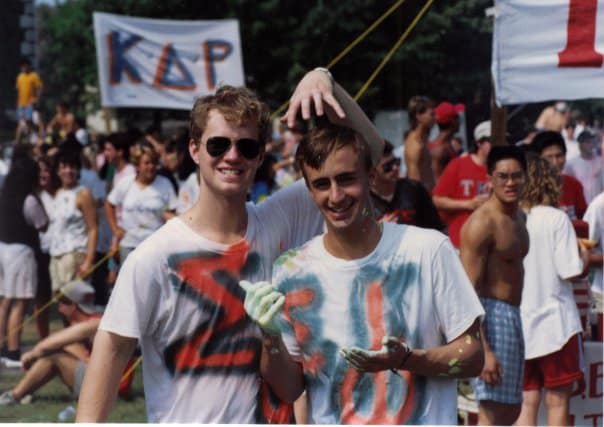
As I stated in my first blog post fraternities were created to get the rich kids away from the poor kids, that is true, but fraternities were created a while ago, and that has evolved, now fraternities welcome people based on how dedicated they are to greek life, and as both of my interviewees told me, hazing happens a lot, but most fraternities see initiation as a celebration of new members, rather than a test or a “haze”.  In fact, Jake told me that the worst thing his fraternity ever did to initiate people was make them solve a puzzle in the dark, which is not very bad compared to the other things that have happened during an initiation to a fraternity.

https://images.complex.com/complex/images/c_limit,w_604/fl_lossy,pg_1,q_auto/s6lzwdmrf7puawqg23xx/fraternity

Initiation to a fraternity


I asked Jake and the other person I interviewed to tell me what happens in order to prevent anything bad happening in a fraternity, and what is done as a punishment to the people in a fraternity. They told me that fraternities can be monitored, they can be dry fraternities, meaning that alcohol is not prohibited, and a few more things that you would expect. A way to stop bad things from happening again, was an “actions have consequences” approach, where depending on how bad something was, there would be punishments from “no parties for the rest of the year”, to expelliation from the fraternity or the school, or for things like the Timothy Piazza case that I talked about in my first post, there can be criminal charges against the other fraternity members. This shows to be careful when in a fraternity and to be careful when looking for a fraternity to join. From these two interviews I can take away that bad things happen because of fraternities, but fraternities are not all bad, as most of them unite people, and show brotherhood, my wise words would be to be careful with what kind of fraternity you are joining.


Click here for my annotated bibliography.
2 Comments

Tell Me Who I Am: What Obligations Does My Skin Color Give Me?

Posted by Kavina Davis in English 1 · Giknis · D Band on Wednesday, March 21, 2018 at 7:46 pm

  Annotated Bibliography:https://docs.google.com/document/d/1TlY_UwtDH8CB8TrXwWMKNWn4QPnNbb8fVRs6cED3GSs/edit

In my previous post before I made this one, I talked about the issue of Racial and Economic Discrimination along with Ethnic and Racial Inequality in our society, and the Discrimination of Economic factors and the hierarchy of lower, higher, and middle class, and what causes this. According to,  http://open.lib.umn.edu/socialproblems/chapter/3-7-reducing-racial-and-ethnic-inequality/ , did you know that Old-fashioned racism has been replaced by a modern, symbolic racism that still blames people of color for their problems and reduces public support for government policies to deal with their problems? This is a unfair treatment, because If Old-fashioned Racism didn't still exist, and the government policies would deal with the growing problems of today, we wouldn’t have so many problems today. I know some of us want to make a change. Something we all want to do so we can better society or change an issue. but how can we talk about change if we don’t even address issues properly? Discrimination and Racial and Ethnic Inequality are two reasons  why most of us want to change the way we view people and society itself.

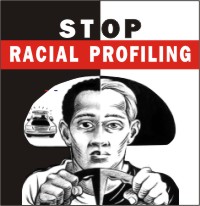
Image result for racial profiling
 Let's not forget Racial Prejudice. Racial Prejudice is an insidious moral and social disease affecting populations all over the world. It can be identified by its various manifestations which are fear, intolerance, separation, segregation, discrimination and hatred. While all of these symptoms of racial prejudice may be evident, the single underlying cause of Racial Prejudice is ignorance. People are too ignorant to really figure anything out anymore, so because of this, this is the reason why today’s society has so many problems. I also talked about facts and important details that related to Ethnic Inequality and Racial Discrimination. I talked about the unfair employment and issues with Economic Discrimination as well. Since my last post, I learned new interesting facts about these issues.

Image result for problems with race
 I learned that, black Caribbean and Black African men and women have had persistently high levels of unemployment over the past twenty years, more than twice as high as the White rate and in some cases more than three times as high.  This is because they continue to have much higher unemployment rates than White men and women and the fall is mainly a result of a large rise in part-time work, with a fall, rather than a rise, in full-time employment rates. While reading this, I came across Racial profiling, which is a popular method used by law officers in order to hypothetically enhance crime prevention by targeting minorities, because they are more likely to commit a crime due to the fact that they may be aliens, or not from here. In other words, It means that it is targeting specific Ethnic groups because they are more likely to commit certain crimes. So it makes us question can we stop the unjust practice of racial profiling? Is it correct for Police Officers to stop a black driver for an alleged traffic offense to question and sometimes search the black driver?

 These questions provoke the need to understand racial profiling and racism along with what problems are involved and the possible solutions. Doesn't the use of race make sense? Isn't it really just good police work? The guarantee to all persons or people of equal protection under the law is one of the most fundamental principles of our society. Our government must continue to evaluate the facts and take appropriate action to resolve this controversial issue instead of just sweeping it away. I decided to interview my mother on these issues.  Because America created and perpetuated the institution of slavery, this institution served as the basis for the creation of racialized ideas about people of color. Under the institution of slavery, racialized ideas (stereotypes), were created to justify this immoral systems. An example of the racialized ideas at this time to justify the Institute of this slavery, where African people were 3/5th’s of a man, African people needed the institution of slavery to civilize them, and they were biologically inferior because of white people. 
Image result for inequality
Me: Where did you Face Inequality? 
Mom: At my job; first experience as an M.S.W student

Me: What were some of the issues you faced during Racial Inequality?
Mother: one of the first issues that I encountered during my internship as an M.S.W student, was covert forms of discrimination. For example, some of the things I specifically encountered was the director of the social work department, would exclude me and other black interns from certain learning experience, while permitting our white counterparts. I was sent to a different unit to shadow and different social worker, and he got mad, and said to my mentor, why is she up here? But he didn't say anything to any other of my white mentors. She flat out told me to watch my back while I was there. Another example of discrimination was the director of the program held secret interviews, at the white interns, against the excluded black interns.

Me: have you ever experienced covert or overt forms of discrimination? 
Mom: Yes, I think the worst form of overt discrimination was when I was working as an intern at Temple University. It was like you knew somebody was out to get you, and it was just hard. People were making faces at me and you could tell. 

Me: Okay, Do you think Racial Inequality still exists in the world today? 
Mom: Yes absolutely, I believe it exists today because of the institutions that were created that helped to create it. Because of the social institutions such as the school systems, juridical systems, the governmental systems, economic system, all help to maintain the social status of non-white people. The media is a huge factor because when the TV shows this, people are able to formulate their opinions from that. 

Me: Do you believe stereotypes play a huge role in racial inequality?
Mom: Yes, Stereotypes plant racialized ideas of a particular group of people that leads to the internalization of that particular belief. If you're looking at that TV, and it shows a black male appearing to be aggressive and loud, my particular belief would be he’s dangerous. When you're looking at those images that are associated with those stereotypes, it evokes that negative belief about that particular group of people. 

Some remedies for these issues, in my opinion, are equal treatment in employment and occupation'; forbidding employment discrimination on the grounds of racial or ethnic origin, religion or belief, age disability and equality for all.

Image result for equality cartoon
1 Comment

Minimum Wage - Time to make change

Posted by Ethan Friedman in English 1 · Giknis · D Band on Wednesday, March 21, 2018 at 4:43 pm

Ethan Friedman

Original Research


Over the past month, I have been researching the minimum wage issues in Pennsylvania. I’ve conducted surveys among teenagers in Philadelphia. Throughout my research, I’ve discovered many different perspectives on the issue and have come to a conclusion.

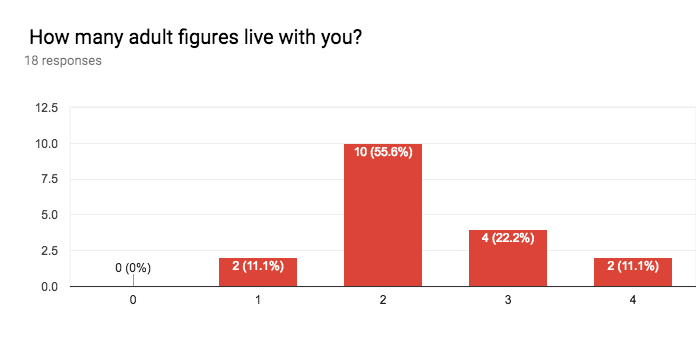
When working on issues regarding money, it is important to take other factors into account, such as location, opportunity, and sources of income. When I conducted a survey with students in Philadelphia, I found out that 1 in every 9 students only lives with 1 adult figure. Forms response chart. Question title:  How many adult figures live with you?. Number of responses: 18 responses.

Source: Google Forms: Original Research Survey


When you only have one source of income which is that adult’s job, it is very difficult to support a family. The population of Pennsylvania is approximately 12.81 million people according to the United States Census Bureau.  That means that about 1.4 million families in Pennsylvania are ran by a single parent. There is clearly a problem in the system if 11% of families can’t afford to live.

Part of being a teenager is spending time with your friends. Whether it be going out for lunch or going ice skating, most activities cost money. According to my survey, most students are unemployed.

Forms response chart. Question title: Do you have a job?. Number of responses: 18 responses.

This is important because the ability to become a social person, you need to have the opportunity to interact with people. The money would have to come from family.


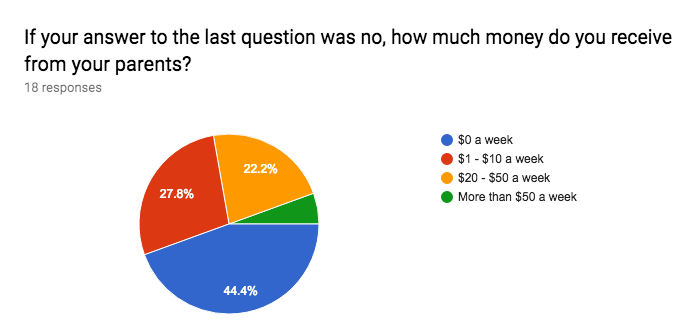
Forms response chart. Question title: If your answer to the last question was no, how much money do you receive from your parents?. Number of responses: 18 responses.


A majority of students don’t receive money at all from their parents, so that will tie into the future once they do need to get a job and live on their own, they won’t have the skills that they would have had from socializing.

It isn’t ethical for a system to take place where 11% of families are treated unfairly and have no way out. Not every kid who grows up in a minimum wage will have the drive to be a scholarship worthey student. Their families can’t afford college like other families can. The same cycle continues because nobody without a degree can get a well paying job. The system needs a change.


Annotated Bibliography: here


Tags: English 9, You and the World
2 Comments

There's a Way to Change

Posted by Akossiwa Koffi in English 1 · Giknis · D Band on Tuesday, March 20, 2018 at 12:15 am

Justine Koffi

Ms.Giknis

English 9

18 March 2018

There’s a Way To Change


For this portion of my You and The World Project, I was meant to do a survey, interview, or  a field observation. I planned to have an interview with the communications director at the G.E.M.S program. I mentioned them in my last post, click here for it. I planned to have my interview Monday afternoon, during advisory, but it had to be rescheduled for the next day. The same thing kept happening until thursday which was the last day I had the time to conduct the interview. I forgot about the interview which was my fault. Overall, there was fault on both sides which resulting in me not having the interview I needed for this part of the project. Instead, I decided to further my research.

For my first post, I looked into the statistics. I found some horrible facts about the children we are losing to this industry and how much they are suffering on a daily. Can you believe that some kids are sold 5-6 times a day? Vulnerable children are targeted, ages 11-17 all the time and they are put into this horrendous life. Since I found very interesting information about the general industry of child sex trafficking, for the second post, I decided to look into some specific stories of women who were sold into the sex industry as children. I found some more surprising information.

First, I found the site Human Trafficking Survivor. The girl in the account said she was raped about 43,200 times, which I found hard to believe until I really read and thought about it. Karla, the woman bravely speaking out about her past, said she was abused since she was five by a close relative. She felt rejected by her mother, and the overall dynamic of her family was dysfunctional. When she was twelve, she was pursued by a man who spoke nice and had a fast car that she liked. They spoke, and exchanged numbers. He started talking to her as a friend and Karla was excited. They met up again and he brought a different red car that she liked a lot. From there, she recalls seeing red flags everywhere. She was convinced to go stay with him since her mom locked her out one night. The next couple months, he shows her kindness and gave her everything she wasn’t getting at home. He then started telling her about the pimping business and how she must act and speak for her to get money for him. He explained the positions to her and how much money she must earn. "I started at 10 a.m. and finished at midnight. We were in Guadalajara for a week. Do the math. Twenty per day for a week. Some men would laugh at me because I was crying. I had to close my eyes so that that I wouldn't see what they were doing to me, so that I wouldn't feel anything," Karla says. They moved to other cities where she was still expected to see about 20 men a day, seven days a week. There was even a day she thought she would escape her unfortunate circumstances when a police officer came in to one hotel known for prostitution. Instead, the officer forced them to do things too. Karla got pregnant at 15 years old and gave birth to a girl. The baby girl was now threatened if Karla didn’t fulfill her duties as a prostitute. She was rescued in 2008 during an anti-trafficking operation. She was 16 at the time. She is now 23 and a speaker and advocate against sex trafficking. She says,  "These minors are being abducted, lured, and yanked away from their families. Don't just listen to me. You need to learn about what happened to me and take the blindfold off your eyes." I think it’s very important to letr Karla’s story sink in and reflect on it. Just as I said in my first post, vulnerable children are being pursued by predators and being taken away from their homes. It’s important to take into account that this could happen to anyone and that we should be doing more as a community to speak out and try to prevent it.

In addition, Karla’s story was fascinating to me, especially the part about the corrupt police officers, so I started to look into the police involvement in child sex trafficking. I looked into this article about police help with the issue at hand. From this post, I found that a lot of the time, police arrest sex trafficking  victims on a prostitution charge in which they are threatened to be prosecuted, which obviously isn’t working very well. The girls, who are victims, are held accountable for their circumstances instead of the people who are actually the problem which doesn’t seem fair to me. They don’t seem to take into account that the girls need help. They just see a crime that someone has to pay for.

In conclusion, although I wasn’t able to conduct the interview, I found some more shocking facts about the sex trafficking industry.


For more research and facts, click here for my annotated bibliography.

1 Comment

Bullying:My Own Research

Posted by Christopher Jacobs in English 1 · Giknis · D Band on Monday, March 19, 2018 at 2:50 pm

Bullying: My Own Research


  Hello, it's me Christopher Jacobs again and today I, after some of my own original research. My last post was all about the research and some personal experience in a major problem all around the world. BULLYING. Now this is a big problem that I have already talked about but  I have some of my own data from my fellow SLA students.


    For those of you who haven't seen my first post where I researched about bullying. It was basically me giving statistics about bullying. As well as me giving my own personal experiences on bullying and how it affects me. Now for me I had 3 options for this post and those were a field observation, survey and interview. I could have easily done any other but decided that a survey would be the most effective thing to do.


   What I made is a survey to collect data on personal experiences of people and bullying in their lives.  What I found was very interesting to be honest. I found that out of the 29 responses I got 13 were of people who told me they were not bullied. While the rest said that they were bullied before. Here's a graph that I have of this info from different responses.


After looking through this I found some interesting responses such as what I mentioned before. So then for my next question I asked them about the current state of this and if they were still being bullied and overall a lot of people said no. When I saw this I was honestly really happy as it shown me that out of this survey the students that answered (which a lot were from my grade were not ever subject to bullying.). But from what I read from their responses a lot of them were victims of bullying during younger grades for their looks usually.


  I also asked a question that I felt was just as, if not bigger than your standard bullying. Cyberbullying, now if you don’t know what cyberbullying is bullying but digitally such as messages, and social media. So I was curious and decided to ask about it and see if people were cyberbullied. Again I got a positive graph. So now  21 people said they weren’t ever cyberbullied while 8 people said they were. Graph is here below.


        For my final question I decided to ask any long effects from bullying. I got what I mostly researched such as anxiety. Plus some other things like people not making friends as easy as they used to. Overall this survey really opened up my eyes and some more and better insight from current students as well.


  This really to me gave me a different look as my fellow classmates that are currently students showed to not be bullied as much but were before. So I did some more research for this and found 20% of high school US students report being bullied. This after I compared it I found to be not that close to my own percentage of kids bullied being a bit higher.


   Overall I really enjoyed this survey as I got to learn just a bit more about my fellow students at SLA in a whole. This survey to me really made me happy as a majority of my classmates never had to go through the pain and suffering of bullying. I truly believe that even if not many people took this this really helped me as well to see how true the statistical “facts” about bullying are.


Check out my annotated bibliography:https://docs.google.com/document/d/1Ir9GL1stvGdU6-QBAzoREZ49DQpITADvoQ2oIMPZYA8/edit


3 Comments

One side of a story

Posted by Jasir Chavis in English 1 · Giknis · D Band on Monday, March 19, 2018 at 12:44 pm

      In my previous blog post I discussed one of the many problems today currently in the world which is Police Brutality. Part of my original research was to go out into the world and gather our own information. I was given the opportunity to interview Officer Mitchell of the 12th district who I was fortunate enough to interview in which he said the following:
Untitled document (4)
I found this Interview to contradict the normal norm of how many people see Police Brutality you see that for question 5 the question was, ¨ Lots of people argue that police brutality is often based on racial bias. What do you think of this?¨ to which he responded, ¨I dont think its racial...I think it is more lack of training and lack of background checks prior to hiring.¨ I found Officer Mitchells response very interesting because his perception of Police Brutality is the opposite to how others view it. Over the course of the Interview I found it very beneficale I was able to learn that contrary to popular belief not all police officers are bad in fact most of them in particular want this agent of change and wants to show that they are just like us human. However with the way things are looking most of society is against authorities they believe there is no level of trust between the two parties we are different and in this case being different is not what we need. In the words of Barack, ¨This is not just a black issue. It’s not just an Hispanic issue. This is an American issue that we should all care about, all fair- minded people should be concerned.¨ The problem with Police Brutality is that it is a frequent thing and with that being said instead of people complaining about Police Brutality we should all try to band together and find a way to change what has happened to our community. An important question that we all must think about is why? why does Police Brutality constantly take place amongst so many people? In my interview with Officer Mitchell he said it might be lack of training and there may be a need of background checks. In conclusion I think Police Brutality is sad, but we as a community must also try to figure out why is it happening and what measures can be taken to prevent it. If you would like to see my annotated bibliography please click this link thank you for reading. Annotated Bibliography: https://docs.google.com/document/d/13wTzYcJCdMGtSsozTe1VAUYwjLW3z1r577zruis1Vrw/edit?usp=sharing
Tags: English 9, You & the World
7 Comments

The Effect of Sexual Objectification on Women’s Mental Health//2

Posted by Moriah Lahr in English 1 · Giknis · D Band on Monday, March 19, 2018 at 1:15 am

   The Effect of Sexual Objectification on Women’s Mental Health

Moriah Lahr

3/14/18

Annotated Bibliography: https://docs.google.com/document/d/1lJ6B8PTnw_vgVb6aBkCLC_DRJA1BjmPpT_-KwdDTSdg/edit

I want to focus on the topic of the effect of sexual objectification on women’s mental health. I experience sexual objectification daily. Whether it’s seeing a music video of half naked girls dancing around a guy or getting cat called on my own block. Both which can make me feel bad about myself. A goal I have in researching this topic is to be educated on the different types of sexual objectification and the different health issues it can cause. I want to help make a change by getting women’s different point of views and stories of being objectified and getting the word out there to people who can’t see that it’s a problem.

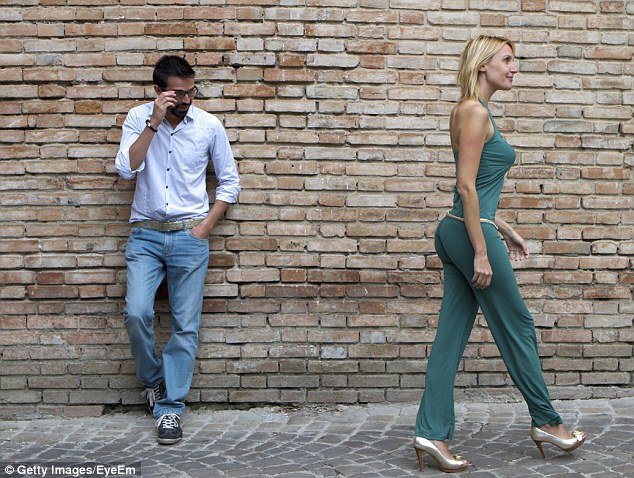
http://www.dailymail.co.uk/femail/article-3673099/Man-confesses-checking-mediocre-women-Reddit-good-deed.html

This woman is shown walking past a man while he looks back at her curves. What this photo actually came from was a website that had a married man saying he checks out mediocre women to “compliment them” as if we enjoy being gaped at.


I am interested in this topic because as a woman in this culture, I have been objectified many times in many different ways. This topic matters to me because I have many friends who have been cat called or checked out etc. and I know first hand how scary it feels to me and my friends. When I’m out with my friends, we have to talk about what if a guy comes up to us and starts checking us out and saying creepy things to us. We came to a conclusion that if that happens, we’ll just say we’re a couple. I think it’s truly sad that girls at a young age are so scared to just walk outside because we get looked at and taunted. Some men even think checking out girls are a compliment when it really makes us feel worse about ourselves. “We are not outside for your benefit. We do not look in the mirror every morning hoping this outfit will get a guy to silently follow us down the street for five minutes after saying, “God bless you mami… Damn.””


http://www.eatthedamncake.com/2010/06/14/getting-checked-out-by-guys-with-wives/

This woman is being showed in the camera view in an angle that only shows her body and shows two guys looking at her body. This shows how much women’s bodies are sexualized and lusted over. It’s showing her body as if she doesn’t have a face or a personality.


In the research I found, I learned that sexual objectification comes in many forms such as catcalling, getting checked out, sexual assault, rape, pornography, television, etc. These things can cause not only men to look at women as objects but cause women to look at themselves as objects and make them want to look a certain way to fit into the cultures view of a “perfect body”. This causes mental health issues such as body dysmorphia, eating disorders, depression, anxiety, etc. It is important for people to know about this and be aware of it because some men are raised to think it’s okay to objectify and they just don’t know any better. Knowing the research behind it might really change the way we are looked at and the way we look at ourselves. The details in my research that can educate readers is what the different types of objectification there are because some people might not even be able to realize it when they see it or do it.

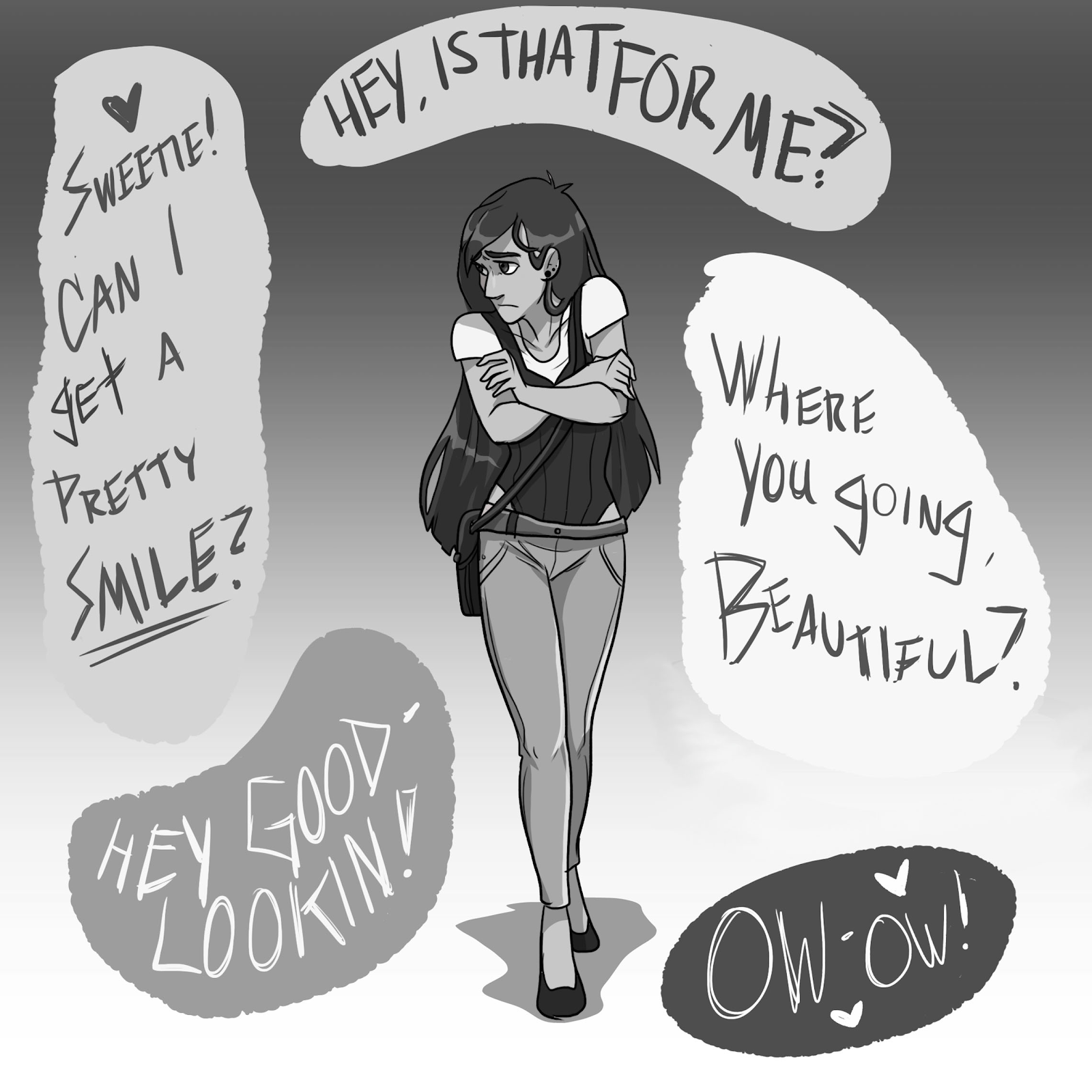
http://websterjournal.com/2014/12/01/catcalls-arent-compliments/

This photo shows a woman that is covering up and looking insecure as people are cat-calling her all around. This happens on a daily basis to women. Mens calls make us feel insecure like all we are is a body.

My research so far has impacted my understanding of sexual objectification because I never really focused on looking at the mental health side of things and how it affects people. Now I can see better why me and some of my friends have the self image issues that we have. I’m objectified on a daily basis so I feel like this is a personal topic that I have actual experience to backup my claims with.


effects on well-being


“The present research suggests that stranger harassment (i.e., experiencing unwanted sexual attention from strangers in public) is a frequent experience for young adult women, and that it has negative implications for their well-being. First, stranger harassment was positively related to self-objectification. This was true for women who coped with stranger harassment using common strategies (passive, self-blame, or benign), but not for women who used an uncommon, active coping strategy (e.g., confronting the harasser). Second, stranger harassment experiences and self-objectification were positively related to women's fear of and perceived risk of rape. Further, women who feared rape were more likely to restrict their freedom of movement. In concert, the findings suggest that stranger harassment may have both direct and indirect negative effects on women's lives, and that it is a phenomenon worthy of future research. “


Women perceive themselves as objects


“girls and women are typically acculturated to internalize an observer's perspective as a primary view of their physical selves. This perspective on self can lead to habitual body monitoring, which, in turn, can increase women's opportunities for shame and anxiety, reduce opportunities for peak motivational states, and diminish awareness of internal bodily states.”


This says that women see themselves the way other people view them and if they are viewed like objects that’s how we’ll see ourselves as.


Graph of psychological consequences  


\


This image shows what sexual objectification can lead to. It’s like a domino affect where once one thing happens there’s a trail of bad things happening after it.


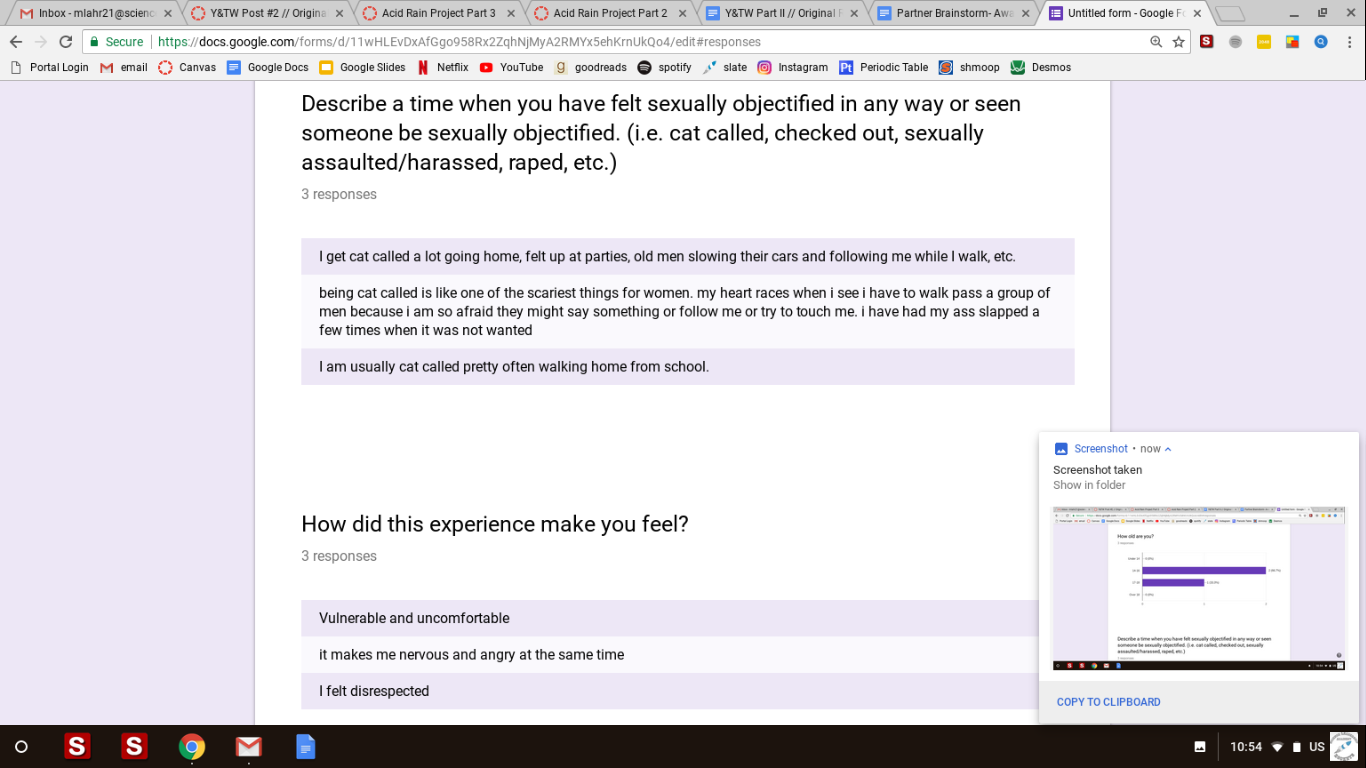
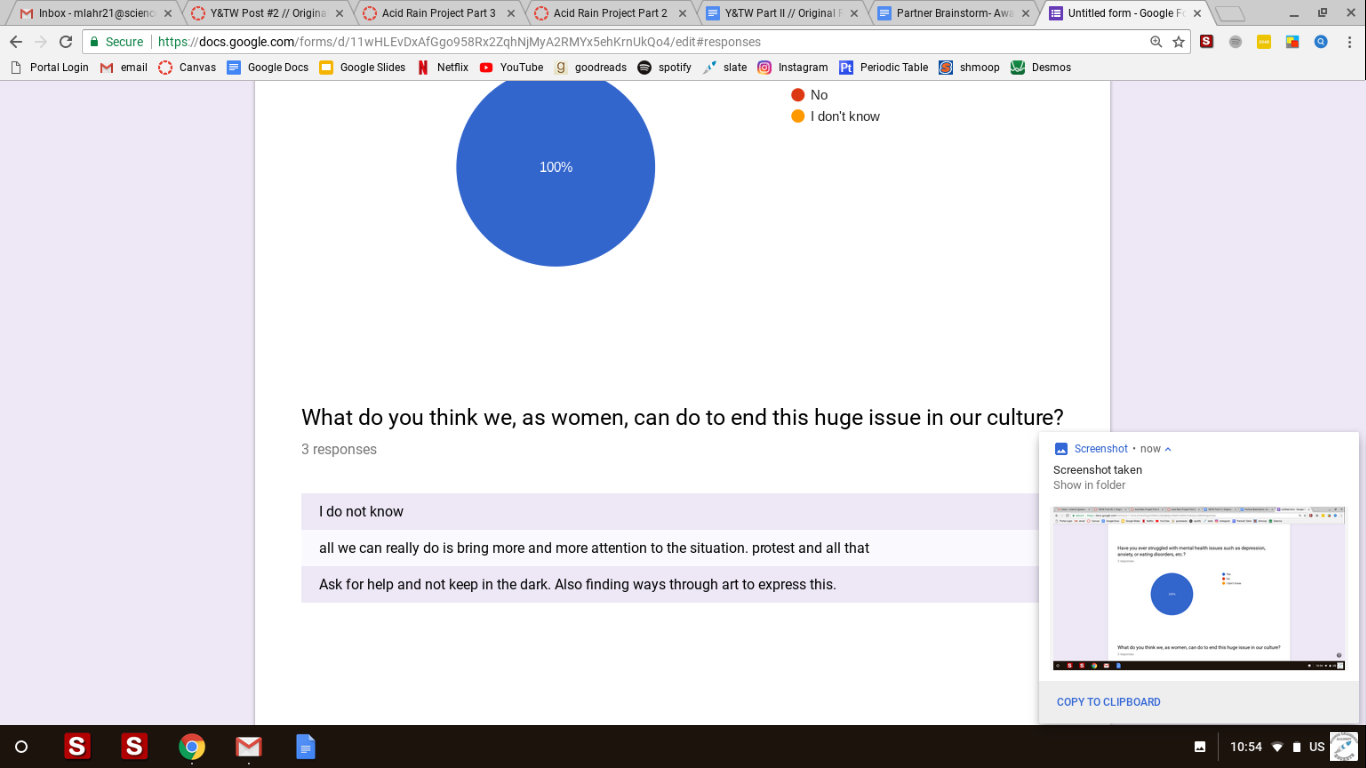
I gathered surveys from 3 different female SLA students. Some new information i found is that ⅔ of them were around my age and ⅓ was an older teen. I learned that people experience similar things such as getting cat called and feeling extremely uncomfortable. One girl said that being cat called is one of the most terrifying experiences she has, I can relate to  his because for me it also sparks a lot of anxiety when I’m being sexually objectified.


Also, 100% of the people who answered the survey say that they deal w mental health issues. This proves my point that sexual objectification affects the mental health of females. I asked them what they think we can do to end this issue, and the main response was to just bring awareness and show people this is what’s happening to you and how it makes you feel as a woman.


9 Comments

Heart Disease: The Big Bad Wolf

Posted by Nickell Caesar in English 1 · Giknis · D Band on Monday, March 19, 2018 at 12:02 am

​ In my previous post, I talked about heart disease and the causes of the different types of heart conditions. How heart disease is the leading cause of death in the United States, how strokes and cardiovascular disease are linked together, having high cholesterol, blood sugar, or diabetes can increase your risk for getting heart disease. I also talked about how heart disease is can be cause by birth conditions or the types of things that you do such as consuming a lot of junk foods or lack of physical exercise. 
This is an image of what a normally functioning heart should look like
According to heart.org, In 2008, heart diseases represented 30 percents of all diseases. About 2,150 Americans die each day from cardiovascular, that's about one every 40 seconds. Strokes and cardiovascular diseases cost man than $320.1 billion, in health expenditures and lost productivity. Nearly half of all African Americans adults have some form of cardiovascular disease, 48 percent of African American women and 46 African American men. Heart disease accounts for 1 in 7 deaths in U.S. Over 159 million U.S. adults are overweight or obese, most adults of the age of 20 are obese. It's estimated that about 1.46 billion adults globally were overweight or obese. High Blood Pressure puts people at risk for diseases, so it was no surprise to me when I had seen that 80 million U.S. adults have it. According to nydailynews.com, Noise pollution is linked to heart disease, people and animals that are exposed to constant loud noise have higher risks for heart disease. Researchers in Germany have found in a study that, noises from traffic, construction, and loud workplaces affects the bodies stress responses on a cellular level that lead to cardiovascular break down over time. Those who are exposed to less loud noise have less chances of heart disease than those who are constantly exposed to loud noises.
This is an image talking about Diabetes and how diabetes is gradually starting to rise all over the globe
For my original research I need someone who had some experience with heart diseases or a bit of knowledge about the topic, so I went to my trustworthy and one of my closest friends, Rene Hart, she had told me that she had pre-diabetes when she was younger, because she was obese, lacked physical activity, and liked to eat foods with lots of sugar. She talked about the changes she had to make in her life so that she could get back on track and start to live a healthier lifestyle. Rene was also generous enough to talk about her family members that were also affected by heart conditions. Rene helped me learn more about a topic that I was unsure of which is childhood diabetes. I was still left wondering if heart disease ran in her family which led her to a higher risk for it. For my Agent of Change, I want to try to starting to help out kids my age so that they have a lower risk of gaining heart disease, and I think that starts with changing the foods that are being served during lunch, to something a bit healthier.

Click on this to see my Annotated Bibliography! 
6 Comments

Into The Wilds

Posted by Zachary Sanders in English 1 · Giknis · D Band on Sunday, March 18, 2018 at 10:04 pm

In my first blog post about wildlife preservation I talked about all of the places out there that helped endangered animals. So for to further expand my knowledge and research I visited the John Heinz National Wildlife Refuge. I did a field observation of half of the trail and was able to spot some animals out and about. Since I went in the morning there was not much to see because most animals came out at night but what I did find was enough for what I needed.

The data I gathered was abe to help in my original research because I was able to see how much of an issue wildlife preservation is. While at the refuge I saw birds, swans, and even some horses. The animals themselves aren’t constantly cared for like you would see at a zoo but the ones here just live like they would in the wild but without having to worry about the dangers of being killed. So comparing this to what I heard about all of the endangered animals has really opened my eyes more as to how bad they have it.

Something I still have questions about is how are the rescued endangered animals cared for. Since I know that there are ones out there that find help they need and are going extinct for different reasons, I wonder how they are cared for. Another question I have which is revolved around this is how do the animals in the wildlife get there food. If all animals there are to be protected then how can they at least surrive food wise. For example if there was an eagle that ate squirrels in the wildlife, but that squirrel was also there for protection then how does it work out so that both can survive?


While at the wildlife center there are some things that I observed and noticed. One of those things were that the other people there were mostly adults and more importantly with there own pets. There were a few kids I noticed there but they were also with parents. But one of the adults I noticed there was actually there to take pictures just like me, except he seemed a lot more professional. He had an actual camera and possible a notepad with him. If I could have stayed longer i would have asked him if he came to this place daily or what other places he went to. Looking back on what I did there only made me realize what more I could have done.

To end it all off I think that my field observation went well. In the future I would have liked to find more animals since was a little bit harder to do during the morning and also maybe ask around from other people on what they have seen here.


6 Comments

Looking Into Philly's Infrastructure

Posted by Tristan Dini in English 1 · Giknis · D Band on Sunday, March 18, 2018 at 9:58 pm

My first blog post addressed some issues with grey infrastructure and stormwater management in the city as well as briefly explaining the problems in the system. Now I gathered some more information around the situation with the help of my mother and some field observations.

Mz. Julie Snell (my mom) worked at PHS for a number of years before starting her own business in landscape architecture along with two other women from PHS. Now seeing as Mz. Snell worked in her field as long as she has as well as teaching a class about green infrastructure at Temple University, I consider Mz. Snell an expert in green infrastructure. So I chose to interview her. In the interview I asked a few questions that relate to stormwater management and green infrastructure in our city.

Is stormwater management a problem in this city and if so how? Was my first question for Mz. Snell. The response explained how that yes it is a problem because of Philadelphia's very old combined sewer system which when is overflowed will cause backups that’ll get your basement flooded.

My second question asked how quickly the city was changing to green infrastructure. Mz. Snell explained Green City Clean Waters, which is a 25 year, 2.5 billion dollar  project that started in 2011. The main goal is to get rid of the combined sewer overflows(CSOs) and the push behind the project is that Philly as well as other cities is mandated by the EPA to eliminate CSOs by 2026.

Knowing that Mz. Snell played a role in getting the Peco green roof all set back in 2009 I asked her about the process and specifically how long it took. I was surprised to hear that it was a very short project. It went from planning the concept of the green roof  in November to putting in the sedums only a month later. As Mz. Snell explained the timeline she also focused heavily on the fact that with green infrastructure the cost of installation is much less and will start working right away. Unlike grey infrastructure such as huge pipes and expanding sewer systems. So hopefully it won’t take that long for the city to reach their goal of getting rid of CSOs

In my fourth question I asked about what people around the city can do to help out. I wanted a better idea of what people could do to involve themselves some more. Mz. Snell explained how there are plenty of volunteering opportunities all over the city. You can choose to volunteer with PHS and join a tree tender group, you can help out with Parks and Rec friend groups, or you can even get a tree right out front of your house for free. The Tree City program can take a look at your space outside your house and see if you can qualify for a tree out there. Other than that you can do your best to keep the city a clean and healthy place by recycling and making sure your trash gets to a trash can.

My final question was simply if there was anything else Mz. Snell thinks people should know about green infrastructure in Philly. In response I got a message about how people who live in this city should be proud of the progress we’ve made with green infrastructure. I was kind of surprised to hear that at first but then I thought to myself that I should be proud of my city and it’s long plan for a cleaner environment.


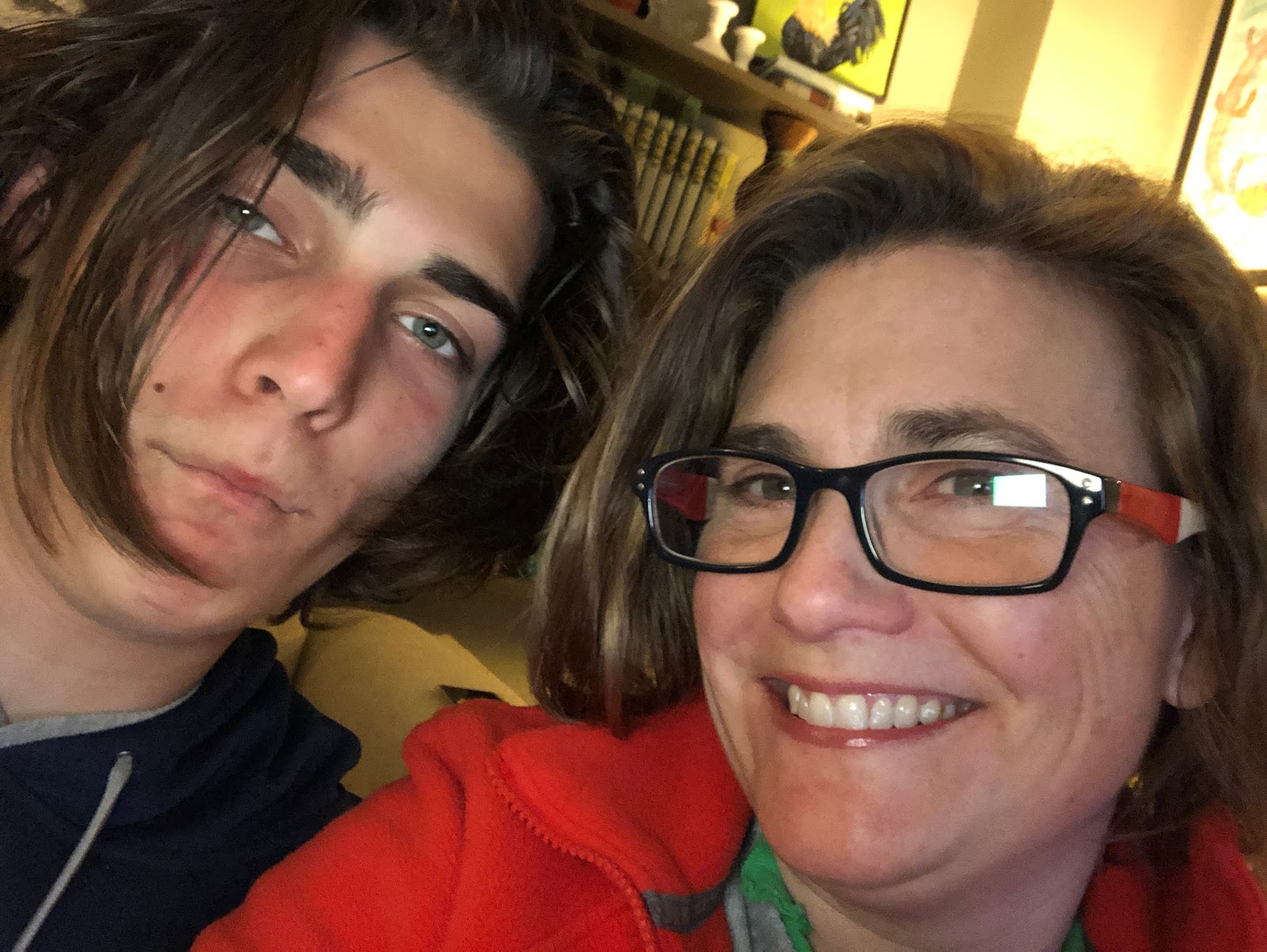
  • This is me an my mother shorty after I conducted the interview with her. I have her to thank for most of my information so thank you, Mom.


Other than an interview with my very own mother I also wanted a location in the city for field observations. Lucky for me there are plenty, the closet on eto SLA would be the Peco green roof. So going up there for my field observations was my original plan. Although it was harder than I thought to get up there seeing as it is not simply open to the public so I had to go with a backup plan which was Cira Green. Development for the green roof finished back in 2015 and if you don’t know the place I’m talking about it’s a green roof on top of the parking building next to the big FMC tower. Greenroofs.com provides the background information of the building such as the building type, the size, and the system. Other than when you go up there you can see how everything is put in place so when it rains it holds a good amount of water in the beds up there.


The coolest part about these projects is that they are usually public places like cira green so when the weather is nice they are really great places to hang out with friends. While at the same time time it’s a powerhouse of stormwater management. Why wouldn’t you want you city filled with places like Cira Green all over. Maybe they will be one day because in the last few years Philly’s green infrastructure has only gotten better and better so I know the only way is forward in this journey of making our city a better place.


Be the first to comment.
92 posts:
← Prev
  1. 1
  2. 2
  3. 3
  4. 4
  5. 5
  6. 6
  7. 7
  8. 8
  9. 9
  10. 10
Next →
RSS

ENG1-026

Term
2017-18

Other Websites

Launch Canvas

Blog Tags

  • English 9 12
  • You & the World 10
  • You and the World 5
  • benchmark 2
  • Public 1
See all See less
  • English 1
  • 9
  • Y&TW
  • english 9 // you and the world
  • Book Club
  • Looking for Alaska

Teacher

  • Amal Giknis
Slate (skeleton-v3 PHP 8 prototype) · Location: 1482 Green St · Shipping: 550 N. Broad St Suite 202 · Philadelphia, PA 19130 · (215) 400-7830 (phone)
×

Log In