• Log In
  • Log In
Slate (skeleton-v3 PHP 8 prototype)
Slate (skeleton-v3 PHP 8 prototype) Learn · Create · Lead
  • Students
    • Mission and Vision
  • Parents
  • Community
    • Mission and Vision
  • Calendar

English 1 · Giknis · Y Band Public Feed

Create a Post

Transphobia in America

Posted by Ashton Krause in English 1 · Giknis · Y Band on Monday, February 26, 2018 at 11:11 am

A sensitive social issue in America is Transphobia. For clarification Transphobia is “intense dislike of or prejudice against transsexual or transgender people” by word of the dictionary. My goal in learning about this topic is to educate myself about a community I am surrounded by. The reason I leached to this social issue is because I am a Transgender male. I find this topic underrated and I want to open it up to the world more. Although my topic is centered to a specific group of people, it connects everyone in a different way. These people are apart of family, have friends, are someone’s coworker or partner. Events that occur to trans people effect others lives and emotions.

Ever since the precidency of Donald Trump sprung on the United States, hate towards groups of individuals has become more exposed due to the bravery our presdient gives to people who spill hate speech. In 2016 after Trump was elected the rate of hate crimes went up by 300. Since January 2017 at least twenty-five transgender individuals have been killed, 80% are transgender people of color, the most ever reported. The Trump administration has continued to put public attacks on the transgender community including his attempt to ban transgender people from the military.

The first reported transgender death of 2017 was on January 4th, Mesha Caldwell was a fourty-four year old African American woman who was a hair and makeup artist. She was shot to her death on a Mississippi road. Her murder is still being investigated to this very day but this is seems to be a trend among the other twenty-four deaths that have occured since 2017. Since the beginning of 2018 at least four trangender people have been shot or killed by any other violent means.  There is 1.6 million to 2.8 million homeless youth in the United states, twenty to forty precent of those children are trangender youth. More than 1 in 10 trandgender people are evicted from their homes. When seeking for a homeless shelter most do not have LGBT friendly communities and supplies. 22% of homeless transgender people are assulted while staying at shelters. The ignorance to the community has been recognized and several people have made their own shelter specifically for LGBTQ people and if not they are open to making theirs LGBTQ friendly. For example, Substance Abuse and Mental Health Services Administration (SAMHSA) has promoted and created educational rescources for serving LGBTQ youth.

Sexual abuse is a big factor in most LGBTQ people’s lives. 47% of transgender people are sexually assualted during some point in their life. One in two transgender people are sexaully abused or assulted. Transgender youth and Transgender people are color are more commonly sexually abused than anyone. 13% of African American transgender people are sexually assaulted in their work place.  

My research has impacted my thoughts on this social situation because I always knew hate crimes occured but I never thought about how frequently they occur. Social actions to handle this problem occur all the time, including, awareness on social media, protests and contributing at local activist centers. Hate crimes transpire every day but its up to the youth to set a path of equality and freedom of speech for the generation after us. It’s up to you if you take part.

annotated bibliography


Violent deaths of transgender people throughout the years
4 Comments

Why are colleges so expensive?

Posted by Jacob Prunes in English 1 · Giknis · Y Band on Monday, February 26, 2018 at 9:32 am

Why are colleges so expensive?

Click here for more info.

This graph shows how colleges are getting more and more expensive over the years.


Colleges are so expensive these days. It’s one of the main reasons to why some people don’t or can’t go to college. But it doesn’t make any sense. If elders are always trying to tell you to get a good education, then why is education so expensive? I have a personal connection to this topic because I am hoping to eventually go to college. Also, my sister is in college and she is struggling to pay for college. It’s important to know because almost everyone wants to go to college and get a good education. Colleges are really expensive.  But why? It’s because colleges know a few things according to Andrew Jenson. They know that you need college more than college needs you. Colleges are also trying to compete with each other at all times. So when one not so famous college goes up the famous colleges like Drexel and MIT goes up to look better.

Another reason college is so expensive is that they need to pay for a lot of things, from staff and building says Wendover Productions.  Paying the right staff for things kids are interested in means more money. When a new popular major comes in, the college has to spend lots of money to find a good professor to teach that major. So money is used to get professors. Professors are used to attract students. And students are used to get more money. Also, the colleges want to attract students with a nice building. The bigger and more attractive the building, the more expensive the building is to make so colleges need to cover that cost. Lastly, there is Federal and State money. Federal and State money helps colleges cover the cost.But with less federal and state money the more students have to pay.

click here for more info.

This graph shows that inflation is a big reason on why colleges are so expensive. Also, it rises much higher than any other thing like house prices.


Some countries like Germany, Sweden, and Norway have free college. You're probably wondering how the college makes money. Well the college isn’t completely free says Abby Jackson. Colleges get money from taxes. But paying a little more on taxes is still better than paying thousands of dollars as a student. Now I’m not saying that that college should be free in America.

Anya Kamenetz and Eric Westervelt say that free college would not work in America like it does in Germany. In the article it does say that, “There's rising concern that this debt is stopping young people from buying homes, starting families or businesses, saving for their futures and generally being launched into their lives.” But the difference is that Germany has much fewer people going to college than the US, so free college wouldn’t work that well. All im saying is that colleges shouldn’t be that expensive. In 1980, one year of college was $10,200 dollars. But in 2016 it’s around $32,000. That’s three times as much. I believe colleges should be way more cheaper, especially since education is really important. By not going to college, you are possibly missing out on half a million dollars.  I hope that by learning more about this topic, I can find sway to make colleges cheaper for middle-class  middle class and lower class students.
2 Comments

Trouble in Ecuador

Posted by Isabela Curtin in English 1 · Giknis · Y Band on Saturday, February 24, 2018 at 9:45 pm


I spent the first four years of my life in the country of Ecuador. When I was younger I thought that Ecuador was this amazing country that had no problems at all, but as I got older I realized this was not the case.  I go back to Ecuador almost every summer, and every time without fail, I will always see a story on the news about companies take resources from the Amazon Rainforest. companies take the wood, oil etc. and ruin the whole ecosystem for the animals and indigenous people that live there.

Ecuador is a very ecologically diverse country. Ecuador is split into 3 terrains the Sierra, the Amazon jungle and the coast. All these places are rich with natural resources. Since Ecuador is rich with many natural resources, they trade with many countries all over the world. Ecuador has sold about 11.3 (1) billion dollars in non oil exports. One of the biggest exports from Ecuador is Oil. With about 8 billion barrels of crude oil in the reserve, Ecuador has the third (2) largest reserve of any South American country.

With oil being such a big part of the economy since the 1970’s  there are many companies trying to profit off this business. Some of these business include Petroecuador, Chevron and Texaco.  Most of the oil in Ecuador is located in the Orient.  The Orient is also home to many indigenous people. These communities (3) include Kichwas, Shuar, Achuar, and Cofán. The constant drilling of oil has affected these communities profusely.

There have been statements (4)  by natives about Chevron's impact on their towns that are horrendous.“Many people in our community now have red stains on their skin and others have been vomiting and fainting. Some little children have died because their parents did not know they should not drink the river water."  says a Secoya tribe member as a statement against Chevron. Texaco has dumped 18 (5)  billion gallons of toxic waste into water into the rivers of Ecuador. Not only does this pollution affect millions of people every year, it affects the beautiful wildlife of Ecuador. Animals are drenched in a toxic sludge, fruit is being grown in water that has strong traces of chemicals such as Naphtha and Kerosene. Poisoning anything that consumes it.


    This is a photo of just one of the thousands of toxic pools scattered around the rainforest of Ecuador.


This topic is important currently because of Yasuni National Park. If you did not know, Yasuni is one of (if not) one of the most biodiverse areas in the whole world. It is heavily protected by many organizations. This area has been fracked and extracted since 2015. Just as of February 12th, 6.1 (6) million Ecuadorians voted to reduce exploitation in that area. The bill passed and d'exploitation is now in the works. This is one step on the right path to ending the exploitation of Ecuadorian resources and people.


                                     This is a photo of the diverse Yasuni National Park ]


This injustice of explosion isn’t just one thing happening in Ecuador. There are so many countries that are dealing with the same  issue that Ecuador is dealing with. There are big companies all over the world taking people's land and resources and not paying for it. What we have to do is open our eyes. We need to be look at all these problems and learn to not just ignore them. They may seem big and whatever you do is insignificant. It may sound cliche but no action is too small. Vote for someone you know will stand for the issues you care about, educate yourself about topics that are important in today's society so you are able to have a conversation about it. Find what you are passionate about and fight for it with every fiber of your body.

Writing this made me feel more connected to my home.  I have learned much more about this topic. I want to use all this information and passion to make an actual difference. I know I'm not going to single-handedly take down Chevron in one night, but just starting a conversation and exposing people to this would be amazing.

Before letting you go I would like to give you the link  to my bibliography and the link to a wonderful documentary  about this whole topic.


Tags: English 9, You & the World
1 Comment

Just a Loss of 30 Cents

Posted by Peter Keo in English 1 · Giknis · Y Band on Saturday, February 24, 2018 at 6:23 pm

Just A Loss of 30 Cents a Day

Run down buildings in a once what was popular shopping district is now almost destitute-like.

Image Credits


For a country (or kingdom as it was previously called), that was once flourished with royalty and riches has now fallen to one of the most poorest countries in the world. Coming from a family who almost entirely immigrated from Cambodia, the country holds a special place in my heart and it was painful for me to see millions of people living under harsh conditions. This past summer, I myself visited the country for the 4th time in my life, and it was like day and night between America and Cambodia. My family members who live in Cambodia mostly classifies as middle class and I lived with them during my sojourn there. We often traveled and visited family members who were living in poverty in order to support them and give them some basic necessities. One day you’re in the middle of a rich and wealthy neighborhood, and the next you’re struggling to find a running faucet or toilet. It was an experience that I cannot describe having to witness firsthand of people without the normal amenities such as water or food. Some signs were scattered alongside an unmarked path which roughly translates to “DANGER: Landmines ahead. Use extreme caution.” I’ve read about thousands of landmines that are still armed from decades ago, so this did not surprise me at all.  As a child before, I didn’t really understand that much and paid no attention to what people’s social status because you know, children only see vacations as having fun! Now as a 15 year old, (14 at the time of the visit), it breaks my heart to see people live like this. My parents also told me that they had to live like this when they were little and lived in Cambodia. It just all felt surreal and hit a little too close to home.  


Daily, people wait alongside on the road in order to busses or pickup trucks to pick them up for work in a factory. Dozens of these trucks can be on the road at one time, and up to 50 people can be squeezed in on each one, often crowded.

Image Credits


Poverty in America is nothing compared to what poverty in Cambodia is like. Over 70% of the population is classified as “poor” or “near poor”. The situation is so dire that in fact if those people who are classified as “poor” or “near poor” just lost 30 cents from their daily income, then they would fall into extreme poverty. Education quality is one of the biggest reasons to why poverty exists in Cambodia. Even though private schools become more and more affordable, public schools just cannot keep up. In 2014 75% of Cambodia’s high schoolers failed their graduation exam due to inadequate teaching and funding. Another major factor was history of the country itself. It experienced a bloody massacre which killed most highly educated scholars and farmers. Once it ended, the country was left to rebuild but the only people remaining were either children or small-scale farmers. Today, the country relies on textile manufacturing and tourism as its main source of income,but even so, this is not enough to revive the economy on its own as these are two very weak compared to things such as fishing, technology manufacturing and the car industries that are present in big countries such as Australia, Japan and the United States.. There is also a source of income from foreign relief as in 2015, the country received a total of $677 million dollars from foreign aid. Compared to other Asian countries such as Japan, South Korea, Taiwan, and Singapore, Cambodia does not farewell in terms of employment and the economy itself. Let’s take a look at a poverty map for Cambodia.


Here we can see two maps, one being from 2009 and the other being from 2012. In 2009, almost 70 percent of the country was in the red area which means over 40 percent of households were identified as “poor”. In 2012, the situation improved, with over 45% of the country dropping from red to green, but a large portion of the country still remains in the red.

Image Credits


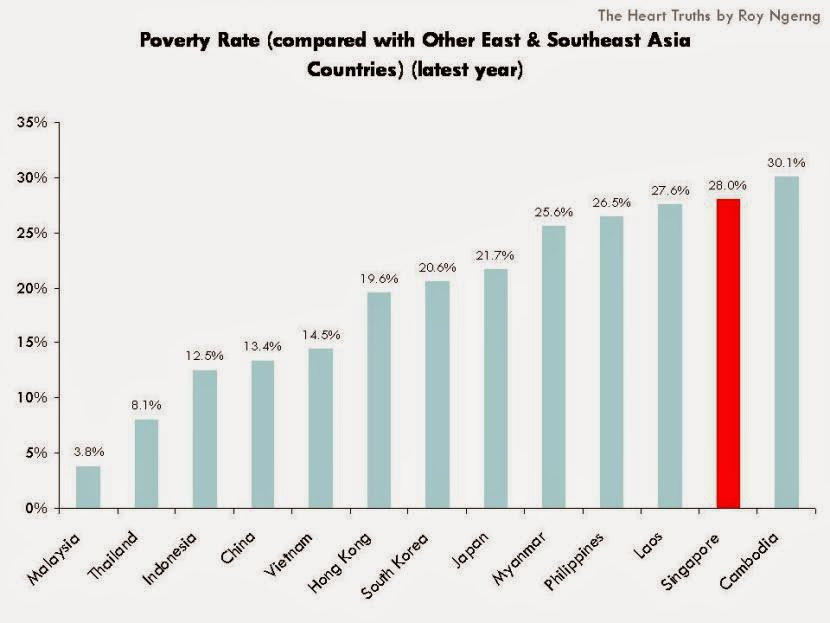
Now let’s take a look at a comparison bar graph.

Cambodia has the highest poverty rate at 30% with Singapore and Laos coming in 2nd and 3rd respectively. The lowest is Malaysia with just 3.8% of the population being in poverty.

Image Credits


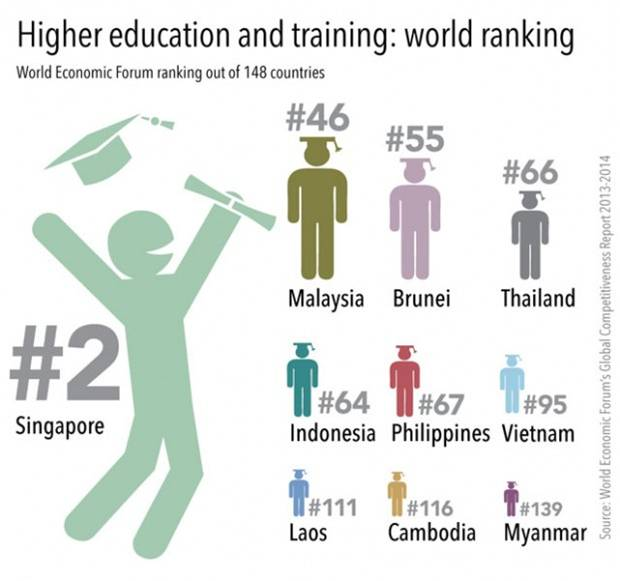
Finally, let’s take a look at where Cambodia stands in education ratings.

Like I said before, education plays a big part in why Cambodia has a lot of poverty. As we can see, Cambodia is ranked 116 out of 146, which is lower than average.  Compared to other SE Asia countries such as Thailand and Vietnam, they just do not fare well with them.

Image Credits


Every day that passes by, that could be tens, hundreds, even thousands of people suffering from the effects of poverty. A staggering 37 percent of all children under the age of 5 suffer from some form of malnutrition. The main question we are looking for here is: Can we save Cambodia from poverty? The answer is yes and no. We can support from relief aids and taking down corruption, but we are only so limited in our power to end poverty in Cambodia. That is up to the government and its people to change themselves. No one deserves to live like this. The government has turned a blind eye to its people, and that is a dangerous place to live in. Extirpating the cause of the problem will help, but won’t solve it completely.


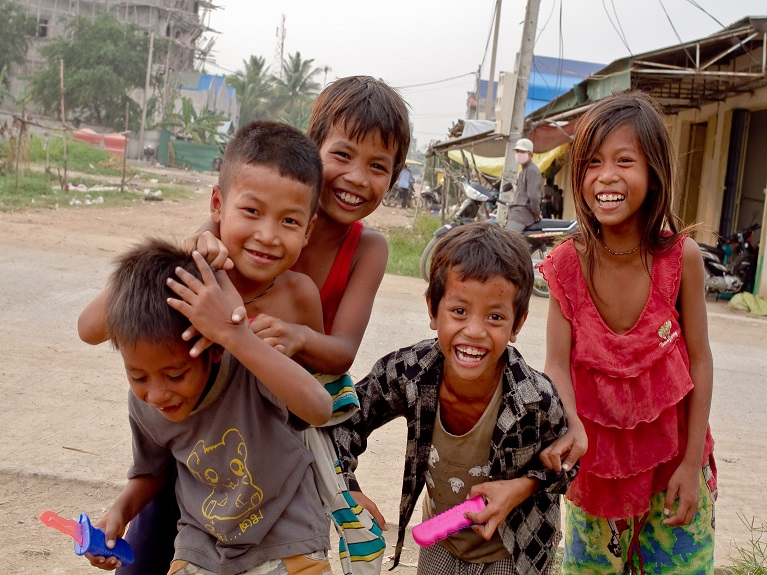
Even in their dark situations, Khmer children always finds a way to smile. One reason I can think of this is because maybe they were taught that everything will be fine or to just be happy. Either way, you can’t just help but smile looking at them.

Image Credits


Ever since I embarked on to that trip, it opened my eyes wider than before and burned the issue into my mind from then to now. It will always be a shadow in my vision until the day that it’s fixed. I plan to be a helping hand in the issue. For me, this IS my community. My international community of Cambodia. Educating others about this issue is something that I hope to accomplish by writing this, and I believe they will have a change in their way of thinking towards Cambodia after this. I am confident that the moment you finish reading this, you are going to do a Google search of Cambodia and learn about its history, photos, and the amazing landscape that it has to offer. Please, help save Kampuchea ( កម្ពុជា)!


Annotated Bibliography


1 Comment

Littering is Not Good !

Posted by Nasir Duppins in English 1 · Giknis · Y Band on Friday, February 23, 2018 at 10:19 pm


Littering Is Not Good!


An issue that is going on in the world that I am passionate about is littering. Littering is an issue that I am passionate about, because littering is a danger to the earth and other living life forms. Everyday when I walk around north philadelphia all I see is trash all over the ground. It is very peevish to see a lot of trash on the ground and especially when there is a trash can near by. I feel like their actions should change immediately. This issue should matter to people because they are living on this earth too and it is important that they keep their planet clean too so we can live clean and keep the Earth green. This information that I am going to be giving is significant because this information will warn people the possible danger not only to our environment but us as well.


Statistics of Littering

There are a lot of statistics on littering and these statistics is saying  that people need to stop littering and keep the Earth clean as possible.The article I was reading was called “11 Littering Statistics Of America” and this website gives facts and statistics on littering that happens in America and it tells how much the world produce littering.  This website says that, “50% of all littering is from cigarette butts” This tells us that half of the world litters cigarette butts, which is not good at all. This is also a safety hazard, because if a cigarette is still burned up, someone could step on it and could get them hurt. Cigarettes butts also leave a horrible smell and that's something people don’t want to smell.  Another part of littering is there is a lot of fast food on the ground. With fast food being littered on the ground, it starts to rod and animals start to eat it. According to the website it says, “Fast food products account for a full third of all litter that produced around the world. That includes the food itself and the packaging materials.” This source tells us that people throws their garbage on the ground, instead of throwing their garbage in the trash. Brandon Gallie is the author of this article and he says, “If we allow our trash to pile up, we’re going to destroy our local ecosystems just as quickly, if not more quickly than climate change can.” This quote stands out to me because Brandon is saying that if trash is being put on the ground, it is going to destroy the ecosystem.

This picture gives us information on how much of different types of garbage is littered. If you press on the link it will take to this website having different posters having different statistics on littering.


Littering In General

Everyone knows that littering is against the law, but people still do it. Since people are continuing to litter, it shows that they don’t care about the environment. It angers me that there is so much on the ground, which is why littering needs to stop. According to the website, “Illegal Dumping & Littering”, it says, “94% of people who says littering is bad still litter.” This shows most people are against the fact that other people litter. Since people are littering so much,  they don’t even know that they are ruining the ecosystem. The website, “Conserving Energy Future” it states, “People still litter, largely for the following reasons: Laziness, people don’t realize that with littering, there do come consequence, the garbage can is too far away…” These are really the main reasons why people litter and people is going to have to start paying attention to what they are doing and fix their mistakes. I always wonder what the world would be like if no one littered at all. If there was a world where people actually cared about what they are doing then the world would be so much cleaner.

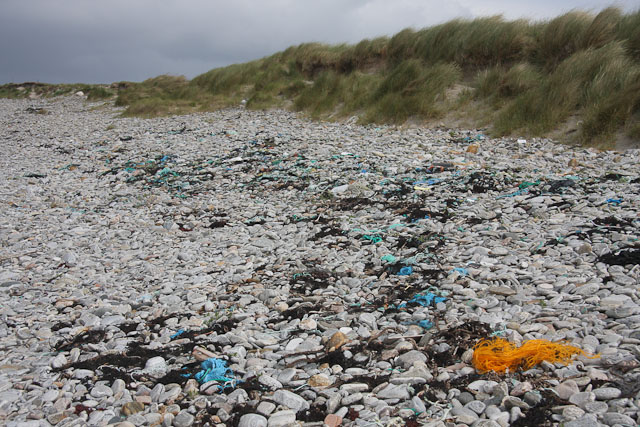
This picture of the beach being filled with trash. This is a way that wildlife that live near the beach could be possibly hurt


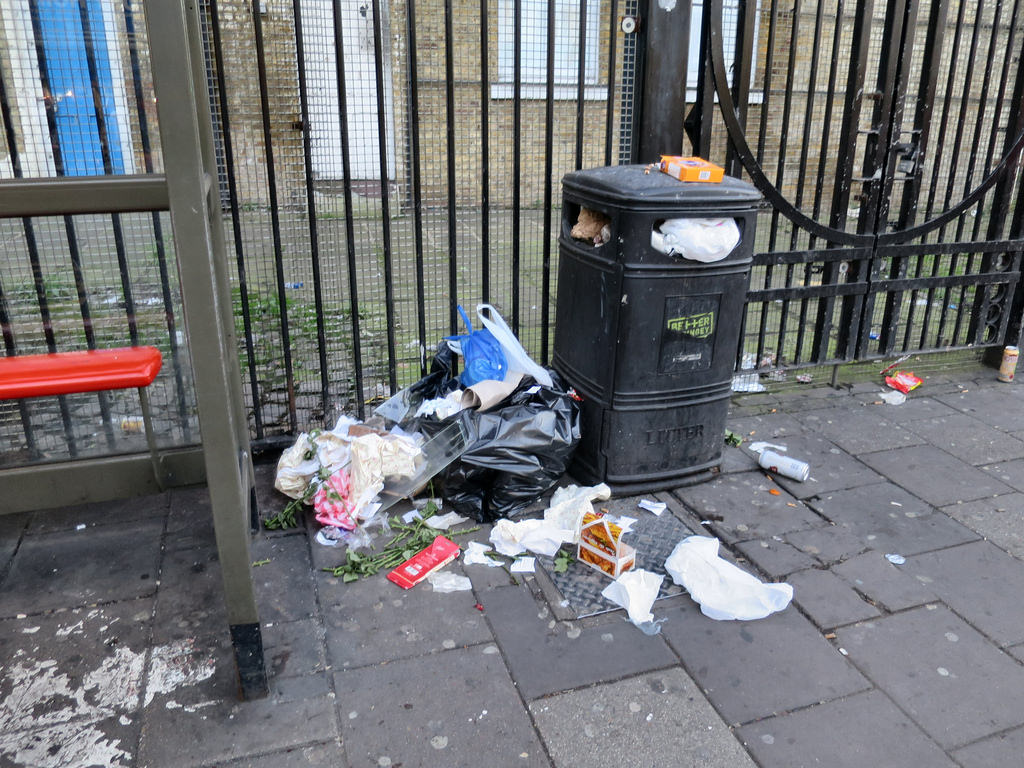
Here is a picture of what people do with their trash even when there is a trash can there.

If you want to see my sources here is the link to it.


1 Comment

Crumb Rubber In Astroturf

Posted by Jakob Cantor in English 1 · Giknis · Y Band on Friday, February 23, 2018 at 9:57 pm


Crumb Rubber In Astroturf

Image result for astro turf crumb rubber

Picture of person running on astroturf field and crumb

rubber jumping out of the grass. Click here for the image source.


When I play baseball and when I used to play at soccer camps, I noticed these fields made up of artificial grass and crumb rubber. I noticed while playing and watching that every time somebody stepped, slide, kick, or made some kind of frictions with this grass, little black rubber pellets would spray up from the ground to the air and fall back down. My first time playing on astroturf it was in the middle of the summer and I was in Maryland for a baseball tournament. I remember sliding into second base and feeling a burning sensation in my arm. I looked down and my arms was red and starting to bleed. That was not the only problem, It felt like it was two- hundred degrees. According to my own experience, the  little black rubber crumbs absorb heat and can make the whole field one-hundred degrees hotter then what the temperature is. I want to learn about all of the problems with this crumb rubber, find all of the solutions and substitutes to each problem because I know their needs to be something done.


This topic matters to me because crumb rubber in astroturf is a little substance that is always overlooked and not thought of. When humans play on these crumb rubbers, it is risking their body and health. Over thousands of kids play on astroturf fields with crumb rubbers in them every day and many of these people are not aware of the risks of playing on these fields.

turf1.jpg

Zoomed in picture of the many crumb rubbers in the artificial grass.Click here for the image source.


The majority of fields consist of natural dirt and grass which take many hours to maintain. This job is extremely hard, having to watch over it, make sure not to many

people are using it, cutting the grass at a constant rate, making sure the dirt is clean and even, and so on. Many field owners are either giving up on these natural fields, limiting a place for kids and other people to have fun being outside, or trying to find a substitute to the fields. Even though astro turf costs a ton of money, after many years it becomes equal to all of the hours spent fixing the field and buying different materials to maintain the field with. I want kids to have the opportunity to go outside and play on these beautiful clean fields. If all of the fields are in good conditions, it is a great site to see but when people when people stop maintaining and caring about these fields, it is a waste of space and a waste of an opportunity for people to be having fun. I want for everybody to be aware of the possible risks of these crumb rubbers in astroturf and try for a change.


Annotated Bibliography:


https://docs.google.com/document/d/1jFkm10hpG_LrnTc7P7ys44l6ixd0LrPOnJrl-Y__u6c/edit


Tags: English 9, You & the World
1 Comment

Lack of Sleep for Students: Is It The Schools Or Ourselves??

Posted by Hasciya Austin in English 1 · Giknis · Y Band on Friday, February 23, 2018 at 8:47 pm

Usually when a teacher asks the class if you’ve had a great night’s sleep, they would most likely be expecting “yes”. But nowadays, the only response teachers get are “meh” or just a plain, simple, “no.”

As a teenager who currently goes to school, I have gotten less sleep than I have ever gotten since I have started high school. Usually I would go to sleep around  9:00-9:30 pm and wake up at 7:20 am, which would be about 8 hours of sleep. Nowadays I would sleep around 12:30-12:50 pm, and wake up at 3:00-3:10 am. That’s roughly about 3 hours of sleep.

I believe that this is a very important topic to discuss because there are many scholars that are lacking sleep because of electronics and/or sleep issues in general. Most people say the reason that teenagers get so little sleep is because of how we get distracted by our electronics, but we say that it’s the schools.


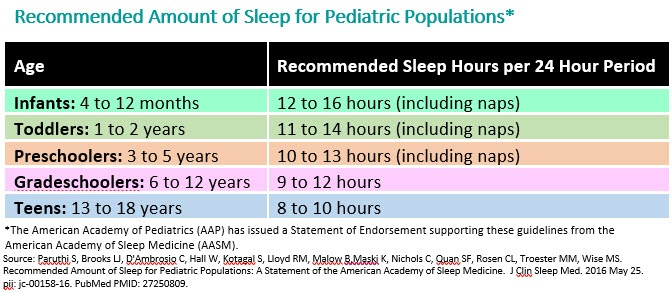
This image shows the recommended amount of sleep each age group should have.


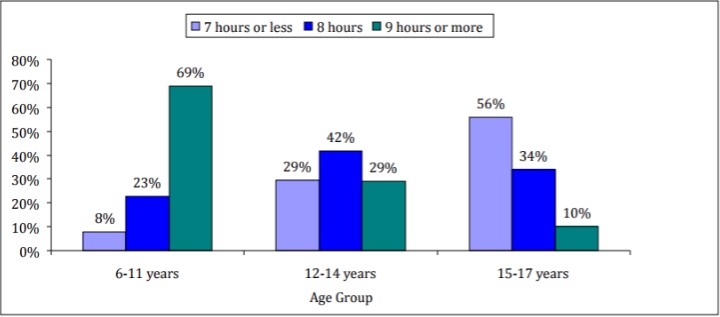
According to The Atlantic, it is said that “teenagers need a least nine and a half hours of sleep each night.” But on a poll from the National Sleep Foundation, it is said that less than 50% of American students get at least nine hours of sleep each night, and that 58% of teenagers from the ages of 15-17 usually get less than 7 hours of sleep on a daily basis.


This graph shows the amount of sleep each different age group gets on a regular basis from the year 2014

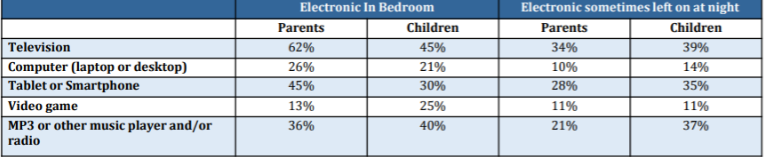
This image shows how much do people use their electronics in their bedroom and how much do people leave their electronics on at night.


Now, I know that nowadays teenagers get so distracted by electronics that they lose track of time and sleep, which results in the teen coming into school late and tired. In all honesty I am on my electronics at night, but I usually leave on my electronics more frequently than I am using it. But back to my main topic. It is really the students’ fault, or the schools’ fault? In my defense, it’s the school’s fault. Sure, I’ll admit I am on my phone late at night sometimes, but even so I still managed to get enough sleep for school.

This image represents the different proportions of children and adults who experienced difficulty getting a good night's sleep due to various factors at least once in previous weeks in 2014


Now why is that? Most people would say it’s the amount of time I spend on my electronics, I say that it’s the school’s fault.  I say this because of the early start times and the amount of homework we get daily. To me, it’s not really the start time of school, but its the homework. But of course, it’s the early start times as well. It’s is said that the teenager’s mind is fully active around 10am. But back to my main issue, homework. The average time to spend working on homework is a 3 hours. According to U.S. news, it is says after surveying 1,000 teachers, it has been confirmed that most students are spending 17.5 hours on homework each week. The teachers think that the time spent doing homework is worth it, but I believe the students beg to differ. As said from teenink, homework can cause students’ mental and physical health to worsen. We as the students are putting our health at risk trying to finish our homework on time. “Teens who have more homework than they can handle may become disillusioned with school and may lose the motivation to work hard,” says Gerald LeTendre, the head of Penn State’s Education Policy Studies department.

Let’s work hard but not too much, this is a serious issue for both parents and teenagers who are suffering from lack of sleep, like me.


​Click here to see my bibliography


3 Comments

Unity With The Move

Posted by Miranda Sosa in English 1 · Giknis · Y Band on Friday, February 23, 2018 at 7:57 pm

Moving schools is hard, and that us exactly what I am going to have to do. My school Science Leadership Academy (SLA) will be moving into Ben Franklin High Schools campus, due to our lease being up. Their school is very different from mine. So I thought that it would be a good idea to bring up the issue of how we are going to get along. My hopes are very high going into this new situation, everyone has to adjust but I hope it will all go smoothly. That being said, there might be a few bumps along the way because of how different the two schools are. I want to fix any problems that might occur in the future.

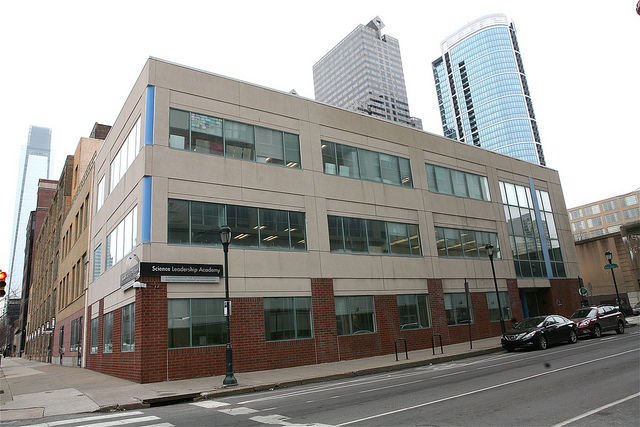
Science Leadership Academy is a public high school that holds about 500 students. SLA is project based, which means we are inquiry driven where we learn by doing major projects rather than midterms or finals. It is a different process to get into SLA than other schools, because you have to do an interview. SLA not only wants to see that you can make and present a nice project, they also want to get to know you and what new students can offer to our community. Our community is something that make us special and unlike other schools, because everyone who goes to SLA is quirky and unique. SLA gives a lot of freedom to be who you are and also a lot of privileges. For example, our laptop program, where all students get a laptop to do school work on. With this comes a lot of responsibility, and teachers know that they can trust us. SLA has achieved above average on all of their test scores. Not only are our academics are great, but  according to Great Schools, SLAs rating is an 8/10.

This is a picture of Science Leadership Academy


Ben Franklin High School is very different, they are a public school from grades 9-12. This school holds about 700 students, which is a couple hundred more than SLA. They have a very strict dress code, unlike SLA where we have total freedom to wear what we want. Including everything from a logo on the shirt, to making sure you have a belt. Ben Franklin's test scores are 56% below state average. Which is very low compared to SLA’s. Also 100% are low income students.

This is a picture of Ben Franklin High school


Ben Franklin’s mission is to “provide a high quality education that prepares, ensures, and empowers all students to achieve their full intellectual and social potential.” SLA’s mission is to “provide a vigorous, college-preparatory curriculum with a focus on science, technology, mathematics, and entrepreneurship.” Ben Franklin's vision is to  “become successful and socially responsible individuals” and also go to college. While SLA’s core values are “inquiry, research, collaboration, presentation, and reflection”. As you can see, these schools are very unique in their own way.

Once my school moves into Ben Franklin's campus, we will have access to many more things. For example like a gym and more learning space. With that being said Ben Franklin High School is making big adjustments, into their curriculum and their campus. Knowing that these two schools are not very alike, all the students and staff are going to have to figure out a way to get along. Not only will the SLA students have to teach Ben Franklin students about how we learn, because they are going from there curriculum to being project based. Both schools will become so much closer to each other because they will share a some of the same spaces. I know that this might be difficult to some, because of how the schools are like opposites. So far my research has showed me that we can really help Ben Franklin improve on things and how much they can benefit from us. I want to bring both schools together and make the situation easier for everyone.


This is my annotated bibliography.


Tags: English 9, You & the World
2 Comments

Bullying in Schools

Posted by Sukainah Hasan in English 1 · Giknis · Y Band on Friday, February 23, 2018 at 7:36 pm

In middle school, I’ve witnessed a lot of bullying. To see students get bullied, it’s heartbreaking to me. My middle school was a one race school. As I looked at some of the students I was around, I noticed how unhappy a lot of them were. I heard things like, “You’re ugly” or “You’re not wearing brand shoes.” Today, students are getting bullied for their looks and/or what they wear. The bullying I’ve witnessed, causes students to skip class just so that their bully won’t bother them. Something that attracts bullying is when one person bullies someone else, and then more and more people will do the same. This is a serious issue. Through my journey, I want some questions to be answered. What can we do to help make this problem into a solution? Also, how can schools stop this issue from occurring? Finally, is there something that I can do to encourage others to make a change? This is something that I will learn as I take you with me on my “You and the World” project to help with bullying in schools.

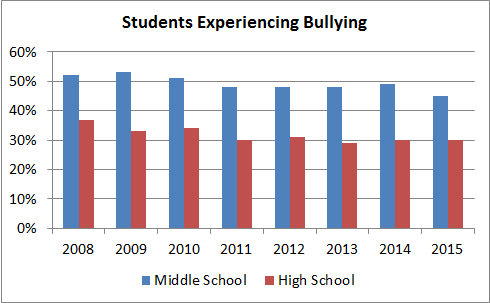
The image above, is an image of statistics of middle school vs. high school bullying that occur in schools. By looking at this bar graph, it shows that more bullying is happening in middle school, rather than in high school. Click here to learn more about bullying statistics!  


More than 160,000 kids that are getting bullied choose not to come to school. According to The Atlantic, “More than 160,000 students missing school every day because they’re afraid of getting picked on, taunted, or beaten up.” This source proves my point about students not wanting to go to school, because they’re getting bullied every single day. The real question is what’s the point of bullying? Isn't it pointless to bully someone to the point where they become suicidal? According to Stop Bullying, an organization that has lots of information and solutions about bullying, it says, “Research indicates that persistent bullying can lead to or worsen feelings of isolation, rejection, exclusion, and despair, as well as depression and anxiety, which can contribute to suicidal behavior.” This source shows that there are actual causes for students getting suicidal. No one deserves to get bullied at all. This situation is not getting any better. Everyday, there is someone getting bullied for what they look like, what they have on, or how they act in general. How can we show these bullies that what they are doing is wrong?


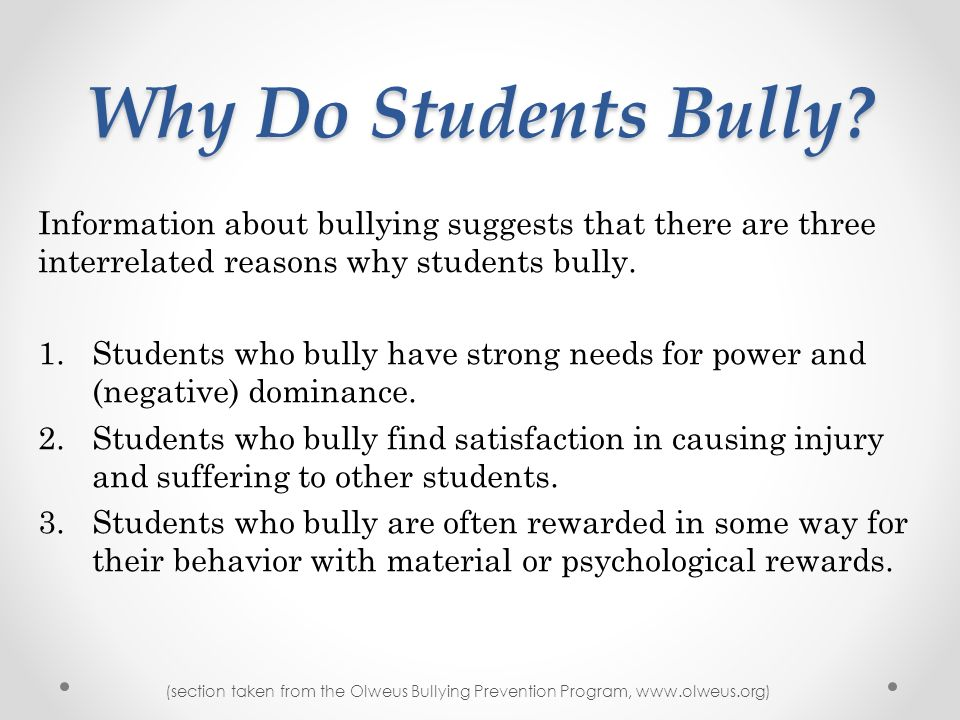
The image above, is a presentation slide on why students feel the need to bully. Click here to learn more about bullying!


Based on the research I’ve done and the background information I gave, we have a big issue in our hands. From this issue, we need to find a solution. Finding a solution towards bullying, that is happening in schools, will educate people, and even ourselves, about why this bullying is getting bigger and bigger. Also, we need to find a solution that will help students, that are actually getting bullied, fso that they won’t feel terrified to come to school everyday. After doing lots of research, my big question is: What can I do to make prevent bullying from happening? I am ready for this journey to take action, so that I can make a difference in the world about making schools an anti-bullying society.


Click Here to see my bibliography!


1 Comment

What in the Food Y&TW

Posted by Camren Jones in English 1 · Giknis · Y Band on Friday, February 23, 2018 at 6:51 pm

                                     What are you really eating?

Most people don’t know what’s actually in their food or how it affects them. My project is mainly based on the documentary What the Health, which promotes eating a plant-based diet, also known as veganism. The reason I chose this topic because both sides of my family have genetic diseases that made somewhat hypochondriac. On my paternal side, the diseases are diabetes, hypertension, and cancer. On my maternal side, there are cardiovascular problems. After watching “What the Health”, everything I thought I knew about these diseases.

Diet is closely linked to a lot of health problems that humans have, such as diabetes, hypertension, cardiovascular problems, cancers, and asthma. In the documentary, it demonstrates how those diseases and meat are connected. The IARC (International Agency for Research on Cancer) pronounced that processed meat is a Type 1 carcinogen. This is the same category as formaldehyde and tobacco smoke. The American Cancer Society made an article in response to the IARC on their website telling cancer patients to limit the amount of processed and red meat consumed. Why do they advertise limiting the consumption of it instead of just telling them to stop completely? In the article, it states “Colleen Doyle, MS, RD,... says, ‘We should be limiting red and processed meat to help reduce colon cancer risk, and possibly, the risk of other cancers. The occasional hot dog or hamburger is okay,’" but on the website they do not tell you to only smoke one cigarette a day, instead they tell you to stop completely.

Another disease connected to red meat is diabetes. A report taken in 2015 found that 30.3 million American citizens have diabetes(9.4%), and 84.1 million are pre-diabetic. Being diagnosed with diabetes shortens your lifespan by 19 years. Researchers have found that in the next 25 year one out of every three American will have some form of diabetes. Most people are taught that eating sugary food is the main reason for diabetes, but it isn’t. The main source is a diet that builds up a large amount of fat into the blood, such as a meat-based diet. Sugar has zero calories all it is, is excess calories, but when you do eat sugar your body stores most of it as glycogen or burns it off as calories.The main focus has been put on sugar instead of meat causing people to believe sugar is the reasoning for diabetes.Harvard T.H. Chan School of Public Health did a study about diabetes in comparison to red meat. They found that red meat mainly when processed it increases the risk of getting Type 2 diabetes. In the Harvard article, it talks the percentage rate that it is increased by, “They also found that one daily serving of half that quantity of processed meat—50 grams (for example, one hot dog or sausage or two slices of bacon)—was associated with a 51% increased risk.”

This photo shows how much the U.S. spends on research on diabetes

Humans are the only species that still ingest milk after infancy. Cow’s milk has zero benefits for a human compared to any other type of animal’s milk. It is full of hormones that are meant to help an infant cow grow. Therefore, when a person says “ I only get hormone-free milk” it is an oxymoron. Most humans are lactose intolerant, 73% of African Americans, 95% Asian, approximately 70% Native American, and about 53% Hispanic Americans cannot break down the sugars in dairy, but it is still advertised by our government. In schools, food guides/pyramids show everything that you eat which promotes dairy. There is a false conception that milk helps makes your bones stronger but studies have shown the more milk you drink the more prone you are to hip fractures. In HuffPost article, they did a study on men who drank milk, “A recent study found that elderly men who drank a lot of milk during their teenage years actually had an increased risk for hip fractures.”

MyPlate was published by the USDA

After doing my research I hope that people become less ignorant about the topic of their food and start to care more. I just want people to be more aware of how their food affects them and their environment.

Annotated Bibliography


1 Comment
83 posts:
← Prev
  1. 1
  2. 2
  3. 3
  4. 4
  5. 5
  6. 6
  7. 7
  8. 8
  9. 9
Next →
RSS

ENG1-025

Term
2017-18

Other Websites

Launch Canvas

Blog Tags

  • You & the World 13
  • English 9 11
  • English 1 5
  • You and the World 4
  • Y&TW 2
See all See less
  • Public
  • Homepage
  • English
  • English9
  • Agent of Change
  • English 9 You & The World
  • you and the world project
  • you and the world projects
  • English 9 - You and The World Project
  • Red streas

Teacher

  • Amal Giknis
Slate (skeleton-v3 PHP 8 prototype) · Location: 1482 Green St · Shipping: 550 N. Broad St Suite 202 · Philadelphia, PA 19130 · (215) 400-7830 (phone)
×

Log In