• Log In
  • Log In
Slate (skeleton-v3 PHP 8 prototype)
Slate (skeleton-v3 PHP 8 prototype) Learn · Create · Lead
  • Students
    • Mission and Vision
  • Parents
  • Community
    • Mission and Vision
  • Calendar

English 1 · Giknis · Y Band Public Feed

Create a Post

Heavy Eyelids

Posted by Phoenix Satterfield in English 1 · Giknis · Y Band on Sunday, March 18, 2018 at 6:24 pm

In my first blog post for the You and The World project, I have completed a lot of research on sleep disorders, specifically in teenagers. I mentioned insomnia, sleep apnea, and other causes of a lack of sleep. I have listed statistics for both disorders, and I have closed out with an original research plan.

Since my first blog post on the topic of sleep disorders, I’ve had a plan for the original research. I’ve researched a lot, and now it’s time go deeper into it.

My first original research plan was to put a survey in an advisory memo (you can take it if you want, it doesn’t matter anymore), or just send it to every freshman if possible. Most of the questions were about normal sleep, and there were some diverse answers from the few people I sent it to.


Screenshot 2018-03-13 at 10.48.24 AM
According to this chart, everyone who took the survey had said that homework and stress are two big causes of a lack of sleep, and I can agree to that.
Screenshot 2018-03-13 at 11.02.09 AM
​The little amount of questions that were about insomnia and sleep apnea had their answers displayed through pie charts. According to these, only one person knew one of the facts mentioned (1 in 3 people have insomnia).

Onto my more SUCCESSFUL original research, I’ve interviewed three people in my school who have insomnia (my first choice was someone at Penn Sleep Medicine, but it was more complicated). Two of the people I interviewed are freshmen in the same stream as I am: Ashton Krause and Izzy Curtin. The third one, a senior, is named Malachi Johnson.

Q: How and when did you learn that you had this problem?
Izzy: I forget the age, but I realized I couldn’t really sleep, and asked my parents, and they said I may have insomnia, and so we got checked out.
Ashton: During the summer.
Malachi: This happened during a rough patch. I went to therapy, and they diagnosed me with clinical depression. From there, we learned that I wasn’t sleeping because of distractions like video games, but when I stopped, I still wasn’t sleeping, and it stuck from there.

Q: What support have you sought for your sleep problem?
Izzy:  I take melatonin, which is a hormone that your body makes. If you obtain a little more, than it helps you sleep.
Ashton: Not a lot, but I do occasionally take blood tests.
Malachi: I’ve mentioned therapy, and I also taken medications, which help you sleep, but it’s not the best sleep you could get.

All three interviews ended in this question:

Q: What do you wish other people knew about insomnia?
Izzy: It can harm you, but you shouldn’t be so scared that you make stereotypes about it.
Ashton: It’s a struggle not being able to sleep at night. Who doesn’t like to sleep? Not having the energy from sleep makes everything harder and slower.  
Malachi: It can effect you a lot of different ways, so it’s not something to tamper with. You have to be aware and understanding of someone not being at their full potential simply because they don’t rest themselves.

I also interviewed one person who has sleep apnea (it was harder to find people who had this than people who had insomnia). The person I interviewed defined sleep apnea the same way this article did:


Q: Could you explain what sleep apnea is?

Brent Hershey: “Sleep apnea is a condition where a person’s airway becomes blocked during sleep. Breathing stops, then restarts again. It puts extra stress on your heart and you don’t get much restful sleep, so being extra tired during the day is a symptom.”.


Brent Hershey has slept better after he has gotten fitted for a CPAP machine. CPAP stands for Continuous Positive Airway Pressure, which is a mode of respiratory ventilation used for the treatment of sleep apnea.


Q: How does this affect other parts of your life?

Brent Hershey: Since I’ve gotten a CPAP machine, I’ve slept tons better.  It difference during the day, not as tired, more alert. Not quite as sleepy at night. Feel more refreshed in AM.


Q: What do you wish other people knew about Sleep Apnea?

Brent Hershey:  Just that if you have it, getting fitted for a CPAP machine is worth it. It’s a bit of a pain to get used to but results have been great.  


Before I completed these interviews, I had done a lot of research, but I still knew very little about treatment.  I didn’t really know everything that was to having insomnia or sleep apnea. These interviews have given me a deeper insight on everything about those two sleep disorders. Three different people gave me three different treatments for insomnia: melatonin, blood tests, and therapy, and I’m sure if I interviewed a fourth person, they would have said something completely different as well. I honestly didn’t consider what treatment for sleep apnea could be like (partially because I never had it myself), and I’m sure there is more to the treatment than a CPAP machine (But what is it?). My thoughts on sleep disorders before the interviews (compared to my opinion now) seems a little broad, and as if I thought there were only few things someone could do to be cured.

So, what’s my next move? I need a way to publicize this problem so that everyone could see it. I honestly don’t have as much of an idea yet, but I’m considering publishing something in writing. So, does that mean some kind of article? Whatever I think of at this moment, I’m probably going to change my mind later, like I did with my original research survey.


My annotated bibliography is right here.


Tags: English 9, You & the World
6 Comments

The Opinion on Pit Bulls

Posted by Michaela Berger in English 1 · Giknis · Y Band on Sunday, March 18, 2018 at 5:35 pm

Y&TW Volume 2

More Opinions About Pit Bulls

In my previous post, I wrote and researched on how there are many common misconceptions about American Pit Bull Terriers. What I found in my research is that the temperament of a pit bull is almost always reliant on its treatment from humans. If the dogs are handled with respect and their needs are met, there are fewer temperament issues. If any breed of dog, not just pit bulls, are abused or not given the care they need, problems start to occur. Sometimes pit bulls especially may have temperment issues because of post-traumatic stress disorder from previous abuse.

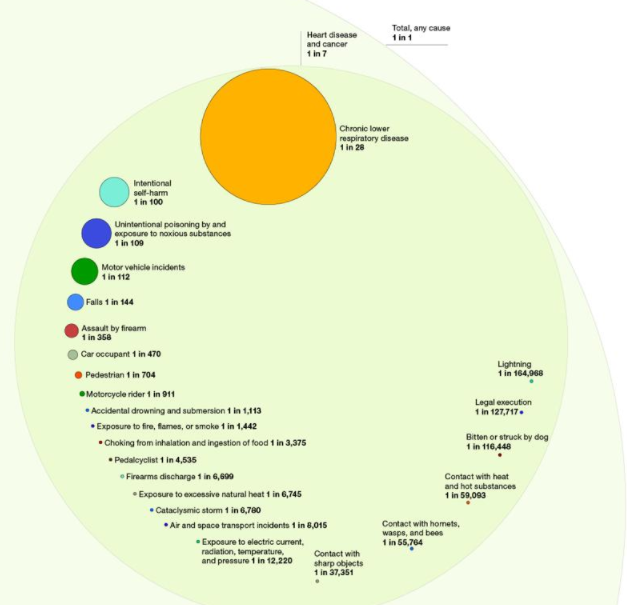
When I continued my research, I focused on statistics with pit bulls. One article by the Huffington Post gathers many statistics on causes of injury or death. For instance, common causes of death are compared to the likelihood of dying from a dog bite. An example from the article states, "Maybe more striking is the fact that you are FAR more likely to die from eating a hot dog (choking from inhalation of food) than from being attacked by an actual dog. Death by a real dog- 1 in 116,448. Death by a hot dog- 1 in 3,375." This reveals that there is always a possibility to die from a dog attack, yet there are many other things that are more likely to occur.

This shows how getting killed by a dog is a very small chance compared to many things

Sara L. Wilson, from the Canine Journal, has a blog post all about pit bull statistics. Similarly to the Huffington Post article, this post has a lot of information which puts pit bull casualties and behavior into perspective. One example is about how American Pit Bull Terriers are technically a “bully breed.” There are many other dogs on the list of over 40 breeds. Some of the other dogs on the list include Pugs and Boston terriers. One point this post makes is about canine behavior. Wilson writes, “What we do know from statistical analysis is that 86.8 percent of American Pit bull terriers have passed their temperament testing according to the American Temperament Test Society, Inc. This is a higher number of American pit bulls to pass their testing than collies, beagles, and even golden retrievers.” I think this quote proves that pit bulls do not have temperament as bad as we think.

Image result for list of bully breeds

Some examples of a bully breed. The quotation marks around “bully” show how those breeds are not necessarily rough.

For my original research on this topic, I created a survey to gather people's opinions on pit bulls. I chose to do this because in order to change people's view on pit bulls, I should know their opinions first. The survey helped me learn the surveyee's experiences with dogs in general, more specifically pit bulls, as well as what they think of pit bulls. Some people have had positive experiences with pit bulls, and some have had less positive interactions. Many of the people who took my survey were very open-minded; some said they had heard bad things about pit bulls, but they were sure pit bulls were friendly and kind dogs. This information lets me know that some people have similar opinions on pit bulls as me, but some people also have more negative views. Generally, more people had a positive outlook on the breed. My goal is to make sure everyone has a positive outlook on pit bulls.

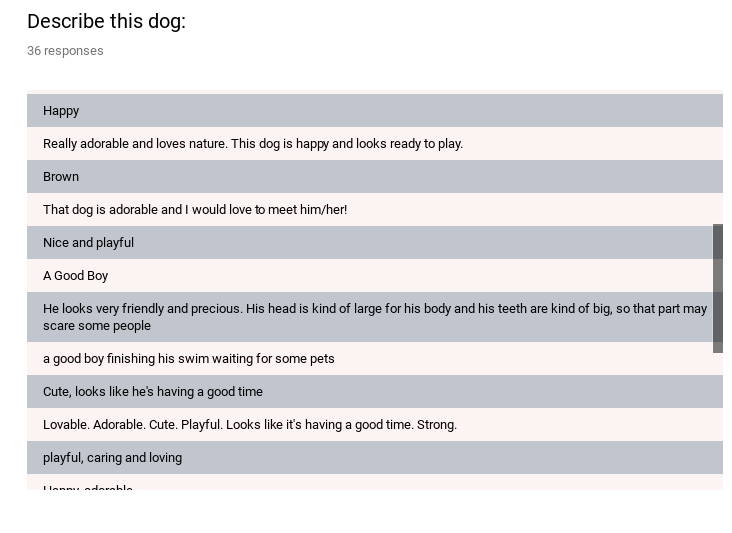
(Top) Some responses of what people thought about pit bulls

(Bottom) People describing a dog- seen below

The dog that I asked people to describe

My opinion on this matter has changed a little bit. Now that I know some of the behavioral statistics, I have an even greater opinion on the matter. I am interested to see what specific experiences, positive and/or negative, people have endured. I am especially curious to see what the negative experiences have been. There is nothing I have been left wondering.

The final step of the project is called an agent of change. This is where we use all of the research we have made and act upon our community problem. I am not very certain what I will do for my agent of change. I have had a few thoughts. One idea I have is that I will collect some supplies (dog toys, dog food, treats, etc.) and donate them to a dog shelter. A second idea that I have is to put up images in my school of pit bulls and caption it "Does this dog look mean to you?" When I do pursue with my agent of change, I am sure it will be great.


Check out my annotated bibliography too!
Tags: English 1, You & the World
7 Comments

Conversation

Posted by Taj Walter in English 1 · Giknis · Y Band on Sunday, March 18, 2018 at 4:40 pm

My first post is a long read and if you haven’t gotten a time to read it I will summarize it in this post. If you do want to read the post you can find it here. My original post introduces the idea of racial microaggressions. Racial microaggressions are racist things said or done that are rarely meant to be offensive. After introducing what they are I present and explain statistics showing how they affect individual people. These statistics come from a variety of sources that are all on my annotated bibliography found here.

Since my first post, I have interviewed six individuals and added two new sources to my annotated bibliography. I am going to breakdown the basic information given in each interview.

Horace Ryans is a sophomore and student advocate at Science Leadership Academy in Center City. The interview. The first question is “Have you seen any racial microaggressions in the SLA community?” His response is saying that racial microaggressions happen all the time. His example was normalization of the N-word. This gives insight into racial microaggressions in the SLA community and what students think about them and if they notice them. The next question was have you experienced any microaggressions personally? His example was in freshman year in African American History class people made jokes such as “slavery was not wrong.” The third question was do you think these microaggressions are common? He says that yes they are common in SLA, but only because they are common in the real world. The fourth question was have you reported these aggressions to any form of authority. He says no. The follow up question was does he regret not reporting these. His response is that he is using these experiences to learn and better himself as a person. The next question was what can be done to help stop racial microaggressions and he responded by saying was you always need to educate and advocate. He also said you cannot change someone mentality, but you can always educate them. The next question was how do you think the administration can help stop racial microaggressions in the SLA community. He says SLA is a community where students can take a problem and attempt to fix it themselves without the help of a teacher. He also says that teachers can be there to facilitate a conversation. This interview tells me that Horace has seen and experienced racial microaggressions, but he uses them to improve himself as a person instead of trying to get an adult to punish the student.

Londyn Edwards was the second person I interviewed. The questions and answers were typed out and they can be found here. The questions are the same as before. Londyn describes microaggressions that are much more personal. She describes when a classmate was discussing whether white people or black people get colder faster. When Londyn attempted to share her opinion the classmate responded with, “Well you’re closer to white anyways so your opinion doesn’t count.” This classmate was clearly talking about her lighter skin tone. This situation is a great example of what a racial microaggression is and why they need to be talked about. She has not reported the aggressions to any authority because they all happened with different people. She also says that she often questions the actions of non people of color in SLA. She then says she wants a gathering of the school to educate students on what racial microaggressions are why they are a problem. This is similar to what Horace said in his interview.

The next person I interviewed was Deacon Mackin, found here. Deacon is a student at SLA center city and a freelance artist. He has seen racial microaggressions in the SLA community and the worst has been the use of fake statistics to prove a point. Like one student claimed that mass incarceration is a myth. He says he has not experienced racial microaggressions in the SLA  community because he is white, but he has witnessed a lot of racial microaggressions in the community. His example is one of his black friends were asked what it is like to live without a father even though he has a dad that he lives with. The aggressor then made a fake statistic that most African Americans do not have a father at home. Deacon believes that these aggressions are common in the community. He thinks students can fight against these aggressions and call people out about these aggressions. He thinks that when aggressions are reported that the administration of the school acts well on the problem. So far all my interviews have led to very similar data. They all believe that microaggressions are a problem and that they need to be stopped in some way. Deacon is the only person so far to say fight against the aggressors instead of educate the aggressors.

My fourth interview is with Zoey Tweh, found here. I recommend listening to this interview if you only listen to one. It is the most insightful interview. Zoey is a junior at SLA center city and is also the president of the Black Student Union of SLA center city. Zoey says she has seen microaggressions. She is the first to mention the diversity of SLA and the intentional diversity of the school. She also says that since there is a lot of diversity there is also a lot of diversity in perspectives. She gives an example that some students believe that police brutality is not real. She says that she has not personally been attacked by a racial microaggression, but she has been offended by someone's lack of open mindedness. Zoey says she doesn’t tell teachers or staff about racial microaggressions, but she does ask for these topics to be brought up in class or discussed in class in some way. She says that SLA students often have difficult conversations and talk about problems with race and that's how you can stop racial microaggressions. Zoey also says that if the administration continues to strive towards having discussions about racism in class then they are doing a good job.


Two people having a conversation to understand each other. An example of what Zoey is talking about.

My final interview was with Ella Burrows and Kaamil Jones. Two seniors from SLA center city campus. Kaamil says social media is a major part of racial microaggressions. His example was in freshman year Harriet Tubman was proposed to be on the twenty dollar bill and a student said on social media “Harriet Tubman doesn’t belong on the twenty dollar bill she belongs ironing my clothes.” Ella agrees that social media plays a major part. She adds that outside the classroom racially insensitive comments are made. Kaamil says he has never experienced a racial microaggression in SLA. Ella says she has experienced racial microaggressions at SLA like “it’s cause she’s white.” She says she has never taken offense to the comments. Kaamil says that they are common, but they are rarely meant to be harmful. He says this is because people become too comfortable with what they say. Ella agrees that when people get too comfortable they say things that are not appropriate. Neither of them have reported anything to any administration at the school. Kaamil wants people to have a conversation about race to try to understand other people's perspectives. Ella agrees that conversations have to be had. They both say that many people do not like talking about race and that is a problem. They agree that the SLA administration does a great job with handling these topics by trying to get the students to have these conversations. This interview talks the most about why racial microaggressions occur. This is another interview that I think is great to listen to.


Major social media platforms.

All these interviews have told me that racial microaggressions are common in the SLA community, but most common on social media. Most agree that a conversation is the best way to stop racial microaggressions. They all agree that the school administration does a good job handling race by having conversations.

The final part of this project is to make some change about my topic. Since most of the people I interviewed agree that conversation is the best way to stop racial microaggressions I will attempt to start multiple conversations in the community about race. I will add more to this idea when I get a firmer grasp on my idea.


Tags: English 9, You & the World
3 Comments

Home For The Isolated

Posted by Margie Castejon Gamez in English 1 · Giknis · Y Band on Sunday, March 18, 2018 at 4:01 pm

As you may remember from my last post , elders living in isolation is something that concerns me. Humans often start a new part of their life when they realize that they are getting old and that they are alone. As part of my investigation, I contacted Gail Kass, the President and CEO of NewCourtland Senior Services. Their mission is “providing affordable housing and services for low-income seniors in Philadelphia.” After the interview with Ms. Kass, I learned about the importance of helping others and how wonderful it is to make someone feel like at home.

Ms. Kass said that the first activity that the residents do is start their morning with a warm breakfast in the dining room. Then throughout the day, the residents do activities like play Bingo, got to the nursery room, exercise, work on music and art projects, or stay in their rooms as they wish. The building is divided into two sections with 60 beds in each section. There are double rooms and each room has the capacity of two patients per room, a little setup, beds, bathroom, and a closet Three warm meals are served throughout the day. I asked her: “To what extent did the patients leave the facility ?” She said, “There are three main reasons why the patients would leave our facility and it is to visit their doctors, go on trips, and when the families pick them up.” Ms. Kass said that they often go on trips to the museums, such as, the flower show, restaurants, outdoors, and their favorite place, the dollar store.


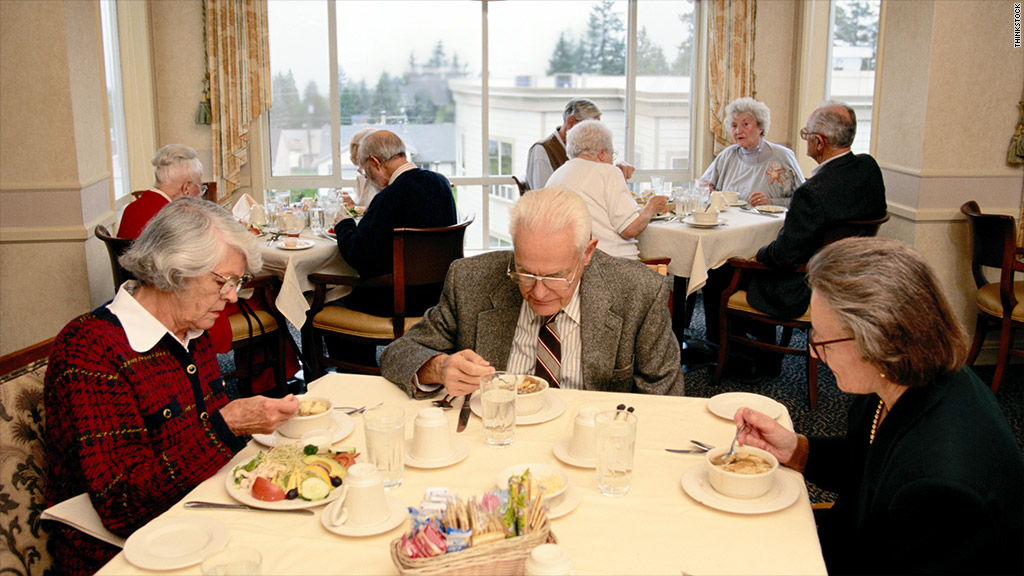
This is a picture of seniors eating at a dining room. That’s how it looks like at Germantown Home

I was impressed by all of the amazing activities the staff at Germantown Home do for their residents. It is clearly that Germantown Home is a safe place to live. In my interview, we also talked about how some of the patients had a tough life, a lack of education, and how some don’t have families. As soon as Ms. Kass told me that some of them had a tough life, I asked her “How do you think the majority of patients here feel about their lives? How would you describe their levels of happiness or isolation?” Ms. Kass responded, “They live happily, we provide them with what they need. They feel lucky to be here. Others feel miserable and angry with their lives.” I also asked her, “What was her hope for them?” She said, “Trying to give them a quality life, make them feel as independent as possible, make them feel safe and happy, and make sure they are part of a clean environment.”  

After the interview, Ms. Kass arranged a tour for me at Germantown Home. On Monday, March 12th, 2018 at 9:00 AM, I was at the doors of Germantown Home. As soon as I got there, the first thing I noticed was how clean the place was and the odor of the place was pleasant.  Ms. Kass told me that the Assistant Home Administrator, Ludmila Kovatcheva, would be taking me on the tour. I met with Ms. Kovatcheva and we sat down, she said the exact same words to me that Ms. Kass had said during the interview. I immediately knew that both ladies are passionate and respectful of their job. We started the tour on the second floor, Ms. Kovatcheva took me to the calendar, which was very specific about the daily activities that were going to be held each day of the month. The activities for that day were dance music and movement, puzzle club, soothing sounds, ball toss, table games, and a hair salon. Also on each floor, they have a command center that has a clear view from the hallways

As we continued the tour, Ms. Kovatcheva took me to the dining room, where the residents were happily waiting for their dance and movement activities. Then, she took me to the nursery room. I was surprised when I went in there. The room was spacious, it was filled with light, it had a fish tank, and a crib with dolls. Ms. Kovatcheva told me that most of the residents spend their time there. The experience was amazing, I loved it. Also, there are kiosks on the walls, Ms. Kovatcheva told me that all of the residents’ activities are recorded in those kiosks. The reason why they have that is to keep a record of the medicines that the residents take, the time they spend doing activities, so if their doctor or family want to see their medical record, it would be available for them all the time.    

In the outside of every room, there is the information of both residents. The information talks about their hobbies, family, and about their life before Germantown Home. After I read a couple, I asked Ms. Kovatcheva “What do you do for the residents who loved their careers and that now feel like they are not able to practice them again?” She said that they try to incorporate some of the activities they used to do. For example, if one of them loved horses, of course, they can not bring a horse to the building, but a solution would be to watch a show based on horses.

I was really happy to know that they also conduct a therapy with a dog. Studies show that pets can be really helpful for seniors who live in isolation. Living in isolation is something that Germantown Home is aware of, they try to keep their residents as busy as possible. They have a huge program known as the comfort and joy program. The program is allied with kids from the area that come in once a week and create beautiful murals that will decorate the building.

This is a picture of how pets can be helpful to seniors who live in isolation.

The tour was about to end and I could not leave without asking “How do you guys deal with the death of one of your residents?” It was a really hard question to ask. I was getting sentimental and Ms. Kovatcheva said that a funeral is held as the resident wished. They make a memorial time for the resident who passed away with their peers, staff, and family.  As I was heading to the exit, something caught my attention, there was a big blanket covering one of the beds, even when I did not know what was happening, I asked Ms. Kovatcheva, “What was going on?” She said that a lady had passed away that morning.

I left the place and felt really happy to know that there are senior homes like Germantown Home who really care for their residents. I’m not sure what I am going to do to make a change, but for now, I am thinking about bracelets of hope. I will try to give out as many as I can to spread the word that just like kids need from our society, seniors need from our society too.                     


Annotated Bibliography                                      

Tags: English 1, Y&TW
2 Comments

Original research

Posted by Fionn Hyland in English 1 · Giknis · Y Band on Sunday, March 18, 2018 at 1:40 pm


    In my first blog post I talked about social media and how it can affect what people think about themselves. I also talked about photoshopped pictures and non photoshopped pictures and how people today want to be something else but there not. For my original research I did an interview I interviewed Jenny Mcquaile. She directed and produced the documentary straight/curve redefining body image.  For my research I also watched the documentary.


In the documentary they talked about a lot of things that I mentioned in my last post. The documentary focused on a lot of things like teenagers and body image and there self esteem how it affects them today. It talks about what people are seeing on social media and in magazines and how people remember pictures faster than anything else. How that affects people thought process about how they look. In the documentary they use a diverse number of models to speak and model so people can see that you can look good in anything and it does not matter how much you weigh and how you look.   


I learned a lot from the interview that I did with Jenny Mcquaile. I learned that clothing sites are actually listening and that they pay people to read the comments. In the beginning I was not focused on eating disorders but when I did the interview I learned about eating disorders. Like how people associate that larger people are not healthy when it really is that people need fat to be healthy. Jenny also mentioned in the interview that social media was a cause for this problem but she also said that social media can be used for good. For example she said that social media can be used as a voice and we can know tell people what we want out there on the internet. In my last post I never really said that social media could be used for good but know that I am thinking about this it can be used for good. You can use social media to get your opinion out there and to make sure that people here you.   


The documentary is not focused on one thing it talks about eating disorders, and teens and how self conscious they are. I think the main thing though that they were trying to get across was that beauty can come in all shapes and sizes. To do this they used different models that were different ages and races and they model to show this. The models also got to tell their experiences like what it is like to be a model today. They talked about what the requirements are to be a model today.


I watched a ted talk and it is a lady who runs a non profit which is dedicated to redefining body image and beauty. In the ted talk she talks about her experiences and what she had to deal with growing up. Something that she said that stood out to me was my body is an instrument not an ornament. I think she meant that once we stop looking at ourselves and trying to fix all the things that is wrong we can move on and become something better. I think that this quote helped me expand on the issue more.

After doing all this research I am starting to notice things that are affecting people self esteem and the way they look at themselves. Like on social media or billboards I am also starting to catch myself and notice when I judge myself because of the way I look. I believe that all these things are wrong and if people stop seeing just their body and the way they look then I think people can move on and stop focusing on the way they look. One thing I wish I focused on more is eating disorders. I believe that eating disorder are a major issue with this topic. I wish I looked into this problem more and discussed it more.


For my agent of change I think I might write letters to all the clothing companies that give the image that looking skinny is the right way to look. I believe that the interview I had with Jenny Mcquaile informed me on a lot of things I did not know before. I also believe that it helped me further my research on this topic and expand my thinking.   


Link to interview here
Bibliography
Be the first to comment.

A POV of Poverty

Posted by Peter Keo in English 1 · Giknis · Y Band on Sunday, March 18, 2018 at 8:24 am

A Unique Point of View of Poverty

A young child carrying grass for cattle. These are usually odd jobs any child can do for miniscule amounts of currency.

Image Credits


In my previous post, I introduced you to the topic of poverty in Cambodia. I provided immense research and information of why it's such a prevalent problem in the country today. One such factor was the effects of wartime, and another one is because of the deteriorating quality of education present in the country. After conducting a bit more research, I found out that the rate of poverty fell by almost 30% in recent years. In 2004, it was a high as 50% in the nation, before dropping to an astonishing but still troubling 24% in 2014. If the data was conducted in 2018, I would predict that the poverty rate would be around 13% if the poverty rate fell by 3% each year. As stated in my other post, Cambodia is backed by money from foreign aid. In my new research, I found out that such countries include the United States, and China. It is said though that China only looks at the potential resources and business that the country can offer, rather than pouring money in for the sake of human rights and living conditions. Over 70% of the country with a population of 15 million is under the age of 30, which is staggering for a country infested with poverty.


Houses on stilts that are deployed along the river are common sights to see in these kinds of areas.

Image Credits


Also related to the new information I found while conducting new research, is that while poverty is mostly in the rural areas of Cambodia (such as the countrysides and so), it is also beginning to appear in urban areas as well. Cities like Phnom Penh (the capital of the country), or Siem Riep (home to Angkor Wat), are slowly starting to see poverty rates rise. In my opinion, this is especially alarming because these are big cities and you should see people going to work and having conversations about the weather, not people begging for spare change on the cobbled and musty streets of Phnom Penh. The last piece of information that I found is that more than 25% of all households are led by a single mother, due to the wars and strifes that have occured during the nation’s bloody history. Combined with the existence of poverty, and an high rate of uneducated unemployed women, they often have to turn to the sex industry, which is another yet unofficial source of income for the economy. Due to this, there are a lot of question marks to whether or not the government should do something about this.


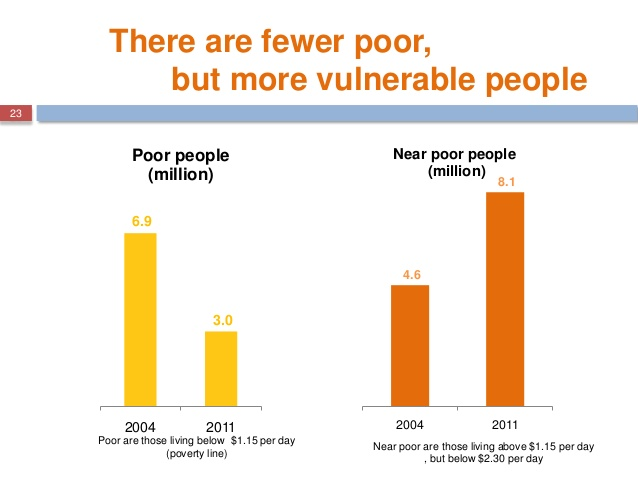
This graph shows the comparison between people in poverty and people who’s on borderline poverty. As you can see, the rate of poor people decreased, but the rate of people who are endangered to becoming poor is astonishingly high in 2011.

Image Credits


For my original research, I conducted an interview with my father. I produced a total of 8 questions, all relating to my topic. There was a lot of reasons for interviewing him such as time, accessibility, language barrier, and etc. But the main reason was that he is a person familiar to the country, with him growing up there himself. He to me is considered someone who lived through poverty. From my interview, I learned many things about him that I did not know or I knew but very vaguely. For example, my first question asked about how it was like growing up for him, and he responded by describing the hardships he had to deal with growing up. One such example included him saying that he would have liked to go to school, but instead he had to focus on working in order to provide for his family. A similar pattern I saw in his responses is that he believes no jobs and the government not caring are the main reasons to why poverty is so prevalent in modern day Cambodia. This leads me to believe that in order to extricate the root of the problem, the government must listen to their people more and there needs to be more jobs with higher paying salaries. These are huge additions to the understanding of my issue and I believe that learning from a person who’s gone through the same things as people I’m researching is invaluable to my knowledge. My personal opinion on poverty has not changed due to the interview, but rather it has strengthened. My opinion is that poverty is a major issue, and if it's not fixed soon, then the future of Cambodia as a nation looks grim and bleak. With this interview, this just confirmed my opinion and there is nothing that can even remotely change it.

The Interview


Here is the person I interviewed, which is my father who is pictured alongside my mother.


This brings my Original Research post to a close. I hope you find the interview interesting as it takes you to a point of view that is told by a person who experienced poverty first hand. Now for my Agent of Change, I plan to send at least 10-15 care packages filled with various amenities and cash. Said various amenities could include, travel sized bottles of toothpaste, shampoo, or instant foods such as ramen noodles or other various instant foods. Monetary values could range from $10-15 dollars which may not seem like a lot, but one  U.S dollar is worth 4000 Cambodian riel and most items in Cambodia such as clothing and food can be worth from around 2000-300 riel, which is a huge bargain. These will be delivered to my lesser relatives in Cambodia who I hope will appreciate it. This plan is tentative for now, but this is just a general idea of what I am planning to achieve for my Agent of Change. Thanks and remember, you can make a big difference to save Kampuchea ( កម្ពុជា)!


Take a look at my annotated bibliography!


3 Comments

I have an animosity to animal abuse;I am ardent in stopping animal

Posted by Kayla Kelly in English 1 · Giknis · Y Band on Saturday, March 17, 2018 at 9:08 pm

post about you and the world project and animal abuse

Kayla Kelly                                                                                                                            3/17/18

English 9

Ms. Giknis

You and the world projet       

  I have an animosity to animal abuse;I am ardent in stopping animal abuse


                           My Dog

Before                                           After

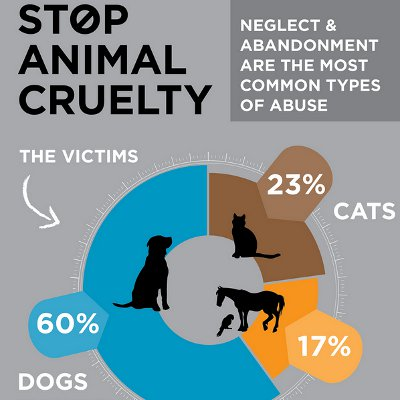
How many animals get abused in the U.S

https://www.petsafe.net/learn/help-prevent-animal-cruelty

The Numbers are high considering the chart, 60% of all abused animal victims and 60% of them are dogs, 83% are cats and dogs, and if you think how many people abuse animal across the united state.The SPCA is is a good choice , because most time they have to euthanize animals if they don’t have enough room, but They said the don’t ethinzia adoptable animals, and they try to save as many animal as much they can which is also why it is also a good choice, and  they are getting less animals in so they don’t have ethinize as much, and maybe more room. And animal abuse is a very serious problem, and SPCA is still good because they try to help as much as they can, it is like me trying to help every homeless person of the street and taking them in to my home I can’t do that to all of them, I don’t have enough room to do that, not to mention I have small house, so I would have to let go of some people like what SPCA does, but now they probably don’t do it as much ( they do not accept birds , dogs, cats, small animals). An the ACCT is a good choice too because like my interviewer said the ACCT  is an open it take shelter,so they will take any animal bird, cats, dogs, etc. So if you know you can’t take care of an animal please take it to ACCT, or any shelter, because if you know you can’t take care of it it is a form of abuse and it is better off in any shelter. She also said that abuse is what they regularly see so don’t be afraid to take the animal in , but if it would be related to the police like your neighbor is the abuser then call the PSPCA.And if you help lessen the number of animal coming in , and to help people take care of animals, and if you don’t know how to take care of an animal but you enough money to take care of one then you can look on web sites and ask for help, don’t be embarrassed, there is more people like that than you think.and my other interviewer said that all my question where more for PSPCA for an iterview, but I was already running out of time for that when I got her response.                                                                My interviewer teeling me that I could hep ACCT with my agent of change

.

the other interview that said PSPCA was a better coice to interview fo r my questions


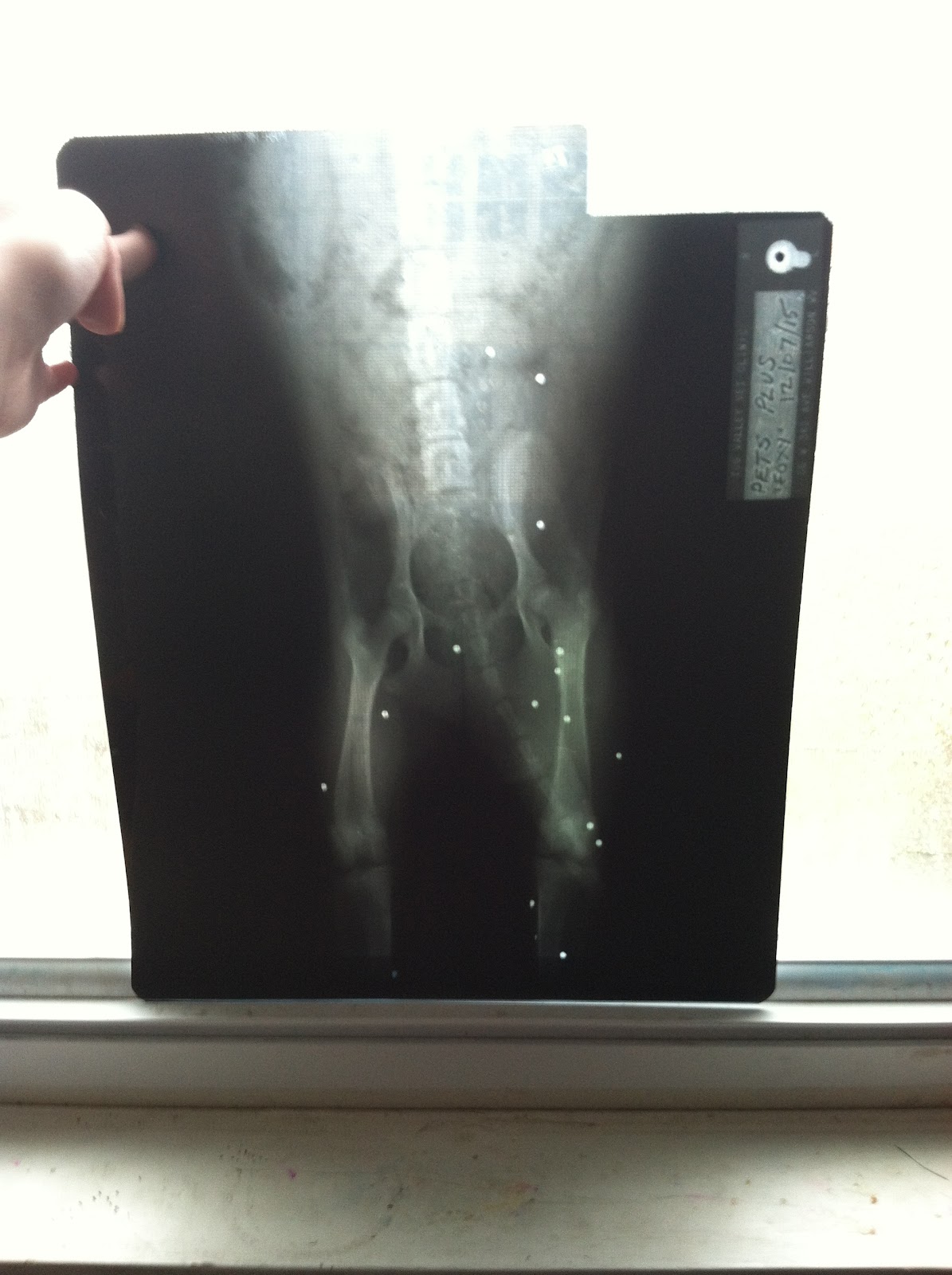
But Anyway, I have a dog(the first picture above) that is probably been through that, Although we don’t,know her back story besides her being shot 16 times and her being still here, not to mentions she had a couple of disease before the adoption center got her, and usually dog adapt and if she was wild she probably would not have a disease, but who knows she may have escaped, but I mean she is in my family's care for about 2 years in march 12th and she is very happy and she is always wagging her tail, beside when she goes for a car ride, tha vacuum goes on , and if we put on a tv show that has a gun shooting a one point like a mystery show,or if there is a fake gun like a nerf gun near, which would be the trama, but that is kind f why i am doing this.

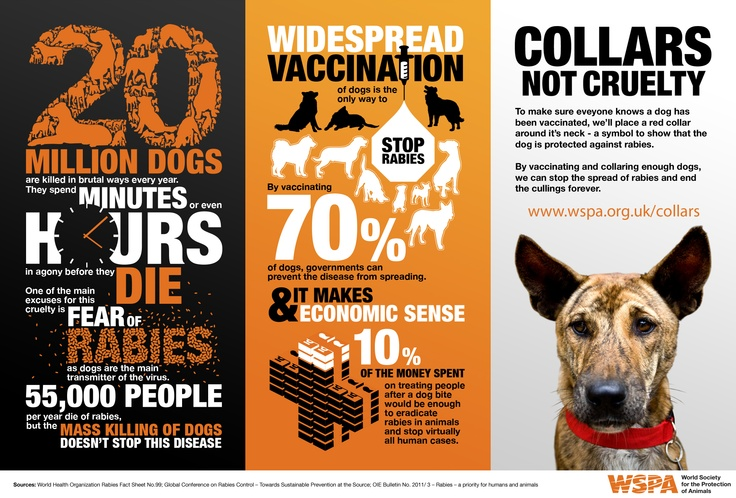
Rabies: why most people terrorize dogs.

https://www.tes.com/lessons/ZfjkR0gtFqB-jQ/animal-rights

Dog are Abused 20% More Than any Other Animals in the U.S


But  Abuse can’t get unnoticed, and that means we have to start speaking up, I mean the abuser doesn't have to know a thing, most calls are autonomous, and you don’t have to tell the person that you going to tell, like almost every one of my site say to do, because it is important.And what is even more important is that 100% of people who commit  sexual homicide has a history of animal abuse which is kind of bothering that a lot of them do that, and it doesn't mean the other way around so if there is a neighbor who is abusing an animal doesn't mean they will commit sexual homicide so don’t be afraid to do your own actions and report them.Not to mention abusers, abusers don’t give the animals enough room for  them sometime to breathe and grow, or give them too much room, like the whole yard but can’t use all of the yard because they are chained up from the picture in many sites. Which is again terrible, considering the effect, which is physical and mental health issues.Or animal hoarder, I mean they collect animals and are like I can take care of them even though they obviously cannot, but they completely think they can handle everything but they have a lot cats, dog, etc.

And to kind of wrap this up a bit, I read the laws(which I suggest for you if you care for animal, because one of my site suggests it too in one of the steps for reporting animal abuse). first, animal abuse penalty includes the officer to file a felony charge(a felony is a severe crime and is viewed severely by the society, and can include murder, robbery, kidnapping, etc)dog t fighting is already a felony, and breaks down into different grade pentaly’s base on how hard the abuse is. And veterinarians have civil immunity( where you don’t get served the punishment) now I don’t get too much of this but if they actually harm animals I think they will get charged because rules are rules, I think it is only for checking things from the dog and stuff. And a little bit obvious but if they commit animal abuse they will have to give animals. And did you know there is a new law that if someone abuse horse’s they will be charge the same charge as abusing dog and cats.

For my Agent of change I was thinking of having a bake sale and and giving the money to ACCT, and I will be ecpically easy because my interviewer is working in funraising and money depratment. I had limited chocies to do think, because I can’t just walk up to a person like hay your and animal abuser I will call the cops and make sure this animal is safe, and there is volenteer options but that means I might have to do it way more than I thought. I have students run philly style, durring saturdays an hour after school on mondays tuesdays and thursdays, and also have robotics, not to metion I also have green season in running which means I have to practice in the summer, and all of that make My time very limited, and I don’t know what hours they would like me to go in, plus I don’t know how to get there, I haven’t even travel in there over there a thousand time on the train but I haven’y been in there, not to metion it is know where neer the train station and the close septa there is 53 an I don’t even know where I could even catch that,  and I can definatl not get another dog, my dog is j same way about elouse with other dogs and she is a nut case, we can take care of her but with my grandma, my grandma would be going nut, my grandma already freaks out over pretty much any thing we do (my dad, mom, brother, and me ,feel the her, way protective, always want to cleans, too much, but we love her any way). I could sent care packages, but I can’t take car of that, mostly likely my dog will rip up ANYTHING, money is better, she hates money and metal, when I show her money she is nor tempted to eat it.


                                          Annotated bibliography

  1. “Animal Cruelty”Learning to give,https://www.learningtogive.org/resources/animal-cruelty

The definition of animal abuse is the acts of violence or negling the animal on purpose or at least mostly on purpose.and it is important to know which ones are which because, police or animal control will know and asses the problem, like if it is dog fighting, and you say i don’t know abusing an animal in a backyard, they might think oh only one and not bring enough equipment, to ring them to a shelter. This abuse can cause physical and emotional pain, considering my dog whenever she hears gunshots(even on TV, plus we live near an country club that has an gun range) she gets scared and when we first got her she was jumpy and whenever and man/boy try to take her collar off she would growl, but when me or my mom took it off she did nothing(she is fine now and is very happy and understands that we will not hurt her and stuff because now my dad and brother can take her collar off) so that memory will live on.

  • Animal abuse is very cruel and hurtful to other animals (I do not trust SPCA because if they run out of room for animals, they ethiniza some animals)

  • It is very horrible because animal are just like us, they have feeling just like us, so it is very unfair for someone to do that to an animal.

              2.“Animal abuse and Human Abuse: Partners in crime” PETA,https://www.peta.org/issues/companion-animal-issues/companion-animals-factsheets/animal-abuse-human-abuse-partners-crime/

Studies have shown that aggressive animal are likely to be abused because people are afraid and a coward. 100% of sexual homicide  has a history of animal abuse.Albert Desalvo killed 13 women and abused puppies so it can back up my reasoning.

  • It is very usual for a sexual homicide person to abuse animals

  • And I am not surprised that aggressive animal get abused more,because again people are cowards

3.“Animal Abuse”Amarican Human https://www.americanhumane.org/fact-sheet/animal-abuse/

4.I didn't know that there was steps, I kind of knew some signs but I am not sure whether I will recognize the signs.owners often neglect their pets because they don’t know there pets need, but most of neglect is on purpose.but outrageous because human system can take calls right at that minute, but they get a lot calls so they will not take the call right at the moment.

  • We can testify or sign a complaint about the abuse like how you sign a complaint about noise

  • Neglect in both children and dogs are horrible  and can result in death

“Reasons for abuse” wildlife rescue and rehabilitation http://wildlife-rescue.org/services/advocacy/animal-abuse/

5.Actions can be active and passive, like hurting the animal and not doing anything for the animal. Like some kid decapitated dog and stuff and setting fire on their tails and butts.Passive actions can cause severe pain to a dog or cat

“ U.S Animal Abuse records deleted-What we stand to lose”National geographics.https://news.nationalgeographic.com/2017/02/wildlife-watch-usda-animal-welfare-trump-records/

The roadside Zoo neglected the animals including premature death. And making the monkey Dehydrated while performing experiment on them that is just rude.and whipping elephants and changing them.

  • I love elephants so I hate that they would do the elephants

  • And I hate that the family zoo would do that and I wonder if they ethinza


Extra websites:

http://placerspca.org/wp-content/uploads/2014/09/faqs.pdf

http://criminal.findlaw.com/criminal-law-basics/what-distinguishes-a-misdemeanor-from-a-felony.html

http://www.philly.com/philly/news/animal-cruelty-pennsylvania-libres-law-20170628.html

https://www.today.com/pets/aspca-adoption-euthanasia-s-down-animal-shelters-t109029


Tags: English, you and the world projects
1 Comment

My Next Phase

Posted by Nasir Duppins in English 1 · Giknis · Y Band on Saturday, March 17, 2018 at 12:23 pm

The Next Phase

In the beginning of my journey to stop littering, I gave a basic definition and talked about what littering is. I explained the cause of littering, the effects, and a solution that could possibly stop people from littering. I also  gave statistics about littering that happens in our community. To see what the littering situation was like, I went out and observed my neighborhood.

Age Difference

The next task that I fulfilled with my journey, was field observations. What I was observing was the amount of trash on the ground and how frequent people drop their trash on the ground. As I was observing, I noticed that different age groups litter less or more. Then I realized that adults litter more than teenagers and teenagers litter more frequently. I looked up a website where it gives gives statistics on the types of trash on the ground and the different age group that litters the most. This website stated, “Those under 19 are the most frequent culprits, while adults aged 21 to 35 are three times more likely to litter than the 50-and-up crowd.” This information explains about the age difference when it comes to littering, because you would think that teenagers are the ones littering but really it is the adults who is littering the most and that has an effect on the youth. The youth doesn't care as much for their environment because they are focused on other things and they litter because they see other people do it. If adults are littering more than teenagers, it’s not showing teenagers a good example of how the world should always be clean. People should educate each other about the importance of keeping our streets clean.

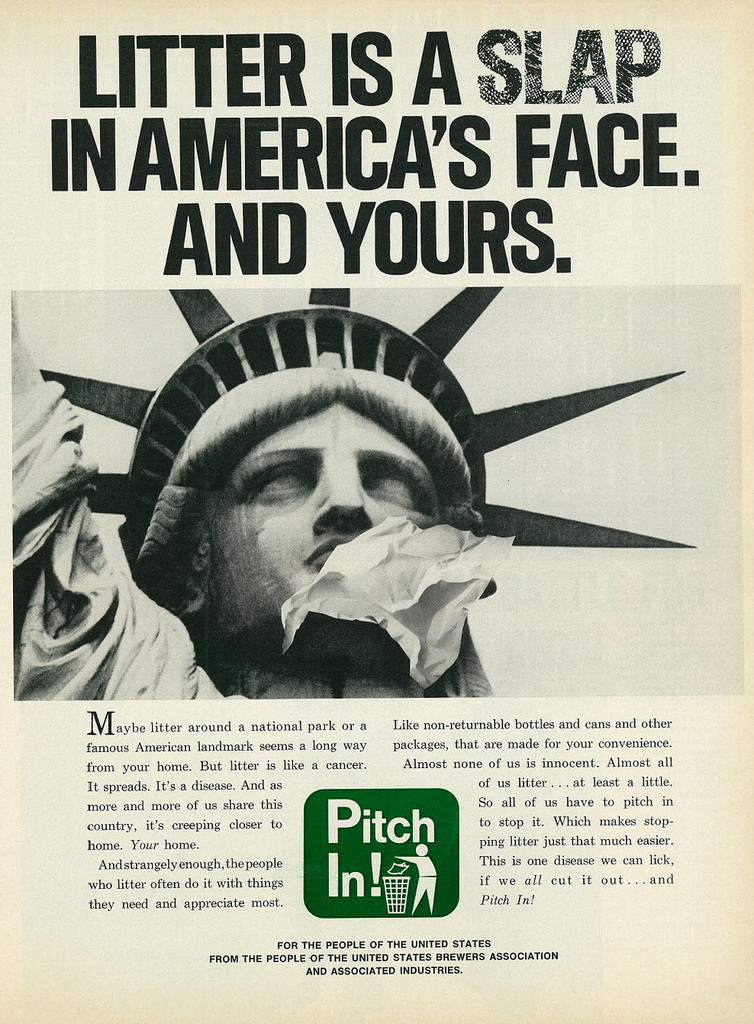
This picture represents america being dirty because all the litter that is everywhere.

My Observations

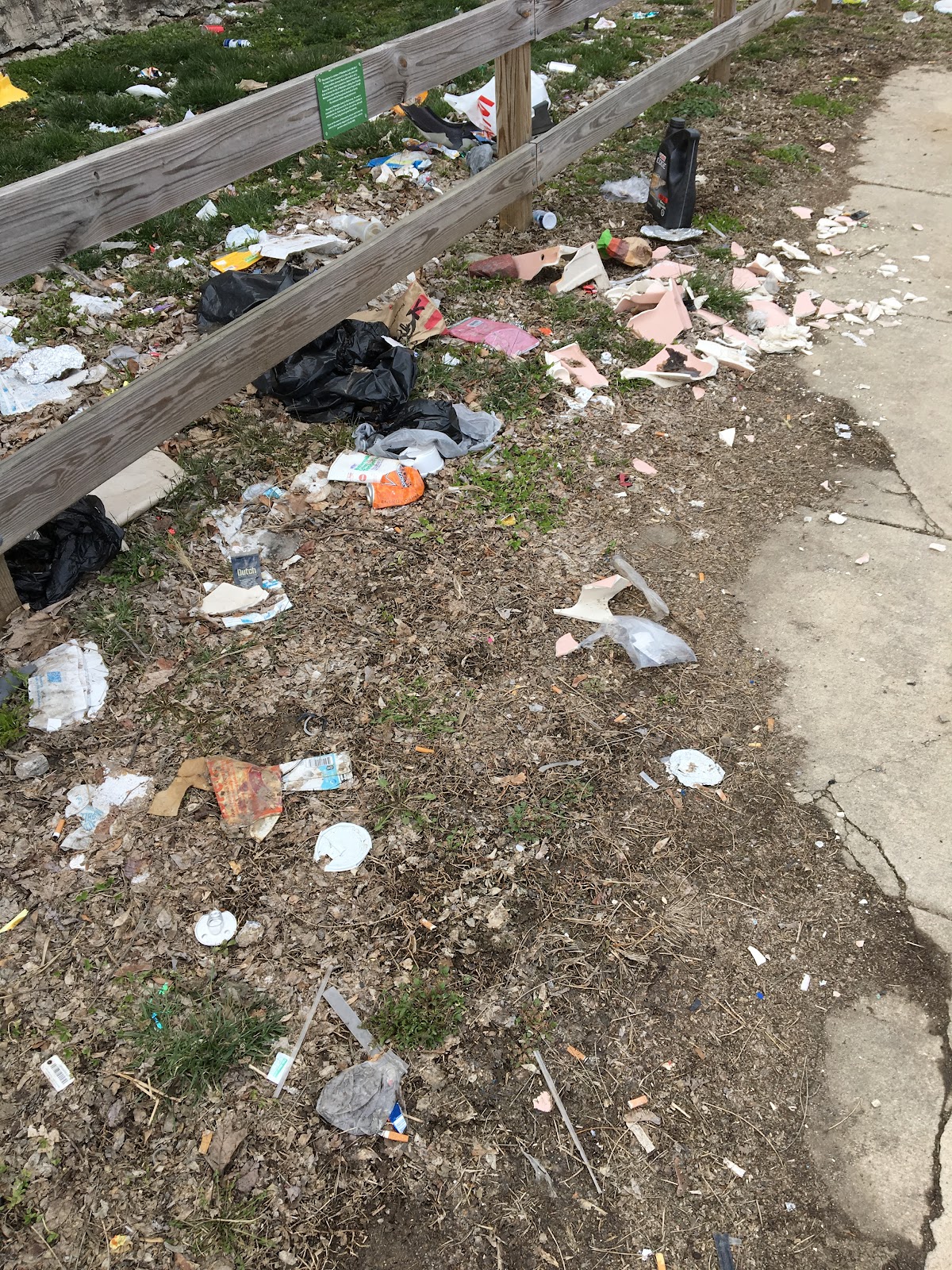
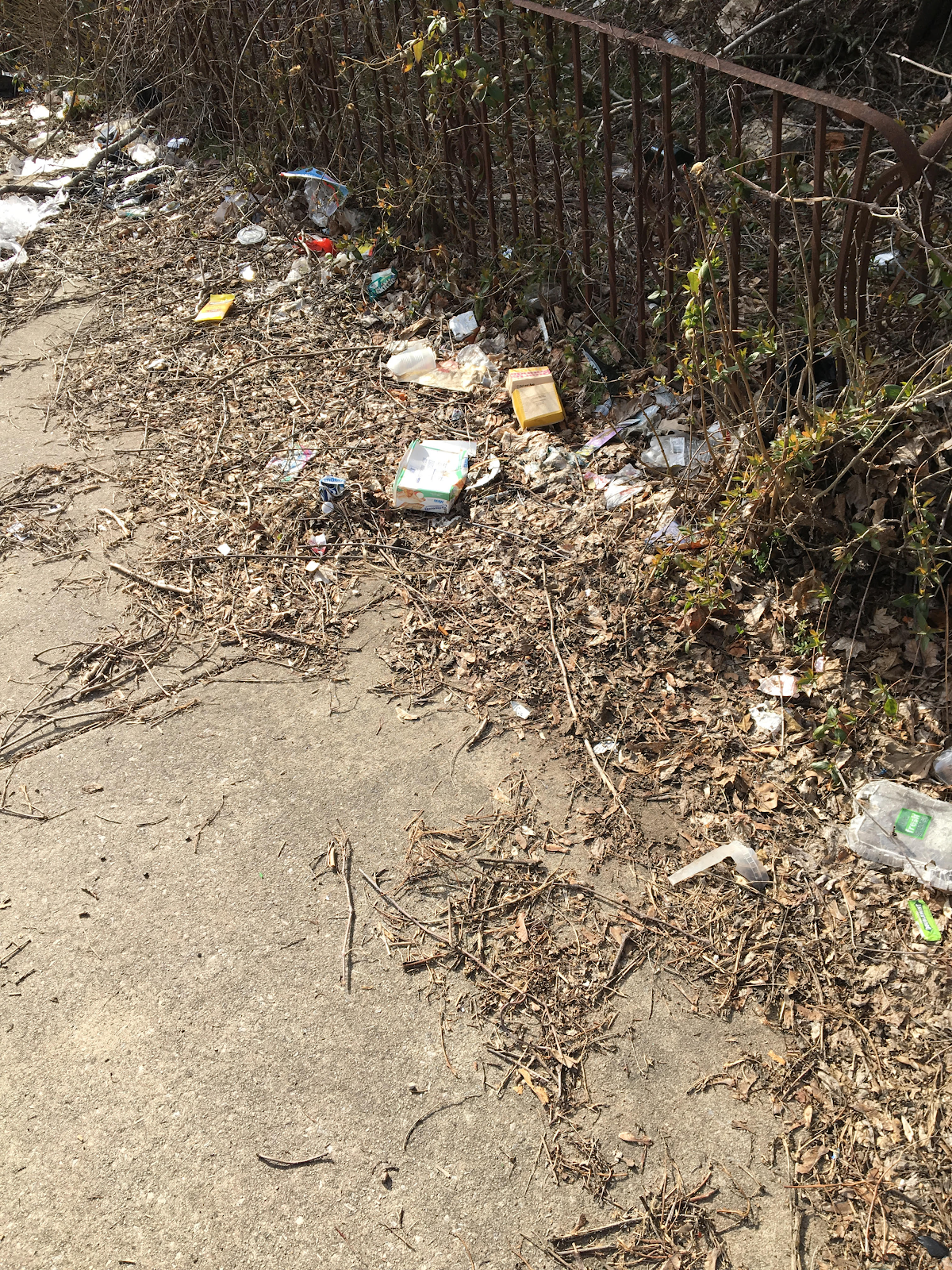
For my observations, I wanted to see the amount of trash in my neighborhood. The first thing I did was look at the ground to see how much trash their was. While I was observing, I noticed there was so many cups, bottles, plates, paper and etc. After seeing all the trash on the ground, it was clear to me that my neighborhood is really dirty. Below are pictures that I took of the trash:


From the pictures above, it shows how filthy our neighborhoods look. My neighborhood, in North Philadelphia, isn’t the only dirty area; there are more areas in Philadelphia that are dirty. I was reading this blog post where the author, Julie Hancher, was talking about how dirty Philly is. She said, “Several neighborhoods actually have removed trash cans from their streets because residents will pile bags next to trash cans instead of waiting for their trash cans. Also, lack of trash cans throughout the city tempt people to throw their trash wherever – in a bush, etc.” This is one of the reasons why Philadelphia is filled with trash. From the blog post it says, “A few years ago I was on Filbert Street near Eighth behind our newsroom in the old Strawbridge & Clothier building, and I watched a woman in a parked minivan throw a dirty diaper right out her window onto the street.” Not only people are dropping trash on the ground while walking people are dropping trash on the ground from their cars.” This shows that since people are lazy to throw their trash, in the trash, they decide to throw it on the ground.

My Next Step

After my first post, I’ve been researching a lot about littering more. As I’m researching, I realized that some people do not care about their environment. Some things I was wonder was if people ever think before actually doing something? This is a question that I have in mind, because people don’t seem to care about what they do as long as it is done and out the way. Now that I have done enough researching and observing, it is time to bring this issue into a solution. One of my solutions is to have an impact on other people to show that cleaning up the environment can make a difference to the community.

You can see my sources here.
Tags: You and the World
3 Comments

The Interview with Dr. Galson about the Bystander Effect.

Posted by Ethan Chen in English 1 · Giknis · Y Band on Friday, March 16, 2018 at 4:58 pm

My first blog post was about the introduction to the bystander effect. My first experience of the bystander effect was when I got jumped in the streets and no one helped. I decided to go deeper about the issue with the bystander effect. I found out that bystander effect is cause by the amount of people present in the situation. The more people at the site of bullying, the more likely they won’t help. With less people in the situation, the most likely they would help. This is because they think another person will step in and help. Also, they don’t feel like it their responsibility to jump in and help. Finally, fear plays on the people because they don’t want to risk their life or be the next victim.  

Some new information I have found since the last post is an experiment that have been done with 5 year old kids about the bystander effect. They are asked to color in a picture while there was an adult in the room painting a cardboard wall. The experiments were set up as the kid was alone with the painting adult, and another one where a couple of other kids painting with them who were confederates of the experimenter but were told not to say anything. In the finally one, they have the confederates kid be block by the cardboard but the non confederate kid can still see them which they call it the bystander unavailable situation. The adult would spill color water and the child would help them bring over paper towels. They found out that kids that were mostly alone help the adult while with other kids, only 50% of them helped. They discover the kids in the bystander unavailable situation still help although there were other kids there. This shows that the role of diffusion of responsibility is the problem and not social referencing

Bystander-effect
Bystander-effect
This photo shows a man on the ground but no one is helping because people think another person will respond and help out or they think of alternative things instead of believing he is in great danger.  
For my original research, I interviewed SLA’s school psychologist Dr. Galson. What I learned from her is we tend to follow the culture norms of other people. She explained how if there is a single person observing, the one observer will most likely respond. When there is several people observing, each person responds depends on the other people if they respond too. People will step in to help if one person around them also step in and help. She really helped add my understand about our thinking process when we are in the group to decide whether or not to step up and help. She said it really depends on your relationship with those group of people. If we look up to the person who sets the culture norm is doing a certain thing we tend to follow what they do. But for a person who are not like the followers, they most likely able to step in and help. She also told me to look more into the milgram experiment which has to do something closely related to the bystander effect. What I am considering doing for my agent of change for now is to make posters and put them around the school. I don’t know what I will put on the poster, but I will take the time to think about it.


Audio Recording of the interview with Dr. Galson:

https://drive.google.com/open?id=1W-ag0sBlWz2JAUeFv9IOkdxA0K7kOoka


My updated annotated bibliography can be found here

Tags: English 9, You & the World
5 Comments

7000 vs You

Posted by Kyree Yates in English 1 · Giknis · Y Band on Monday, March 5, 2018 at 10:03 pm

7000 vs You


Cigarettes are a big problem in US and around the world. More than over 17% of the US smokes and cause over 480,000 deaths almost every year. That’s ridiculous and only to tell you that it starts with young teens.

Smoking has been around for a while now and has recently died down since 2005 by 3% but that's 17% percent that I was talked about before was filled with 15% of teens smoke under the age of 18. Now to me thatś crazy and I bet that some of you didn’t even know some of these things I just told you and probably won’t know the things I’m about to tell you. The reason why smoking is so bad is because it’s increase in risks of incurable diseases such as lung cancer.

Lung cancer. Smoking causes 80 to 90 percent of lung cancer cases in the US. This happens from all of the over 7000 chemicals in cigarettes and some of them give a more of a craving from flavored cigarettes appealing to the younger community and therefore increasing a higher death rate from cancer in young teens and all over the world setting a trend of how smoking is cool when it’s really is not at all.


Image result for 7000 chemicals in cigarettes

A photo of only a few different chemicals in cigarettes. Check this image out for more information here


If you’re a smoker then technically you’re a murderer because second hand smoke kills 7,500 people per year . That is a problem because this consists of young children, elders and innocent people. It also messes up yours and others brain for the worst. It cause the brain to create extra receptors just to feel the sensation of nicotine in your system therefore giving you less money because you are craving something that is expensive. Every time  you buy a pack of cigarettes you lose up to $10. But back to the brian, cigarettes mess up the human brain sometimes causing brain damage due to nicotine withdrawal which comes from you losing nicotine which causes those extra brain receptors that you’ve built up to not receive nutrients then possibly some sort of brain trauma or making a person go crazy from lack of nicotine.


Image result for brain addiction nicotine

This picture shows how Nicotine builds those extra receptors in you brain


Those were just some facts about smoking and how bad it is but I want to tell you the reader a little story about my grandmother who smoked since she was 16 years of age and how that affected her life. My grandmother Linda was a lifetime smoker who enjoyed smoking and that ruined her life. Smoking made her crazy, poor and smell bad. Now I don’t like to speak on my grandmother that much because her addiction to nicotine has also affected my life for the worst as well. Smoking also gave her bronchitis which is a breathing disease in the bronchial glands and also gave a gum disease where she had rotten teeth that had to be removed. Now that sounds disgusting right? My grandmother is not a bad person, she is actually amazing but ever since she starting smoking or as it progressively gotten worse she gotten meaner in a since. Sometime she wouldn’t have the money to purchase cigarettes and would ask me. Most of the time I would pay for her addiction which I should´ve never done; But when I wouldn’t give her any money because either I didn’t have it or I didn’t want to give her the money she would get a really bad attitude and say things a grandmother shouldn’t say to her grandchild. What i’m trying to show you is that smoking changes people for the worse. It makes you very angry and upset and just not pleasant to be around.


Now speaking on the money issue with cigarettes, cigarette take up almost 80 million dollars  of the worlds pockets. Just like this picture shown here you’re basically burning your money away. Just imagine getting your check after a long week or 2 of work and cut it in half because that’s what your doing when you want to buy cigarettes that month. That is basically wasting money on suicide because every pack you smoke takes off 7-8 years

Image result for cigarette taking your money

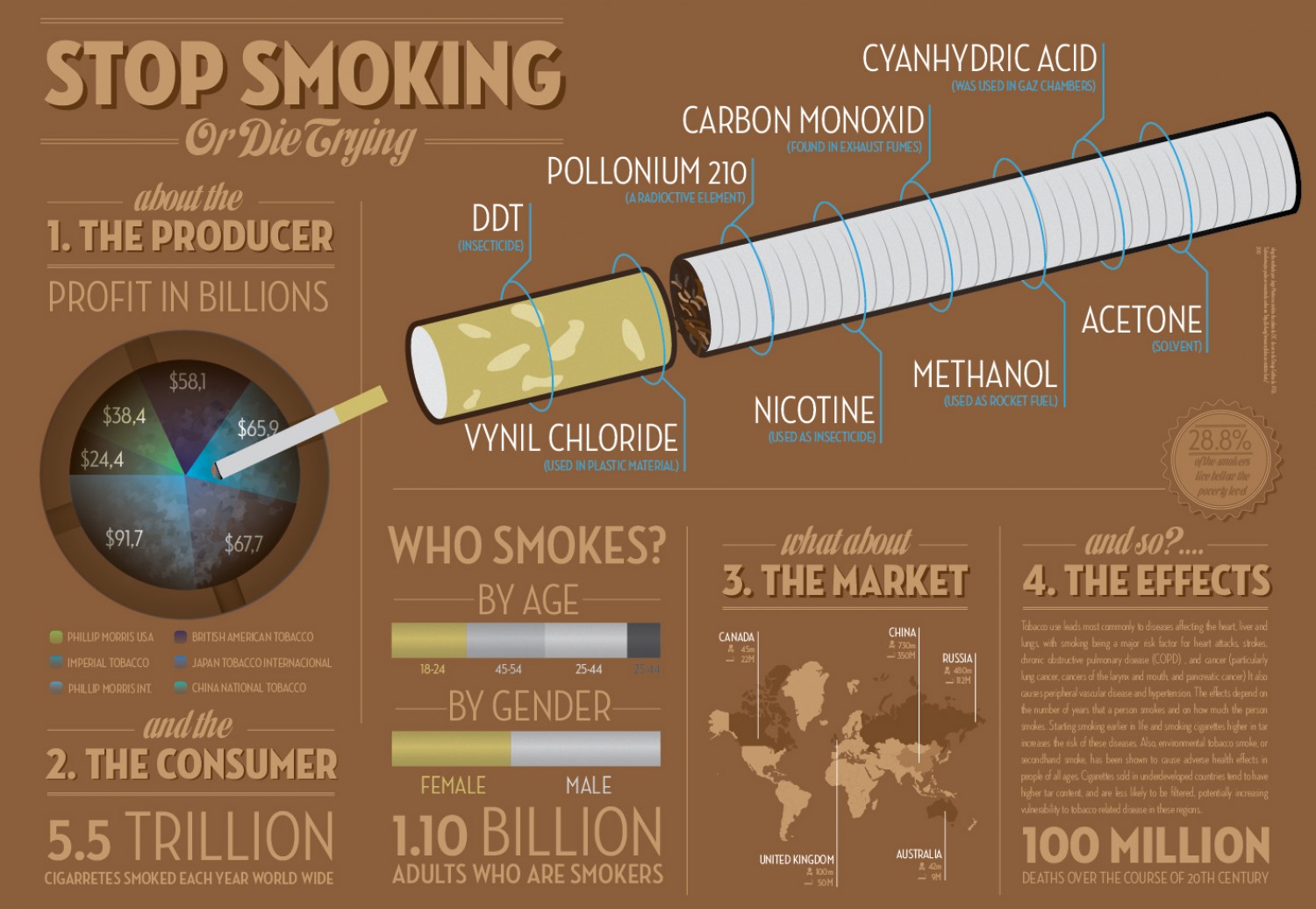
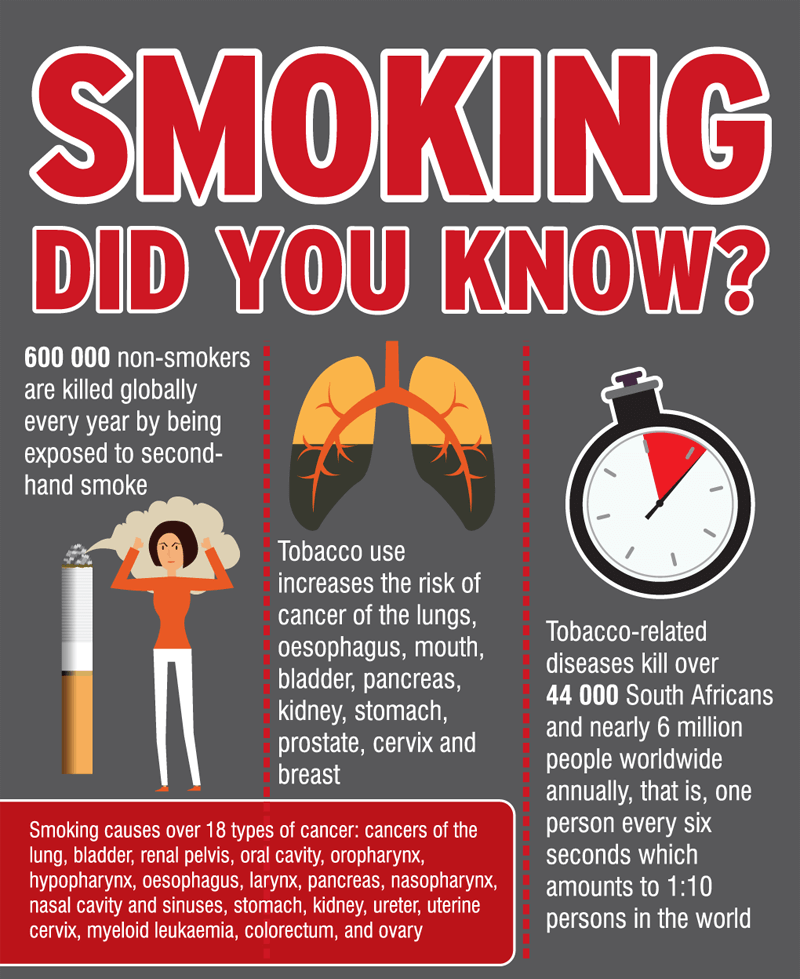
Image result for infographics about smokingImage result for infographics about smoking

A diagram of everything that I talked about.                     BAD facts about smoking effects on lungs


Infographic of second hand death...I meant smoke on children from ages 3-11Charts:


1 Comment
83 posts:
← Prev
  1. 1
  2. 2
  3. 3
  4. 4
  5. 5
  6. 6
  7. 7
  8. 8
  9. 9
Next →
RSS

ENG1-025

Term
2017-18

Other Websites

Launch Canvas

Blog Tags

  • You & the World 13
  • English 9 11
  • English 1 5
  • You and the World 4
  • Y&TW 2
See all See less
  • Public
  • Homepage
  • English
  • English9
  • Agent of Change
  • English 9 You & The World
  • you and the world project
  • you and the world projects
  • English 9 - You and The World Project
  • Red streas

Teacher

  • Amal Giknis
Slate (skeleton-v3 PHP 8 prototype) · Location: 1482 Green St · Shipping: 550 N. Broad St Suite 202 · Philadelphia, PA 19130 · (215) 400-7830 (phone)
×

Log In