• Log In
  • Log In
Slate (skeleton-v3 PHP 8 prototype)
Slate (skeleton-v3 PHP 8 prototype) Learn · Create · Lead
  • Students
    • Mission and Vision
  • Parents
  • Community
    • Mission and Vision
  • Calendar

English 1 · Giknis · Y Band Public Feed

Create a Post

One Step Towards Change

Posted by Alex Jimenez in English 1 · Giknis · Y Band on Monday, March 19, 2018 at 10:12 am

One grows when they finally see reality. I have done a lot of research and have been  coming up with my solution to better make the situation for the homeless. Through my research I have seen things that have given me a whole different perspective of how I see the homeless now since my Slate Blog #1. In Slate Blog #1 I talked mostly focused on the misconceptions about homeless people. How they are seen as lazy, drug addicts, and people who take advantage of their situation. I focused only on how they were viewed, treated, and reasons why they were in the situation they were in. Never did I focus on how their life was like before they came into the situation they are in. I never mentioned the true definition of homelessness for me. Most people would think about why the homeless  didn’t they just go to homeless shelters instead of staying outside. I was no different from these people. I have better prepared myself by making myself more opened minded and even went out to find information from a person who has indeed experienced homelessness. I researched more about the reasons why people go homeless and even went deeper with it. I also found possible reasons why people don’t go and stay in homeless shelters. With the information I have gathered I came up with my own definition of what it means to be homeless.

What does it mean to be homeless? For me being homeless isn’t just not having a place to live, but you can also be considered homeless if you have a place to live but you can’t really keep up with the rent or you can maintain yourself or your family, also fleeing from domestic violence can be considered homelessness. For me this is what it means to be homeless, for others there’s more to it. After you see what I have gathered here, you can up with your own definition of being truly homeless. In Slate Blog #1 I got most of my info from a site that was reliable but it was updated in 2015, I recently got new information from a site that was recently updated in 2017. The site was a pdf file of The U.S Department of Housing and Urban Development, it gave me a lot of updated facts in 2017 about the homeless. When going through it I found out that 553,742 people were experiencing homelessness in the U.S, 65% of the people that were homeless were in shelters or had housing support while the other 35% were unsheltered. 61% of the homeless are men while 39% were women. Race is something that shocks many of us because each race is given a stereotype and many believe them, people believe that hispanics and blacks are more prone to becoming homeless but in reality whites have a higher chance of becoming homeless. 47% of the homeless population is white, 41% are black, 22% are latino or hispanic and 7% identified as multiracial.


Screenshot 2018-03-18 at 7.44.00 PM
This is a graph that shows the number of people unsheltred, sheltered, and all the homeless people.
​

For many of us when we hear the word homeless we think of someone lazy and is a drug addict who just doesn’t want to work and keep things easy for themselves. The truth is that this isn’t the case for many of the homeless. It’s different from what we hear and it’s hard when you are in this situation and you have to change your life around. To get a better perspective i went to the Sunday Breakfast Rescue Mission and got the chance to interview Eric who was homeless and now he helps other homeless people turn their lives around. This homeless shelter is located in 1010, 302 N 13th St, Philadelphia, PA 19107. In this interview I wanted to get a better insight from someone who was homeless to understand the truth of how some people become homeless and how their experience was. I wanted to hear Eric’s opinion of how he feels about the stereotypes about the homeless and what he would do to change this problem. Of course, before I asked him these questions I had to first hear his story. This is the document of my questions.


Click here for video!

My inquiry was an interview and my questions were answered in a very detail way by Eric because I could see what he said and feel what he felt. Eric helped me better inform me about the homeless by telling me about how he got in the situation of being homeless, telling me his experience, and how he got out of that situation. He proved my point of the misconception of homeless people because they are people who were just in the hard times in life, some got beaten down by life, and others picked themselves up.

There is homeless people that are in the street because of mental illnesses. These are the people that need a lot of support, about 25% of the homeless population suffer from mental illnesses. You may be asking yourself, why didn’t they just get support when they were with their friends and families? The reason is that they lose their communication with friends and family because of their delusional thinking. When this happens they are left all alone and unable to take good care of themselves because they lack sustainability of employment. Many others have mental illnesses after they become homeless, that is because the fact that they are in the situation that they are in stresses them, encourages anxiety, causes fear, depression, causes them to sleep less, and this eventually leads up to drug abuse. It’s sad but the truth is that people with mental illnesses experience homelessness for a longer time when compared with someone who doesn’t suffer from mental illnesses. Domestic violence is the reason 75% of women experiencing homeless have mental illnesses. Hospitals and prisons have a big role of why there’s people with mental illnesses in the streets because they release them into the streets knowing their situation and that many of these people don’t have family to go to.

There’s many homeless people in the streets and many of us just wonder to ourselves, why don’t they just go to a homeless shelter? The truth is there’s reasons why many homeless people don’t go to shelters and one of them is that many homeless people can’t bring their best pals around with them, meaning there is no pets allowed in the homeless shelters because of the lack of resources. Many homeless people don’t want to give away their best friend who has been loyal to them.


9343489
9343489

Many homeless people don’t go to shelters to avoid giving their best friend away.


Another reason is because homeless shelters deny the entry to people who suffer from mental illnesses because they can be a threat to others. I believe that they should be allowed in because all they need is somebody to talk to and what better people than the people who are experiencing the same problem these people with mental illnesses are experiencing. Many people also don’t go to homeless shelters because they don’t let people with parasites, lice, and bedbugs because they can spread and ruin the shelter. Others don’t go at the fear that they could be raped or assaulted.


9343448
9343448

Many people are afraid of going to shelters because they could be raped or assaulted.


Some people know that they have a disease that can easily spread and they decide to stay away from shelters to not spread it and they can’t even get in the shelters because they deny entry to people with diseases. A very high reason why people don’t go to shelters because they can’t be helped with their drug abuse. The main reason why people don’t go to shelters is because of the lack of available beds. There is many more reasons why people don’t go to shelters but you can check more out at this site (where I got my information). Many of the homeless people are in shelters and the people with mental illnesses and drug addictions are left in the streets and this is what caused the stereotypes of homeless people because that’s all we get to see.

Now that I have done some research I can give my opinion on how I truly see the homeless. I believe that the homeless are people who were beaten down by life and that does who stay homeless haven’t necessarily given up but they don't feel motivated because they are alone. But, for the people that picked themselves up, they were motivated at the fact that they wanted to help their family, prove people wrong about them, or both. There’s many things I still wonder about, I wonder If with the help of others, we will be able to end poverty? For Slate Post #3 for change, I am thinking about going out to the streets and telling all the homeless people I see that they aren’t alone and that me, others, and god support them. I will give them food and money so that they can start their life again. They don’t need much support, they just need a boost. One only cannot make change but one and others can.


Bibliography


Tags: English 9 - You and The World Project
2 Comments

Is it Meat or Veggies?

Posted by Camren Jones in English 1 · Giknis · Y Band on Sunday, March 18, 2018 at 10:29 pm


What's really the best for you?

In my previous post I spoke about what people's food actually contains and how it affect their body. In my post I explained how meat can have a negative impact on your body. When I wrote my first post, it was based on the documentary What The Food and it glorified being vegan, but I wanted to personally find if being vegan is as good as it seems to be.     


To find my original research i decided to do interviews to get different perspectives on being vegan. I did three different interviews. The first interview I did was Gabe Sosa he is the father to one of my classmates, Miranda Sosa. He responded to  my question via email. When I did get a response I was shocked because I didn’t think he would say those things. Here are my following questions:


Q: What was the reasoning behind you becoming vegan?

A:I became a vegan because I was having health issue.

Q: Do you believe that becoming vegan was a drastic change?

A:I think that for some people it can be a drastic change for them, I know how to cook so for me it was just about making good wholesome food. So my instead of eating meat and dairy products I made substitutions. For example, for my cereal in the morning I used Almond milk, (has the same flavor of milk) and for meat products I used beans and made beef patties. For me it was not a drastic change. (for my kids it was, because they don’t like good food)

Q:What is the hardest part of being vegan?

A:The hardest part was taking the time to plan out your meals, For example I work a lot on the road, so I had to makes sure I have food to eat. A lot of food has animal products in it. So I could not eat it. it hard because you can’t just run into McDonalds and get some fires. Because they have beef flavoring on them so a vegan cannot eat there, and just so you know a lot of fast food does not have Vegan options.

Q: How much has being vegan benefited you?

A:I feel that being a vegan has not benefited me as much as it would have any other person. I think that if someone became vegan it would benefit them a lot more than it did me.

Q:·  Have you seen a change in your health after changing your diet?

A:My health has declined even after 3 months of being a vegan, as my issues are not with what goes in my body but what stays in my body. My blood holds on to too much iron in the blood, and you can get a lot of iron from Lentils, spinach and other vegetables (that I have been eating a lot of) along with meat. So I think that eating more of these vegetables might have hurt me as much as eating meat.


After reading his answers I was surprised but he had a valid reason why being vegan didn’t work for him. By searching on the internet I believe that Mr. Sosa might have a disease known as Hemochromatosis. This is when you have iron overload causing it to affect your heart, liver, and other organs. To manage with this disease doctors advise you to stay away from high contents of iron or vitamin C and vegetables are full of those.  When Mr. Sosa became vegan his body continued to absorb an excess amount of iron. He said that he consumed a lot of green leafy foods such as spinach, but spinach contains more iron than red meat.

Which one is really good for you?


My next two interviews they were completely different from Mr. Sosa. I got in touch with my friend Nile Shareef-Trudeau because her and her family are vegan. I sent her my questions and she interviewed herself and her mother because this was the only way the questions could be answered at the time. This is the interview for Nile’s mom and this is Nile’s. Nile and her mother believe that being vegan is the epitome of being healthy, unlike Mr. Sosa because of his condition.


By doing both interviews I get different perspectives of being a vegan. I learned that being vegan isn’t meant for everyone. I also learned this by changing my food habits for six weeks. For the last part of my project I decided to not to eat meat for six weeks. I broke the six weeks into three sections. For the first two weeks I was a pescatarian which means that the only meat I could eat was seafood. Then the next two weeks, I was a vegetarian, and the last two weeks I was a vegan. During the six weeks I gained 10 pounds because I wasn’t eating properly. The hardest part wasn’t the fact that I wasn’t eating meat, but that most of the time I was hungry unless I did a meal prep. When I was vegan (which I did not continue for two weeks) I learned in order for me not to starve I would have to carry food with me, everywhere I go because there were never any vegan options. Instead of me being vegan I went back to eating dairy and fish.


My annotated bibliography


2 Comments

Is Crumb Rubber Okay?

Posted by Jakob Cantor in English 1 · Giknis · Y Band on Sunday, March 18, 2018 at 10:02 pm

In my last you and the world blog post, I wrote about the affects the crumb rubber has on the human body and why the topic interests and connects to me. I stated it's important to me in the world and in the sports industry. The last post included  the negative perspectives on the crumb rubber in astroturf. I interviewed Ms. Samantha from Star Finder to find out her perspective on the crumb rubbers on astroturf and her own personal experiences with it.


From my own perspective, crumb rubber in astroturf is a extremely hazardous and bad idea but for some people and places, the crumb rubber in astroturf is a smart and productive idea. The positives for having crumb rubber in astroturf are; it saves water, it can reduce some injuries because of mud and uneven grass spots, increases playability and allows more sports to be able to play on the field, lower maintenance costs, and it is way easier to maintain then grass.  All astroturf fields are the same size as a soccer field or bigger which allows more sports and activities to be held on the fields.


From my original research, I learned the benefits of having astroturf and the crumb rubber. Rubber is extremely hard to get rid of and different people and organizations have tried to find different ways of getting rid of these tires. The crumb rubber can be less harmful if it is cleaned well and in the places where people have got diseases from these tires, the tires were not cleaned well. When astro turf is in a inside place, it traps the heat from hitting the turf which makes the astroturf stay room temperature. When the astroturf and crumb rubber is outside, it captures heat which makes the whole field extremely hot which makes it more likely for an injury to occur.


My opinion on crumb rubber has changed in a small way. I believe that putting crumb rubber in the astroturf helps our environment by reducing these tires that are not biodegradable. The tires have to be cleaned extremely carefully so they are clean. I still believe that crumb rubber is dangerous though and when it is outside, it absorbs heat which makes it hotter which puts people's health in danger. When it is too hot, people can get dehydrated and are more likely to get injured. I wonder what other solutions could substitute crumb rubber and what will fields look like in the future.


For my agent of change, I am thinking about spreading awareness about the concerns of crumb rubber and try to find a solution to the problem.


Image result for star finder soccer

Here is a picture of the organization Ms. Samantha works for


https://docs.google.com/document/d/1jFkm10hpG_LrnTc7P7ys44l6ixd0LrPOnJrl-Y__u6c/edit


1 Comment

Life is a Drug

Posted by Kaleb Harris in English 1 · Giknis · Y Band on Sunday, March 18, 2018 at 9:58 pm

Life is a Drug


In my first blog post, I did my background research about Teenage Drug Use. In this post I obtained information about teen drug use via databases, websites, charts, and diagrams. While conducting my research I focused on 3 of the most mainstream drugs used amongst teen which included cannabis, cigarettes/juuls, and alcoholic beverages. I conducted several things from my research including susceptibility to addiction, dependency, intrusion on personal life, emotional problems, and a slur of other psychologic.al and physical problems. You can read more in depth about my findings here.

For my original research I interviewed my Uncle’s friend who works at The Juvenile Justice Center who used lots of the drugs I mentioned earlier, and more including pills. This interview opened my eyes and introduced me to some factors of using drugs that I did not think of or imagine. The person’s I interviewed name was David, and he started smoking weed at the age of 12 and shortly after started drinking and smoking cigarettes freshman year. David impregnated his girlfriend he met in high school and became the father to 5 kids, 3 girls and 2 boys by the age of 25. David spent his early days of adulthood in taking pills (xanax) and other opioids such as OxyContin. He continued to smoke weed and cigarette and drink in the midst of the other drugs as well. David spent his life in and out of rehab centers and shelters trying to seek and commit to recovery. David’s girlfriend had cheated on him and this heartbreak is what pushed David to continue using drugs, even while he was in and out of Rehab Centers.


Everytime David found himself finding a better opportunity and bettering himself, he was easily stressed and the drugs were an escape for him, almost his top priority. He would use money for support he received (i.e. food stamps) and sell them for money to purchase drugs. David also suffered from minor depression from struggling to see his kids, lack of happiness, and little support from his family. In his case, drugs were his antidepressants, and it was his only way of keeping sane. Along the way of using and selling drugs, continuing to be in and out of rehab centers and shelters, he was able to find an plumbing job, which was extraordinary considering David was unemployed without a high school diploma. David found this job to be his passion and was very good at it. The only problem that was still present seemed to be his emotional problems and his drug addiction. David was provided and house, helped pay for by the shelter he resided at and started his own plumbing business after 20 years of being a drug addict and practically homeless.


With the acquired knowledge I gained from Mr.David as well as extended research, I still have a few lingering questions, but I have gained a stronger understanding of teenage drug use. What I can infer based on my research is drug use in teenagers is not strictly just to look “cool” of to fit in or to “fit in”, but can be used to help escape reality or as a downtime. For example smoking marijuana and videogames are very similar conceptually.They both release the chemical dopamine, which is the reward hormone in your brain. In addition both of these things are mentally addictive, but is possible to get addicted to both of these things due to the individual. The problem with Teenage Substance Abuse is not just the intake of the drugs some teens may use, but the lack of information they don’t know until later when it’s too late. Drugs also pose a more potent threat when used in the teenage years due to the brain developing in its most critical state and drugs can not only stunt the brain from developing by destroying brain cells, but may pose long term negative effects on the brain depending on how much of a drug you intake. In conclusion what I have conducted from this research is that Teenage Drug Abuse while on the rise of marijuana and nicotine use, the only way to combat this issue is by informing adolescents and children around us not only the danger these drugs can pose, but the all around truth about these drugs, and how to stay safe even if they do try or experiment with varied substances.


Link to my bibliography here.

Link to screenshots here

download
download
1 Comment

"The Move"

Posted by Miranda Sosa in English 1 · Giknis · Y Band on Sunday, March 18, 2018 at 9:57 pm

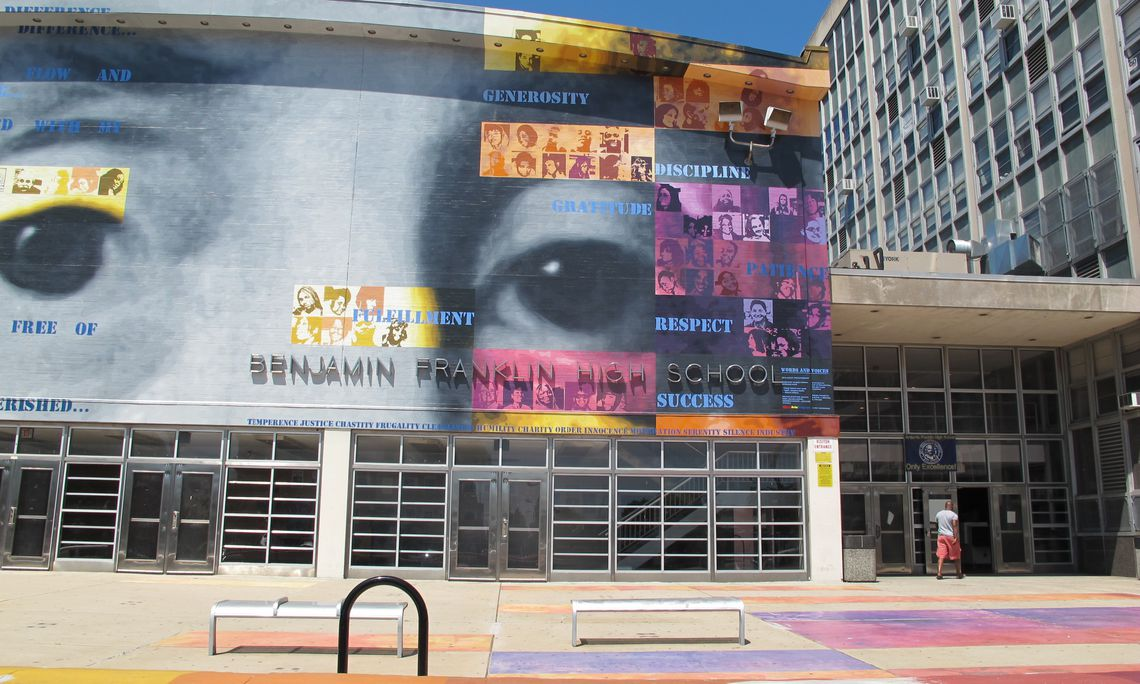
As you know in my last blog post, I talked about two different schools, Ben Franklin High School and Science Leadership Academy. These two schools will be colocating together in the year 2020, my goal is to prevent any conflict that might happen before the move. I have continued to do research on this topic, I interviewed some pretty amazing people including Mr. Lehmann who is the principal of Science Leadership Academy. Dr. Christine Borelli who is the principal of Ben Franklin High School, and Christina Grant who is assistant superintendent of the Innovation Network and Opportunity Network.

Along with these interviews I have done some extra research. This is a new site that just came out about the move. The site talks about a variety of different things that have to do with this particular situation, such as the project overview with a schedule/timeline. This website also shows pictures of both Ben Franklin  and SLA students collaborating to generate ideas about renovating Ben Franklin’s building for the move. Along with all of this, I learned some new things. For example, construction starts in June 2018 and goes until July 2019. Also that Stantech is in charge of the architectural side of the project, they are designing and planning for the new building. This website was a great resource to get information about the building and planning of the move.

Timeline of the project

Another site that I found, helped me a little bit in understanding the financials of the move. As of right now it costs about $1 million to rent out SLA’s building, which is very expensive. The school district is putting $20 million into renovating the new building. Something else I learned was that Ben Franklin High School can hold a little over 1000 kids.  In the school year 2016-17, they only had 546 students while SLA has about 500. So this move makes a lot of sense because Ben Franklin has the space and it’s cheaper financially.

In my first blog post I talked a lot about each school individually and a lot about how they are both different academically and culturally. When I interviewed people about this move none of them brought up academics, which to me was surprising. Although, it made me realize that that’s not what this move is about. One of the people that I interviewed was Dr. Borelli who is the new Principal of Ben Franklin. Dr. Borelli stated “I really want people to know that BFHS and SLA are very different schools but that doesn't make one school better than the other. This is an opportunity to build one school campus by collaborating and celebrating our diverse cultures, not a competition between two separate schools.” I believe that a lot of people are worried about this move because of how different the schools are, and what Dr. Borelli says really ensures people that us being different schools won’t affect how we act towards one another. Dr. Borelli goes on to say that, ”It is important that BFHS students understand the shifts that will occur during the upcoming year (changing the morning admission location, eliminating access to some stairwells, etc.).” This is something that caught my eye because I hadn’t really thought about how the construction would affect the Ben Franklin community. They are going to have a major change in their learning environment and the SLA community needs to be mindful about what they are giving up for a year.

Dr. Christina Borelli

I also had an interview with the principal of SLA, Chris Lehmann. Mr. Lehmann talked a lot about making sure students, parents, and teachers are taking opportunities given to them during this move. For example Mr. Lehmann said “ When we have these opportunities for students to interact with one another, to come in with an open mind, to come in excited, to come in and share our energy, ideas, and our excitement for the project with Ben Franklin.” This is something everyone should keep in mind because we are co-locating and there will be a lot of chances to get together and talk with each school as a whole. There are so many factors that are going into this move, Mr. Lehmann brought up a good point about Ben Franklin. He said “Recognizing that it’s hard for Ben Franklin to share resources and a facility as much as it for us to now move.”  SLA is moving into a new building, not the other way around. We need to be mindful about how Ben Franklin and how SLA are feeling. This is going to be new for everyone, and these two schools will have to adjust to make everything work and go smoothly. Mr. Lehmann concluded the interview by saying “What we share is far greater than what is different about us.” This statement is very true and although this will be a huge adjustment on some people we are all going to be a new family because of the move.

Chris Lehmann (Principal of Science Leadership Academy)

The last interview I am going to tell you about was with Christina Grant, she is superintendent of the Innovation Network and Opportunity Network, which means she supervises 35 different schools in Philadelphia. She has worked a lot in New York with co-located schools for some time of her life. During our interview she gave me some valuable information, like how Ben Franklin has a CTE program and what she hopes to happen with this move. While we were talking she said “ My biggest goal is to make sure you all both walk into a school and you’re like this is our new home and we’re going to figure it out.” This really shows how passionate she is about making this go well. A question I asked was “How do you think this move will impact the two distinct cultures of the two schools?” Her response was “ I think that you guys will both shape the culture of each other schools.” This really got me thinking about how each school is different but we are going to learn from each other in many ways. Christina then went on to say something that really ensured me and got me very excited about the new building, “ I don’t think you all will appreciate how amazing your school is going to look and the privilege it’s going to be to be in that school. I think it’s going to change your life at sla and dramatically change the lives of kids at Ben Franklin.” What she says hopefully makes everyone more excited about moving into a new building and also sharing one. This might be challenging at first but in the end it will be better for both schools.

Me interviewing Christina Grant

In conclusion this move is going to be a great thing for everyone! A lot of my concerns/questions were answered now that I have spoken to some people. I feel like the move will have less conflict then I originally thought, but it will still be challenging for both schools. I still don’t know what exactly is going to happen when the day comes when both schools are in the same building, I can only hope for the best. Now that I have gone deeper into this topic I feel a lot more calm and excited about actually moving and I hope that I made other people feel that way too. When we are finished with this project we are supposed to create and agent of change. This means that we have to take action and start something to help fix our problem. In my case there isn’t a problem yet, but to prevent any from happening I think I want to start a club between the two schools. This will students from both schools an opportunity to get to know each other so that when we move we aren’t complete strangers to one another.  

Ben Franklin High School

Annotated Bibliography


Tags: English 9, You & the World
6 Comments

Talking to College Administrators About the 1st Amendment

Posted by Elijah Lerner in English 1 · Giknis · Y Band on Sunday, March 18, 2018 at 9:41 pm

In my first blog post, I outlined the problems and instances of suppression of speech on college campuses. Specifically, I wrote about the misconceptions of our 1st Amendment Rights as citizens of the United States of America and what speech is punishable by law. I also wrote about the Evergreen State College student who tormented Bret Weinstein for opting out of a day without white people on campus.

The New York Times and the Washington Post have similar ideas in their recent articles. The Washington Post article suggests that young people support free speech seemingly contrary to the story at Evergreen, but Evergreen can be used as a measure of the extreme, not the norm. The New York Times article cites a Gallup study for its evidence.  There were several polls that stated/confirmed what we already knew, and some that went against our previous knowledge from the first blog post. First off, college students think that political conservatives are the least able group to openly express their views (69%), the next least able group is Muslims (80%). We already knew that many conservatives are less able to share their views. 10% of students say violence is acceptable to stop people from hearing controversial speakers. Some new information I have gathered is based on who feels “uncomfortable” on campus because they heard something about their race or ethnicity. Black and Jewish students are most likely to feel that way (43% Black) and (38% Jewish).

Since the first blog post I have gathered new research on my own about free speech on college campuses. I had the pleasure of interviewing two advisors at Temple University, Seth Finck and Bradley Pearson. They both clarified their centrist political positions early on in the interview which aligned well with my own beliefs, which I believe was productive for the conversation. Bradley answered my question “What are your thoughts on students right to speech and what should be done on campus?” in an incredible, enlightening way. He said that: “I’ll say that, you know, from my own experience, as well as my own research on it, it is difficult to really have one, university-wide, clear cut policy on what constitutes free speech and what doesn’t.” He then went on to explain and go deep into the “cost of free speech”, which he calls a cliché, but nevertheless, is a real thing. He explains that the security cost of some of the events that are held on campus are astronomically high and are not financially beneficial for the college. I did not mention this perspective in my first post, so I am glad to have captured and recognized this new perspective. The interview added a new viewpoint from which I can look at this topic: the angle of the administrator.

For my Agent of Change, I am thinking about sending out flyers to SLA students, who will one day be college students, about their rights as students now and their rights as adults. I am also thinking about creating a quiz that students will take and will show their 1st Amendment Rights.


Annotated Bibliography


​image source

interview audio
Tags: English 1, Y&TW
1 Comment

Change Is Still Needed

Posted by Ashton Krause in English 1 · Giknis · Y Band on Sunday, March 18, 2018 at 9:08 pm

If you have been following my recent posts about Transphobia you can tell that I have a strong passion against hate crimes and the rate that hate crimes occur against transgender people. Hate crimes towards transgender individuals has gone up by 300 since January of 2016. There have been 24 transgender people killed since the beginning of 2017. In the process of learning about Transgender hate crimes and experiences, I decided to go out and interview two people. One, who deals with transgender patients when teaching them about safe sex. The second person is a transgender male who came out at an older age. I interviewed him about his life and struggles as a trans person. He then proceeded to tell me about the hate he received from his own family after coming out and how isolated he was for years.

For privacy reasons we will call this trans individual John. John then told me he was kicked out of his home at the age of 16 and lost all communication with his parents for years. The only person he had contact with was his sister.

Image result for transgender homeless youth

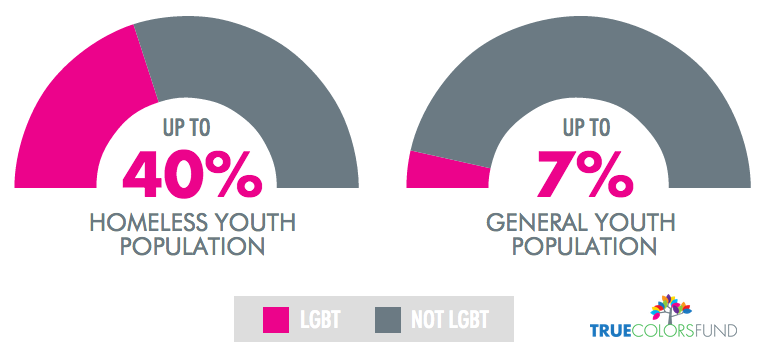
He was homeless for several years and had to provide for himself. In my latest research 40% of LGBTQ youth are homelss and John was apart of the 40%. Throughout my years of knowing John I would have never expected such a painful story from him because of the way he presents himself. This is a first hand experience showing to never assume things about people and their story.

To further my research I interviewed a worker at Children’s Hospital Of Philadelphia, Yexsy Alicea . His job is to educate trans youth on safe sex. He deals with a lot of patients whose parents are unsupportive and leave them to educate themselves on how to support their lifestyle. He talked about the amount of stress his transgender patients have in using public restrooms. All the hype in the media about what restrooms trans people can use has caused a restraint on them actually using the bathroom. 59% of transgender people avoid using public bathroom and there is approximately 1.4 million transgender people in the United States. In 2016 a survey in New York went around that 27,715 people answered.

Image result for transgender bathrooms

It founded that 12% of transgender people have been verbally abused, 1% physically attacked and 1% were sexually assaulted in the restroom. After this survey was taken North Carolina passed a Bill which forces transgender individuals to use the bathroom that corresponds with their gender at birth. North Carolina Governor Pat McCrory said this Bill was necessary to “protect our children” and “preserve traditional values.”

Transphobia is still existent in the United States. Throughout my research of Transphobia I find that despite the growth of mindset in the United States toward the LGBTQ community, statistics prove that there is still need for improvement. Therefore, I believe that we must continue our efforts to overcome transphobia in the United States.


Bibliography


5 Comments

The Extinction of Orcas?

Posted by Annie Chen in English 1 · Giknis · Y Band on Sunday, March 18, 2018 at 9:00 pm

In my first post, I explored the horrific actions of orca captivity. As I studied and dug deeper into the treatment of orcas. I found current events about the situation and discovered facts that had shocked me, including brutal images that will haunt me for many days.

Recently, at SeaWorld Orlando, a female orca, named Malia, is living her final days as a captive orca. In the article, SeaWorld of Hurt: Campaign Updates, they had stated that the ten year-old orca has been facing excruciating and painful infections for years, up to the point where the pain had finally broken her down. The painful infections had caused an infection in her upper jaw area. The jaw is now discolored and many of her teeth are either damaged or broken. More than half of SeaWorld orcas have died due to the lack of care, resulting in the infections. Malia’s father, Tilikum and her sister, Unna, have died in 2015 and 2017 due to painful infections.

Image of Malia’s infected jaw. Credits


I found a very interesting  article, written by John Jett PhD and Jeffrey Ventre MD, both former SeaWorld trainers. These doctors were also cast members of the documentary, Blackfish. Both Jett and Ventre are orca captivity activists and do amazing things to aid orcas. John Jett has participated in “The Orca Project”, which is a “small but effective non-profit corporation, collaborating with some of the world’s top marine mammal experts and caring professionals from diverse backgrounds,”, stated on their website. There was a section in the article where they discussed the interaction between Corky and Kandu, two female orcas living at SeaWorld. An artificial death that wouldn't happen in the wild. The two already had tension between them for a long time, but one day, right as the show was going to start, Kandu rammed into Corky. Because of the force of the impact, it severed her jaw and severed an artery. Kandu, who was eleven years old at that time, slowly bled out for 45 minutes, in front of the crowds at SeaWorld San Diego, and eventually passed away from the loss of blood.

Image of Kandu bleeding into her death. Here is a video of it happening.  Image Credits


For my original research, it was a difficult and long journey. In the beginning, I had big envisions to have multiple interviews with marine biologists who specialize in orcas, but it ended up not working out. I contacted PETA and had gotten some answers back by an animal’s rights activist, Melissa White. Her answers were not what I had hoped for, so I had sent many more emails to anyone I could find. I even emailed all of the SeaWorld trainers that had a voice in Blackfish. I would have never thought that any of them would reply.

A couple of days after I had emailed the trainers, I received one email back from Jeffrey Ventre. It was a genuine exciting moment because I was so pumped that I had gotten to interview with a former SeaWorld trainer and a Blackfish cast member! Not to mention, he is a Physician and a medical doctor too. Shortly after, I emailed him my 10 questions I had, and within 30 minutes, he replied back with his answers.

Image of Dr. Ventre in Blackfish. Image Credits, also click to know more information about Ventre.

Here is a doc with the questions I asked and Dr. Ventre’s answers.

I asked him a variety of questions, ranging from his research to his personal experiences with orca captivity. I wondered what an experienced scientist, who specializes in the topic, would think what would happen to orcas in the long run. Dr. Ventre replied, “The only orca population that is endangered is the Southern Resident orcas, the ones SeaWorld decimated. They now don't have enough fish due to dams on the Snake and Columbia Rivers. If the four lower Snake River Dams are not breached, I believe this particular group will go extinct in your lifetime.” SeaWorld have captured at least 80 orcas from the Southern Resident waters. When the orcas were becoming scarce, SeaWorld ventured to different oceans, up north, the perimeters of West Canada.  

Image of the Killer Whale range from California and up. (capture range)


Going back to something I had pointed out, SeaWorld employees were supplying uneducated people with false information. I thought it would be interesting to ask Dr. Ventre, a previous SeaWorld employee on his experience. He replied that  as a trainer, received PR lessons from SeaWorld company about orcas that could be said to the guests. The information was very misleading said Dr. Ventre. To give solace to my excitement, I asked Dr. Ventre about the filming experience of Blackfish. He answered saying that it was a super fun experience because he gotten to reunite with his former trainer friends, and film at a beautiful location. Dr. Ventre, I, and many other people who are against orca captivity agreed that, in order to support the cause, people should not continue purchasing tickets; henceforth, helping the business decline. Also to spread awareness, even if it is simply educating another person the facts behind orca captivity.

I have thought about what I, as a young teenager could do for such a massive cause. For my agent of change, I have many ideas in mind. I could do something creative. For example, making an illustrative book, posters, or create a film. I could also start a fundraiser and with the money, I would be able to donate to an organization helping orcas. I also thought about trying to march in a protest, but since I live in the Northeast, there isn’t  protests on orca captivity. Stay tuned because whatever my agent of change is going to be, I will make sure it does become an agent of change.

Click here for my updated annotated bibliography.


7 Comments

Light Pollution

Posted by Tyler Carter in English 1 · Giknis · Y Band on Sunday, March 18, 2018 at 8:29 pm

Two  Sundays ago I walked around the city with my mom and took some pictures of the tall buildings.It was windy, but me and my mom survived, we walked to 30th street up toward the bridge on Schuylkill River to take a good  picture of the city.https://docs.google.com/document/d/1lSvMeJUmNnhbMoaLe4A-UnbLe8hMga5wY_CxSxMvZsY/edit. I took like nine pictures on my phone. This is a hard picture to take because it was a hard angel because it was when we were walking to catch the trolley in 22nd street.Trust me,it was really cold it felt like 10 degrees I hope you enjoy this doc.If the lights look green, it is really blue.    


I learned that Philadelphia is one of the worst cities with light pollution. In fact, Washington, DC to Boston has the most light pollution in the United States. Germany has the worst light pollution in Europe which has the worst light pollution on Earth.  


Here is the link to my annotated bibliography.


2 Comments

Here is why colleges is so expensive

Posted by Jacob Prunes in English 1 · Giknis · Y Band on Sunday, March 18, 2018 at 6:34 pm

Here’s why colleges are so expensive

Annotated bibliography


In Blog post 1, I talked about why colleges are so expensive. They were expensive because of main reasons like inflation, the need of college, and popularity. Because colleges know you need and want them, they want to make it more because they can. Also, if non-popular colleges raise their prices the more popular and expensive colleges will raise theirs to make it seem like they are better.  These things are the reason colleges are about 33,000 a semester.

Some new information, coming from Quora, gives even more reasons. Another reason that I did not mention the cost of textbooks. Textbooks are extremely expensive not only because of the price but the quantity. A textbook is about $150, but you have to multiply that cost with the amount of classes you have. Another reason is the teachers. They get paid a pretty good amount, which the college has to give so the colleges need more money so they can pay for them. College professors get about 25K per course. Another source says that one of the reasons colleges are so expensive is because the state usually doesn’t give much support to public colleges. Because the State gives more money to private, because they know they will be successful, public gets less support. I interviewed some college students. I asked them these questions. I got many different helpful responses. Here is an example of what one student responded with. These responses gave me many different types of views like, whether college is worth the price. Some said no unless you get a good job out of it. Some said yes, no matter what college is worth it. I personally think after all this research that college is worth the price but the price is a bit extreme. One of the questions I asked was, “What’s the worst thing about college?” I asked that because I was wondering if price was the worst thing about it. I am wondering if people really don’t care about the price, or if they got used to the fact that it is really expensive. These interviews gave me many insights on how college is different for different students in different colleges. It’s also interesting to see the ideas they have to make colleges cheaper. For my final blog post, which is to make a change to the problem,I was thinking of getting money to via donations or fundraiser, and to give it to college student that are having a problem paying.

cost of college
cost of college
3 Comments
83 posts:
← Prev
  1. 1
  2. 2
  3. 3
  4. 4
  5. 5
  6. 6
  7. 7
  8. 8
  9. 9
Next →
RSS

ENG1-025

Term
2017-18

Other Websites

Launch Canvas

Blog Tags

  • You & the World 13
  • English 9 11
  • English 1 5
  • You and the World 4
  • Y&TW 2
See all See less
  • Public
  • Homepage
  • English
  • English9
  • Agent of Change
  • English 9 You & The World
  • you and the world project
  • you and the world projects
  • English 9 - You and The World Project
  • Red streas

Teacher

  • Amal Giknis
Slate (skeleton-v3 PHP 8 prototype) · Location: 1482 Green St · Shipping: 550 N. Broad St Suite 202 · Philadelphia, PA 19130 · (215) 400-7830 (phone)
×

Log In