• Log In
  • Log In
Slate (skeleton-v3 PHP 8 prototype)
Slate (skeleton-v3 PHP 8 prototype) Learn · Create · Lead
  • Students
    • Mission and Vision
  • Parents
  • Community
    • Mission and Vision
  • Calendar

English 1 · Giknis · Y Band Public Feed

Create a Post

Helping College students

Posted by Jacob Prunes in English 1 · Giknis · Y Band on Friday, May 18, 2018 at 9:14 pm

Helping college students

Blog Post 2 Blog post 1


For my You and the World project my goal is to help college students pay their very expensive college fees. In my last 2 post, I talked about the expense of college, why it’s expensive, and ways we can make it cheaper. I’m hoping that with these post you can understand the problem with colleges. It’s important because lots of people want to go to college and get a good education but can’t because of fees.


My check to drexel


Drexel University

Main Building


This post is about how I contributed in helping this cause. For my Agent of Change, my goal was to obtain money and the give it to a scholarship fund. This will help future college students because it means that colleges can give more scholarships to students which means cheaper tuition for more students. To get the money, I have worked in different jobs in my neighborhood for friends and family. I have mowed lawns, babysat, and more. I have raised $105.

This will all go to Drexel University because the tuition there is really expensive. It’s one of the most expensive colleges in Philadelphia. Donating to a scholarship fund isn’t hard. If you want to support the cause this is a way you can do it.

I decided to obtain money this way instead of a fundraiser because working more than likely gets you more money than a fundraiser. I did still tell friends and family about the cause. My experience was excellent because I was gaining a lot of money and I knew it was going to a good cause. I was effective in making a change because I helped pay for a scholarship that will go to a future college student that might be struggling to pay the fees. With my small donation, I can make a big difference in someone’s life.

I really enjoyed this project. I enjoyed it because it helps me, a simple person, be able to call out a problem with the world and make a difference. I learned that anyone can help others and feel as good as I feel now. I also learned that anyone can have that feeling. I feel like I could have done a better job getting this issue out to everyone. My goal wasn’t awareness, it was helping and I feel like I should have done both. If I were to do it again, and I might, then I would definitely make it more public to everyone. Whether it’s posters or social media. Just because this project is over, doesn’t mean I’m done helping and it doesn’t mean you should forget this project. Anyone can donate and anyone can help this cause.


Be the first to comment.

Mission Accomplished

Posted by Nasir Duppins in English 1 · Giknis · Y Band on Friday, May 18, 2018 at 9:04 pm

Mission Accomplished

In my first blog about littering, I wrote about  how I felt about issue of littering and provided statistics, facts, and consequences that it gives. Then, my second blog post talked about the age difference and what ages litters the most, and I talked about what I observed from my neighborhood. After researching and telling how I felt about the issue I was passionate about, I took matters into my own hands and went to go clean up a park called East Poplar Playground.

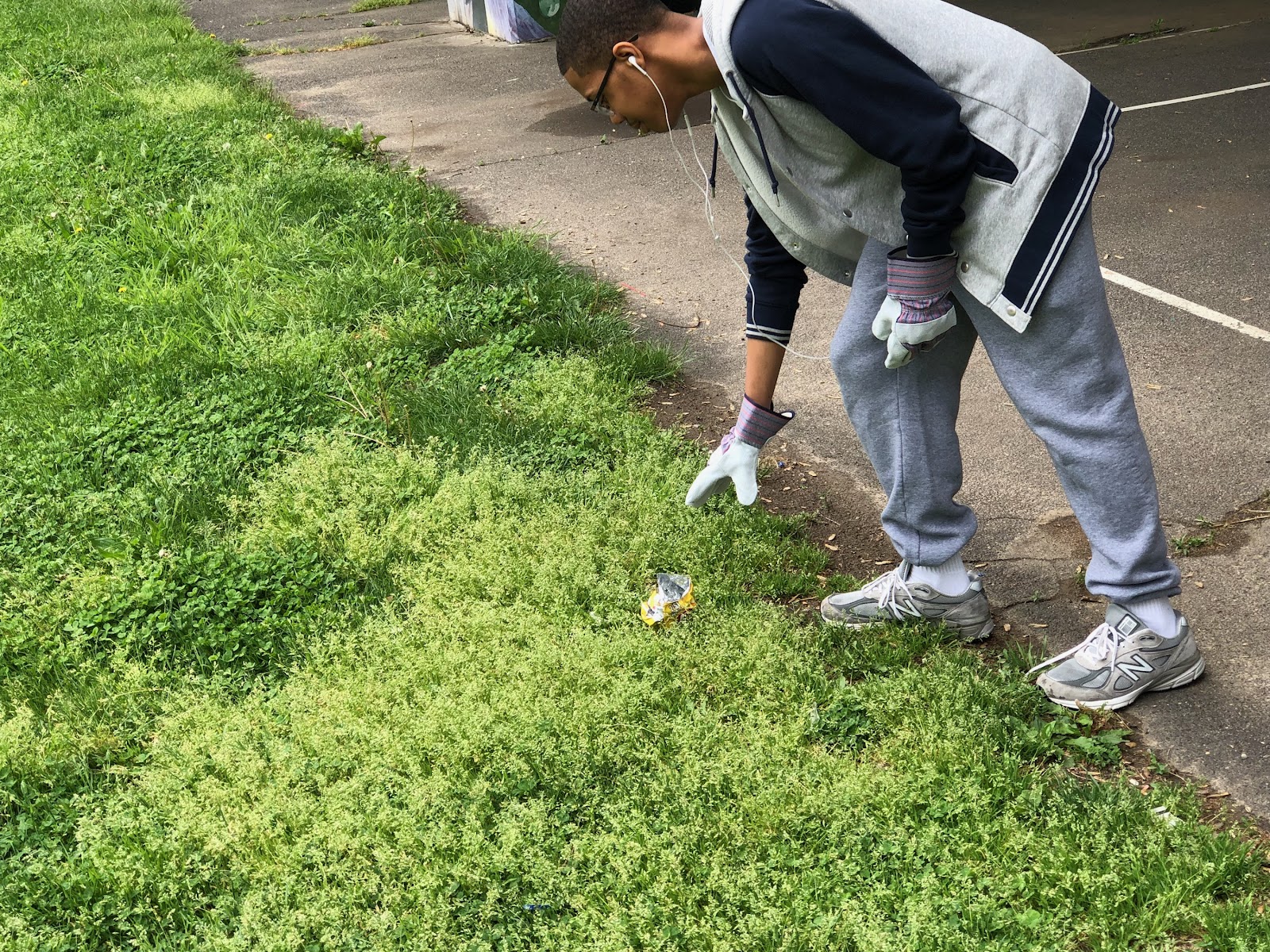
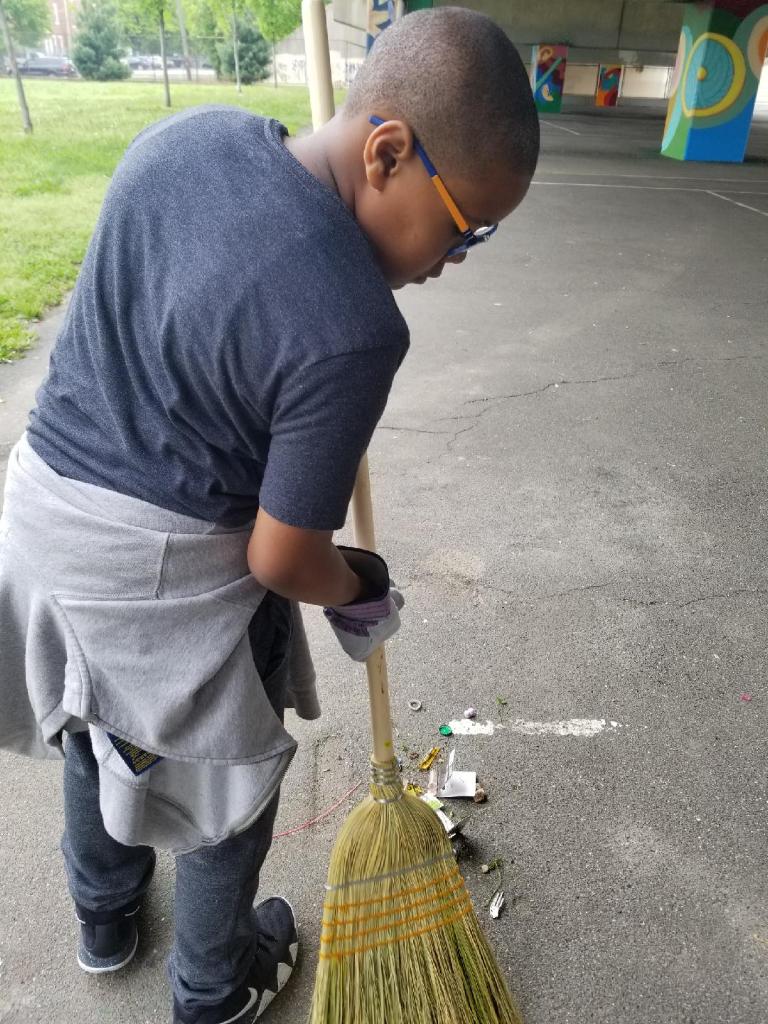
The park is located in North Philadelphia on 8th and Poplar street. I decided to have my family help me with the clean up. The clean up was a success, we collected a lot of trash off the ground. We had a rake to get the trash out the grass, we had a broom to sweep up the trash into the bag, and we had gloves to pick up the trash. Here are some pictures of us cleaning up:


My  original idea was on Earth Day I was going to the FDR park but the plan didn’t go right so I canceled it. Instead, I decided to go to the East Poplar Park because it wasn’t that far from me,  so from there that's where I did my agent of change. My experience while cleaning up was I felt like I was a big help to the environment because majority of people don’t care about the environment but I do, and taking my time to clean up the environment shows how much I care. It was a great experience having my family coming to help fix the issue that I am passionate about. I felt like I was effective in this agent of change because as I was cleaning up, people were walking and driving past seeing what we were doing and probably in their heads they were probably glad that my family and I were doing the right thing for the community. It seems like it was a impact on them because the people that was looking were probably thinking of having their kids do the same.


The Project Overall

The project was overall a great journey for me as a teenager. During this period of time this generation is full of open-minded kids, but there are other kids who doesn't care about anything do anything they want. I feel like it was a great opportunity for me to go out and clean up the trash because according to this website it says, “ Every year, the United States generates approximately 230 million tons of "trash"--about 4.6 pounds per person per day.”

That is a lot of trash that people is bringing up and some of that trash ends up on the ground. What I learned about my potential during this adventure is that I can be a big help to my community and other communities as well. I can be an role model to other people and maybe that will change people decision about dropping trash on the ground and instead they can put their trash in the garbage can. Throughout the course of setting up my agent of change what I could’ve done better was getting the word out. I didn’t put up flyers and that’s why people didn’t come the first time so that's why I wanted to cancel it as I said it earlier in the post. What else I could have done better was plan out the event I was doing because I didn’t think about bringing water and snacks until someone said that so I should’ve thought of that.

What Else Is Left To Change

There are some things to change and it starts with the kids. Kids today don’t know that much about littering and the effect of it. Like I explained in my second blog post, parents should teach their children about littering because as they are growing up they will see what the adults are doing and think that is the right thing to do when it’s not. Adults as well litter because they are lazy to throw their trash in the garbage can and that should change by maybe having a little challenge where if they don’t litter they can get a certain amount of money and maybe that can change their habits. Different types of events could take place where kids and adults could go out to a park and pick up trash to clean up their community; it could be a clean up day! If your community ever wanted or have a clean up day here is some advice on what materials you should have and what to think about during the process. Well, this experience has been a extravagant adventure and I am so glad that I was able to go out and do my part for the world.

Here are some pictures:


Here are my sources
Be the first to comment.

What's The Move?

Posted by Miranda Sosa in English 1 · Giknis · Y Band on Friday, May 18, 2018 at 8:45 pm

My topic which is bringing together Ben Franklin and Science Leadership Academy, due to the co-location that will be happening in the 2020 school year. My goal is to prevent any conflict between the two very different schools.  In my first post I talked a lot about how each school was very different, but also how we can benefit from that. In the second post I interviewed 3 important people who are working towards making this a smooth transition for everyone. I talked with principals from my school and Ben Franklin, and also spoke with the Superintendent of Innovation Network, Christina Grant. In the interview I asked questions about what could be improved on during this move, what challenges they anticipate, and what they think about the situation in general.


Me asking for some feedback on some questions and ideas.


The next step in this project wasn’t finding more resources or more people to interview, it was going out and making a change for this cause. We call it an Agent of Change, some way to spread awareness or help make a difference. I knew right from the start what I wanted to do to make a change. I wanted to start a club between the two schools. Taking in the input I received I found other ways to help, like having a day of team building or a party. A club seemed like the most efficient and long lasting solution to this problem.


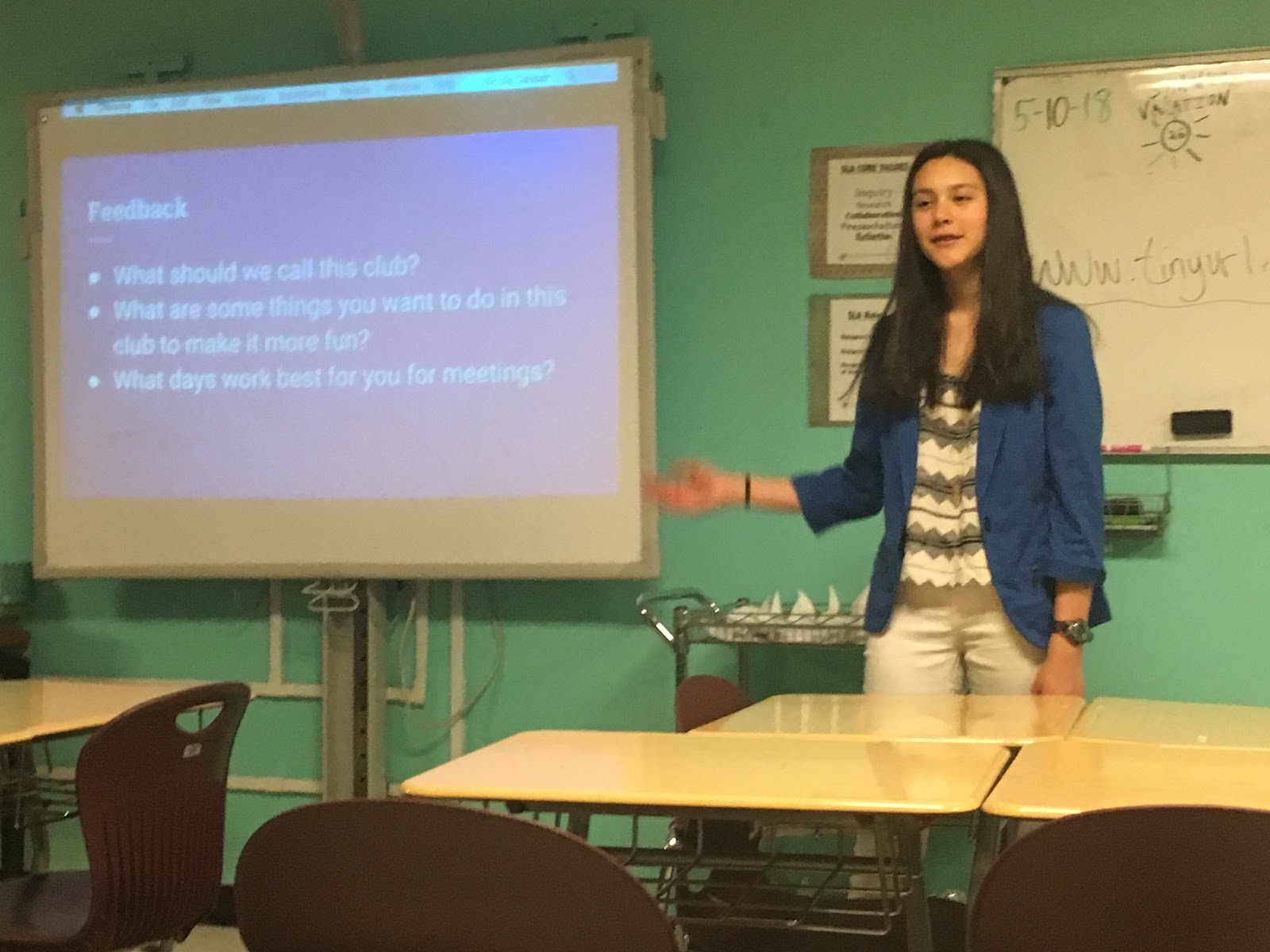
That’s what I did, I started a club to bring together Ben Franklin and SLA students. The first meeting was not what I was expecting, only about 5 people came. My teacher sponsor and I talked about ways to get Ben Franklin involved in the club, because as of right now it’s only SLA students. We did some fun icebreakers and also had a discussion about what to call the club during the first meeting. I realized that I needed to think about ways to improve this new club and advertise it better, so that more people will want to join. My plan is to have another meeting next week and hopefully it will be more successful. That being said I have to start somewhere and I think this is a great starting point for me and this club.


Me presenting during my first club meeting


My objective is to keep this club going throughout my whole high school career and even further after I graduate. I believe this club will really make both school environments feel better with each other. I want my club to have 3 main goals, one is problems solving. Which means I want our club to be the place everyone goes to if there is a problem involving both schools, that we can fix. The second goal I want is team building, so that aspect of having a club where we would get to know each other and have fun while doing it. The last goal I want is event planning, I was thinking we could be the group that plans dances and both school wide events.


I did have some setbacks and in the beginning, my plan was to contact Ben Franklin staff. That didn’t really work out due to lack of communication, so I had to work around that challenge. This is why the club right now is only SLA students, we are working towards finding a way to contact Ben Franklin students. Overall this experience was something I won't forget, this project really inspired me. Trying to make an impact and change on something that means a lot to me, makes me feel like I am making a difference. This topic isn’t really an issue yet but if it ever does become one I feel like my club will really help, and lot of people will benefit from it.

This is my annotated bibliography.
Be the first to comment.

Free Speech Flyers

Posted by Elijah Lerner in English 1 · Giknis · Y Band on Friday, May 18, 2018 at 8:03 pm

As I have mentioned in my previous two posts, my You and the World project has been about free speech on college campus and how it is being undermined. I have researched this topic extensively and in turn, have also researched ways people are contesting the toxic anti-free speech ideology on campus. I have seen lectures at campuses trying to establish the importance of speech, I have seen protests, and I have seen informative flyers aimed at stating the importance of free speech. For my Agent Of Change, I decided to create my own informative flyer and put it up around University City. Although I think it is the least effective method of the three, I believe that it will be able to make a difference to students and other passerbys alike. I certainly am not able to lecture a college-level educated audience for an hour, and therefore could not do it for my Agent Of Change. I believe it is the most impactful way to inform people on this issue. Throughout my research on this topic, I have stumbled across fascinating lectures that changed my perspective several times. Figureheads of this movement like Ben Shapiro, Jordan Peterson, and Bret Weinstein all have had captivating speeches, lectures, and discussions that illuminate the absolute necessity of free speech on a functioning campus.

I chose a flyer for several different reasons. I wanted to create a discussion and inform people. I wanted to give them basic facts about their current campus climate so they could think to themselves honestly for a second and say: “Am I part of the problem?” I want to inhibit people’s instincts to cover their ears and more importantly: other people’s mouths. I think if I start a conversation as a result of my flyer, I consider my Agent of Change a success.

I enjoyed doing my You and the World project. It allowed me to research and write about something I am passionate about in school which is normally not the case. This project also contradicted and challenged my own previous knowledge on the subject of free speech. It let me know about organizations and students who are vehemently leading the fight against campus intolerance. Before my research for this project I was less optimistic about how much was being done to combat the prominent negative feelings about speech. There is still much to do, as the advocates are still in the minority.


annotated bibliography


image of my flyer on bulletin board, University City
Be the first to comment.

Planned, Spent, Wrapped and Sent

Posted by Peter Keo in English 1 · Giknis · Y Band on Friday, May 18, 2018 at 5:11 pm

Planned, Spent, Wrapped and Sent

Image Credits


    Welcome back! In my first post, I introduced the topic and the importance of poverty in Cambodia. I showed how some factors like education play a role in the issue, and the history of it. In my previous post, I interviewed my father, who himself grew up in poverty. He shared his experiences with me, and made some really key points on what he should believe happen in order for modern day Cambodia to make a change.

    During my time between the last post and this, I’ve uncovered a couple of organizations that do work in Cambodia, primarily towards relief aid and poverty. One I have discovered in particular was Cambodia’s Children Fund, which is a charity directed towards children in poverty. They encourage impoverished children to hopefully turn into tomorrow’s leader. To do this, they take the children in, provide a home for them and enroll them in their “rich and challenging curriculum”, which will hopefully educate and inspire them. The organization has existed since 2004. One example of a major case was when they took in 45 children that was living on a garbage dump in 2009. Their programs focus on 6 core values similar to my own school’s values: Education, Leadership, Community Outreach, Healthcare, Childcare and Vocational Training.


Logo of the CCF


    I believe that this organization is actually very ingenious in how they operate. They plan out their steps to create a better change, which is very organized, and they actually go through with their plans, which in the end results in an improved future for the children.

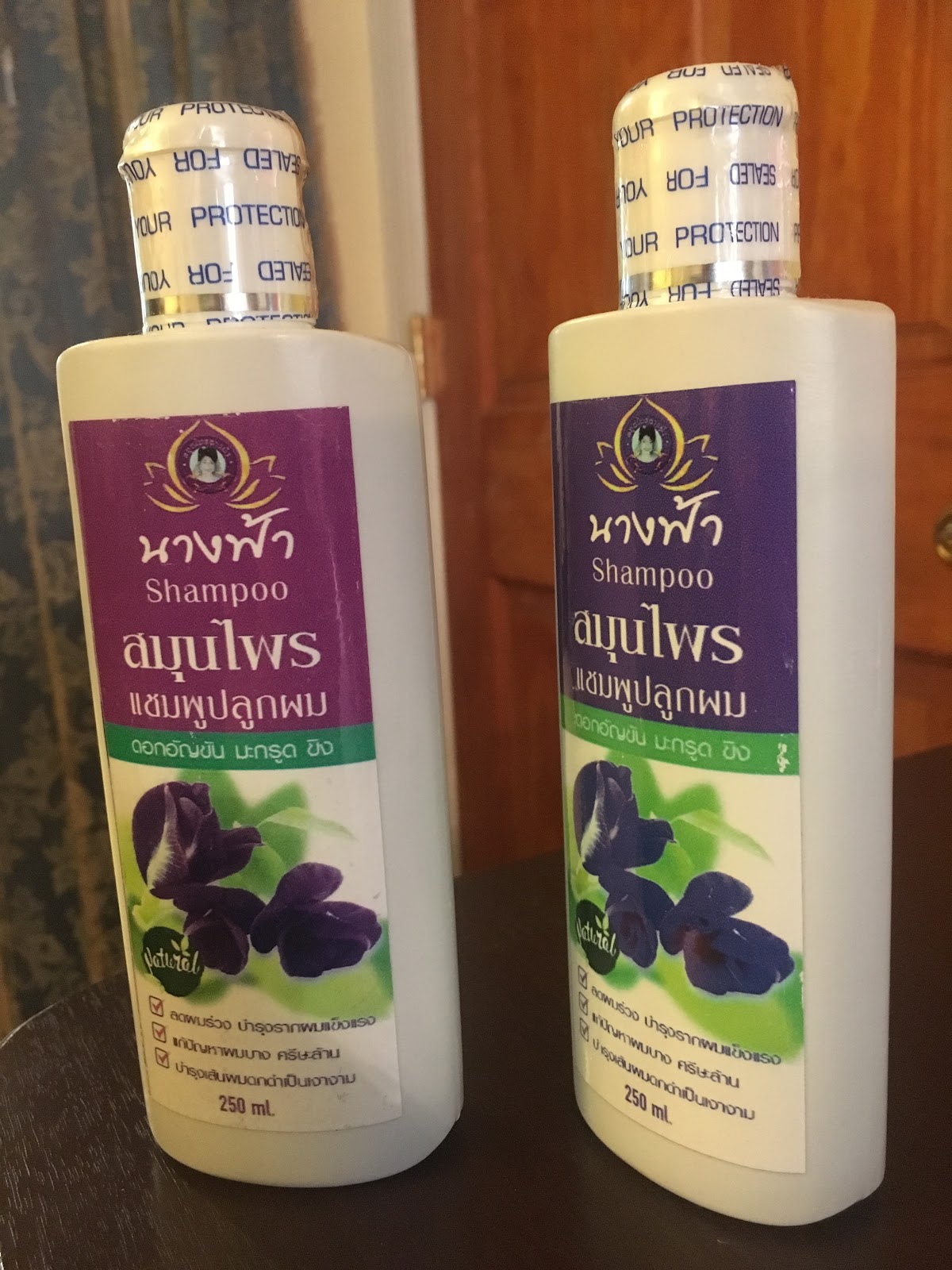
    As explained in my previous post, I told about my plan to send a care package to Cambodia. I’ve decided to change a few aspects of the plan, since the plan itself is pretty tentative and supple. Originally, I wanted to send multiple care packages, each containing different items for different family members, but I concluded that it would cost way too much due to shipping and handling. In the end, I decided to send on big package, to one family of 4 that contained items that they would certainly prove useful. I included various amenities that you would not find normally in Cambodia or find at a relatively low price; some of these items included various hygiene products, clothing items, educational literature, and toys.


Examples of Items Included in the Care Package

Depicted From Left To Right: Men's Body Wash, Fragrant Shampoo, Mouthwash


My reasoning for including these items in the package was that hygiene products are hard to come by in bulk, and they are usually marked up higher than their original retail price than you would find in say the United States for example. Next, I included clothing because most Cambodians usually sew and stitch their own clothing, which while it is cost-friendly, it is not as durable as something you would buy from a big department store, so these clothes would give them a fresh change. Then, the addition of educational literature was party based that they are learning English in their schools, because most of the education system in Cambodia focuses on English more than Khmer, the national language, in order for them to travel out the country and go study in English speaking countries. With my books, which range from simple coloring books, to books like The Hunger Games and Maze Runner, this gives them a free and cheap source of education and leisure in their free time, which hopefully provides a boost to their English fluency. Lastly, the last example of toys is that most toys that are sold in Cambodia are cheap and break very easily, due to them being manufactured in China at a very low cost, so quality toys that I purchase from a store like Target will last longer, and hopefully the children would have a fun time playing with it!


Depicted From Left to Right: Toothpaste, Various Books


I did not have much trouble in purchasing these items, nor did I have much trouble packaging and sending it to the desired location. The only challenge I had during this Agent of Change was the items that I had to buy. I had to consider the people I was sending them to, so once I did, it made it for a relatively easy process. The package is still currently on it’s way to Cambodia at the time of this writing, so I cannot say for sure if it has made an impact yet on the family I sent it to, but I will provide you all with an update when the time comes. One thing I can say for sure though, is that I hope this will make an immediate impact on how they live for the next few weeks or years, and that I will feel elated knowing they can live in a environment that is a drastic improvement over their previous one.

The Agent of Change is the final part of the trilogy of You and the World and I can’t believe how much I’ve come so far. This has been a wonderful ride, and this is one of the few projects over my 11 years in the school system where it really got me thinking about my world. Multiple parts of the project widened my eyes on the issue in Cambodia, and really educated me about a deep and serious issue that many people do not pay attention to. I knew that there was poverty in Cambodia for a while now, but with the addition of the research conducted during the project, I never realized how serious and problematic the entire situation was. I saw my father in a new light after that interview and reading the transcript. He sacrificed everything he had to come to America, looking for the American Dream, and I am honestly speechless. Cambodia is in a bit of a predicament right now, and it’s up to us to see it. Sending a care package to a family, fixes a minute part of the problem, which is a huge step toward the actual solution of the problem. I wished I would have found a documentary to screen to an audience, but I felt the care packages felt more in theme with the entire problem of poverty in Cambodia. To be completely honest, it is going to take more than me, or you as the reader to put even a dent in the poverty situation in Cambodia. There is always hope, but the light will be at the end of of a long dark tunnel for Cambodia. We must spread awareness for this problem, and my Agent of Change will hopefully inspire you to do something similar. Remember, there are millions living without food or water. It is up to us to help them. Save Kampuchea! (កម្ពុជា)

Take a look at my annotated bibliography!

​
Be the first to comment.

Sleep Well

Posted by Phoenix Satterfield in English 1 · Giknis · Y Band on Friday, May 18, 2018 at 4:50 pm

A lot has happened since I first looked into this issue.

Back when I was writing my first blog post for my You and The World issue, I was listing a lot of other statistics on general teen sleep. I have mentioned how other disorders (such as depression and anxiety) could lead to insomnia. I have also written about sleep apnea and its own causes (such as obesity) and its cures. I’ve been considering my plan of original research as I was writing it.

I put that plan into action soon before I wrote my second blog post. I summarized the survey and how that plan didn’t work out (questions were more about sleep than disorders), and what four people said when I interviewed each of them (Three had insomnia, one had sleep apnea; that’s the plan that did work out). Those four interviews have let me know more of what it’s like to actually have one of the two disorders. At the very end of my second post, while considering a second plan, I said : “Whatever I think of in this moment, I’m probably going to change my mind later”. I was right about that.

When I first glanced at this part of the project, I considered raising money to push towards medicine for insomnia and sleep apnea (and contacting Penn Sleep Medicine first), But realization came across. Only doctors can prescribe medicine. It didn’t take me too long to think of a different idea. Recent data suggests that these sleep disorders are gradually starting to get recognized, and a lot of Sleep Clinics are still studying the brain. I can’t create medicine on my own, but I wanted to at least help spread the word.


I have created a website called SleepWell! It’s meant to raise awareness for medication for insomnia, sleep apnea and many more. I felt that it would be easy for people to see and view a website (once I promote it well enough through via advertisements around the school) since people are on the internet all the time. The website summarizes what needs to be known about insomnia, sleep apnea, and a few more common sleep disorders, with statistics and symptoms found from a variety of Sleep Meds and other trustable sources.

Screenshot 2018-05-18 at 4.30.54 PM

Here’s what the introduction looks like.


It starts out with an introduction page, which introduces both me as an SLA student and the Y&TW issue I’m working on. It also summarizes my first two posts on this issue. The four paragraphs are meant to give people a backstory on who I am and what I’m doing. The “backstory” includes links to my first two posts and bibliography. There’s also a list of things you’ll find in the website found towards the left. It’s to give a small preview of what there is to see.

Insomnia and Sleep apnea have their own two pages on the website. Those are two common disorders I’ve been focusing on throughout the entire project. Insomnia is more prevalent in teenagers, and sleep apnea is prevalent in both teenagers and adults. Both of those pages have a description, list of causes, its symptoms, the statistics, and treatment. The treatment for insomnia lists Melatonin (a medicine), therapy, chamomile, and passionflower (both are tea). The treatments I have written about for sleep apnea are a CPAP machine, surgery, and physical exercise. A few quotes have been taken from WebMd, a vitamin/supplement center,  to describe the treatments. I wanted to make the treatment category the biggest one, so people who look through this website can easily find out what to do/how to treat it.


Screenshot 2018-05-17 at 12.06.53 PM

Here’s what the insomnia statistics look like.


“Insomnia and Sleep apnea may be two of the most common sleep disorders, but they are surely not the only two on the list. Some of the following sleep disorders are rare, but are possible for people of various ages to get.” -SleepWell, my own website.

This is a whole nother page with descriptions on eight other sleep disorders. Those eight include:

  • Narcolepsy (sudden attacks of sleep),

  • Restless leg syndrome (an urge to move the legs at night),

  • Kleine Levin Syndrome (KLS, oversleeping for 23 hours a day),

  • Sleep paralysis (inability to move/speak),

  • REM sleep behavior disorder (acting out one’s own dreams),

  • Fatal Familial insomnia (FFL, increased trouble to fall asleep at night),

  • Periodic Limb Movement Disorder (PLMD, repetitive limb movements during sleep),

  • Sleepwalking (completing tasks as one sleeps).

I have also taken quotes from Alaska Sleep Clinic and Sleep Med of Santa Barbara, since they are both professionals that know a lot about most of those disorders. For every one of those disorders, there is a description that comes with treatment/cures (if any). If i didn’t create this one page, this website wouldn’t have been as helpful. Writing only about insomnia and sleep apnea seems more like an article with its own URL than a whole new website.

Since the website was finalized on Wednesday, May 16th, I’ve been working on ways to publicize it. Venngage lets me create flyers, print them out, and publish them to another world on the internet, so I’m sure I’ll be using that to get the word out. People also have suggested for me to advertise it on medical forums, and I am currently looking for some good ones.

It took me nearly a month to work on this website, and I’m still not done the project. If anything could have been done better, it would be time management, and that way I could have added things such as more visuals for the eight other sleep disorders (diagrams, pie charts, etc.), or I could have worked more on what the advertisement looks like and says.  I honestly don’t think that the job is complete until everyone is able to see what I’ve done, and I know I haven’t reached that point yet. There is still much left to do, and I’m willing to continue.


My annotated bibliography is right here.


Tags: You and the World
Be the first to comment.

Final Steps

Posted by Jakob Cantor in English 1 · Giknis · Y Band on Friday, May 18, 2018 at 12:11 pm

In my last two you and the world blog posts, I wrote about the affects the crumb rubber has on the human body and why the topic interests and connects to me. I stated its importance to me in the world and in the sports industry. The last post included  the negative perspectives on the crumb rubber in astroturf. In my most recent post, I wrote about how my perspectives about crumb rubber has changed and the benefits of it. To make this issue public, I have presented a slideshow composed of information informing my school community and others of the issue and how to make a change.


The negative effects crumb rubber has on the human body is extremely hard to change quickly which is why I chose to spread awareness and pass information to people so that the problems the human body have with the turf can be solved. Through all of my deep research, I found out that with a lot of care, crumb rubber can be cleaned well which gets rid of some of the chemicals in the old tires. I also found out about many inside astro turf facilities which allow the crumb rubber to not be absorbed by the sun’s heat.  


For my agent of change final project, I decided the best way to inform others of this information is by creating a slideshow presentation including what crumb rubber is, the problem with it, and how it can be treated. I decided to spread awareness for this topic because it is a problem in the United States that many people are not aware of and by presenting this topic to them they can learn about it and inform others of the problems and benefits of astroturf fields so they can make educated decisions about whether or not it is harmful to them. My experience presenting this issue felt good because when teaching my peers on a problem that they were not aware of teaches them something new. This made it effective for me to make a change because now that these people are informed of this issue, they can inform others and it will keep passing down.


I felt appreciated while doing this project because I did ambitious work to understand this topic and put it into a presentation to teach others about this overseen topic. I learned that there a vast amount of problems on this earth, some big and some small and if we inform each other about these problems we can become a more educated and informed society.  While doing this project I learned how easy it was to teach others about a issue and how effortless it is to pass on the problem and how to fix it. When I presented my project, I was in front of about twenty people which is a fair number of people but the word would spread faster if I presented multiple times for different people or brought more people to my presentation. Even though I have presented this issue, it is not done. To make this complete change, we need to inform others of this issue spread the word to people who work with crumb rubber. If we convince the ones who put crumb rubber into fields how we can do it so it is not harmful then our job is done.


https://docs.google.com/document/d/1jFkm10hpG_LrnTc7P7ys44l6ixd0LrPOnJrl-Y__u6c/edit


IMG_1287
IMG_1287
Be the first to comment.

What Can We Do To Spread Pit Bull Awareness?

Posted by Michaela Berger in English 1 · Giknis · Y Band on Friday, May 18, 2018 at 11:40 am

What Can We Do To Spread Pit Bull Awareness?


In my first post, I discussed the issue of the American Pit Bull Terrier, and spreading awareness in my community. I addressed how there are several negative media portrayals of Pit Bulls, as well as how the breed is heavily influenced by its treatment. For example, if a Pit Bull is treated abusively, it will act accordingly. For my second post, I did some original research about the issue by conducting a survey. In my survey, I received various answers. Many people did not know too much about Pit Bulls, while some had very positive experiences, and others had negative ones. From this survey, I was able to gain knowledge of people’s perceptions of Pit Bulls, and how I could positively impact this issue. After completing my original research, I wanted to do something more.

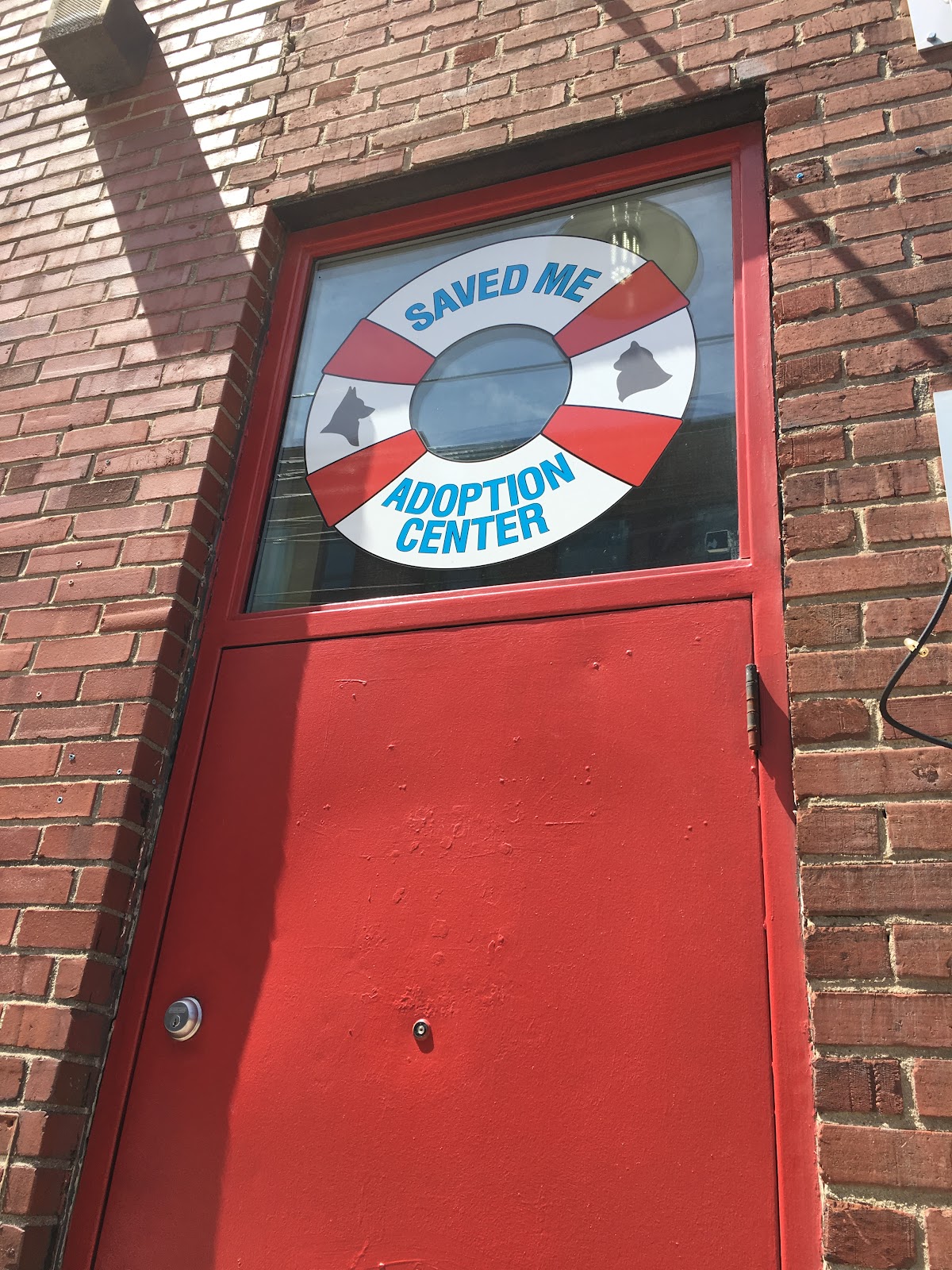
For additional research, I looked at Saved Me Animal Rescue’s website. Their mission is “to provide a safe, responsible, and loving home [to their] rescues.” They are a non-profit shelter, and  pull dogs from shelters that euthanize (“put down”) due to a lack of space. This means they are a no-kill shelter. This shows how Saved Me is dedicated to helping dogs in danger of euthanization, and making sure they have a chance at life. I personally think this is great because when dogs have to be euthanized, their innocent lives are taken away. While sometimes dogs must be put down because of extreme behavioral and health issues, it is often done because of overcrowding.

Saved Me’s entrance (left), and volunteering sign in Saved Me (right).

Euthanasia is especially common among Pit Bulls because they make up a lot of the shelter dog population. According to Save A Bull Rescue's Website, about 75% of municipal shelters euthanize pit bulls immediately upon arrival to the shelters. In addition to that, “Studies estimate that up to 1 million pits are euthanized per year, or 2,800 per day.” Almost 3,000 innocent dogs will be killed today. They also say 1 in 600 pit bulls born will ever be adopted into a good home. 1 in 600. These tear-jerking statistics make me glad that I support a shelter like Saved Me, which helps lower these statistics. Even the county shelter has already euthanized 371 dogs (including owner-intended), according to April statistics on their website.

The statistics are EXTREMELY low. Only .16% of pit bulls will be adopted into a good home.

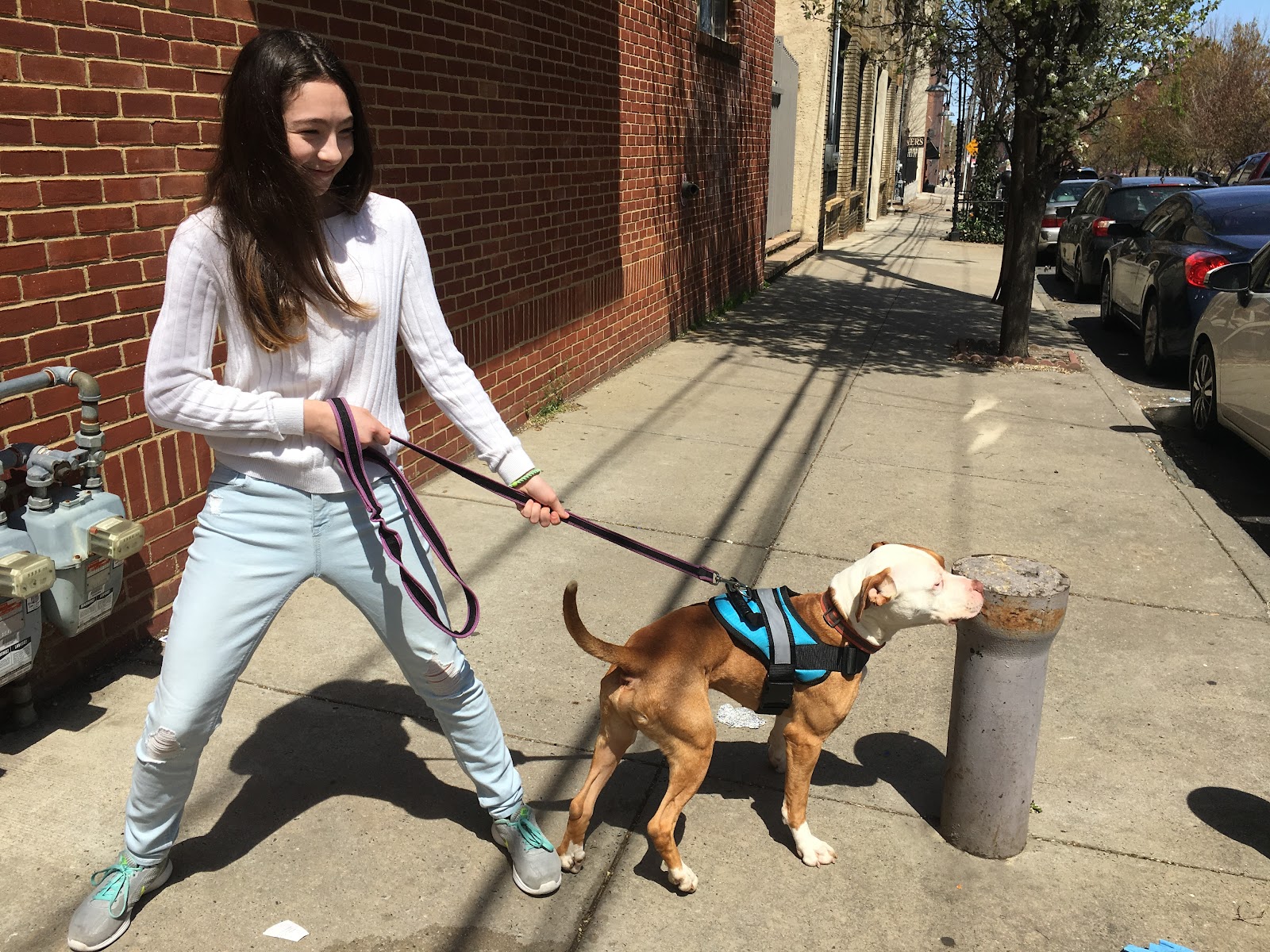
For my agent of change, I volunteered at Saved Me’s shelter. There, they rely heavily on volunteers because they are non-profit.  At the shelter, I walked and played with the dogs, because they don’t have enough workers to be able to do that as much as it is needed. The first week I went, I walked two dogs named Bam Bam, a chihuahua mix, and Jasper, a pit bull. When I returned two weeks later, both dogs had been adopted! When I returned, I walked and played with a total of four  dogs. Working with the dogs made me feel happy. I was glad I was making a difference in their lives, as well as providing the shelter staff additional help. I do plan to return to volunteer several times within the next few months. Sadly, I will not be able to volunteer there for much longer because the shelter is in danger of closing at the end of June; their building’s lease is up.

Here I am walking Jasper, a Pit Bull mix.

Doing this project has been an emotional roller coaster for me. I chose to focus on Pit Bulls because I have seen negative stereotypes of the breed, but I know they are rarely true. I wanted others to see through the negative stereotypes too. As the project went on, I added information about the effect of the negative stereotypes: both its impact on people, and their lives. While I really enjoyed doing research about pit bulls, as well as being able to help them, learning some of the statistics is heartbreaking. However, now that I know these things, I am very glad I chose to focus on Pit Bull Awareness.

Throughout this project, I learned how some of the common misconceptions of Pit Bulls are made, what people think about them, and how to help. I even learned how I can benefit the lives of Pit Bulls in my community. One thing I could have done better could have been to focus more on the actual breed for my agent of change. For example, I could have volunteered with just Pit Bulls. If I had done this, I would not have had the opportunity to meet the lovely shelter dogs I worked with. While Pit Bulls are at higher risk than some breeds, others need loving too. It is important to keep working with the issue, instead of leaving it alone after this project That is why I will continue volunteering at the shelter as long as possible. While I might not be able to eradicate the issue completely, I am doing my part.

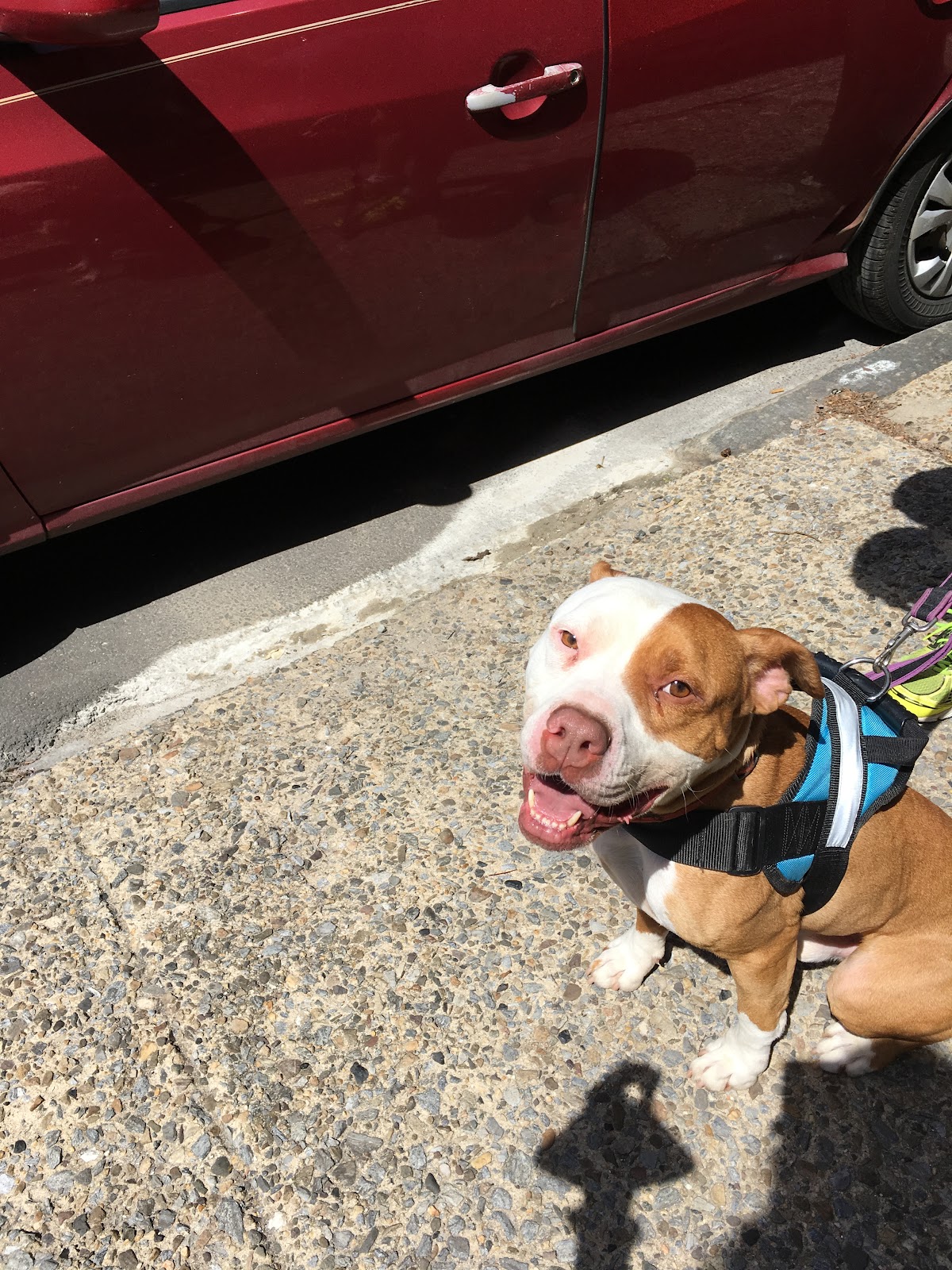
My Pit Bull and I.


Here is my finalized annotated bibliography if you want to check it out!
Tags: English 1, You & the World
Be the first to comment.

Starting the Change

Posted by Taj Walter in English 1 · Giknis · Y Band on Friday, May 18, 2018 at 11:37 am

In my First Post I introduced the topic of racial microaggressions and defined what they were. Racial microaggressions are degrading statements that target a specific race, they are usually jokes or stereotypes. I also addressed the fact that the best way to stop racial microaggressions, in youth, is by raising awareness about them.

In my Second Post, I explained all the progress I had made since the first post. I interviewed six individuals. I summarized every interview in the post and also attached the full interview done with each person. Most of these interviews told me that racial microaggressions happen commonly in SLA, but more commonly on social media. I also started to figure out what my Agent of Change would be. An Agent of Change is the part of the project when we make our change that we have been building to.

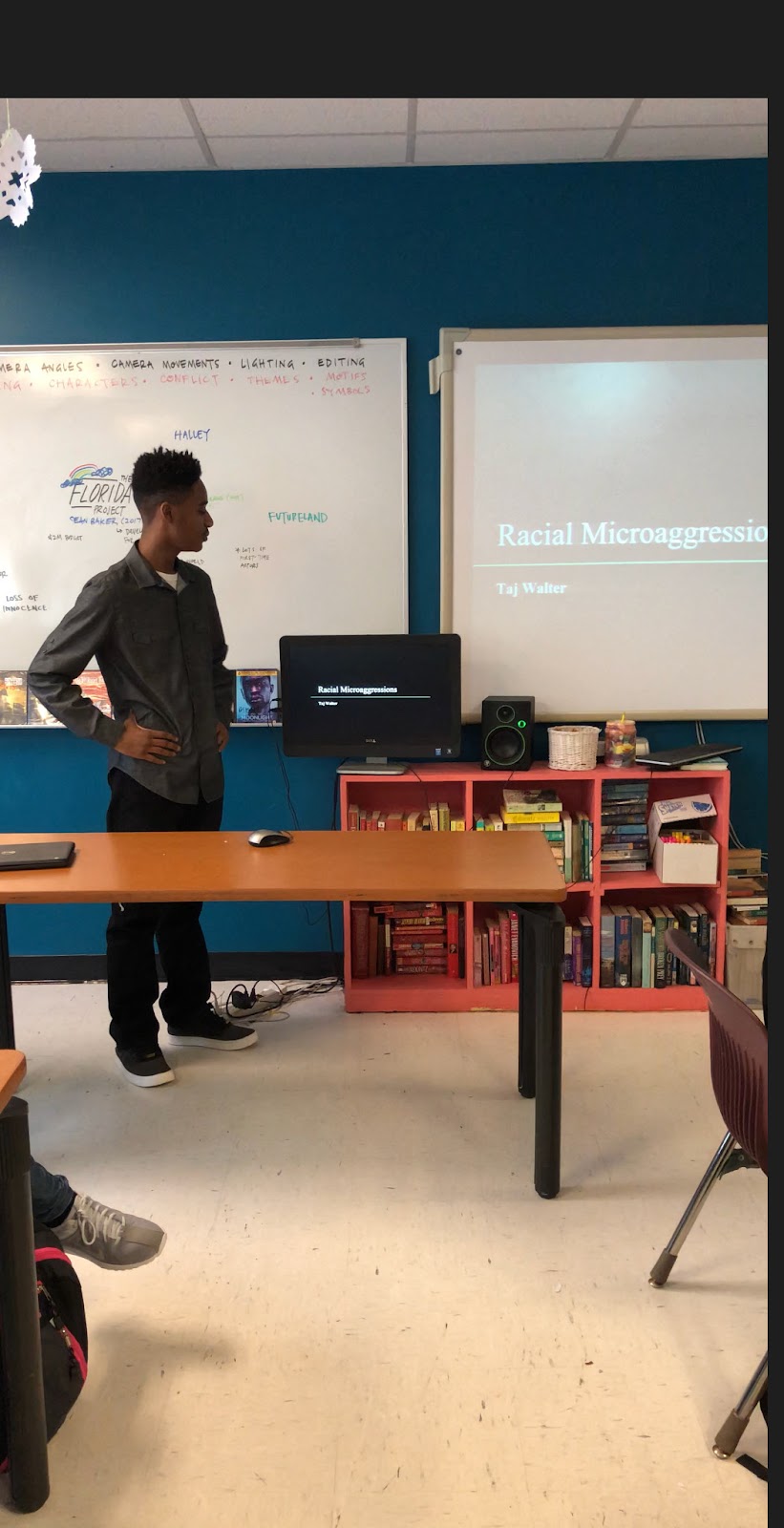
For my agent of change, I did a presentation in my English classroom, to an audience of SLA students willing to learn more about this cause. I decided to do a presentation because I found it to be the easiest way to get my information out to a large audience. I made the presentation by using the knowledge I gained from my research, taking my previous interviewers feedback  and changing it for the better.

This presentation was a success. I raised awareness of racial microaggressions to about thirty students and many of them said that they learned how to have a conversation about race from the presentation. That is exactly what I wanted to accomplish and I think I did it to the best of my ability.

Me at the start of my presentation.

The video was split into two seperate videos, but they can be found here and here.

Part of my audience at the end of my presentation


The focus of the presentation was to tell people to not be afraid about race and explain to them how to have the conversation. I started my presentation by explaining what racial microaggressions are and how they are commonly jokes or stereotypes about it. Next, I explained that they come from a place of comfort if there are jokes, stereotypes or serious statements Lastly, I explained that the best way to have the conversation is to inform and to look to be informed, not to judge the person you are talking to. The presentation was inspired by the American Psychological Associations feature by Tori DeAngelis. One thing Tori said was, “She was acting with bias—she just didn't know it.”There was a part of my presentation that focused on ignorance to race and what Tori said was the inspiration for that. Sometimes the aggressor may not even know that they are acting with bias or being racist because it may be all they know. My hope is that students will see racial microaggressions and stop them by following my idea for how to have a conversation with others. I hope to continue raising awareness on this subject throughout my years of high school.

I enjoyed this project because of two main things. One of the first reasons being that I loved how it allowed students to be creative with their work and what they wanted to do for their agent of change. The second reason being that the project was made to help the world in someway. I never really had any problems during this project and everything went well. This has lead to students doing things that have benefited their community considerably.

This project has given me the tools and the will that I needed to make a change for something that I care about. Here is a link to my Annotated Bibliography.


Be the first to comment.

The Bird Talk

Posted by Taj Walter in English 1 · Giknis · Y Band on Monday, April 9, 2018 at 12:00 pm

The Bird Talk


Taj: We have recently finished Maya Angelou’s first autobiography.

Nasir: Today we have a lot to discuss about “I Know Why the Caged Bird sings.”

Karima: We have recently finished the first autobiography by Maya Angelou.

Taj: So how did you all like the book

Karima: I honestly loved the book, because I’m just the type of person that loves books that are based on true stories.

Taj: Nasir?

Nasir: I read this book in 8th at first I thought it was good but I wasn’t really interested in it but reading it a second time and understanding the book more I actually started to really like it and I understood everything that was going on in her life. Not only she talked about her life but she talked about society back then and what it meant for her to be black during a time where racism occured.

Taj: I think it was a very well written book. I would recommend it to anyone who likes these types of books, but this is not my type of book. I enjoy fantasy and dystopian future writing. So I did not enjoy the book very much. I have no problems with the book it is just not my prefered genre.

Taj: What do you think the themes of the book are?


Nasir: I think the themes of the book were to always be who you are and racism. I think the theme always be yourself was a theme in the book because maya couldn’t figure what she was as a person. She always questioned things about her like her sexuality and and her womanhood. But going towards the end of the book she figures out who she is. The other theme, racism, was in the book because in the book she talked about a lot about racism.


Taj: I think the themes are growing up and racism. The theme of growing up is very relatable to me. Since I am only a few years away from being an adult and soon I will have to mature and prepare for adulthood. Maya discusses the problems with her and her brother growing up. I may have some of these problems growing up. When it comes to racism I have only encountered one racist person in my life, but I am bound to encounter more. So I can learn from her mistakes.


Karima:I think one of the themes is to just be who you are no matter what, and also like Taj and Nasir said Racism was a big part of it as well, it was one of the main themes. I can’t really relate on racism, but I can kinda relate to the not being myself back in elementary school I moved to the U.S and I didn’t really know any English or anything like that and my where I came from was really really different so I always tried to be like the other girls and I always just tried to fit in with them, I changed how I dressed how I talk and everything.


Taj: Compare society from her life to society today.


Nasir: Life in society back in her day wasn’t as good as today even there are some dark spots in today society. I’ll say society during her time was so crucial because there were a lot of lynchings happening and segregation was on big thing that happened back then. Now if you look at society today it got a little better but it gets worse with mass incarceration and young black kids dying. But, I’ll say back then was worse than what is happening today  

Karima: I think one big part that’s the same from both Society is boys taking advantage of teen girls, like reaping them and stuff like that, Another thing is racism racism is still going on in today society. 43 `

Taj: Maya’s society was completely different than today’s. In Maya’s time racist were much more of a problem than they are today. Same with sexists. Both problems still exist today, but on a much smaller scale. In Maya’s society any questions that she had she had to ask her parents or guardians, but in today’s society everything can be found on the internet. Maya would have never talked to her mom about being a hermaphrodite if she could have googled the answer.

Taj: Any other questions today?

Karima: No

Nasir: No

Taj: Ok then. Goodbye goodbye goodbye from the bird talk.


https://www.youtube.com/watch?v=sVaZVsmLpyI&t=3s
Be the first to comment.
83 posts:
← Prev
  1. 1
  2. 2
  3. 3
  4. 4
  5. 5
  6. 6
  7. 7
  8. 8
  9. 9
Next →
RSS

ENG1-025

Term
2017-18

Other Websites

Launch Canvas

Blog Tags

  • You & the World 13
  • English 9 11
  • English 1 5
  • You and the World 4
  • Y&TW 2
See all See less
  • Public
  • Homepage
  • English
  • English9
  • Agent of Change
  • English 9 You & The World
  • you and the world project
  • you and the world projects
  • English 9 - You and The World Project
  • Red streas

Teacher

  • Amal Giknis
Slate (skeleton-v3 PHP 8 prototype) · Location: 1482 Green St · Shipping: 550 N. Broad St Suite 202 · Philadelphia, PA 19130 · (215) 400-7830 (phone)
×

Log In